
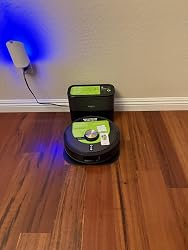
MONSGA robot vacuum and mop review: MONSGA offers affordable robotic vacuum systems that combine automated floor cleaning, LiDAR navigation, mopping, app controls, and self-emptying on selected models. The lineup ranges from the slim MR1 to the feature-rich MR7 PRO, making model selection more important than the brand name alone.
Bottom Line: MONSGA is most compelling for homeowners who want automated daily floor maintenance without paying premium-brand prices, but the right model depends heavily on whether you prioritize basic vacuuming, LiDAR mapping, mopping, self-emptying, or pet-hair management.
MONSGA Robot Vacuum at a Glance
MONSGA has built a growing range of automated floor cleaners rather than a single robot vacuum. Its current robot-vacuum lineup includes the MR1, MS1, MS1 MAX, and MR7 PRO, and their capabilities are not identical. The official lineup shows substantial differences in suction, navigation, runtime, and dock functionality.
The entry-level MR1 is designed around a slim body and basic autonomous cleaning, while the MS1 adds LiDAR navigation and combined vacuum-and-mop functionality. The MS1 MAX takes the concept further with a self-emptying station, and the MR7 PRO adds higher claimed suction, dual anti-tangle technology, multi-floor map memory, and a larger auto-empty system.
That makes this brand particularly interesting for buyers who are comparing features rather than simply looking for the cheapest robotic vacuum cleaner.
Key Features That Matter Most
The biggest distinction between the MONSGA models is the level of automation. Depending on the model, buyers can get LiDAR navigation, multi-floor mapping, scheduled cleaning, zone cleaning, automatic recharge, recharge-and-resume functionality, voice control, mopping, and self-emptying.
LiDAR is especially important because it allows a robot to understand the shape of a room and follow organized cleaning routes instead of relying entirely on random bump-and-turn movement.
The higher-end models also focus on reducing maintenance. The MS1 MAX, for example, combines a 6,000Pa suction rating with a 3.5L self-emptying station, while the MR7 PRO is listed with 8,000Pa suction and a 4L auto-empty dust bag.
Who This Robot Vacuum Is Best For
MONSGA makes the most sense for homeowners who want an autonomous cleaner for everyday dust, crumbs, pet hair, and light floor maintenance.
It is particularly appealing for hard-floor homes, mixed-floor households, busy families, pet owners, and people who want to schedule cleaning instead of manually vacuuming every day.
It is less convincing as a replacement for a full-size vacuum and mop when the home has very thick carpet, heavy embedded dirt, large liquid spills, or stains that require aggressive manual scrubbing.
Quick Pros and Cons
Pros
- Strong suction ratings across the lineup
- LiDAR navigation on the MS1, MS1 MAX, and MR7 PRO
- Vacuum-and-mop functionality on selected models
- Self-emptying available on higher-end models
- Multi-floor mapping on supported models
- Long claimed battery runtime
- Smart Life/Tuya control on supported models
- Alexa and Google Assistant compatibility on supported models
- Competitive feature-to-price positioning
Cons
- The models vary considerably, so specifications cannot be generalized across the brand
- Published suction ratings do not tell the complete cleaning-performance story
- Mopping is primarily intended for maintenance rather than deep stain removal
- Consumables such as filters, brushes, mop pads, and dust bags require ongoing maintenance
- Basic models do not offer the same navigation and automation as premium models
Bottom Line: MONSGA is best viewed as a family of different robot vacuum systems. The MS1, MS1 MAX, and MR7 PRO are much more feature-rich than the entry-level MR1, so buyers should choose by cleaning requirements rather than brand alone.
MONSGA Robot Vacuum Models Explained
The easiest way to understand MONSGA is to compare its individual models. The current official lineup lists four robot vacuums: MR1, MS1, MS1 MAX, and MR7 PRO.
This distinction matters for SEO as well as buyers because searches for “MONSGA robot vacuum” can represent several different products.
MONSGA MR1 Robot Vacuum
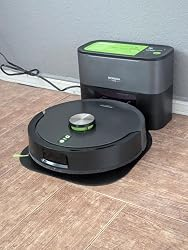
The MR1 is the simpler model in the lineup. MONSGA lists a 3.2-inch slim profile and up to 140 minutes of runtime, making its physical design particularly useful for homes with low furniture. The manufacturer’s current page also describes infrared and cliff sensors, four cleaning modes, and automatic return to the charging dock.
There is an important specification inconsistency worth noting: MONSGA’s collection title currently advertises 4,000Pa, while the MR1 product page text currently describes 3,000Pa suction. Because of that discrepancy, buyers should verify the exact specification attached to the unit they are purchasing rather than treating every retailer listing as interchangeable.
The MR1 is therefore best considered a basic autonomous floor cleaner for everyday dust and debris rather than a premium smart vacuum.
MONSGA MS1 Robot Vacuum and Mop
The MS1 moves into a more advanced category. MONSGA lists 7,000Pa suction, 360-degree LiDAR navigation, and up to 180 minutes of runtime. Its documentation also lists a 340ml dustbin, 270ml water tank, HEPA filtration, and support for up to five editable maps.
This combination makes the MS1 a more suitable option for households wanting organized navigation and vacuum-and-mop functionality without necessarily needing an auto-empty dock.
The LiDAR system is one of its most meaningful upgrades because mapping allows the robot to divide the home into rooms and plan more systematic routes.
MONSGA MS1 MAX
The MS1 MAX is aimed at buyers who want less hands-on maintenance. It combines 6,000Pa suction with a 3.5L self-emptying station and up to 180 minutes of claimed runtime. The manufacturer also lists a 340ml dustbin, 270ml water tank, three suction levels, and three water-flow settings.
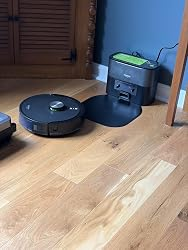
Its self-emptying station automatically transfers debris from the robot into a larger dust bag after cleaning. MONSGA says the station can hold up to 60 days of dirt under its stated usage conditions. That figure should be treated as a manufacturer estimate rather than a guaranteed interval because actual capacity depends on floor area, cleaning frequency, and household debris.
MONSGA MR7 PRO
The MR7 PRO represents the most feature-rich model in the current lineup. It is advertised with 8,000Pa suction, dual anti-tangle technology, LiDAR mapping, a 4L sealed dust bag, up to 160 minutes of runtime, and memory for up to five floor plans.
MONSGA also lists a 460ml water tank and describes an all-rubber main roller combined with an anti-tangle side-brush design. That configuration is particularly relevant for homes with long hair or pets because the brush system is intended to reduce hair wrapping.
Bottom Line: The MR1 is the simplicity-focused option, the MS1 is the balanced mapping-and-mopping choice, the MS1 MAX adds hands-free dust disposal, and the MR7 PRO is the strongest choice when maximum automation and anti-tangle features are the priority.
MONSGA Robot Vacuum Technology and Smart Features
The technology inside a robotic vacuum determines how efficiently it covers a home. Suction power is only one part of the equation.
A robot with strong suction but inefficient navigation can waste battery and repeatedly clean the same areas. Conversely, a well-mapped robot can cover a floor systematically while using its available battery more intelligently.
LiDAR Navigation and Smart Mapping
LiDAR navigation is one of the most important technologies in the MS1, MS1 MAX, and MR7 PRO.
Instead of relying only on physical bump sensors, the robot uses laser-based distance information to understand its surroundings. The MR7 PRO, for example, uses Smart LiDAR Mapping to build floor plans and clean in systematic rows.
This is useful because the robot can identify room boundaries, calculate routes, and return to areas that still require cleaning.
LiDAR should not automatically be confused with SLAM mapping, however. SLAM mapping is the broader process of simultaneous localization and mapping, while LiDAR is one sensing technology that can contribute to that process. For SEO and technical accuracy, it is better to explain the relationship than claim that every MONSGA model uses a specific SLAM implementation unless the manufacturer documents it.
Multi-Floor Mapping and No-Go Zones
Multi-floor mapping becomes valuable in two-story or multi-level homes.
The MS1 documentation lists up to five editable maps, while the MR7 PRO is also advertised with five-map memory.
A homeowner can therefore benefit from storing different floor layouts instead of rebuilding a map every time the robot moves between levels.
No-go zones and virtual boundaries are equally useful. They allow users to prevent the robot from entering areas such as rooms with loose cables, pet bowls, fragile objects, or floor surfaces that should not be wet-mopped.
App, Scheduling and Voice Control
MONSGA’s supported smart models can be controlled through Smart Life or Tuya-related applications, depending on the model and documentation.
The MS1 manual lists Smart Life/Tuya Smart, remote control, push-button control, Amazon Echo, and Google Home compatibility.
This creates useful smart-home integration because a homeowner can schedule cleaning, select rooms or zones, adjust cleaning settings, and use voice commands rather than manually operating the robot.
The important distinction is that app functionality is a convenience feature, while navigation technology determines how intelligently the robot actually moves around the home.
Recharge, Resume and Autonomous Cleaning
A major advantage of an autonomous cleaner is that the homeowner does not need to monitor the battery.
The supported MONSGA models can return to the charging dock when power is low. The MR7 PRO is specifically described as calculating the required charge and then resuming the remaining cleaning task.
This is particularly useful for larger homes because a robot does not need to finish the entire floor in a single battery cycle.
Field Note: One practical consideration that specification sheets rarely emphasize is that robot-vacuum autonomy still depends heavily on floor preparation. Loose cables, socks, toys, pet bowls, and lightweight objects can turn an otherwise intelligent navigation system into a repeated-stop situation. Good mapping cannot completely compensate for a cluttered floor.
Bottom Line: LiDAR navigation, mapping, scheduling, and recharge-and-resume features matter because they reduce wasted movement and user intervention. They are often more important to everyday convenience than simply choosing the model with the highest advertised suction number.
MONSGA Cleaning Performance: Vacuuming and Mopping
A good robot vacuum should be judged by what it removes from the floor, not merely by its maximum suction specification.
MONSGA’s models target common household debris such as dust, crumbs, pet hair, and fine particles. The higher-powered models are better suited to mixed surfaces, while the basic MR1 is more focused on everyday maintenance.
Hard-Floor Cleaning Performance
Hard floors are generally the easiest environment for a robotic vacuum.
Dust, crumbs, hair, and small debris remain relatively accessible to the brush and suction system. A systematic cleaning path also helps the robot cover large open areas without repeatedly crossing the same section.
The MS1 MAX provides three suction levels, allowing homeowners to balance noise and battery consumption against cleaning intensity.
For tile, laminate, and ordinary hardwood maintenance, the combination of scheduled vacuuming and occasional mopping can reduce the amount of manual cleaning required.
Carpet and Rug Cleaning
Carpet introduces more variables.
Fine particles can become embedded between carpet fibers, meaning that suction power, brush agitation, robot speed, and the number of passes all affect pickup.
The MR7 PRO’s claimed 8,000Pa maximum suction gives it the highest advertised suction level in the current MONSGA lineup, while the MS1 MAX is listed at 6,000Pa.
However, Pa should not be interpreted as a complete measure of carpet performance.
Two robots can have similar pressure ratings and deliver different real-world results because of airflow, brush design, sealing, nozzle geometry, and how efficiently the motor moves air through the cleaning path.
Pet Hair and Anti-Tangle Performance
Pet owners should pay attention to the brush system as much as suction.
Hair can wrap around a conventional roller, reducing cleaning performance and increasing maintenance. The MR7 PRO uses a dual anti-tangle design consisting of an arched side brush and all-rubber main roller. MONSGA specifically positions this system for homes with pets and long hair.
That does not mean the brush will never require cleaning. Long human hair and pet fur can still accumulate around side brushes, axles, and other moving parts.
Regular inspection remains important even with an anti-tangle design.
Mopping Performance
MONSGA’s vacuum-and-mop models are intended primarily for maintenance cleaning.
The MS1 MAX, for example, combines a 270ml water tank with three water-flow settings.
That allows the user to control how much moisture reaches the mop pad. Lower water flow can be useful for routine cleaning, while higher settings may be appropriate for more noticeable floor residue.
A robot mop should not, however, be treated as a direct replacement for a manual mop when dealing with thick grease, dried food, sticky spills, or heavily soiled floors.
The robot can maintain a floor between deeper cleanings, but manual intervention remains necessary for stubborn contamination.
Bottom Line: MONSGA’s strongest cleaning advantage is automation rather than replacing every type of traditional cleaning. Vacuuming can handle daily debris effectively, while mopping is best viewed as ongoing surface maintenance.
Understanding Suction: Pa, Water Lift and CFM Airflow
One of the easiest mistakes in robot-vacuum reviews is treating suction numbers as the entire performance story.
MONSGA advertises suction using Pa, such as 6,000Pa, 7,000Pa, and 8,000Pa on different models. But Pa represents pressure, not the complete volume of air moved through the cleaning system.
Why Water Lift Matters
Water Lift, measured in inches, is another vacuum-performance metric that describes the vacuum’s ability to generate pressure under a standardized test condition.
A higher Water Lift value can indicate stronger pressure capability, but it still does not tell the complete story of how effectively a machine picks up dirt from a carpet.
MONSGA does not publish a verified Water Lift figure in the product information reviewed for this article. Therefore, we would not assign an inches-of-water figure to these robots without a standardized test.
Why CFM Airflow Matters
CFM airflow measures the volume of air moved by a vacuum system.
For cleaning performance, airflow can be highly relevant because dirt pickup depends on both pressure and the amount of air passing through the cleaning path.
Again, MONSGA’s published consumer specifications emphasize Pa rather than a verified CFM measurement. That means buyers should avoid assuming that a higher Pa rating automatically means higher airflow or superior carpet performance.
How Suction Should Actually Be Evaluated
The best assessment combines:
- Suction pressure
- Airflow
- Brush agitation
- Cleaning-path sealing
- Filter condition
- Dustbin condition
- Surface type
- Cleaning speed
- Number of passes
This is also why a robot’s HEPA efficiency and filtration design matter. A filter that becomes clogged can restrict airflow and gradually reduce performance.
Sealed System Filtration
Filtration is another area where marketing terminology should be handled carefully.
The MS1 documentation identifies HEPA filters, but a specific whole-machine sealed-system filtration efficiency percentage is not clearly established in the product information reviewed here.
Therefore, it is more accurate to discuss HEPA filtration as a component of the dust-filtration system rather than claiming a specific sealed-system efficiency percentage.
Bottom Line: Pa is useful for comparing MONSGA’s advertised models, but Water Lift, CFM airflow, brush design, filtration, and cleaning-path sealing all influence real-world pickup. A technically honest review should never manufacture missing measurements.
Self-Emptying Station, Battery and Everyday Convenience
Self-emptying is one of the biggest differences between a basic robotic vacuum and a more automated robot vacuum system.
Instead of manually opening the dustbin after every run, the robot transfers collected debris into a larger container or bag at the charging station.
How the Self-Emptying System Works
The MS1 MAX uses a 3.5L self-emptying station, while the MR7 PRO uses a 4L auto-empty dust bag.
After the cleaning cycle, the robot docks and transfers collected debris into the larger station.
The benefit is not simply convenience. Frequent manual emptying can expose users to dust and pet hair, while a sealed bag can make disposal cleaner.
The MR7 PRO’s manufacturer claims up to 90 days of hands-free cleaning under stated conditions. Actual results will vary according to household size, cleaning frequency, pets, and the amount of debris produced.
Battery Runtime and Coverage
Battery runtime is another important specification.
The MR1 is advertised at up to 140 minutes, the MS1 and MS1 MAX at up to 180 minutes, and the MR7 PRO at up to 160 minutes.
These are maximum or claimed runtime figures rather than guaranteed cleaning times.
Higher suction levels, carpet, repeated navigation, and mopping can affect actual battery consumption.
The MR7 PRO is advertised to cover up to 2,690 square feet under specified conditions, while the MS1 MAX is advertised for up to 2,000 square feet per charge.
Noise and Daily Usability
Noise matters because a robot may operate for an extended period while people are working, sleeping, watching television, or studying.
The MR1 is listed by MONSGA at less than 55dB under its stated conditions.
Other models can produce different noise levels depending on suction mode and whether the dock is emptying the dustbin.
The self-emptying cycle may also be noticeably louder than normal robot operation, so scheduling the dock’s cleaning cycle during convenient hours can make the experience more comfortable.
Smart Features That Actually Save Time
Not every smart feature has equal practical value.
The features that genuinely reduce work are:
- Scheduled cleaning
- Room and zone cleaning
- No-go zones
- Automatic recharge
- Recharge and resume
- Self-emptying
- Multi-floor mapping
- App control
- Voice commands
AI obstacle avoidance can also be valuable in premium robot vacuums, but it should not be assumed that LiDAR alone means a robot has camera-based AI object recognition.
MONSGA documents obstacle detection and navigation features, but buyers should distinguish between LiDAR navigation and advanced AI obstacle recognition rather than treating the terms as interchangeable.
Bottom Line: The MS1 MAX and MR7 PRO are the strongest choices for homeowners who value hands-free operation. Runtime is useful, but automation features such as self-emptying and recharge-and-resume have a bigger effect on ownership convenience.
MONSGA Robot Vacuum Maintenance and Running Costs
Even the most autonomous cleaner requires maintenance.
The goal of maintenance is not just keeping the robot clean. It protects airflow, brush performance, navigation sensors, charging reliability, and battery efficiency.
Filter, Brush and Roller Maintenance
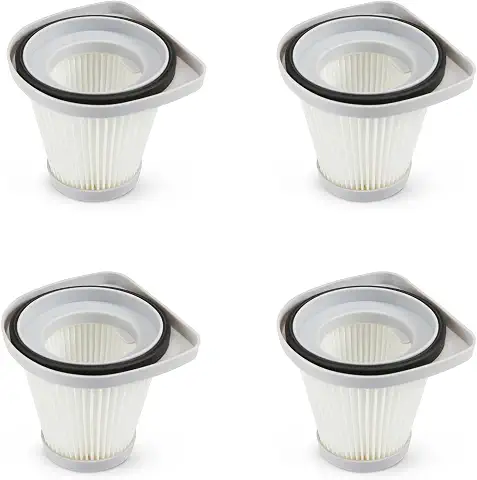
Filters should be inspected regularly because accumulated dust restricts airflow.
The MS1 MAX manual recommends cleaning the main brush, side brushes, sensors, and charging contacts as part of routine maintenance.
Hair should be removed from the main roller before it forms a dense layer around the axle.
Side brushes should also be checked because hair can wrap around their central mounting points.
Mop Pad and Water Tank Care
Mop pads should not be left wet and dirty for extended periods.
After mopping, remove and clean the pad according to the manufacturer’s instructions. Emptying the water tank when appropriate also helps prevent stale water and odors.
The MS1 MAX provides 270ml of water capacity, so frequent mopping in a large home may require more than one water refill.
Self-Empty Station Maintenance
The self-emptying dock reduces daily work but does not eliminate maintenance.
Users should inspect:
- Dust-bag condition
- Air pathways
- Dock sensors
- Charging contacts
- Debris around the station
- Seals and openings
The MR7 PRO uses a 4L dust bag, while the MS1 MAX uses a 3.5L station bag.
Long-Term Ownership Costs
The ongoing cost of a robot vacuum includes more than its purchase price.
Potential consumables include:
- Filters
- Main brushes
- Side brushes
- Mop pads
- Dust bags
- Replacement water-related components where applicable
Before purchasing, check whether replacement parts are readily available for the exact model.
This is particularly important with less-established brands because the long-term value of an inexpensive robot can decline if essential consumables become difficult to source.
Bottom Line: Regular maintenance is still necessary even with a self-emptying robot. Keeping filters, brushes, sensors, and mop components clean is one of the simplest ways to preserve cleaning performance.
MONSGA Robot Vacuum Troubleshooting Guide
Robot vacuums are complex autonomous appliances, but many common problems have simple causes.
The best troubleshooting approach is to check the physical cleaning system before assuming the navigation software has failed.
Robot Vacuum Gets Stuck or Lost
First inspect the floor for:
- Charging cables
- Socks
- Toys
- Pet bowls
- Small objects
- Uneven transitions
- Furniture with narrow clearances
MONSGA’s MS1 documentation specifically lists cables, small objects, and uneven surfaces as potential causes of frequent sticking. It also recommends using no-go zones where appropriate.
If mapping becomes unreliable, clean the sensors and make sure the charging dock has adequate space around it.
Poor Suction or Cleaning Performance
If pickup performance decreases, check the:
- Dustbin
- Filter
- Main brush
- Side brushes
- Suction inlet
The MS1 and MS1 MAX manuals identify full dustbins, clogged filters, and tangled brushes as common causes of poor cleaning.
Also check the selected suction mode.
Running a robot continuously at maximum suction can increase noise and battery consumption, while an excessively low setting may not provide the desired carpet performance.
Mopping Problems
Poor mopping does not necessarily mean the water system is defective.
Check whether:
- The water tank is filled
- The mop pad is installed correctly
- The mop cloth is adequately damp
- Water-flow settings are appropriate
- The water outlet is unobstructed
MONSGA’s MS1 troubleshooting information specifically points to an empty water tank, dry mop cloth, and low water-flow setting as possible causes.
Wi-Fi, App and Mapping Problems
Smart-home connectivity can fail for reasons unrelated to the robot itself.
MONSGA’s documentation specifies 2.4GHz Wi-Fi for app connection troubleshooting.
If pairing fails, verify the Wi-Fi band, password, router distance, and app permissions.
Restarting the pairing process can also resolve temporary connection problems.
Bottom Line: Most everyday problems can be traced to debris, filters, brushes, water settings, sensors, or network configuration. Start with those checks before assuming the robot requires professional service.
MONSGA Model Comparison: Which One Should You Buy?
The table below is designed to help buyers understand the lineup without treating all MONSGA products as identical.
| Feature | MR1 | MS1 | MS1 MAX | MR7 PRO |
|---|---|---|---|---|
| Advertised suction | 4,000Pa* | 7,000Pa | 6,000Pa | 8,000Pa |
| LiDAR | No | Yes | Yes | Yes |
| Mopping | Basic model configuration varies | Yes | Yes | Yes |
| Self-emptying | No | No | Yes, 3.5L | Yes, 4L |
| Claimed runtime | Up to 140 min | Up to 180 min | Up to 180 min | Up to 160 min |
| Multi-map support | Limited/basic | Up to 5 maps | Up to 5 maps | Up to 5 maps |
| Best suited to | Budget/basic cleaning | Balanced automation | Hands-free convenience | Maximum feature set |
*MONSGA’s current MR1 collection listing says 4,000Pa, while the product page text currently states 3,000Pa. Verify the exact specification before purchase.
MONSGA MR1 vs MS1
The MS1 is the stronger choice when navigation and mopping matter.
Its 7,000Pa advertised suction and 360-degree LiDAR navigation give it a much more advanced feature set than the MR1.
Choose the MR1 if basic automated vacuuming and a slim body are the main priorities.
Choose the MS1 if you want room mapping, mopping, smart controls, and a more sophisticated autonomous cleaning system.
MONSGA MS1 vs MS1 MAX
The MS1 MAX is essentially the more convenience-focused option.
The MS1 has the higher advertised suction rating at 7,000Pa, while the MS1 MAX offers 6,000Pa but adds a 3.5L self-emptying station.
For someone who dislikes emptying a robot’s dustbin, the MS1 MAX may provide greater everyday value even though its headline suction number is lower.
MONSGA MS1 MAX vs MR7 PRO
This is the more interesting premium comparison.
The MR7 PRO offers 8,000Pa advertised suction compared with 6,000Pa for the MS1 MAX. It also uses a 4L auto-empty dust bag and adds a dual anti-tangle brush design.
The MS1 MAX, however, offers up to 180 minutes of runtime compared with the MR7 PRO’s 160 minutes.
For pet households and buyers prioritizing maximum cleaning specifications, the MR7 PRO is the stronger option. For buyers prioritizing longer claimed runtime and a slightly simpler feature package, the MS1 MAX remains attractive.
Which MONSGA Model Offers the Best Value?
For a balanced feature set, the MS1 is compelling.
For hands-free operation, the MS1 MAX makes more sense.
For maximum advertised suction and anti-tangle technology, the MR7 PRO is the strongest model.
The MR1 is the model to consider when the goal is simply affordable automated floor maintenance.
Bottom Line: There is no single “best” MONSGA model for every household. The MS1 is the balanced choice, MS1 MAX is the convenience choice, MR7 PRO is the feature-focused choice, and MR1 is the budget-oriented option.
MONSGA vs Competing Robot Vacuums
MONSGA competes in a crowded category that includes established brands such as Roborock, Dreame, and Ecovacs.
The most important comparison is not simply suction power. Buyers should consider navigation, obstacle avoidance, mopping technology, software quality, dock functionality, replacement parts, and long-term support.
MONSGA vs Roborock
Roborock is generally stronger when buyers prioritize a mature smart-home ecosystem and advanced premium models.
MONSGA becomes more interesting when the buyer is focused on feature-to-price value.
The decision should therefore come down to whether the buyer values the broader premium ecosystem or wants a lower-cost entry into LiDAR-based automated cleaning.
MONSGA vs Dreame
Dreame competes aggressively in premium robot vacuum and mop technology, particularly around sophisticated docks and advanced mopping.
MONSGA’s advantage is simpler positioning: strong advertised suction, LiDAR on selected models, mopping, and self-emptying without necessarily entering the highest premium price tiers.
MONSGA vs Ecovacs
Ecovacs has a broad range of robotic cleaning products and established smart-cleaning technology.
MONSGA can make sense for shoppers who find a specific MONSGA model at an attractive price while still wanting features such as LiDAR mapping, self-emptying, and app control.
When a Competitor May Be Better
Consider another brand if your highest priority is:
- Advanced AI obstacle avoidance
- Sophisticated object recognition
- Mop washing and hot-water dock systems
- Highly mature software
- Extensive long-term accessory availability
- Premium carpet-cleaning specialization
This does not mean MONSGA is inferior overall. It means that different brands emphasize different parts of the robot-vacuum experience.
Bottom Line: MONSGA’s strongest competitive argument is value. Premium competitors may offer more sophisticated software, obstacle avoidance, or dock technology, but MONSGA can provide a substantial portion of the core robotic-cleaning experience for less.
Buyer’s Intent — Is the MONSGA Robot Vacuum Worth Buying?
This is where the specifications should become a practical purchasing recommendation.
Best For
MONSGA is a strong candidate for:
- Busy households
- Pet owners
- Hard-floor homes
- Mixed-floor homes
- People who want scheduled cleaning
- Buyers interested in LiDAR mapping
- Multi-level homes needing multiple maps
- Buyers wanting self-emptying
- Homeowners who want vacuuming and light mopping in one device
For pet owners, the MR7 PRO is particularly interesting because of its dual anti-tangle brush design and 8,000Pa advertised suction.
For homeowners who prioritize reducing daily maintenance, the MS1 MAX’s 3.5L self-emptying station is more important than its lower advertised suction figure.
Not Ideal For
MONSGA may not be the right solution for homeowners who need:
- Deep manual-style scrubbing
- Heavy stain removal
- Professional-grade carpet extraction
- Cleaning of large liquid spills
- Completely maintenance-free ownership
- The most sophisticated AI obstacle avoidance available
Robot mops are designed primarily to maintain floors between deeper cleaning sessions.
Which MONSGA Model Should You Buy?
Best Budget: MR1
Choose it when the priority is simple autonomous vacuuming, a slim profile, and basic daily maintenance.
Best Balanced: MS1
Choose it for LiDAR navigation, vacuum-and-mop functionality, app control, and a strong overall feature set.
Best Hands-Free Value: MS1 MAX
Choose it if self-emptying is a major priority. The 3.5L dock substantially reduces how often you need to empty the robot manually.
Best Overall Features: MR7 PRO
Choose it if you want the highest advertised suction in the lineup, dual anti-tangle technology, 5-map memory, a 4L auto-empty bag, and 160 minutes of claimed runtime.
Should You Buy MONSGA or Choose Another Brand?
Buy MONSGA when its combination of price, navigation, suction, mopping, and automation matches your needs.
Look elsewhere when advanced AI obstacle avoidance, premium mop washing, highly developed software, or long-established accessory availability is more important than price.
Bottom Line: MONSGA is worth considering when you want a practical autonomous floor cleaner without automatically moving into the most expensive premium category. The MS1 MAX and MR7 PRO are especially compelling for buyers who value hands-free operation.
Pros, Cons and Long-Term Ownership Verdict
What MONSGA Does Well
MONSGA has assembled a lineup with a surprisingly broad range of features.
The MS1 and above offer LiDAR-based navigation, while the MS1 MAX and MR7 PRO add self-emptying. The MR7 PRO also pushes the advertised suction figure to 8,000Pa and adds a dual anti-tangle design.
The brand also offers multiple cleaning modes and smart-home integration on supported models.
Where MONSGA Could Improve
The biggest consideration is consistency across the product range.
Specifications differ substantially from one model to another, and the MR1’s current suction information even shows a discrepancy between the collection listing and product page.
The brand could also make long-term ownership easier by providing exceptionally clear information about replacement consumables, software support periods, and accessory availability.
Who Will Be Happiest With It?
The happiest buyers are likely to be people who understand what robot vacuum technology can and cannot do.
If you want daily automated removal of dust, hair, crumbs, and light floor residue, MONSGA can significantly reduce manual cleaning.
If you expect a robot to completely replace a full-size vacuum cleaner and traditional mop in every cleaning situation, expectations should be adjusted.
Final MONSGA Robot Vacuum Verdict
MONSGA is a credible value-oriented option in the robot vacuum and mop category.
Its strongest models combine LiDAR navigation, mapping, substantial advertised suction, mopping, self-emptying, and smart-home controls.
The biggest lesson from this review is simple: do not buy a MONSGA robot vacuum based only on the Pa number.
Look at navigation, brush design, mapping, battery runtime, filtration, dock functionality, replacement parts, and the type of flooring in your home.
Bottom Line: If your priority is automated everyday floor maintenance, MONSGA deserves consideration. The MS1 is the balanced option, MS1 MAX is the strongest hands-free value choice, and MR7 PRO is the model to target when you want the most feature-rich MONSGA system.
Frequently Asked Questions About MONSGA Robot Vacuums
Is MONSGA a good robot vacuum?
MONSGA can be a good choice for everyday automated floor maintenance, especially when you choose a model with LiDAR navigation, mapping, mopping, and self-emptying features that match your needs.
Is MONSGA a Chinese company?
MONSGA presents itself as a technology brand focused on intelligent home-cleaning products. Buyers who need detailed corporate ownership or manufacturing information should check the company’s current official corporate information rather than relying on retailer descriptions.
Does MONSGA use LiDAR navigation?
Yes. The MS1, MS1 MAX, and MR7 PRO are advertised with LiDAR navigation or Smart LiDAR Mapping. The MR7 PRO also supports 5-map memory.
How powerful is the MONSGA robot vacuum?
It depends on the model. The current lineup includes advertised suction ratings ranging from the MR1’s currently inconsistent 3,000Pa/4,000Pa listings to 8,000Pa for the MR7 PRO.
Does MONSGA vacuum and mop at the same time?
Selected MONSGA models are designed as vacuum-and-mop combinations. The MS1 MAX, for example, is described as a 3-in-1 sweep, vacuum, and mop system.
Does MONSGA have a self-emptying station?
Yes, selected models do. The MS1 MAX has a 3.5L self-emptying station, while the MR7 PRO uses a 4L auto-empty dust bag.
How long does a MONSGA robot vacuum run?
Claimed maximum runtime varies by model. The MR1 is listed at up to 140 minutes, MS1 and MS1 MAX at up to 180 minutes, and MR7 PRO at up to 160 minutes.
Can MONSGA clean pet hair?
Yes. The higher-powered models are designed for pet-hair cleaning, and the MR7 PRO specifically uses a dual anti-tangle system intended to reduce hair wrapping around its brushes.
Does MONSGA work on carpets?
Yes, the robot vacuum models are designed for mixed floor surfaces, but performance varies by carpet thickness, debris type, suction setting, and brush design. Robot vacuums generally perform best on low- and medium-pile carpeting rather than extremely thick carpet.
Can MONSGA clean multiple floors?
Selected models support multi-floor mapping. The MS1 documentation and MR7 PRO specifications indicate support for up to 5 maps.
Does MONSGA work with Alexa and Google Assistant?
Supported models offer voice control through Amazon Alexa/Google Home or compatible smart-home systems. The MS1 documentation specifically lists Amazon Echo and Google Home among its control methods.
What app does MONSGA use?
Supported models use Smart Life/Tuya-related applications. The exact app experience can vary by model and region.
How often should I maintain a MONSGA robot vacuum?
Inspect the filter, brushes, sensors, charging contacts, dustbin, and mop components regularly. Pet owners and homes with long hair may need to clean the brush system more frequently.
Is the MONSGA robot vacuum worth buying?
For buyers who want affordable automated vacuuming, LiDAR mapping, mopping, and selected hands-free features, MONSGA can be worth considering. The best value depends on choosing the model whose features match your home rather than automatically buying the highest-spec version.
Final Bottom Line: MONSGA offers a useful range of robotic vacuum systems, from the slim MR1 to the feature-rich MR7 PRO. The MS1 is the balanced choice, the MS1 MAX is better for hands-free convenience, and the MR7 PRO is the strongest option for buyers prioritizing suction, anti-tangle performance, mapping, and automation. For the best ownership experience, choose based on floor type, pets, home size, maintenance tolerance, and the level of automation you actually need.