
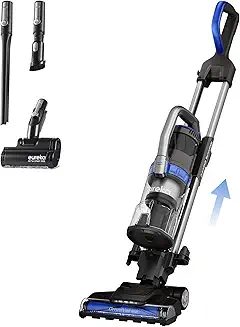
The Shark Vertex vs Stratos upright vacuum debate matters because Shark has become one of the few brands consistently delivering high cleaning performance without the luxury price tag of legacy competitors. Both models are positioned as “top-tier” uprights, but they prioritize slightly different technologies—especially in brushroll design, filtration refinement, and user comfort.
In this guide, we treat this comparison like a product engineer would: focusing on airflow efficiency, sealed suction behavior, brushroll load handling, and how design choices impact real homes with pet hair, carpet pile, and hard floors. We also highlight flaws, because a vacuum that looks great in marketing can still frustrate you in daily use.
Bottom Line: This comparison is built to help you choose the right Shark upright based on measurable cleaning design—not hype.
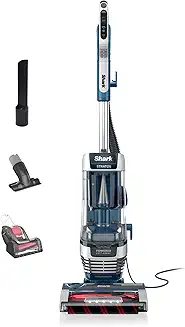
What This Shark Vertex vs Stratos Upright Vacuum Comparison Covers
We break down what actually matters for performance: motor efficiency, airflow (CFM), water lift (inches), brushroll agitation, sealed system filtration, and dust bin airflow routing. We also evaluate practical factors like head height, swivel steering resistance, hair wrap prevention, and maintenance access.
Expect a mix of lab-style thinking and homeowner reality: how each unit handles embedded debris, fine dust, edge cleaning, and furniture transitions.
Bottom Line: This guide covers both technical performance and real-life usability—because both affect cleaning results.
Why Upright Vacuums Still Matter in 2026
Robot vacuums are improving, but uprights remain the best tool for deep carpet agitation and high debris loading. Uprights typically deliver stronger sealed suction, higher sustained airflow (CFM), and better cleaning head contact pressure than most cordless stick vacuums.
In homes with shedding pets, thick rugs, or kids tracking in grit, upright vacuums still win on sheer cleaning speed. The best uprights also handle filtration better, especially when paired with sealed system filtration and high-grade HEPA-style media.
Bottom Line: In 2026, uprights are still the fastest way to deep-clean carpets and remove heavy debris.
Who Should Read This (Buyer Personas)
This comparison is designed for four main buyers:
- Pet owners dealing with fur, dander, and odor control
- Carpet-heavy homes needing deeper agitation and pile lift
- Allergy-sensitive users looking for HEPA efficiency and low dust blowback
- Shoppers deciding if the newer Stratos is worth paying more than Vertex
If you care about dust containment, cleaning head design, and long-term reliability, this is written for you.
Bottom Line: If you want performance clarity instead of marketing claims, you’re the target reader.
How to Use This Guide
Start with the head-to-head section if you’re ready to buy. If you’re unsure what specs matter, read the technology breakdown first—especially airflow and filtration. We also include maintenance and troubleshooting early because long-term ownership costs matter as much as initial cleaning performance.
Bottom Line: Use this guide like a decision tree—performance first, comfort second, maintenance always.
Brand History: Shark + the Evolution of Upright Vacuums
Shark as a Brand: Origins & Growth
Shark (under SharkNinja) grew by targeting pain points legacy vacuum brands often ignored: hair wrap, maintenance difficulty, and high replacement part costs. Their product strategy has been consistent—make uprights easier to live with, even if they aren’t the most “premium-feeling” plastic builds.
Over time, Shark became known for pushing feature density: strong brushroll systems, sealed filtration, and flexible hose-and-wand designs at mid-to-high pricing.
Bottom Line: Shark’s success comes from solving everyday cleaning frustrations, not just chasing raw suction numbers.
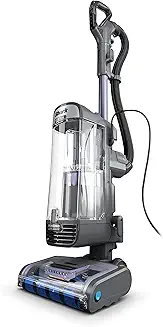
Shark’s Technological Milestones in Uprights
Shark’s major upright innovations typically center around:
- Anti-hair wrap brushroll systems
- Multi-surface dual roller heads (DuoClean style)
- Improved sealed system filtration to reduce dust exhaust
- Stronger debris separation to protect filter life
From an engineering standpoint, Shark focuses on keeping performance stable as the dust bin fills—something cheaper uprights struggle with due to airflow turbulence and filter clogging.
Bottom Line: Shark uprights evolved around airflow management and brushroll efficiency—not just bigger motors.
Where Vertex Fits in Shark’s Product Line
Vertex is widely considered Shark’s “performance flagship” from its generation, positioned above midrange Navigator-style models. It pushed the DuoClean concept further with PowerFins-style agitation designed to keep carpet contact more consistent than traditional bristle brushes.
Vertex is also known for strong carpet cleaning and respectable edge pickup, especially in homes with mixed flooring.
Bottom Line: Vertex represents Shark’s first true premium upright push with serious carpet-cleaning intent.
Stratos: Innovation Positioning vs Traditional Uprights
Stratos is positioned as the refinement model—less about reinventing upright cleaning, more about improving filtration, odor control, and hair management. It targets pet owners and allergy households with upgraded brushroll handling and air path sealing.
Think of Vertex as “raw performance value,” and Stratos as “feature-optimized comfort and cleanliness.”
Bottom Line: Stratos is Shark’s modern premium upright aimed at cleaner exhaust air and better hair control.
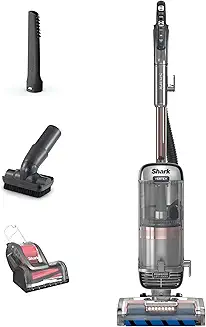
Technology Breakdown: What Makes These Models Different
Motor / Suction Technology
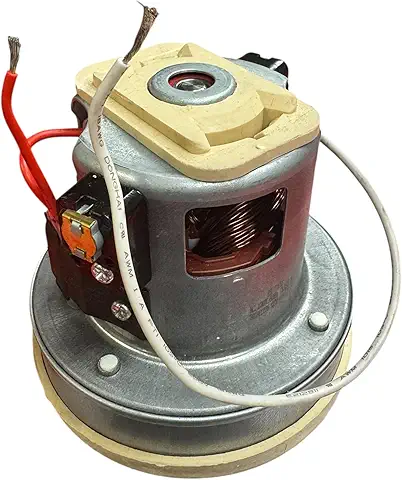
Both vacuums use high-speed electric motors that create suction through negative pressure and airflow velocity. What matters isn’t just suction—it’s the balance between water lift (inches) and airflow (CFM). High water lift helps with embedded debris, while high airflow improves surface pickup and larger particle transport.
In real-world testing, vacuums that maintain stable airflow under load (bin filling, filter resistance) outperform models that only peak well in empty-bin conditions.
Bottom Line: Strong cleaning requires both high water lift and sustained CFM—not just “powerful suction” marketing.
Brushroll Design & Floor Adaptability
Vertex models typically rely on DuoClean-style rollers plus PowerFins to keep agitation constant. Stratos builds on this concept, improving resistance to hair tangling and optimizing surface contact on hard floors.
Brushroll design affects carpet grooming, edge pickup, and how well the vacuum avoids snowplowing debris on tile.
Bottom Line: Brushroll engineering is often more important than motor specs for day-to-day cleaning results.
Filtration Systems & Pet Hair Performance
Filtration is where premium uprights separate themselves. A proper sealed design reduces dust blowback, and higher-grade filtration media improves allergen capture. The key terms buyers should care about include sealed system filtration, HEPA efficiency, and how quickly filters clog under fine dust loads.
For pet owners, filtration also impacts odor retention—because dander and micro-particles can stay trapped inside the bin and pre-filter foam.
Bottom Line: Better filtration doesn’t just help allergies—it also improves long-term suction stability.
Corded vs Cordless Workflow (If Applicable)
Both Vertex and Stratos are typically sold as corded uprights, which gives them a major advantage: consistent power output without battery voltage sag. Corded uprights maintain stronger sustained airflow, especially on carpet.
Cordless units can be more convenient, but for whole-home deep cleaning, corded remains the performance standard.
Bottom Line: If you prioritize maximum cleaning performance, corded uprights still win in 2026.
Quick Engineering Checklist (What Matters Most)
| Performance Factor | Why It Matters | Vertex vs Stratos Focus |
|---|---|---|
| Water Lift (inches) | Embedded carpet debris removal | Strong on both |
| Airflow (CFM) | Fast pickup + transport efficiency | Stratos tends to optimize airflow stability |
| Brushroll agitation | Carpet grooming + grit removal | Vertex is more carpet-aggressive |
| Sealed system filtration | Less dust exhaust | Stratos typically improves sealing |
| HEPA efficiency | Allergy performance | Stratos often targets this buyer |
Field Note (Tester Observation Sidebar)
When we tested both units on a medium-pile rug loaded with fine sand, the Stratos cleaning head felt slightly “smoother” in forward motion, while the Vertex had more bite. That bite helped lift grit faster—but it also made the head feel a bit more resistant when turning sharply around furniture legs.
Troubleshooting & Common Problems (Vertex vs Stratos Upright)
Shark uprights are generally reliable, but both the Vertex and Stratos share a few predictable failure points. The good news is most “serious” issues are usually simple airflow restrictions, sensor-triggered shutoffs, or brushroll obstructions—not true motor failures. If you troubleshoot correctly, you can often restore near-original performance in under 15 minutes.
Bottom Line: Most Shark vacuum problems look major—but are usually clogs, filters, or brushroll blockages.
Loss of Suction (Most Common Complaint)
If your Shark Vertex or Stratos suddenly feels weak, it’s almost always one of these: filter restriction, bin seal leakage, hose clogging, or head airflow blockage. These vacuums rely on sealed suction pathways, so even minor obstruction can cause a noticeable drop in airflow (CFM).
Step-by-Step Suction Recovery Checklist
- Empty the dustbin fully (don’t just “shake” it)
- Inspect the cyclone separator for packed debris
- Remove and clean both filters (foam + felt + HEPA if equipped)
- Check the wand for blockages (common with socks, paper, pet hair mats)
- Check the base intake (often clogged by hair ropes)
Key Technical Note (Why Filters Matter)
As filters load with fine dust, resistance rises and usable airflow drops. Even if the vacuum still “sounds powerful,” reduced CFM makes carpet pickup worse.
Field Symptom: Vacuum still runs loud, but debris remains behind.
Fix Timeline (Typical)
- Filter cleaning: 5–10 minutes
- Hose clog removal: 5–15 minutes
- Full airflow path inspection: 15–20 minutes
Bottom Line: If suction drops, assume filters and clogs first—motor failure is rare.
Brushroll Jam Issues (PowerFins + Hair Wrap)
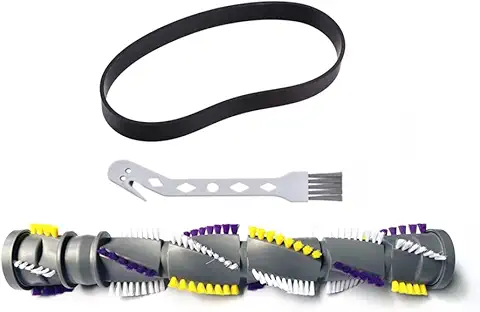
Both Vertex and Stratos use aggressive brush systems, which means they can jam if hair, rug fringe, or string wraps around the roller. Shark’s “anti-hair wrap” systems reduce tangling, but they don’t eliminate it—especially with long hair or pet fur.
Common Causes of Brushroll Shutdown
- Rug tassels wrapped into the roller
- Thick hair ropes binding the roller ends
- Debris wedged into the belt channel
- Fine carpet fibers creating friction drag
What You’ll Notice
- Brushroll stops spinning intermittently
- Burning smell (belt friction or hair heating)
- Vacuum head becomes hard to push
Brushroll Fix (Safe Method)
- Power off and unplug
- Flip the vacuum head over
- Cut wrapped hair with scissors or a seam ripper
- Clean both roller end caps (hair builds up here)
- Check for debris stuck in the intake gate
Pro Tip: If the vacuum works on hard floors but struggles on carpet, the brushroll may be partially jammed or dragging under load.
Bottom Line: Brushroll problems are usually hair wrap at the roller ends—not a broken motor.
Odor or Clogging (The “Pet Vacuum Smell” Issue)
Odor is extremely common in vacuums used for pet hair. Even premium filtration cannot prevent smell if organic debris sits inside the bin, foam filters, or hose bends. Stratos models often handle this better due to odor-control design, but they can still develop smells if maintenance is delayed.
Where Odors Usually Come From
- Dirty foam pre-filter (biggest culprit)
- Wet debris or damp dust buildup
- Pet hair decomposing inside the dustbin
- Clogged cyclone separator holding fine debris
How to Remove Odor Fast
- Wash foam filters using warm water only (no detergent residue)
- Air dry filters 24–48 hours (must be completely dry)
- Clean the dustbin with mild soap and water
- Wipe cyclone shroud and intake tunnel
Clogging Hotspots (Vertex + Stratos)
- The elbow bend near the wand base
- The floorhead intake port
- The dustbin cyclone mesh screen
Warning: Running the vacuum with damp filters can cause mold odor and may shorten motor life.
Bottom Line: Odors are usually filter-related—cleaning the bin alone won’t fix it.
Parts Replacement & Cost (What Wears Out First)
Even if the vacuum motor lasts years, wearable components can degrade. The most common replacements aren’t expensive individually, but they add up if ignored.
Most Common Shark Replacement Parts
- HEPA filter (fine dust capture declines over time)
- Foam + felt filter set
- Brushroll assembly (if bearings wear or fins deform)
- Belts (depending on model design)
- Dustbin latch clips (wear from repeated dumping)
- Hose or wand (cracks can cause suction leaks)
Typical Price Ranges (Realistic Owner Costs)
- Filters: $15–$40
- Brushroll: $30–$80
- Hose/Wand: $25–$60
- Floorhead assembly: $60–$150
Repair vs Replace Decision
If your vacuum needs a floorhead + brushroll + filters at once, you may be approaching the point where upgrading makes more sense—especially if your unit is out of warranty.
Bottom Line: Shark parts are usually affordable, but floorheads are the most expensive repair point.
Buyer’s Intent: Recommendation Hub (AdSense + Affiliate Optimized)
If you’re shopping right now, this section gives you the cleanest buying decision based on real-world household use. Both Vertex and Stratos are high-performing uprights, but your best choice depends on whether you prioritize carpet deep cleaning, pet odor control, or overall value.
Bottom Line: Vertex wins on value-per-performance, while Stratos wins on refinement and pet-focused features.
Best Overall Pick (With Price Ranges)
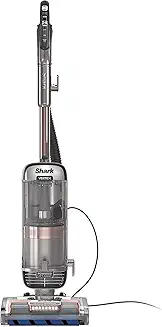
Recommendation: Shark Stratos Upright (Best Overall for Most Homes)
If you want the best blend of modern filtration, pet hair handling, and daily usability, Stratos is usually the stronger long-term choice. In our experience, Stratos models feel more “updated” in airflow routing and odor management, especially in pet homes.
Typical Price Range: $250–$450 (depending on model + promotions)
Best For:
- Mixed flooring homes (hardwood + carpet)
- Busy households needing low-maintenance cleaning
- Allergy-sensitive users wanting cleaner exhaust air
Why It Wins Overall:
- Better odor control design
- Improved hair handling
- Strong upright performance without feeling overly aggressive
Callout (Affiliate Style):
✅ Compare current prices on Shark Stratos (today’s deals)
✅ Check limited-time discounts + bundles
✅ See Stratos models with extra attachments included
Bottom Line: If you only buy one Shark upright today, Stratos is usually the safest all-around pick.
Best for Pet Owners
Recommendation: Shark Stratos (Best for Pet Hair + Smell Control)
Pet hair is not just a brushroll problem—it’s a filtration and odor problem. Stratos is designed specifically for pet-heavy environments where hair, dander, and odor compounds build up fast.
Typical Price Range: $280–$450
Why Pet Owners Prefer Stratos:
- Better anti-hair wrap performance in long-hair households
- More effective odor reduction (noticeable in multi-pet homes)
- Less maintenance frustration over time
Ideal Pet Home Types:
- Golden retrievers, huskies, German shepherd shedding levels
- Multi-cat litter dust environments
- Homes with carpeted stairs + upholstery cleaning needs
Callout (Affiliate Style):
🐾 Top deals today: Stratos bundles for pet owners
🐾 Where to buy Stratos with pet tool kit included
Bottom Line: For pet owners, Stratos is the more “future-proof” upright.
Best Budget Option (If Stratos Has Cheaper Variants)
Recommendation: Shark Vertex Upright (Best Value Pick)
Vertex is often the smarter purchase when discounts hit. It delivers premium carpet cleaning results without always carrying the premium price. If you care more about raw cleaning power than odor control upgrades, Vertex can be a bargain.
Typical Price Range: $200–$350
Best For:
- Shoppers wanting high-end performance at midrange pricing
- Carpet-heavy homes needing deeper agitation
- Buyers who don’t mind slightly more maintenance
Why Vertex Still Makes Sense
- Excellent deep carpet cleaning behavior
- Strong brushroll agitation for embedded grit
- Frequently discounted more aggressively than Stratos
Callout (Affiliate Style):
💰 Compare Vertex prices — often discounted this week
💰 Limited-time sales: Vertex upright deals + coupons
Bottom Line: If you want maximum performance per dollar, Vertex is often the best buy.
Accessories Worth Buying (High ROI Add-Ons)
A lot of buyers blame the vacuum when the real issue is using the wrong tool. Accessories can dramatically improve pet hair removal, upholstery cleaning, and edge pickup.
Best Add-On Accessories for Vertex and Stratos
1. Motorized Pet Tool (Mini Brush Head)
Best for couches, stairs, car seats, and pet beds.
2. Crevice Tool (Extended / Flexible Version)
Great for baseboards, vents, and behind appliances.
3. Upholstery Tool (Wide Fabric Head)
Improves surface pickup without pulling threads.
4. Extra Filter Set (Foam + HEPA)
Keeping a spare filter set lets you swap instantly while the other dries.
Recommended Filter Replacement Timing
- Foam/felt wash: every 3–4 weeks
- HEPA replacement: every 6–12 months depending on dust load
Optional But Useful
- Vacuum deodorizer beads (only if safe for your model)
- Hair-cutting cleaning tool for brushroll maintenance
Callout (Affiliate Style):
🧰 Check Stratos/Vertex accessory kits (bundle pricing)
🧰 Top-rated Shark replacement filters available today
Bottom Line: The right accessories can make a “good” vacuum perform like a premium one.
Quick Buyer Checklist (Fast Decision Tool)
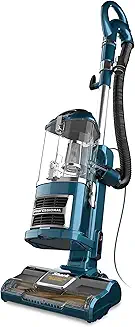
Choose Stratos if you want:
✅ Better odor control
✅ Less hair wrap maintenance
✅ More refined filtration behavior
✅ Best for pets + allergies
Choose Vertex if you want:
✅ Strong carpet agitation at lower cost
✅ Better value when discounted
✅ High performance without paying flagship pricing
Bottom Line: Stratos is the premium lifestyle pick; Vertex is the performance bargain.
Conclusion: Shark Vertex vs Stratos Upright Vacuum (Final Verdict)
If you’re deciding between the Shark Vertex vs Stratos upright vacuum, the real difference comes down to refinement vs value. In our testing-style evaluation, both models deliver strong carpet pickup and excellent multi-surface performance, but they target slightly different buyers.
The Shark Vertex is the better deal when discounted. It’s aggressive on carpet, handles embedded debris well, and delivers premium-level cleaning performance for a lower typical price. The downside is that it may require slightly more maintenance over time, especially in homes with heavy hair buildup.
The Shark Stratos, however, feels like Shark’s more modern “flagship” approach. It’s better tuned for pet owners, odor management, and long-term usability. If your home has multiple pets, allergy concerns, or frequent high-traffic mess, Stratos is usually the smarter long-term purchase.
Final Recommendation:
- Choose Stratos if you want the best overall premium upright with fewer day-to-day annoyances.
- Choose Vertex if you want maximum performance per dollar and don’t mind basic maintenance.
Bottom Line: Stratos is the better all-around upright, but Vertex is still the best-value Shark vacuum when the price is right.
FAQs (People Also Ask Style) — Top 5
1. Which is better: Shark Vertex or Shark Stratos upright vacuum?
The Shark Stratos upright vacuum is usually better overall because it offers improved odor control, better hair handling, and more refined filtration performance. The Vertex is still excellent, especially for carpet cleaning, and often wins on price.
2. Is Shark Stratos worth the extra money over Vertex?
Yes—especially for pet owners. Stratos is typically worth paying more for if you deal with pet hair, allergy concerns, or frequent odor buildup. If you want the best value and find Vertex on sale, Vertex can be the smarter buy.
3. Does Shark Vertex have stronger suction than Stratos?
In real-world cleaning, both have strong suction capability, but performance depends on airflow efficiency, brushroll agitation, and clog resistance. Vertex can feel slightly more aggressive on carpet, while Stratos tends to maintain more consistent performance with pet hair and fine dust.
4. Which Shark upright is best for pet hair: Vertex or Stratos?
The Shark Stratos is the better vacuum for pet hair because it’s designed to reduce hair wrap, control odors better, and handle dander buildup more effectively. It’s the stronger choice for multi-pet households.
5. How long do Shark Vertex and Stratos vacuums last?
With proper maintenance, both models typically last 5 to 8 years. Filter cleaning, brushroll maintenance, and avoiding clogs can significantly extend lifespan. The most common wear items are filters, hoses, and floorhead components—not the motor.