
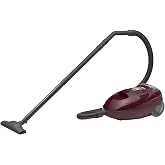
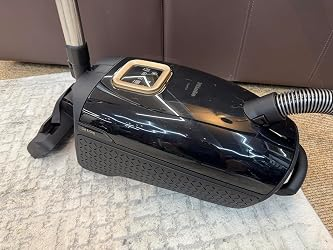
miele guard l1 cat & dog bagged canister vacuum is a premium corded cleaner designed for pet-owning households, combining adjustable suction, a dedicated TurboBrush, bagged dust containment, and Active AirClean filtration. It is particularly suitable for removing dog hair, cat hair, everyday debris, and pet-related odors from carpets, hard floors, and upholstery.
Is the Miele Guard L1 Cat & Dog Worth Buying?
The Miele Guard L1 Cat & Dog is designed around a simple idea: pet owners need more than basic suction. Animal hair can become embedded in carpets, trapped in upholstery, and mixed with fine dander that ordinary cleaning tools may struggle to handle effectively.
Instead of competing with cordless stick vacuums or robotic vacuum systems, this Miele uses a traditional corded canister design. Its focus is sustained cleaning performance, adjustable suction, a powered pet-hair attachment, and controlled dust collection.
The U.S. configuration includes a 1,200-watt PowerLine motor, 3.5-liter HyClean Pure TU dustbag, Active AirClean filter, four power settings, and approximately 36 feet of operating radius. The package also includes the STB 305-3 TurboBrush, which is specifically intended for stubborn dirt and animal hair.
The overall concept makes sense for larger homes and frequent cleaning. You get the continuous power of a corded vacuum rather than depending on battery runtime, while the bagged system provides a contained way to dispose of accumulated dirt and pet hair.
Bottom Line: The Guard L1 Cat & Dog is a premium pet-focused canister vacuum for buyers who prioritize cleaning performance, dust containment, and dedicated pet tools over cordless convenience or automated cleaning.
For pet households, the TurboBrush is one of the most important components. Suction alone does not always remove hair that has become tightly attached to carpet fibers or fabric. Mechanical agitation helps loosen that material before the airflow carries it into the vacuum.
The model is also suitable for mixed flooring. Adjustable suction gives you more control when switching from hard floors to rugs or carpets. Lower settings can be useful where excessive suction makes a lightweight rug difficult to maneuver, while stronger settings can be reserved for heavily soiled carpet.
There is an important filtration distinction to understand before purchasing. The standard Active AirClean filter should not automatically be described as a HEPA filter. Active AirClean focuses significantly on odor control, while HEPA filtration is specifically associated with high-efficiency particle capture.
Bottom Line: Pet owners should evaluate the exact filter configuration rather than assuming every Miele pet vacuum provides identical allergen filtration. Active AirClean and HEPA technology serve related but different purposes.
Miele Guard L1 Cat & Dog Overview and Key Specifications
Miele Guard L1 Cat & Dog at a Glance
The following specifications provide a useful starting point when evaluating the machine against other premium bagged canister vacuums.
| Specification | Miele Guard L1 Cat & Dog |
|---|---|
| Vacuum type | Bagged canister |
| Motor | PowerLine motor |
| Motor rating | 1,200 W |
| Dustbag | HyClean Pure TU |
| Bag capacity | 3.5 L |
| Exhaust filter | Active AirClean |
| Power settings | 4 |
| Weight | 15 lb / 6.6 kg |
| Cord length | 24 ft / 7.5 m |
| Operating radius | 36 ft / 11 m |
| Pet tool | STB 305-3 TurboBrush |
| Control type | Electronic suction adjustment |
| Vacuum format | Corded |
The combination of a large bag, long operating radius, adjustable power, and dedicated pet tool makes the specification sheet particularly relevant to whole-home pet cleaning.
What Comes in the Box?
Depending on the market and exact package configuration, the Cat & Dog version is supplied with accessories intended for general floor care and pet-related cleaning.
The most important attachment is the STB 305-3 TurboBrush. Its rotating brush is intended to loosen stubborn dirt and animal hair from suitable surfaces.
The standard accessory selection also includes tools for more detailed cleaning, including an upholstery nozzle, crevice nozzle, and dusting brush. These attachments make the vacuum more versatile than a machine designed exclusively for floors.
The HyClean Pure TU bag is another central component. Because this is a bagged vacuum, replacement bags are part of normal ownership rather than an optional accessory.
Who Is the Guard L1 Cat & Dog Designed For?
This vacuum is primarily aimed at:
- Dog owners dealing with regular shedding
- Cat owners dealing with hair and dander
- Multi-pet households
- Homes with carpets and hard floors
- Users who prefer bagged filtration
- Buyers seeking a premium corded canister
- Households where odor control matters
- Users who want dedicated upholstery and pet-hair tools
It is less compelling for someone who only wants a lightweight vacuum for quick daily spills. A cordless stick model may be easier for that type of task.
First Impressions of the Design and Build
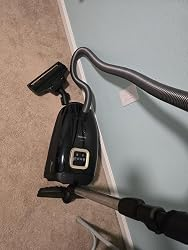
The Guard L1 follows the classic Miele canister-vacuum philosophy. The main motor unit remains on the floor while the user controls cleaning through the hose, wand, and floorhead.
This arrangement distributes much of the machine’s weight away from the user’s hand. You are primarily moving the wand and floorhead rather than repeatedly lifting a full-size vacuum body.
The canister also uses caster wheels to help it follow the user around the room. That is particularly useful during longer cleaning sessions because the machine can be pulled behind rather than carried.
Bottom Line: The Guard L1’s design is intentionally conventional. It gives up cordless and autonomous features in exchange for sustained corded operation, flexible attachments, and a traditional canister cleaning experience.
Miele Guard L1 Cat & Dog Cleaning Technology Explained
PowerLine Motor and Suction Control
The PowerLine motor provides the main airflow and suction generated by the machine. For a canister vacuum, however, motor power alone does not determine cleaning performance.
Airflow, floorhead design, agitation, filtration, and the condition of the dustbag all influence how effectively debris travels from the surface into the collection system.
The four adjustable power levels are therefore important. Different surfaces can require different levels of suction, and using maximum power everywhere is not necessarily the best cleaning strategy.
Four Cleaning Power Modes
The adjustable power control can be useful across several common household surfaces.
For hard floors, moderate suction can provide effective debris pickup without making the floorhead unnecessarily difficult to move.
Area rugs may benefit from lower suction, particularly if they are lightweight and tend to move when vacuumed. Carpet generally allows stronger suction, although the ideal setting depends on pile height and floorhead configuration.
Upholstery and delicate materials require additional care. Excessive suction can make some fabrics difficult to clean comfortably, so adjustable control gives the user more flexibility.
TurboBrush Technology for Pet Hair
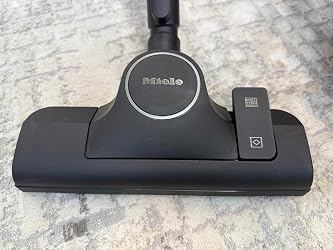
The STB 305-3 TurboBrush is arguably the defining feature of the Cat & Dog package.
A powered brush does more than simply create suction. Its rotating agitation helps loosen hair and debris that may be attached to carpet fibers or upholstery.
That becomes especially important with long-haired pets. Hair can form small clusters and become woven into fabric, making passive suction less effective.
Bottom Line: The TurboBrush adds mechanical agitation to the cleaning process, making the Cat & Dog configuration more appropriate for serious pet-hair removal than a basic floorhead alone.
Canister Maneuverability and Floor-Care Design
Miele’s canister architecture allows the user to control the cleaning head separately from the motor housing.
Features such as the telescopic wand help adjust reach, while caster wheels allow the canister to follow during cleaning.
The automatic cord rewind is another convenience feature. After cleaning, the power cable can be retracted into the machine instead of being manually wrapped around the canister.
The park system is useful during pauses because the wand or floorhead can be positioned securely rather than simply placed on the floor.
Field Note: One practical benefit of the canister format is that detailed cleaning can feel less cumbersome than using a full upright. Once the hose and wand are connected, you can move around furniture and direct the cleaning head into narrow spaces without pushing the entire motor housing.
Miele Guard L1 Cat & Dog Pet-Hair Cleaning Performance
How Well Does It Pick Up Dog Hair?
Dog hair presents different challenges depending on its length, texture, and the surface where it accumulates.
Short hair may sit relatively close to the carpet surface, while longer hair can wrap around fibers or collect in corners. A vacuum needs sufficient airflow plus mechanical agitation to address both situations.
The TurboBrush is particularly useful for stubborn hair because its rotating brush works the surface while suction removes the loosened material.
For homes with heavy shedding, frequent vacuuming remains important. No vacuum should be expected to remove every accumulated hair with a single slow pass if the carpet has not been cleaned for an extended period.
Cat Hair, Dander and Fine Debris
Cat hair can be surprisingly difficult because it is lightweight and often spreads beyond obvious pet resting areas.
Fine dander introduces another challenge. While visible hair is easy to recognize, microscopic particles can become distributed across carpets, upholstery, and other household surfaces.
The bagged design helps contain the collected material once it reaches the dustbag. This is one reason some allergy-conscious users prefer a bagged vacuum over a bagless system that requires opening and emptying a dust container.
Carpet and Area-Rug Performance
Carpet is where the pet-focused configuration becomes especially useful.
The TurboBrush can help loosen embedded animal hair from low- and medium-pile carpet. However, higher-pile carpet can behave differently because hair may settle deeper into the fibers.
Area rugs require more care. Some lightweight rugs can move under strong suction, so the adjustable power control is useful for reducing suction when necessary.
For embedded pet hair, slower passes generally give the brush more opportunity to agitate the fibers rather than rushing across the surface.
Bottom Line: The Guard L1 Cat & Dog is best suited to users who are willing to use the appropriate attachment and cleaning technique. The TurboBrush is more important to pet-hair performance than simply increasing motor power.
Upholstery and Furniture Cleaning
Pet owners should not limit their vacuum routine to floors.
Sofas, chairs, pet beds, cushions, and fabric-covered furniture can accumulate considerable amounts of hair. These surfaces are also places where hair can become trapped between seams.
The included upholstery-oriented tools make it possible to clean these areas without using the main floorhead.
The TurboBrush can be particularly useful on appropriate fabric surfaces where pet hair has become embedded.
Stairs can also benefit from the canister configuration because the user can carry or position the canister while working with the hose and wand.
Filtration, Dust Containment and Pet Odor Control
Active AirClean Filter Explained
The Active AirClean filter is designed to help neutralize unpleasant odors.
This is especially relevant in pet households because vacuum cleaners can collect hair, dander, food particles, and other organic debris that may contribute to unpleasant smells inside the machine.
Activated-carbon-based filtration is useful for odor management, but it should not be confused with HEPA filtration.
The filter’s role is therefore different from simply maximizing particle filtration efficiency.
Bagged Filtration and Dust Containment
The Guard L1 uses a disposable HyClean Pure TU dustbag rather than a reusable dust container.
One advantage is reduced direct contact with collected dirt. Once the bag is full, the user can remove it and install a replacement rather than dumping loose debris from an open container.
That can be particularly attractive for pet owners because vacuum bags may contain a mixture of hair, fine dust, dander, and other debris.
The downside is recurring consumable cost. Unlike a bagless vacuum, this system requires compatible replacement bags throughout its service life.
Pet Dander and Indoor Air Quality
Vacuuming can reduce the amount of settled dust and pet debris on household surfaces, but a vacuum should not be treated as a complete indoor-air-quality solution.
Pet dander can remain on fabrics and surfaces even after visible hair has been removed. Regular cleaning of carpets, upholstery, bedding, and pet resting areas is therefore important.
A well-maintained filtration system also matters. Filters that become excessively loaded can affect airflow and overall performance.
Active AirClean vs HEPA Filtration
This is one of the most important distinctions when evaluating the machine.
Active AirClean is primarily associated with odor reduction, while HEPA filtration is designed for high-efficiency capture of very small airborne particles.
Therefore, calling the standard Active AirClean filter a HEPA filter would be inaccurate.
Buyers concerned specifically about allergies should check the exact configuration available in their country and whether a compatible HEPA-grade filter option is offered.
Independent testing also demonstrates why filter configuration matters. Different Miele models and configurations can produce noticeably different particle-filtration results.
Bottom Line: Active AirClean is a useful feature for pet odors, but buyers seeking maximum particle filtration should verify whether their exact Guard L1 configuration supports the filtration level they require.
Miele Guard L1 Cat & Dog Design, Usability and Everyday Experience
Canister Weight and Maneuverability
The machine weighs approximately 15 pounds / 6.6 kg, which is substantial compared with lightweight cordless stick vacuums.
However, the body weight is not constantly carried during normal floor cleaning. The canister remains on its wheels while the user handles the hose and wand.
That can make the machine more comfortable for longer floor-cleaning sessions than its headline weight might suggest.
Cord Length and Cleaning Radius
The approximately 24-foot cord contributes to an operating radius of around 36 feet.
A long operating radius matters in larger homes because fewer outlet changes are required.
The trade-off is that the user still needs to manage the cable. This is fundamentally different from a cordless vacuum, where the main limitation is battery runtime rather than outlet access.
Foot Controls and Suction Adjustment
Foot-operated controls can make everyday operation easier because the user does not necessarily need to bend down to adjust the vacuum.
The four power levels allow cleaning intensity to be changed according to the surface.
This is especially useful when moving between hard flooring, rugs, and carpet during one cleaning session.
Storage, Parking and Onboard Accessories
The park system provides a convenient place to secure the wand or floorhead during temporary pauses.
The automatic cord rewind also reduces storage effort after cleaning.
Accessory organization is important with a canister vacuum because different cleaning tasks may require different tools.
Bottom Line: The Guard L1 is not the smallest or lightest premium vacuum, but its long operating radius, canister mobility, adjustable suction, and accessory system make it well suited to deliberate whole-home cleaning.
Miele Guard L1 Cat & Dog vs Other Miele Vacuums
Guard L1 Cat & Dog vs Miele Complete C3 Cat & Dog
The Complete C3 Cat & Dog is one of the most obvious alternatives because both models target pet owners and use Miele’s premium canister-vacuum architecture.
The Guard L1 represents a newer product generation, while the Complete C3 has a long-established reputation among Miele users.
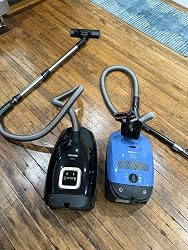
Independent testing has shown that performance can vary considerably between configurations. In one comparison, the tested Guard L1 configuration demonstrated substantially stronger measured suction and particle filtration, while the Complete C3 showed advantages in certain pet-hair cleaning tests.
| Category | Guard L1 Cat & Dog | Complete C3 Cat & Dog |
|---|---|---|
| Design | Bagged canister | Bagged canister |
| Pet focus | Dedicated | Dedicated |
| TurboBrush | STB 305-3 | Pet-focused floorhead/tool configuration |
| Suction control | 4 settings | Multi-level electronic control |
| Dust collection | Bag | Bag |
| Main advantage | Newer platform | Established premium platform |
| Best for | Buyers wanting newer design | Buyers finding a strong C3 deal |
The better choice depends on pricing, exact configuration, floorheads, filtration, and availability.
Guard L1 Cat & Dog vs Miele Classic C1 Cat & Dog
The Classic C1 generally occupies a more traditional and potentially lower-cost position within Miele’s canister lineup.
The Guard L1 is the more attractive option for buyers who want newer design features and a larger overall operating radius.
The Classic C1 can make sense for buyers who prioritize simplicity and value.
The Guard L1 is more compelling when long-term usability, pet-focused equipment, and newer platform design are higher priorities.
Guard L1 Cat & Dog vs Other Guard-Series Models
The Cat & Dog configuration should be understood as a specialized version aimed at homes where animal hair and odor are meaningful cleaning concerns.
Not every Guard model needs the same accessory configuration. A household without pets may have little reason to pay extra for specialized pet tools.
For pet owners, however, the dedicated TurboBrush can provide a practical advantage.
Which Miele Vacuum Is Best for Pet Owners?
There is no universal winner because household conditions vary.
Best for dedicated pet cleaning: Guard L1 Cat & Dog
Best for buyers who find a strong premium deal: Complete C3 Cat & Dog
Best for simpler/value-focused ownership: Classic C1 Cat & Dog
Best for maximum filtration: Choose the configuration with the appropriate verified filtration system rather than relying solely on model names.
Bottom Line: The Guard L1 is not automatically better than every older Miele. Its strongest argument is its combination of newer platform design, pet-focused accessories, adjustable suction, and strong overall cleaning architecture.
Miele Guard L1 Cat & Dog vs Competing Pet Vacuums
Miele Guard L1 vs Dyson Pet Vacuums
Dyson’s biggest advantage is often cordless convenience and lightweight operation.
The Miele takes the opposite approach. It uses a corded canister architecture, allowing continuous operation without worrying about battery runtime.
For users cleaning an entire house, sustained corded operation can be an advantage.
For quick daily cleaning, a cordless Dyson may be more convenient.
The Miele’s bagged design also creates a different ownership experience from Dyson’s bagless approach. Some users prefer the cleaner disposal process of a sealed dustbag.
Miele Guard L1 vs Shark Pet Vacuums
Shark offers a wide variety of pet-oriented vacuum designs, often emphasizing flexibility and aggressive floor-level cleaning.
The Miele differentiates itself through its premium canister format, bagged dust collection, adjustable suction, and long-established focus on filtration and floor-care engineering.
Price is another major consideration. Shark often provides lower-cost options, while Miele’s value proposition depends more heavily on build quality, filtration, accessories, and long-term ownership.
Bagged Miele vs Bagless Competitors
| Factor | Bagged Miele | Bagless Competitor |
|---|---|---|
| Dirt disposal | Replace bag | Empty dust container |
| Direct dust exposure | Generally lower | Potentially higher |
| Recurring consumables | Bags + filters | Filters and other parts |
| Dust capacity | Large bag | Varies |
| Pet-hair disposal | Contained in bag | Loose debris in bin |
| Maintenance | Bag/filter replacement | Bin and filter cleaning |
| Convenience | Good for contained disposal | Convenient if avoiding bags |
Neither system is universally better.
Bagged systems are particularly attractive to users who dislike emptying dusty containers. Bagless systems may appeal to buyers who want to avoid purchasing replacement bags.
Which Type of Pet Vacuum Makes More Sense?
Choose a premium bagged canister when:
- You have multiple pets.
- You clean frequently.
- You want strong corded performance.
- You prefer contained dust disposal.
- Your home has substantial carpet or upholstery.
- You value dedicated pet tools.
A cordless stick may make more sense when:
- You primarily clean small areas.
- You want maximum portability.
- You dislike managing power cords.
- Quick daily cleaning is more important than long sessions.
A robotic vacuum may complement rather than replace a canister vacuum in some homes, particularly for automated maintenance between deeper manual cleaning sessions.
Bottom Line: The right vacuum depends on cleaning behavior as much as raw specifications. The Guard L1 is strongest when you want a serious manual whole-home cleaner rather than a lightweight or autonomous maintenance machine.
Miele Guard L1 Cat & Dog Maintenance and Running Costs
When Should You Replace the HyClean Pure TU Bag?
The 3.5-liter HyClean Pure TU bag provides substantial collection capacity, but actual replacement frequency depends on household size, pet count, shedding, cleaning frequency, and debris levels.
A home with several shedding pets can fill a bag much faster than a small apartment with one short-haired pet.
Do not wait until airflow becomes severely restricted if the machine provides a bag-full indication. A heavily loaded bag can affect cleaning performance.
Filter Replacement and Cleaning
The filtration system requires routine attention.
The Active AirClean filter should be replaced according to the manufacturer’s recommended schedule or when its odor-control performance declines.
The motor protection filter also plays an important role because it helps protect the vacuum’s motor from fine debris.
Users should follow the official replacement instructions rather than relying on arbitrary intervals.
TurboBrush and Brushroll Maintenance
Pet hair naturally accumulates around rotating brush components.
Inspect the TurboBrush regularly, especially if you have long-haired pets.
Remove wrapped hair carefully and check the brushroll for obstruction. Hair buildup can eventually interfere with rotation and reduce cleaning effectiveness.
The nozzle should also be checked for trapped debris.
Long-Term Ownership Costs
The purchase price is only one part of ownership.
Plan for:
- Replacement dustbags
- Exhaust filters
- Motor protection filters
- Occasional accessory replacement
- Brush maintenance
- Potential professional repairs
Miele has stated that the Guard series underwent development testing equivalent to many years of use. That is a manufacturer durability claim, not a guarantee that every individual vacuum will operate for a specific number of years.
Bottom Line: The Guard L1 can make sense as a long-term investment, but buyers should include bags and filters in their ownership budget rather than evaluating only the initial purchase price.
Miele Guard L1 Cat & Dog Troubleshooting Guide
Why Has the Vacuum Lost Suction?
Start with the simplest possibilities.
Check whether the dustbag is full and whether the filters require replacement. Next, inspect the hose, wand, and floorhead for blockages.
Also check the attachment currently being used. A blocked crevice tool or floorhead can create the impression that the entire vacuum has lost suction.
If airflow remains poor after these checks, professional service may be appropriate.
Why Isn’t the TurboBrush Picking Up Pet Hair?
Inspect the brushroll first.
Long pet hair can wrap around rotating components and prevent effective agitation. Remove accumulated hair and check whether the nozzle has become blocked.
Also verify that the vacuum is operating at an appropriate suction setting.
If the brush mechanism itself is not functioning correctly, increasing suction will not necessarily solve the problem.
Why Is the Vacuum Making Unusual Noise?
Unusual sounds can indicate an obstruction or mechanical problem.
Inspect the floorhead, hose, and wand for trapped objects. Check the TurboBrush for hair wrapped around its rotating components.
A sudden change in motor noise should be treated more seriously, particularly if accompanied by reduced suction or a burning smell.
If basic blockage checks do not identify the cause, stop using the vacuum and consult qualified service personnel.
Why Does the Vacuum Smell?
Pet debris can create odors inside a vacuum over time.
First check the dustbag. A heavily loaded bag may produce unpleasant smells, particularly in homes with multiple pets.
Next inspect the Active AirClean filter and brushroll.
A persistent burning smell is different from an ordinary dusty or pet odor. In that situation, discontinue use and investigate the machine before continuing.
Bottom Line: Most basic performance problems should be approached systematically: check the bag, inspect airflow paths, examine the floorhead and TurboBrush, and verify filter condition before assuming there is a motor failure.
Miele Guard L1 Cat & Dog Pros and Cons
Major Advantages
Pros
- Strong corded cleaning architecture
- Dedicated STB 305-3 TurboBrush
- Four suction settings
- Large 3.5-liter dustbag
- Active AirClean odor filtration
- Approximately 36-foot operating radius
- Bagged dust containment
- Useful accessory selection
- Suitable for mixed flooring
- Good option for serious pet owners
Important Disadvantages
Cons
- Premium purchase price
- Ongoing replacement-bag costs
- Cord management required
- Heavier than many cordless stick vacuums
- TurboBrush needs periodic maintenance
- Less convenient for quick spot cleaning
- Standard Active AirClean should not automatically be considered HEPA filtration
Who Should Buy It?
The Guard L1 Cat & Dog is a strong match for serious pet owners who vacuum regularly and want a traditional premium canister.
It is particularly suitable for homes with a combination of carpets, hard floors, rugs, upholstery, and pet resting areas.
Buyers who prefer sealed dust disposal may also appreciate the bagged design.
Who Should Skip It?
Consider another format if your priority is an extremely lightweight vacuum for quick cleanups.
It may also be unnecessary for buyers who have no pets and do not need the specialized TurboBrush or odor-control features.
Cordless buyers should also understand that this machine cannot provide the grab-and-go convenience of a battery-powered stick vacuum.
Bottom Line: The Guard L1 Cat & Dog earns its premium positioning primarily through the complete cleaning system rather than one headline specification. Pet tools, filtration, suction control, bagged collection, and long operating range work together.
Buyer’s Intent — Is the Miele Guard L1 Cat & Dog Worth Buying?
Best Reasons to Buy the Guard L1 Cat & Dog
The strongest reason to buy this model is its specialization.
If your home contains pets that shed regularly, the dedicated TurboBrush can be more useful than a generic vacuum configuration.
The bagged system is another strong reason. Users who dislike emptying dusty bins may prefer removing a filled bag and disposing of it.
Continuous corded operation is also valuable for large homes where cleaning can take considerable time.
Situations Where a Cheaper Vacuum Makes More Sense
A less expensive vacuum may be the better investment if your home has limited carpet, few pets, and relatively low cleaning demands.
You also may not need a premium canister if most of your cleaning consists of small daily messes.
Similarly, buyers who strongly prefer cordless convenience may receive more practical value from a quality cordless stick vacuum.
Best Alternatives to Consider
| Alternative | Best For | Main Reason to Consider |
|---|---|---|
| Miele Classic C1 Cat & Dog | Value-conscious Miele buyers | Simpler premium canister approach |
| Miele Complete C3 Cat & Dog | Established Miele platform | Strong pet-focused alternative |
| Dyson pet vacuum | Cordless convenience | Lightweight grab-and-go cleaning |
| Shark pet vacuum | Flexible value | Broad range of pet-focused models |
| Premium bagged canister | Long-term manual cleaning | Large capacity and contained disposal |
The important point is not to select an alternative simply because it has a higher advertised suction number.
Look at the entire system: floorhead, agitation, filtration, airflow, dust capacity, maintenance, usability, and actual cleaning requirements.
Final Buying Decision
Buy the Guard L1 Cat & Dog if: you own pets, want a premium corded cleaner, prefer bags, and need dedicated tools for animal hair.
Consider alternatives if: you want cordless convenience, have a smaller home, or need a lower-cost vacuum.
Choose another Miele configuration if: you do not need specialized pet-hair equipment.
Bottom Line: For the right household, the Guard L1 Cat & Dog is worth considering because its strengths align closely with demanding pet-cleaning tasks. Its value is weaker if convenience and low ownership cost are more important than deep manual cleaning.
Final Verdict — Should You Buy the Miele Guard L1 Cat & Dog?
Overall Performance Verdict
The Miele Guard L1 Cat & Dog is a thoughtfully configured premium canister vacuum for pet-owning households.
Its biggest strengths are not based on gimmicky technology. Instead, the machine combines adjustable suction, a dedicated TurboBrush, bagged collection, odor-focused filtration, and a long operating radius.
Best Use Cases
It is particularly well suited to:
- Homes with shedding dogs
- Homes with cats
- Multi-pet households
- Carpet-heavy homes
- Mixed-floor homes
- Upholstery cleaning
- Frequent whole-home vacuuming
- Users who prefer bagged systems
Value and Long-Term Ownership Verdict
The main question is whether you will actually benefit from its premium configuration.
If you have several pets and vacuum frequently, the dedicated pet equipment and bagged system can justify spending more.
If you live in a small apartment and primarily need quick daily cleaning, a lightweight cordless model may be more practical.
Final Recommendation
BUY: If you want a premium, corded, bagged canister specifically suited to pet hair and whole-home cleaning.
CONSIDER: If you are comparing it against the Complete C3, Classic C1, Dyson, or Shark and price is a major factor.
SKIP: If cordless convenience, ultra-lightweight handling, or automated cleaning is more important than deep manual cleaning.
Final verdict: The Miele Guard L1 Cat & Dog is a strong choice for pet owners who want a serious manual floor-care machine rather than a smart or autonomous cleaner. Its combination of pet-focused agitation, adjustable suction, contained dust collection, and odor control gives it a clear purpose—and for the right household, that specialization is what makes the premium price easier to justify.
Frequently Asked Questions — Miele Guard L1 Cat & Dog
Is the Miele Guard L1 Cat & Dog good for pet hair?
Yes. Its pet-focused configuration includes the STB 305-3 TurboBrush, which is designed to help remove stubborn dirt and animal hair. Its effectiveness will still depend on surface type, hair quantity, and cleaning technique.
Does the Miele Guard L1 Cat & Dog have a HEPA filter?
The standard configuration uses an Active AirClean filter, which should not automatically be described as HEPA. Buyers seeking HEPA-level filtration should verify the exact model and compatible filter configuration available in their market.
What bags does the Miele Guard L1 Cat & Dog use?
The specified configuration uses HyClean Pure TU dustbags. Always verify compatibility before purchasing replacement bags because Miele uses different bag types across product families.
How often should I change the Miele Guard L1 vacuum bag?
There is no universal interval. Replacement depends on pet count, shedding, cleaning frequency, home size, and debris levels. Replace the bag when the vacuum indicates that it is full or when performance begins to decline.
Is the Miele Guard L1 better than the Complete C3?
Not in every situation. Independent testing has shown performance differences between configurations, with the Guard L1 demonstrating advantages in some suction and filtration measurements while the C3 can perform strongly in certain pet-hair tests. Compare the exact configurations rather than assuming the newer model wins every category.
Is the Miele Guard L1 worth the money?
It can be worth the premium for pet owners who want a durable-feeling corded canister, dedicated pet tools, bagged dust collection, adjustable suction, and long operating range. Buyers focused primarily on low price or cordless convenience may find better value elsewhere.
Can the Miele Guard L1 clean hardwood floors?
Yes. The canister format and adjustable suction make it suitable for hard-floor cleaning when used with the appropriate floorhead and setting.
Can the Miele Guard L1 remove embedded dog hair from carpet?
It is designed to address animal hair, and the TurboBrush provides mechanical agitation that can help loosen embedded hair. Severely embedded hair may require multiple passes and slower cleaning.
How long does a Miele Guard L1 last?
Actual lifespan depends on usage, maintenance, and service conditions. Miele has made long-term durability claims for the Guard series, but those claims should not be interpreted as a guaranteed lifespan for every individual machine.
Is the Miele Guard L1 good for allergies?
The bagged system provides contained dust collection, which can be useful for users concerned about exposure during emptying. However, allergy-focused buyers should verify the exact filtration configuration rather than assuming that Active AirClean is equivalent to HEPA filtration.
Why is my Miele Guard L1 losing suction?
Check the dustbag, hose, wand, floorhead, and filters for blockages or excessive loading. A full bag or restricted airflow is one of the first things to investigate.
What is the difference between Miele Guard L1 Cat & Dog and Classic C1?
The Guard L1 represents a newer platform and offers a different combination of design, operating range, controls, and accessories. The Classic C1 is a more traditional option that can appeal to buyers prioritizing simplicity and value.