
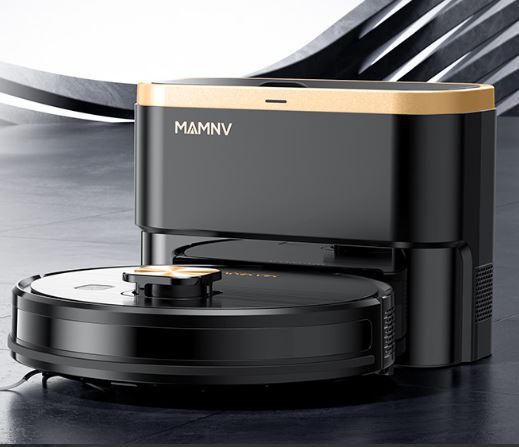
MAMNV robot vacuum and mop combo reviews show that the brand offers budget-focused robotic vacuums with very different capabilities depending on the model. The BR151 emphasizes simple 2-in-1 cleaning, while the D13S MAX adds LiDAR navigation, multi-floor mapping, and an auto-empty dock for more automated floor care.
MAMNV Robot Vacuum and Mop Combo Review at a Glance
MAMNV occupies an interesting position in the robot vacuum market. Instead of competing only through premium automation, the brand focuses on bringing useful robotic cleaning features into less expensive machines.
The important point for shoppers is that MAMNV should not be evaluated as one single specification set. Its models can differ considerably in navigation, suction, docking, battery runtime, dust capacity, and mopping design.
For example, the MAMNV BR151 is a relatively simple robot vacuum and mop designed for hard floors and low-pile carpet. MAMNV lists 1,400Pa suction, 200ml dust-box capacity, 230ml water-tank capacity, and 100 minutes of working time for this model.
The D13S MAX moves into a more advanced category. It uses spinning LiDAR navigation, supports multi-level maps, and includes an auto-empty station. Independent testing also found that its vacuuming and navigation performance were considerably stronger than its mopping performance.
What Is MAMNV?
MAMNV is a robot-vacuum brand focused on automated vacuuming and mopping for everyday household floors.
Its product range includes 2-in-1 robotic vacuum systems that can vacuum debris and perform wet mopping in the same overall cleaning ecosystem.
The brand’s current website highlights the BR151 and D13S MAX as robot vacuum and mop products.
The appeal is straightforward: instead of manually vacuuming every day, a homeowner can schedule an autonomous cleaner to handle routine dust, crumbs, and floor debris.
However, the amount of automation depends heavily on the exact model.
What Does a MAMNV Robot Vacuum Do?
A MAMNV robotic vacuum can combine several household-cleaning functions:
- Automated vacuuming
- Wet mopping
- Automatic charging
- Scheduled cleaning
- Smartphone control on supported models
- Voice-assistant integration on supported models
- Automatic dust collection on models equipped with an auto-empty dock
- Mapping and room navigation on more advanced models
This makes the system useful for maintenance cleaning rather than replacing every type of traditional floor cleaning.
A robot can collect everyday dust and debris while you’re working, sleeping, or away from home. The mop function can then provide a light wipe across suitable hard floors.
Who Are MAMNV Robot Vacuums Designed For?
MAMNV models can make sense for apartment owners, busy households, hard-floor homes, and shoppers looking for an inexpensive automated floor cleaner.
They’re particularly interesting for people who want routine vacuuming without paying flagship-brand prices.
However, households with lots of cables, toys, long hair, heavy pet debris, or demanding mopping requirements should examine the individual model carefully.
Quick Pros and Cons
Pros
- 2-in-1 vacuuming and mopping
- Automatic cleaning
- Budget-oriented pricing
- App/voice controls on supported models
- LiDAR available on the D13S MAX
- Multi-floor mapping on the D13S MAX
- Auto-empty docking on the D13S MAX
Cons
- Features vary substantially by model
- Basic models have simpler navigation
- Mopping performance can be limited
- Obstacle avoidance isn’t necessarily equivalent to LiDAR navigation
- Hair management can require frequent maintenance
- App experience may not match larger established brands
Bottom Line: MAMNV is best viewed as a model-by-model value brand. The D13S MAX is considerably more sophisticated than the basic BR151, so buyers should never assume that one MAMNV model represents the performance of the entire lineup.
MAMNV Robot Vacuum Technology Explained
Technology is where the biggest differences between MAMNV models become apparent.
A modern robot vacuum is more than a motor and spinning brush. Navigation, sensors, airflow, battery management, mapping, software, and floor-cleaning mechanics all influence the final result.
Navigation and Mapping Technology
The BR151 uses random-route and Z-shape navigation, according to MAMNV’s published specifications. That approach is fundamentally different from LiDAR-based robotic mapping.
The D13S MAX, meanwhile, uses a top-mounted LiDAR system. Independent testing found that its navigation efficiency was one of its strongest characteristics, and the machine supports multi-floor mapping.
This distinction matters because navigation determines how efficiently a robot covers your home.
A random-navigation robot may eventually cover an area, but its route can be less systematic. A mapped robot can understand the layout and create more organized cleaning paths.
SLAM mapping is another term shoppers may encounter in robot-vacuum research. SLAM, or simultaneous localization and mapping, refers broadly to a robot building and updating an understanding of its environment while determining its position.
However, you shouldn’t automatically assume that every robot marketed as “smart” uses the same mapping architecture. Always check the exact model documentation.
Suction Power and Cleaning System
Suction is one of the most heavily advertised robot-vacuum specifications.
MAMNV lists 1,400Pa suction for the BR151 and 11,500Pa official suction power for the D13S MAX.
But Pa alone doesn’t tell the complete cleaning story.
Actual pickup depends on airflow, brush design, floor contact, suction-path design, navigation, debris type, and how efficiently the robot moves over the floor.
Independent testing of the D13S MAX measured 2.64kPa suction and 21 CFM airflow, with the airflow result exceeding the test average cited by the tester.
This is why a technically minded review should separate advertised specifications from measured performance.
Sensors and Obstacle Detection
Robot vacuums use sensors to determine where they are and how they should move.
Depending on the model, these can include:
- Infrared sensors
- Cliff sensors
- Wheel sensors
- Bumper sensors
- LiDAR
- Drop detection
- Charging sensors
One important distinction is navigation versus AI obstacle avoidance.
LiDAR can create an accurate map and help a robot navigate around larger objects, but that doesn’t automatically mean the robot can recognize small objects such as socks, cables, toys, or pet waste.
The D13S MAX is a useful example. Independent testing found that it had LiDAR navigation but no true obstacle avoidance, meaning users should tidy floor clutter before running it.
App, Wi-Fi and Voice Controls
Smart-home integration can make a robot vacuum much more convenient.
The BR151 is listed with Wi-Fi/app/Alexa functionality and supports 2.4GHz Wi-Fi according to its published specifications.
Depending on the model and software environment, users may be able to:
- Start or stop cleaning
- Schedule cleaning
- Select cleaning modes
- Control rooms
- Create no-go areas
- Edit maps
- Connect voice assistants
Independent D13S MAX testing found support for scheduling, map editing, no-go zones, Alexa, and Google Assistant.
Bottom Line: Don’t confuse a smart app with premium automation. The D13S MAX demonstrates that an inexpensive robot can offer LiDAR and smart-home integration while still lacking advanced AI obstacle avoidance and premium mopping hardware.
MAMNV Robot Vacuum Cleaning Performance
Vacuuming is ultimately more important than a long feature list.
A robot can have impressive app controls and mapping but still disappoint if it leaves debris behind.
Performance on Hardwood and Tile Floors
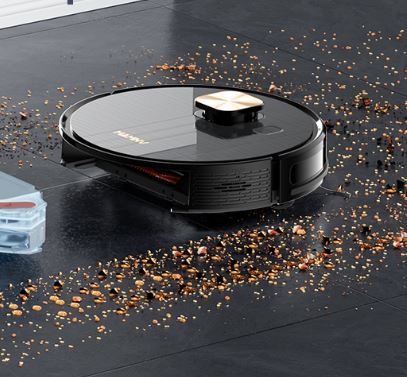
Hard floors are generally a natural environment for robotic vacuum systems.
Dust, crumbs, hair, and small debris are accessible to the side brush and main brush without the same deep penetration issues associated with carpets.
The D13S MAX performed particularly well in independent vacuum testing. Vacuum Wars reported good pickup across hard floors and carpets, although some debris scattering occurred during the first pass on hard flooring before being addressed on a subsequent pass.
That observation illustrates an important real-world point: one cleaning pass doesn’t always equal perfect pickup.
The robot’s route, brush angle, debris size, and floor surface can influence whether material is collected immediately.
Performance on Carpets and Rugs
Carpet cleaning is more demanding because debris can become embedded between fibers.
The D13S MAX produced a strong result in an independent carpet deep-clean test, removing 87% of embedded sand from medium-pile carpet.
That is a meaningful result because it demonstrates more than just picking up visible surface crumbs.
Still, carpet performance varies by:
- Carpet pile
- Debris type
- Brush design
- Suction level
- Cleaning mode
- Number of passes
Low-pile rugs are generally easier for robot vacuums than thick or heavily textured carpets.
Mopping also creates another consideration. A robot with a fixed mop pad may not be suitable for every carpeted environment because the mop may remain in contact with the floor rather than lifting completely.
Pet Hair and Long-Hair Performance
Pet hair requires two separate considerations:
- Pickup ability
- Hair-tangle resistance
A robot can collect a good percentage of pet hair but still require frequent brush cleaning if long hair wraps around the roller.
Independent D13S MAX testing illustrates this difference. It removed 82% of flattened pet hair, matching the cited test average, but 50% of the test hair wrapped around the main brush during a separate hair-tangle test.
For households with dogs, cats, or long human hair, brush maintenance therefore becomes important.
Mopping Performance
Mopping is where buyers should be especially careful.
A 2-in-1 label doesn’t necessarily mean the machine provides deep scrubbing.
The D13S MAX uses a basic flat-pad mopping design. Independent testing found exceptionally weak stain-removal performance, including a very low result in a dried coffee-stain test.
That doesn’t make the mop completely useless.
A flat wet pad can still help with light dust and everyday floor maintenance.
But users shouldn’t expect the same performance as a manually operated mop or premium robot equipped with powered rotating or roller-based mopping technology.
Bottom Line: The strongest evidence currently points toward the D13S MAX being a vacuum-first robot with basic mopping, rather than a genuinely advanced all-in-one floor scrubber.
MAMNV Model Comparisons
The most useful way to understand this brand is to compare its models directly.
MAMNV BR151 vs MAMNV D13S MAX
| Feature | MAMNV BR151 | MAMNV D13S MAX |
|---|---|---|
| Navigation | Random + Z-shape | Spinning LiDAR |
| Listed suction | 1,400Pa | 11,500Pa |
| Battery runtime | 100 minutes | 160 minutes |
| Dust capacity | 200ml | 230ml onboard |
| Water capacity | 230ml | Model-specific system |
| Auto-empty dock | No | Yes |
| Multi-floor mapping | Not listed | Yes |
| App control | Yes | Yes |
| Alexa | Yes | Yes |
| Mopping | Yes | Yes |
| Best suited to | Simpler cleaning | More advanced navigation |
The BR151’s official specifications list 1,400Pa suction, 200ml dust capacity, 230ml water capacity, 2,500mAh battery capacity, and 100-minute working time.
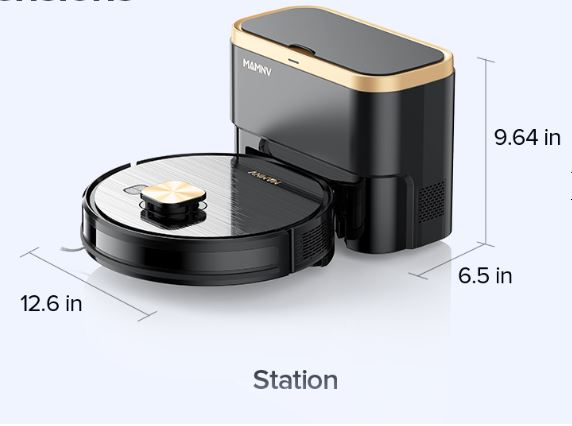
The D13S MAX is officially listed with 160 minutes of battery life, 11,500Pa suction, 230ml onboard dustbin capacity, spinning LiDAR, multi-level maps, and a 3.5-liter disposable bag in its auto-empty system.
MAMNV vs Roborock
Roborock generally occupies a broader range of the robot-vacuum market, including models with advanced navigation, sophisticated docks, powerful mopping systems, and more mature software ecosystems.
MAMNV can make more sense when the priority is obtaining specific features at a lower cost.
For example, if your main goal is simple automated vacuuming, a lower-priced MAMNV model may be sufficient.
If you want highly automated mopping, sophisticated object recognition, advanced docking, or a more mature software ecosystem, a premium competitor deserves consideration.
MAMNV vs Eufy
Eufy competes strongly in the value segment but also offers more advanced robotic cleaning systems.
The key comparison should therefore focus on the exact models rather than brand names alone.
Look at:
- Navigation
- Obstacle avoidance
- Carpet performance
- Pet-hair handling
- Mopping design
- Dock automation
- App functionality
A cheaper MAMNV can win on basic value, while a more expensive Eufy can provide greater automation.
MAMNV vs ECOVACS
ECOVACS has a much broader robot-vacuum ecosystem and offers sophisticated mapping, mopping, obstacle recognition, and multifunction docking on many models.
MAMNV’s advantage is primarily simplicity and value.
For buyers who want basic automated vacuuming and don’t need premium floor-washing technology, MAMNV can be interesting.
For buyers who expect a robot to vacuum, mop, wash its mop, dry its mop, empty itself, identify objects, and intelligently manage carpets, higher-end ECOVACS models may be better suited.
Bottom Line: The D13S MAX is the more compelling MAMNV technology showcase because LiDAR, multi-floor mapping, and an auto-empty dock dramatically change the ownership experience. The BR151 remains more appropriate for buyers who simply want basic automated vacuuming and mopping.
MAMNV Robot Vacuum Features That Matter Most
Battery Runtime and Recharge
Battery runtime affects how much floor a robot can clean before returning to its dock.
MAMNV lists 100 minutes of working time for the BR151, while independent documentation for the D13S MAX lists 160 minutes.
Actual battery runtime can vary depending on:
- Cleaning mode
- Suction level
- Floor type
- Navigation
- Battery age
- Number of passes
A larger runtime number doesn’t automatically mean proportionally greater coverage.
Efficient navigation can sometimes be just as important as raw battery capacity.
Dustbin and Water-Tank Capacity
Dustbin capacity determines how much debris the robot can hold before needing attention.
The BR151 includes a 200ml dust box and 230ml water tank.
The D13S MAX has a 230ml onboard dustbin but combines it with an auto-empty station using a 3.5-liter disposable bag.
This distinction is important.
An auto-empty station reduces manual emptying, but the robot’s onboard bin still has to hold debris while cleaning.
Homes with pets or heavy debris may therefore benefit from frequent inspection even when an auto-empty base is available.
Auto-Empty Docking
An auto-empty station is one of the most convenient features in modern robot vacuums.
After cleaning, the robot returns to its base, and the station transfers debris from the onboard container into a larger bag.
The D13S MAX uses a 3.5-liter disposable bag and is marketed/tested as capable of extended hands-free debris storage.
However, this doesn’t eliminate maintenance completely.
Users still need to monitor:
- Dust bags
- Filters
- Brushes
- Sensors
- Mop pads
- Water components
Noise, Height and Furniture Clearance
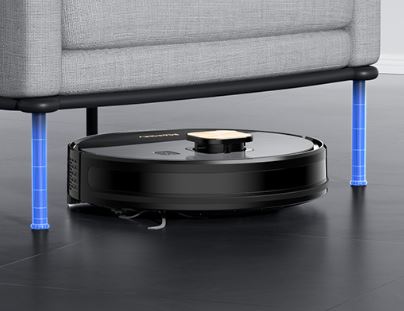
Robot dimensions can determine whether an automated floor cleaner can reach under sofas, beds, cabinets, and other furniture.
The BR151 is listed at 2.87 inches in height and 65dB low-noise operation.
A slim design can be particularly useful in bedrooms and living rooms where furniture clearance is limited.
However, don’t compare noise numbers between brands without understanding their testing conditions. Cleaning mode, floor type, and distance from the machine can affect perceived noise.
Bottom Line: When comparing MAMNV models, look beyond suction. Battery runtime, navigation efficiency, dust handling, robot height, dock automation, and mopping design all affect how convenient the machine will be in everyday use.
MAMNV Robot Vacuum Maintenance Guide
Even the best autonomous cleaner needs regular maintenance.
How to Clean the Main Brush
The main brush is one of the most important components to inspect.
Turn the robot off and remove the brush according to the model instructions.
Check for:
- Long hair
- Pet hair
- Threads
- Carpet fibers
- Dust buildup
- Debris around the brush ends
If hair becomes tightly wrapped around the roller, remove it before running the machine again.
This is especially important for homes with long hair because independent testing found substantial hair wrapping on the D13S MAX.
How to Maintain Filters and Dustbins
Empty the dustbin regularly, even if your robot has an automatic emptying system.
Clean filters according to the manufacturer’s instructions and allow washable components to dry completely when applicable.
A blocked filter can reduce airflow and make the robot appear weaker even when the motor itself is operating normally.
Don’t assume that replacing a filter can compensate for a clogged suction path.
How to Clean the Mop System
Mop maintenance is equally important.
After mopping:
- Remove the mop pad.
- Wash it appropriately.
- Allow it to dry.
- Empty the water tank when required.
- Inspect the water outlet.
- Reinstall the components correctly.
Leaving a wet mop pad attached for long periods can create unpleasant odors.
Replacement Parts and Long-Term Ownership
Before buying any robot vacuum, investigate replacement parts.
Important consumables include:
- Filters
- Main brushes
- Side brushes
- Mop pads
- Dust bags
- Batteries
This is one area where established brands can have an advantage because replacement ecosystems tend to be easier to understand.
Bottom Line: Autonomous doesn’t mean maintenance-free. A few minutes of routine brush, filter, dustbin, and mop maintenance can make a significant difference to long-term cleaning performance.
MAMNV Robot Vacuum Troubleshooting
MAMNV Robot Vacuum Won’t Start
If the robot won’t start:
- Confirm that the battery has charge.
- Check whether it is seated correctly on the dock.
- Inspect charging contacts.
- Check the power switch if the model has one.
- Look for warning indicators.
- Make sure the wheels and brush aren’t blocked.
If the machine remains unresponsive, consult the model-specific manual rather than repeatedly forcing the controls.
Robot Gets Stuck or Doesn’t Navigate Correctly
Start by checking the floor.
Remove:
- Charging cables
- Clothing
- Small toys
- Long strings
- Loose rugs
- Objects that can catch wheels
The D13S MAX is particularly important here because its LiDAR navigation should not be mistaken for complete AI obstacle avoidance. Independent testing found that small objects can still present problems.
MAMNV Isn’t Picking Up Dirt
Poor pickup can result from:
- Full dustbin
- Dirty filter
- Blocked brush
- Hair-wrapped roller
- Obstructed suction channel
- Incorrect cleaning mode
- Debris requiring multiple passes
First inspect the physical cleaning system before assuming the motor has failed.
Mopping Isn’t Working Properly
If the mop isn’t wetting correctly:
- Confirm the water tank is filled.
- Check that the tank is installed correctly.
- Inspect the water outlet.
- Check the mop pad.
- Review the water-flow setting if available.
- Confirm that the selected cleaning mode actually enables mopping.
Also remember that a basic flat mop pad cannot provide the same mechanical scrubbing action as an active roller or rotating mop system.
Bottom Line: Most basic robot-vacuum problems should first be approached as maintenance or setup issues. Cleaning the brush, filter, sensors, wheels, and water system can resolve many performance complaints before professional service is considered.
MAMNV Robot Vacuum Pros, Cons and Real-World Ownership
Major Advantages
MAMNV’s biggest advantage is feature accessibility.
The D13S MAX demonstrates that a relatively inexpensive robot can combine LiDAR navigation, multi-floor mapping, automatic dust collection, app controls, and voice-assistant integration.
The BR151 provides a simpler path to automated vacuuming and mopping without requiring the advanced hardware of a premium robot.
For many households, that basic automation may be enough.
Important Disadvantages
The biggest concern is that advanced-looking specifications don’t guarantee advanced overall performance.
The D13S MAX’s independent testing illustrates this perfectly.
It performed strongly in vacuuming and navigation but poorly in mopping, lacked true obstacle avoidance, and showed significant hair tangling.
That’s why a good robot vacuum review must evaluate the complete cleaning system rather than focusing on the highest Pa number.
What Owners Commonly Like
Published owner feedback for the BR151 includes positive comments about everyday dirt pickup and convenience. One owner reported that the machine significantly changed their household cleaning routine, while also mentioning difficulty setting up the app.
This is a useful reminder that usability includes more than cleaning performance.
A robot can work well mechanically but still frustrate users if setup instructions, app configuration, or connectivity aren’t straightforward.
What Owners Commonly Complain About
Reported concerns should be treated as individual experiences rather than universal failure rates.
Potential complaint areas include:
- Getting stuck
- App setup
- Mopping limitations
- Hair accumulation
- Navigation around small objects
- Long-term durability
Independent D13S MAX testing also identified concerns with mopping, hair tangling, and obstacle avoidance.
Field Note
Field Note: One of the most useful lessons from independent testing is that a robot’s strongest specification can distract from its weakest practical feature. The D13S MAX produced excellent vacuuming and navigation results for its class, yet its basic mop system performed dramatically worse in stain testing. That contrast is more useful to a buyer than simply seeing a large suction number on a product page.
This is the kind of real-world information that manufacturer specifications alone cannot provide.
Bottom Line: MAMNV’s value proposition becomes strongest when buyers prioritize automated vacuuming and efficient navigation. It becomes weaker when the main goal is premium mopping, sophisticated object recognition, or a highly mature smart-home ecosystem.
Buyer’s Intent — Is a MAMNV Robot Vacuum Worth Buying?
This is ultimately the question most shoppers want answered.
Who Should Buy a MAMNV Robot Vacuum?
A MAMNV robot vacuum can be a sensible choice for:
- Budget-conscious shoppers
- Apartment owners
- Hard-floor households
- People wanting daily automated cleaning
- Users who don’t need advanced obstacle recognition
- Buyers who primarily want vacuuming
- Users who understand the limitations of basic mopping
The D13S MAX is particularly interesting for buyers who want LiDAR navigation and auto-emptying without immediately moving into premium pricing.
Who Should Consider Another Brand?
Consider alternatives if you need:
- Advanced AI obstacle avoidance
- Excellent mopping
- Strong hair-tangle resistance
- Sophisticated mop washing
- Highly automated docking
- A mature premium app ecosystem
- More comprehensive long-term support
Independent testing places the D13S MAX well behind stronger machines in mopping and obstacle avoidance despite its strong vacuuming performance.
Which MAMNV Model Should You Choose?
Choose the BR151 if:
- You want straightforward 2-in-1 cleaning.
- Your home has mostly hard floors.
- You don’t need LiDAR.
- You want a slimmer basic robot.
- You are comfortable performing more manual maintenance.
Consider the D13S MAX if:
- LiDAR navigation matters.
- Multi-floor mapping is useful.
- Auto-emptying is important.
- You prioritize vacuuming over mopping.
- You want stronger listed suction.
- You want more advanced route planning.
MAMNV Buying Checklist
Before purchasing, verify:
| Buying Factor | What to Check |
|---|---|
| Exact model | BR151, D13S MAX, or another model |
| Navigation | Random, Z-route, LiDAR, etc. |
| Suction | Manufacturer rating and independent testing |
| Airflow | CFM data if independently measured |
| Mapping | Single or multi-floor |
| Obstacle avoidance | Determine whether it is true object recognition |
| Dustbin | Onboard capacity |
| Water tank | Capacity and water control |
| Dock | Charging or auto-empty |
| Mopping | Flat pad, rotating mop, roller, etc. |
| Battery | Claimed runtime |
| App | Scheduling and map functions |
| Smart home | Alexa/Google support |
| Parts | Brushes, filters, mop pads and bags |
| Warranty | Current retailer/manufacturer terms |
Bottom Line: The right MAMNV purchase depends on what you value. If vacuuming and navigation are the priority, the D13S MAX becomes considerably more attractive. If deep mopping, object recognition, and premium automation are essential, the broader robot-vacuum market offers stronger choices.
MAMNV Robot Vacuum Setup Guide
Unboxing and Charging
Place the charging station on a stable surface with enough surrounding clearance for the robot to approach and leave reliably.
Remove protective packaging, install the appropriate components, and charge the robot according to the model instructions before its first full cleaning cycle.
Connecting the Robot to Wi-Fi
For supported models, connect through the appropriate MAMNV-compatible app.
The BR151 is listed as supporting app connectivity and 2.4GHz Wi-Fi.
Keep the robot close enough to the router during initial setup to reduce connection problems.
Creating the First Cleaning Map
For a mapped model such as the D13S MAX, allow the robot to complete an initial mapping run.
Before starting:
- Open doors to rooms you want mapped.
- Remove cables.
- Pick up small objects.
- Keep floors reasonably clear.
- Keep the charging station accessible.
A clean first mapping run can provide a better foundation for future automated cleaning.
Setting Cleaning Schedules and Boundaries
Once mapping is complete, use available app features to establish:
- Cleaning schedules
- Room selections
- No-go areas
- Virtual boundaries
- Cleaning modes
Independent D13S MAX testing confirmed features including no-go zones, scheduling, and map editing.
Bottom Line: A few minutes of setup can substantially improve autonomous cleaning. The robot cannot intelligently clean around every possible piece of clutter, so preparing the floor remains important even with smart mapping.
MAMNV Robot Vacuum Specifications Explained
What Does Pa Suction Mean?
Pa, or pascals, measures pressure.
Robot-vacuum manufacturers commonly use Pa to advertise suction power, but the number shouldn’t be interpreted as a complete cleaning-performance score.
Airflow, brush design, filtration, floor contact, suction-path design, and navigation all matter.
The D13S MAX is a strong example. Its manufacturer specification lists 11,500Pa, while independent testing measured 2.64kPa suction and 21 CFM airflow under the tester’s methodology.
Those numbers demonstrate why manufacturer specifications and standardized independent measurements should not be treated as interchangeable.
Understanding Battery Runtime
Battery runtime is affected by:
- Suction level
- Cleaning mode
- Floor type
- Navigation
- Battery age
- Room layout
The BR151 is listed at 100 minutes, while the D13S MAX is listed at 160 minutes.
Actual coverage will depend on how efficiently the robot moves.
Understanding Dustbin and Water Capacity
Larger capacity generally means less frequent manual attention.
However, capacity needs to be considered together with household debris levels.
A small dustbin may be perfectly adequate for a low-debris apartment but inconvenient for a home with multiple pets.
Navigation Technology vs Cleaning Performance
This is one of the most important lessons for robot-vacuum buyers.
Better mapping does not automatically mean better cleaning.
The D13S MAX demonstrates the point:
- Strong navigation
- Strong vacuuming
- Weak mopping
- No true obstacle avoidance
- Significant hair tangling
Independent testing found its navigation efficiency to be unusually strong, while its mopping score was exceptionally weak.
A robot should therefore be evaluated as a complete cleaning system rather than through one specification.
Bottom Line: Treat Pa, CFM airflow, battery runtime, mapping, and docking as individual pieces of the ownership equation. None should be used alone to determine whether a robot is genuinely good.
Final Verdict — Should You Buy a MAMNV Robot Vacuum and Mop Combo?
Best Reasons to Buy
MAMNV becomes compelling when your priority is affordable automation.
The D13S MAX offers a particularly unusual combination of LiDAR navigation, multi-floor mapping, 160-minute listed battery life, and an auto-empty system for a budget-oriented robot.
The BR151 is simpler but can suit buyers who want basic vacuum-and-mop functionality without advanced navigation.
Biggest Reasons to Skip It
The main reason to look elsewhere is demanding mopping.
Independent testing of the D13S MAX found extremely poor stain removal, while hair tangling and lack of true obstacle avoidance were additional weaknesses.
Therefore, don’t buy a MAMNV robot simply because the product title says “vacuum and mop.”
Determine what kind of mopping system you’re actually getting.
Best MAMNV Model for Different Users
| User Type | Better Direction |
|---|---|
| Basic automated cleaning | BR151 |
| Hard-floor apartment | BR151 or D13S MAX |
| LiDAR navigation | D13S MAX |
| Multi-floor home | D13S MAX |
| Auto-emptying | D13S MAX |
| Strong vacuuming priority | D13S MAX |
| Premium mopping priority | Consider alternatives |
| Lots of long hair | Consider alternatives or expect frequent brush maintenance |
| Heavy floor clutter | Consider a robot with true obstacle avoidance |
Final Value Verdict
The best way to describe the MAMNV D13S MAX is an ultra-budget vacuum-focused robot with impressive navigation hardware and meaningful compromises.
Independent testing found strong vacuuming, excellent airflow, efficient navigation, and good carpet deep cleaning. At the same time, mopping was extremely weak, hair tangling was significant, and there was no true obstacle avoidance.
So, are MAMNV robot vacuum and mop combos worth buying?
For the right buyer, yes.
If you primarily want automated vacuuming and appreciate LiDAR navigation and auto-emptying at a lower price, the D13S MAX deserves consideration.
If your priority is premium mopping, sophisticated AI obstacle avoidance, or a highly polished ecosystem, you should compare it against more established alternatives before purchasing.
Frequently Asked Questions About MAMNV Robot Vacuums
Is MAMNV a Good Robot Vacuum Brand?
MAMNV can be a reasonable budget-oriented choice, but performance varies significantly by model. The D13S MAX has shown strong vacuuming and navigation performance in independent testing, while its mopping and obstacle avoidance were notable weaknesses.
Is MAMNV Robot Vacuum Worth Buying?
It can be worth buying if your priority is affordable automated vacuuming. Buyers should be more cautious if they specifically need excellent mopping or advanced obstacle avoidance.
Does MAMNV Vacuum and Mop at the Same Time?
MAMNV sells 2-in-1 vacuum-and-mop systems, but the exact mopping behavior depends on the model. The D13S MAX uses a basic flat-pad mop and its mop performance was weak in independent testing.
Does MAMNV Have LiDAR Navigation?
Some models do. The D13S MAX uses spinning LiDAR, while the BR151 uses random-route and Z-shape navigation rather than LiDAR.
How Do I Connect My MAMNV Robot Vacuum to Wi-Fi?
For supported models, use the appropriate MAMNV-compatible app and follow the model’s Wi-Fi setup process. The BR151 is listed with app compatibility and 2.4GHz Wi-Fi support.
Does MAMNV Work With Alexa?
Supported MAMNV models can integrate with Alexa. The BR151 is listed as Alexa-compatible, and independent D13S MAX testing also confirmed third-party voice-assistant support.
How Long Does a MAMNV Robot Vacuum Battery Last?
Battery runtime depends on the model and cleaning mode. MAMNV lists 100 minutes for the BR151, while the D13S MAX is listed at 160 minutes.
Can MAMNV Robot Vacuums Clean Pet Hair?
Yes, supported models can pick up pet hair, but performance varies. Independent D13S MAX testing found 82% flattened pet-hair pickup, while its separate hair-tangle test showed 50% hair wrapping around the brush.
Can MAMNV Robot Vacuums Clean Carpets?
Yes. The exact performance depends on the model and carpet type. Independent testing of the D13S MAX found 87% embedded-sand removal in a medium-pile carpet deep-clean test.
How Do You Clean a MAMNV Robot Vacuum?
Regularly empty the dustbin, clean the filter according to instructions, remove hair from the main and side brushes, wipe sensors, inspect wheels, and wash the mop pad when required.
Why Does My MAMNV Robot Vacuum Keep Getting Stuck?
Floor clutter, cables, rugs, thresholds, furniture, and objects around the robot can cause problems. LiDAR navigation does not automatically provide AI obstacle avoidance. Independent D13S MAX testing specifically found no true obstacle-avoidance system.
Why Is My MAMNV Robot Vacuum Not Mopping?
Check the water tank, mop-pad installation, water outlet, cleaning mode, and water-flow settings if available. Also inspect the mop pad for dirt or improper attachment.
How Often Should MAMNV Filters and Brushes Be Replaced?
There isn’t one universal replacement interval for every MAMNV model. Follow the specific manufacturer’s maintenance instructions and replace components when they become damaged, excessively worn, or difficult to clean.
What Is the Difference Between MAMNV BR151 and D13S MAX?
The BR151 is a simpler robot using random/Z-shape navigation, 1,400Pa listed suction, a 200ml dust box, 230ml water tank, and 100-minute runtime. The D13S MAX adds LiDAR, multi-floor mapping, an auto-empty dock, and substantially higher listed suction.
Is MAMNV Better Than Roborock, Eufy or ECOVACS?
There is no universal winner. MAMNV can be attractive for budget-conscious buyers, particularly when vacuuming and navigation are the main priorities. Roborock, Eufy, and ECOVACS offer models with different combinations of navigation, obstacle avoidance, mopping, docking, and smart-home features.