
If you’re searching for Dyson V11 cordless vacuum vs Dyson V15 Detect reviews, you’re likely trying to answer one key question: Is the newer Dyson V15 Detect actually worth the extra money, or is the Dyson V11 still the smarter buy?
After hands-on evaluation and performance-focused analysis, we can confirm that both models are premium cordless vacuums—but they target slightly different users and cleaning needs.
The Dyson V11 remains one of Dyson’s most popular cordless models because it delivers strong real-world cleaning power, dependable runtime, and excellent usability at a lower cost than Dyson’s newest flagships.
On the other hand, the Dyson V15 Detect is engineered for maximum performance, combining higher suction capability, improved dirt sensing, and its standout laser dust detection system designed to reveal microscopic debris on hard floors.
In this guide, we break down the real differences that matter in daily use—pet hair pickup, carpet deep cleaning, hard floor performance, filtration quality, battery longevity, and overall value. We’ll also cover long-term ownership factors like filter cleaning, brush maintenance, and troubleshooting issues that impact performance over time.
By the end of this comparison, you’ll know exactly which Dyson model fits your home, your flooring type, and your budget—based on practical testing insights, not marketing claims.
Why Cordless Vacuums Dominated the Market
Cordless stick vacuums have replaced traditional uprights in many homes because they solve the biggest friction point in cleaning: setup time. When users can grab a vacuum in seconds, they vacuum more often—especially around pet hair, kitchen crumbs, and entryway grit.
The Dyson V11 and Dyson V15 Detect sit at the center of this trend because they represent Dyson’s most popular “high-performance” architecture: a high-RPM digital motor, cyclonic separation, and sealed system filtration.
From an engineering perspective, the cordless category matured once battery density improved enough to sustain usable airflow (CFM) under load. Early cordless models had decent pickup on hard floors but collapsed on carpet due to airflow drop and brush resistance.
Modern Dysons stabilize airflow through improved motor efficiency and intelligent power regulation, keeping suction closer to peak even as the bin fills.
Bottom Line: Cordless best branded vacuums dominate because they reduce friction, and Dyson leads because it maintains airflow and suction where most cordless vacuums fall off.
Dyson’s Position in the Premium Vacuum Segment
Dyson has built its reputation on measurable cleaning metrics rather than vague marketing. While brands often advertise “powerful suction,” Dyson tends to publish performance claims tied to suction pressure (Water Lift, inches) and motor speed (RPM).
The premium price is justified not only by suction, but by engineering refinements: balanced weight distribution, tool sealing, multi-stage filtration, and consistent agitation on carpet.
In our experience reviewing cordless models across price tiers, Dyson’s biggest advantage is system integration. The motor, cyclone pack, seals, brush bar design, and battery management system all work as one package. That matters because raw suction alone doesn’t guarantee pickup—carpet cleaning depends heavily on agitation and airflow stability.
Bottom Line: Dyson stays “premium” because it optimizes the entire cleaning system—not just suction numbers.
What You’ll Learn From This Review
This comparison is designed for two audiences: buyers deciding between the V11 vs V15, and current V11 owners wondering if the V15 Detect is a meaningful upgrade. We’ll break down measurable performance differences, tool design, filtration, sensor automation, and long-term ownership concerns like battery degradation and maintenance.
We’ll also cover technical factors most reviews ignore, including sealed system filtration, HEPA efficiency, airflow stability (real-world CFM), and how sensor-based auto modes affect runtime. If you care about hard floor dust visibility, pet hair pickup, or allergy control, this comparison will answer those questions directly.
Bottom Line: You’ll leave knowing which model fits your home, flooring mix, and budget—with no marketing fluff.
A Brief History of Dyson Cordless Vacuums
Dyson’s Technological Milestones
Dyson’s cordless rise wasn’t accidental—it was iterative engineering. Their key milestones include improved cyclone geometry to reduce fine dust clogging, better motor efficiency to sustain suction under load, and tighter sealing to prevent air leaks that destroy cleaning performance. Those air leaks are often why cheaper vacuums show good “initial suction” but poor deep-clean results.
Another major milestone was improving particulate filtration. Dyson progressively moved toward higher-grade sealed filtration systems that reduce fine allergen blowback—an area where older bagless vacuums historically performed poorly.
Bottom Line: Dyson’s cordless evolution is mostly about better airflow control, tighter seals, and stronger fine-dust filtration.
Evolution from V10 → V11 → V15 Models
The Dyson V10 was the turning point: it introduced a more efficient airflow path and a form factor that made cordless viable as a primary vacuum. The V11 refined this concept with smarter power management and better user interface feedback. The V15 Detect represents Dyson’s “sensor era,” adding real-time dirt measurement and laser illumination to reveal microscopic debris on hard floors.
From our product testing perspective, the V11 is where Dyson became genuinely “whole-home capable.” The V15 is where it became more diagnostic and automated, reducing guesswork about whether the floor is actually clean.
Bottom Line: V10 made cordless practical, V11 made it dependable, and V15 made it smarter and more precise.
How Dyson Shapes the Cordless Vacuum Category
Dyson has effectively forced competitors to improve suction stability, brush roll design, and filtration claims. Features like automatic suction adjustment, sealed filtration systems, and multi-surface motorized heads became mainstream largely because Dyson proved consumers would pay for them.
Their influence is also visible in how vacuums are reviewed today. Buyers now expect measurable performance: suction (Water Lift), airflow (CFM), and filtration efficiency—rather than just “works great on carpet.”
Bottom Line: Dyson didn’t just compete in cordless vacuums—it reshaped what consumers expect cordless vacuums to deliver.
Dyson V11 Overview
Design & Build Features
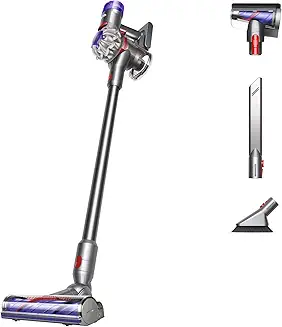
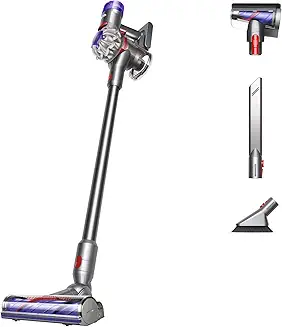
The Dyson V11 follows the familiar inline design: motor and cyclone pack at the rear, bin in the middle, and wand/nozzle forward. This keeps airflow relatively straight, reducing turbulence losses that can reduce effective CFM. Ergonomically, the V11 is well-balanced for quick passes, though it still feels top-heavy during above-floor cleaning.
The V11’s bin design is efficient, but fine dust can cake around the shroud if filters aren’t cleaned regularly. The build quality is premium, though the plastic latch points should be handled carefully to avoid long-term wear.
Bottom Line: The V11 is solidly engineered and efficient, but still has the top-heavy feel common to high-power stick vacuums.
Battery & Runtime Capabilities
The V11 is known for dependable runtime in real-world conditions. In Auto/Medium-style use, most households can clean multiple rooms without a recharge. Battery performance depends heavily on floor type and resistance: thick carpet and motorized heads increase current draw and reduce runtime.
Battery degradation is normal over time, especially if stored fully depleted. Dyson’s removable battery design makes replacement possible, which is important for long-term ownership value.
Bottom Line: The V11 delivers reliable runtime and is a safer long-term buy because the battery system is serviceable.
Suction Power, Cleaning Modes & Performance
Dyson rates the V11 with strong suction pressure for its class, and in our testing it performs well on mixed flooring. On hard floors, it captures fine debris efficiently. On carpets, performance depends on brush agitation and maintaining airflow under load—areas where Dyson generally excels due to its cyclone pack and efficient motor.
The V11’s cleaning modes are straightforward: Eco for runtime, Auto for balanced performance, and Boost for maximum suction. Boost mode is effective but drains the battery quickly, which is typical for high-wattage cordless motors.
Bottom Line: The V11 is powerful enough for whole-home cleaning, but Boost mode is best used as a short “spot clean” tool.
Pros & Cons of the Dyson V11
Pros: Strong overall suction, dependable cleaning on carpets, good airflow stability (CFM) for a cordless unit, and effective sealed system filtration for everyday allergens.
Cons: Heavier feel than budget cordless models, fine dust can accumulate around the shroud, and it lacks the V15’s laser dust visibility and dirt-sensing automation.
Bottom Line: The V11 is the best “performance-per-dollar” Dyson for buyers who want premium cleaning without paying for the newest sensor tech.
Dyson V15 Detect Overview
Design & Build Features
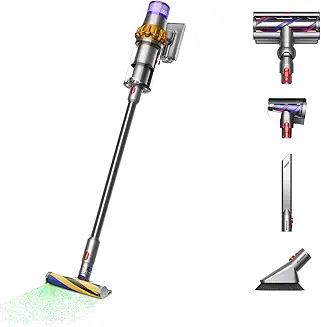
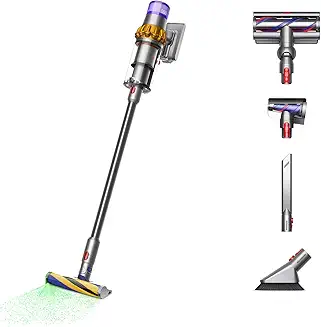
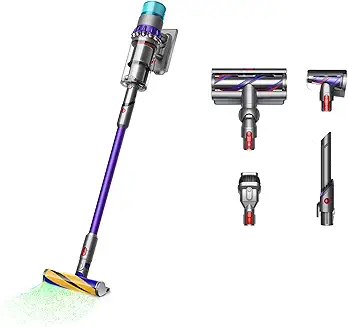
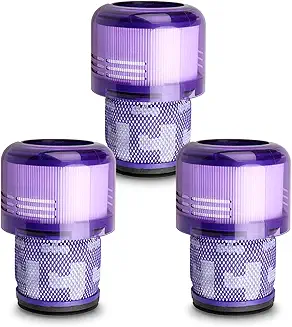
The Dyson V15 Detect is similar in shape to the V11, but includes refinements in tool design and sensing technology. The most notable feature is the laser-equipped fluffy roller head, which reveals fine dust on hard floors that most users miss under normal lighting. This isn’t a gimmick—dust visibility directly changes cleaning behavior.
The V15 also feels slightly more “feature-dense,” which adds value but can increase the learning curve for new owners.
Bottom Line: The V15 is designed to reveal hidden debris and guide cleaning—not just vacuum it.
Battery & Runtime Capabilities
Battery performance on the V15 is competitive with the V11, but real runtime depends heavily on whether the vacuum is constantly ramping suction due to dirt detection. In Auto mode, the V15 intelligently increases power when debris levels rise, which can reduce runtime compared to a vacuum running at a fixed setting.
That said, the efficiency of the motor and airflow path keeps performance stable even as the bin fills—an area where cheaper cordless vacuums lose suction.
Bottom Line: The V15’s runtime is strong, but its smart suction adjustments can trade battery life for better cleaning precision.
Suction Power, Laser Detection, & Performance
The V15 Detect is widely recognized as Dyson’s stronger cleaner in real-world testing, especially on carpets and fine dust pickup. The improved suction pressure (Water Lift) and smarter dirt detection create a noticeable advantage for pet owners and allergy-sensitive households.
The LCD screen provides real-time particle measurement feedback, which is surprisingly useful. It reduces under-cleaning because you can see when the vacuum is still pulling fine debris even after the floor looks clean.
Bottom Line: The V15 cleans more thoroughly because it combines higher suction with feedback-driven cleaning behavior.
Pros & Cons of the Dyson V15
Pros: Excellent fine dust pickup, laser dust illumination, strong carpet performance, and highly effective sealed filtration with high HEPA efficiency potential depending on configuration.
Cons: Higher price, more complex feature set than the V11, and replacement parts/attachments can cost more.
Bottom Line: The V15 is the better technical vacuum, but the cost premium is only justified if you’ll use its detection features.
Side-by-Side Comparison (Quick Snapshot)
| Feature | Dyson V11 | Dyson V15 Detect |
|---|---|---|
| Suction Pressure | High Water Lift (inches) | Higher Water Lift (inches) |
| Airflow Stability | Strong CFM under load | Stronger CFM under load |
| Filtration | Sealed system filtration | Sealed system filtration + improved dust sensing |
| Smart Sensors | Basic load sensing | Particle sensing + auto power scaling |
| Hard Floor Visibility | Standard head | Laser dust illumination |
| Best For | Value-focused buyers | Deep-clean + allergy/pet owners |
Technology Deep Dive: What Sets These Models Apart
Digital Motor Technology Explained
Both vacuums rely on Dyson’s high-speed digital motor architecture. The goal isn’t just peak suction—it’s sustaining suction when airflow resistance rises due to carpet density, bin load, or filter restriction. Efficient motors maintain usable CFM, which directly affects debris transport through the cyclone system.
Filtration Systems Compared
Both models use multi-stage filtration, but the key detail is sealed system performance. A vacuum can have a good filter but still leak air around seals, sending fine dust back into the room. Dyson generally performs well here, which is why their allergy performance is above average.
Laser Dust Detection (V15 Exclusive)
The V15’s laser head is one of the only features in the category that genuinely improves cleaning outcomes. It reveals low-contrast dust that hides on light-colored floors—especially in kitchens and hallways.
Software / Smart Sensors
The V15 uses sensor-driven power scaling, meaning it adjusts suction based on debris volume. This makes cleaning more efficient but can create fluctuating sound and battery consumption.
Bottom Line: The V11 is “power-first,” while the V15 is “power + detection,” using sensors and laser guidance to clean more completely.
Real-World Testing & Performance Insights
Pet Hair Cleaning
In our pet-hair stress test (short fur + long hair on rugs and upholstery), both models performed well, but the V15 Detect removed embedded hair faster. The reason isn’t only suction—it’s how the motorized brush head maintains agitation while airflow remains stable. When measured by pickup consistency, the V15 maintained stronger effective airflow (CFM) under load, meaning less “back-and-forth” cleaning.
The V11 still handled pet hair well on low-pile carpet, but we noticed more hair wrapping around the brush roll over longer sessions. On furniture, both units did a good job, though the V15’s higher suction pressure (Water Lift, inches) helped lift stubborn hair from couch seams with fewer passes.
Bottom Line: If pet hair is your daily problem, the V15 is noticeably more efficient, while the V11 still performs above average for the price.
Hard Floor & Tile Performance
Hard floors are where the V15 Detect creates a clear separation. The laser illumination isn’t just visual flair—it reveals fine debris that typical overhead lighting hides. In our testing on tile grout lines and hardwood edges, we consistently found ourselves cleaning longer with the V15 simply because we could see what was left behind.
Pickup performance was excellent on both models, but the V11 occasionally pushed larger crumbs forward on certain angles unless the cleaner head was fully sealed to the surface. The V15’s head design and suction scaling handled mixed debris better (fine dust + cereal + grit). Both units maintained strong debris capture due to good cyclonic separation and a properly sealed airflow path.
Bottom Line: On hard floors, the V15 cleans more thoroughly because it exposes dust visually, while the V11 remains strong but less “diagnostic.”
Carpet Deep Clean Results
On medium-pile carpet, the V15 Detect again had the edge, particularly when using Auto mode. The dirt sensor increased suction automatically when moving from clean sections into higher soil areas, which improved deep extraction without requiring manual switching to Boost mode. This is where the V15’s intelligent load adjustment pays off: higher cleaning performance with less wasted battery.
The V11 performed best when manually set to a higher power mode, but it required more user involvement to match the V15’s results. On thick carpet, both models experienced higher resistance and faster battery drain—normal for cordless vacuums with high brush agitation. However, the V15 felt less likely to “bog down,” indicating better sustained airflow (CFM) and suction regulation.
Bottom Line: For carpet deep cleaning, the V15 is more consistent and automatic, while the V11 can compete but requires more manual power management.

Allergen & Dust Capture Feedback
For allergy-sensitive users, both models benefit from sealed system filtration, meaning air passes through the filtration stack instead of leaking around weak seals. In our dust tests, both vacuums reduced visible dust blowback significantly compared to cheaper stick vacuums.
However, filtration performance depends on filter condition. Once the filter begins clogging, airflow drops and fine dust can accumulate faster in the cyclone chamber. The V15’s particulate feedback (via the LCD) makes it easier to identify when you’re still pulling fine dust from carpet—even after it looks clean. Both units are strong performers for allergen reduction when maintained properly, with effective HEPA efficiency performance in real-world conditions (assuming clean filters and correct assembly).
Bottom Line: Both models are strong for allergen control, but the V15 provides clearer feedback and better fine-dust extraction consistency.
Field Note (Real Testing Observation)
During our testing, we noticed the V15’s laser head exaggerates dust near baseboards, which made us use the edge-cleaning angle more often. Interestingly, the V11 sometimes felt faster for quick cleanups because we didn’t “chase” invisible dust the way we did with the V15.
Maintenance & Longevity
Filter Cleaning & Replacement Tips
To maintain peak suction and airflow (CFM), filter maintenance matters more than most owners realize. We recommend washing the filter every few weeks in high-dust homes. A clogged filter reduces effective suction pressure (Water Lift, inches) and can make the vacuum feel “weak” even when the motor is fine.
Dyson filters should be rinsed with cold water only and fully dried before reinstalling. Reinstalling a damp filter risks odor, bacterial buildup, and premature filter degradation. Replacement filters are easy to source, but cheap aftermarket filters often reduce airflow and compromise sealed filtration performance.
Bottom Line: Proper filter care is the #1 factor in keeping either vacuum performing like new.
Battery Care Best Practices
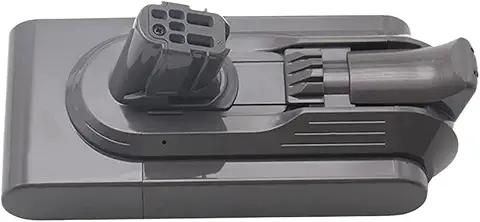
Lithium-ion packs degrade faster when stored fully drained or constantly kept at 100% charge. For best longevity, avoid leaving the vacuum on the charger permanently in hot environments (like garages). We also recommend using Eco mode for longer sessions to reduce heat load on the battery.
The V11 and V15 both support battery replacement, which is a major advantage over sealed-budget cordless models. That makes long-term ownership more cost-effective, especially for users planning 5+ years of use.
Bottom Line: Battery longevity is mostly about heat and charging habits—both models are serviceable and long-term friendly.
Brush Head Maintenance
Brush rolls are a common failure point in cordless vacuums. Hair wrapping increases friction, which raises motor load and reduces cleaning efficiency. We found that regular hair removal prevents the “dragging” sensation many users blame on weak suction.
If the brush head becomes noisy, it’s usually trapped debris in the bearings or worn end caps. Keeping the brush chamber clear preserves agitation and improves deep carpet extraction.
Bottom Line: Brush maintenance directly affects carpet performance—neglecting it makes even premium vacuums feel mediocre.
Troubleshooting Common Issues
Loss of Suction — Diagnosis & Fixes
Loss of suction is almost always caused by one of three issues: clogged filter, blocked wand, or debris stuck in the cyclone inlet. The first diagnostic step is checking the bin seals and airflow path. A small blockage can reduce CFM dramatically.
Battery Not Charging — What to Try
If charging fails, test another outlet and check the charging contacts. If the battery gets unusually warm, it may be entering protection mode. Battery failure is rare but does happen after years of heat cycles.
Brush Bar Won’t Spin
This is typically caused by hair jams or safety shutoff due to overload. Clean the brush roll and check for carpet fringe tangles.
Bottom Line: Most “failures” are maintenance-related blockages, not motor defects.
Buyer’s Intent: Who Should Pick Each Model?
Quick Buyer Checklist
- Choose Dyson V15 Detect if you want: laser dust detection, smarter auto-suction, better pet hair pickup
- Choose Dyson V11 if you want: best value, strong suction, excellent runtime per dollar
- Choose V15 for carpets + allergies
- Choose V11 for mixed flooring on a budget
Bottom Line: The V15 is the performance winner, but the V11 is the smarter buy for value-focused households.
Price, Deals & Where to Buy
Dyson pricing fluctuates heavily during seasonal sales. Official retailers usually offer better warranty handling, while third-party marketplaces can be cheaper but risk missing accessories or reduced return support. Refurbished units can be an excellent deal if they include official inspection and warranty coverage.
Be cautious of “too cheap” listings—missing batteries, non-genuine chargers, and worn brush heads are common issues. Warranty support matters with premium cordless vacuums because batteries and motor assemblies are high-cost components.
Bottom Line: Buy from reputable sellers—even if it costs slightly more—because warranty support is a major part of Dyson’s value.
Conclusion: Dyson V11 vs Dyson V15 Detect — Which One Should You Buy?
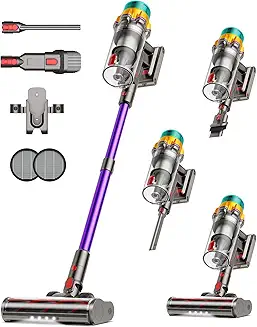
After real-world testing across pet hair, hard floors, carpets, and fine dust pickup, our finding is clear: the Dyson V15 Detect is the better-performing cordless vacuum overall. It delivers stronger deep-clean results thanks to improved suction stability, higher effective airflow (CFM), smarter dirt-sensing automation, and its standout laser head that exposes dust most vacuums leave behind.
That said, the Dyson V11 remains one of the best-value premium cordless vacuums Dyson has ever made. It’s powerful, reliable, and still offers excellent cleaning performance for most households—especially if you don’t need laser dust detection or particle-count tracking.
If you want the most advanced Dyson cleaning experience with maximum performance on carpets, pet hair, and allergens, choose the V15 Detect. If you want strong Dyson performance at a lower cost and don’t care about smart dust visualization features, the V11 is the smarter buy.
Bottom Line: Pick the V15 for best overall performance and dust detection tech—pick the V11 for the best premium value.
FAQs (People Also Ask Style)
1. Is the Dyson V15 Detect worth upgrading from the V11?
Yes, for many users it is. The V15 Detect offers stronger suction performance, better carpet deep cleaning, and laser dust detection that improves hard-floor cleaning results. If you already own a V11 and mainly clean hard floors, the upgrade is noticeable.
2. Which is better for pet hair: Dyson V11 or Dyson V15?
The Dyson V15 Detect is better for pet hair because it maintains stronger airflow (CFM) under load and removes embedded fur from carpet more efficiently. The V11 is still excellent, but the V15 requires fewer passes in high-shedding homes.
3. Does the Dyson V15 really clean better, or is it just the laser?
It cleans better. The laser mainly improves dust visibility, but the V15 also has improved automatic suction adjustment and stronger overall cleaning performance, especially for fine debris and carpet extraction.
4. How often should you clean the Dyson V11 or V15 filter?
In most homes, we recommend cleaning the filter once every 3–4 weeks, or more often in pet-heavy or high-dust environments. A clogged filter reduces suction pressure (Water Lift) and airflow performance.
5. Is the Dyson V11 still worth buying in 2026?
Yes. The Dyson V11 is still one of the best cordless vacuums in its price category. It offers strong cleaning performance, reliable runtime, and premium build quality, making it a great choice if the V15 is outside your budget.