
The Dreame Aqua10 Roller AE robot vacuum cleaner review shows a premium robotic vacuum built around fresh-water roller mopping, strong 30,000Pa suction, smart navigation, and automated dock care. It suits hard-floor homes and mixed surfaces, but its simplified navigation and missing premium features affect value.
What Makes the Aqua10 Roller AE Different?
Robot vacuums have become increasingly automated, but the biggest difference between premium models is no longer simply suction power. Mopping technology, carpet protection, obstacle avoidance, and how much maintenance the dock can handle now play equally important roles.
The Dreame Aqua10 Roller AE takes a particularly interesting approach. Instead of relying on conventional flat microfiber pads or two rotating mop discs, it uses an AquaRoll roller mop designed to receive fresh water during cleaning while dirty water is collected separately. That makes the system fundamentally different from many conventional robot vacuum and mop combinations.
The AE version also retains several headline specifications associated with Dreame’s higher-end Aqua10 platform, including 30,000Pa maximum suction, a HyperStream Detangling DuoBrush, an extending side brush, automated roller washing, hot-air drying, and laser-based navigation. The major trade-off is that Dreame has removed or simplified some of the advanced technology found in the more expensive Aqua10 Ultra Roller.
That distinction matters when evaluating value. The AE is not simply a flagship model at a lower price; it is a carefully simplified version designed to preserve the core roller-mopping experience while reducing some of the intelligence and convenience features.
Independent testing of the AE by HardwareZone found that its roller-mopping results remained close to the more expensive Ultra Roller on marble and parquet flooring, while the simpler navigation became more noticeable around smaller objects and household clutter.
Quick Verdict
For households dominated by tile, hardwood, marble, vinyl, parquet, or other hard surfaces, the Aqua10 Roller AE is one of the more interesting premium robotic vacuum systems to consider. Its strongest argument is not simply the 30,000Pa suction rating; it is the combination of continuous fresh-water roller mopping and a dock that automatically cleans and dries the roller.
The main compromise is intelligence. The AE uses a fixed LDS navigation system and dual-laser structured-light sensing rather than the more sophisticated camera-assisted object recognition and retractable LiDAR arrangement found on the Ultra Roller.
In our assessment, that makes the AE particularly attractive when mopping performance and low daily maintenance matter more than having the most advanced obstacle recognition available.
Bottom Line: The Aqua10 Roller AE is best viewed as a premium hard-floor cleaning specialist that borrows the most important roller-mopping technology from Dreame’s flagship platform while cutting back on some of the expensive intelligence features.
Key Specifications at a Glance
| Specification | Dreame Aqua10 Roller AE |
|---|---|
| Maximum suction | 30,000Pa |
| Battery capacity | 5,200mAh |
| Robot dimensions | 350 × 350 × 120mm |
| Robot weight | 11.24 lb / 5.1kg |
| Dust box | 220ml |
| Clean-water tank | 4.0L |
| Dirty-water tank | 3.5L |
| Main brush | HyperStream Detangling DuoBrush |
| Mop system | AquaRoll Roller Mop |
| Roller washing | Up to 100°C / 212°F |
| Navigation | LDS + dual-laser 3D structured light |
| Maps | Up to 4 maps |
| Single-tier crossing | Up to 2.2cm |
| Double-layer crossing | Up to 4cm |
| Automatic dust emptying | Yes |
Dreame’s AE specifications identify the 5,200mAh battery, 30,000Pa suction, 220ml dust box, large water tanks, and LDS/dual-laser navigation system.
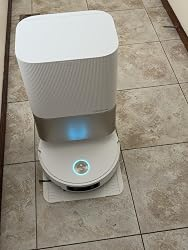
Dreame Aqua10 Roller AE Design and Build Quality
Robot Vacuum Dimensions, Weight, and Physical Design
The Aqua10 Roller AE has a relatively substantial body measuring 350 × 350 × 120mm and weighing approximately 5.1kg / 11.24lb. Those dimensions give it the physical presence expected from a premium robot vacuum, but they also create an important consideration: furniture clearance.
At 120mm tall, the robot is not exceptionally low-profile. Sofas, beds, cabinets, and other furniture with low undersides may therefore remain inaccessible. Before buying, measure the clearance underneath the furniture you most want the autonomous cleaner to reach.
The build itself follows the familiar premium Dreame design language. The robot is designed around a large central brush, front-facing sensing hardware, side-cleaning components, and the roller-mopping assembly underneath.
Bottom Line: The build feels purpose-designed for a sophisticated vacuum-and-mop system, but the 120mm height means low furniture clearance should be checked before purchase.
Roller Mop Design and AquaRoll System
The AquaRoll system is the defining feature of this machine. Instead of placing a static damp cloth against the floor, the roller continuously rotates while clean water is introduced through the roller assembly.
HardwareZone reports that the AE’s roller measures 260mm and uses 12 water nozzles to supply fresh water, while a scraper removes dirty water as the roller rotates.
This design addresses one of the fundamental weaknesses of conventional mop-pad robots: the cleaning material can become increasingly dirty during a long cleaning run. With a continuously rinsed roller, the system is designed to keep presenting a cleaner surface to the floor.
The dirty water is then directed away from the roller rather than simply remaining in the microfiber material.
Bottom Line: The AquaRoll approach is the strongest engineering reason to consider this model, especially if you have large hard-floor areas that require frequent wet cleaning.
Extending Mop and Side Brush
Edge cleaning is another area where the Aqua10 Roller AE tries to solve a traditional robot-vacuum weakness. Circular robot bodies naturally struggle to reach directly against walls and around furniture.
The extending side brush helps move debris from those areas into the robot’s cleaning path. The roller-mopping assembly also extends toward edges, allowing the wet-cleaning surface to reach closer to cabinets and walls.
In our evaluation of the design, the practical advantage is more important than the mechanism itself: less visible dust accumulation should remain along the perimeter of frequently cleaned rooms.
However, no circular robotic vacuum can completely eliminate corner limitations. A 90-degree corner remains physically difficult for a round cleaning body to reach.
Bottom Line: Edge-extension technology improves coverage significantly, but expect to manually clean tight 90-degree corners occasionally.
Docking Station Design
The PowerDock is effectively the maintenance center of the Aqua10 Roller AE. Rather than simply acting as a charger, it handles several cleaning-related tasks.
The robot can return to the dock to empty its onboard dust container, wash its roller, and dry the roller using heated air. The dock also contains separate clean- and dirty-water storage.
The AE retains the 100°C hot-water roller washing capability despite being less expensive than the Ultra version. One notable compromise is the absence of the Ultra’s integrated cleaning-solution compartment, according to HardwareZone.
Bottom Line: The dock dramatically reduces daily maintenance, although the large base requires dedicated floor space and the AE’s detergent arrangement is less convenient than the flagship version.
Dreame Aqua10 Roller AE Cleaning Technology Explained
How AquaRoll Fresh-Water Mopping Works
The easiest way to understand AquaRoll is to imagine a small automated floor scrubber rather than a robot dragging a wet cloth.
Fresh water is supplied to the rotating roller while a scraping mechanism removes dirty water. The result is a cleaning surface that is repeatedly refreshed during the cleaning process.
This can be particularly useful for everyday footprints, food marks, paw prints, kitchen residue, and other light-to-moderate contamination.
HardwareZone’s hands-on evaluation found that the AE produced evenly cleaned marble and parquet floors without the circular streaking sometimes associated with rotating mop pads.
Bottom Line: Fresh-water roller mopping is most valuable when your floors need genuine wet cleaning rather than simply a quick damp wipe.
100°C Hot-Water Roller Self-Cleaning
After completing cleaning, the robot can return to its dock where the roller is washed with water heated to 100°C / 212°F.
The important distinction is that the hot-water process happens primarily during the dock’s roller-cleaning cycle. It should not be interpreted as the robot applying boiling-temperature water directly across your flooring during ordinary mopping.
High-temperature roller washing can help remove accumulated grime and reduce the conditions that allow unpleasant odors to develop.
However, users should still inspect the roller periodically. Automatic cleaning reduces manual work; it does not make physical inspection unnecessary.
Bottom Line: The 100°C wash cycle is an excellent hygiene-oriented feature, but it should complement—not replace—normal maintenance.
Hot-Air Drying and Odor Prevention
A wet mop roller left inside an enclosed dock could eventually develop an unpleasant smell. Dreame addresses this with hot-air drying after washing.
The principle is straightforward: reduce the amount of residual moisture remaining in the roller after cleaning.
This is especially useful when the robot runs every day. Instead of leaving a damp cleaning surface sitting inside the dock for hours, the system actively dries it.
That makes the Aqua10 particularly appealing to households where the robot is expected to operate frequently without someone manually washing and hanging the mop after every run.
Bottom Line: Hot-air drying is one of the less glamorous but more practically useful features because it helps make automated mopping more sustainable for everyday use.
AutoSeal Roller Guard and Carpet Protection
One of the most important problems with robot mop systems is what happens when the machine encounters carpet.
A wet roller that simply continues across a rug can transfer moisture into the fibers. The Aqua10 Roller platform addresses this with an AutoSeal Roller Guard designed to isolate the wet roller when carpet is detected.
This allows the robot to move between hard floors and carpets without treating the entire house as one continuous wet-mopping surface.
Independent testing of the Ultra version found the carpet-protection concept useful, while the AE retains the core roller and carpet-sealing philosophy.
Bottom Line: For mixed-floor homes, carpet protection is arguably as important as mopping power because it determines whether autonomous cleaning can truly happen without supervision.
Battery Life, Charging and Cleaning Coverage
5,200mAh Battery
The Aqua10 Roller AE uses a 5,200mAh battery.
Battery capacity alone cannot tell you the actual cleaning area per charge. Suction level, mopping intensity, navigation complexity, floor type, obstacle frequency, and whether the robot repeatedly returns to previously cleaned areas all influence battery runtime.
HardwareZone found that the AE was able to clean a five-room apartment without needing to stop for a recharge during its evaluation, despite having a smaller battery than the Ultra.
That is a useful real-world indication that battery capacity should be considered alongside actual route efficiency.
Bottom Line: The 5,200mAh battery is smaller than the flagship version, but efficient navigation can make the difference less important in many normal-sized homes.
Automatic Recharge and Resume
Automatic recharge is essential for autonomous cleaning.
When the battery becomes low, a capable robot should return to its dock, recharge, and continue the cleaning task rather than simply stop halfway through the house.
This is particularly useful in large homes where a single battery cycle may not cover every room.
For everyday users, the important point is simple: you do not need to monitor the battery manually during normal scheduled cleaning.
Bottom Line: Recharge-and-resume functionality makes battery limitations much less significant for users who value automation.
Faster Charging and Battery Protection
Charging behavior can affect both convenience and long-term battery health.
Premium robot vacuums increasingly provide charging-management options that allow users to avoid keeping lithium-ion batteries continuously at maximum charge when full capacity is unnecessary.
Off-peak charging can also be useful for households that want to schedule charging around electricity usage.
These are secondary features compared with cleaning performance, but they matter over years of ownership.
Bottom Line: Smart charging features are most valuable for frequent users who expect to keep the robot for several years.
Large-Home Cleaning Performance
Small apartments are easy territory for almost any competent robotic vacuum.
The real test comes in larger homes with multiple rooms, thresholds, rugs, furniture, and mixed floor types.
The AE’s combination of automated docking, large water reservoirs, mapping, and recharge behavior makes it much more suitable for large homes than a basic robot vacuum with a small dustbin and manual mop.
However, users should remember that the robot still needs access to every floor. Multi-floor mapping does not mean the robot can magically climb stairs.
Bottom Line: It is a strong candidate for larger homes, but multi-level houses still require the user to move the robot between floors.
Dreame Aqua10 Roller AE Maintenance and Running Costs
Roller Mop Maintenance
The AquaRoll system significantly reduces manual mop cleaning, but it does not eliminate maintenance.
The roller should occasionally be inspected for hair, fibers, string, and other debris that may accumulate despite automated washing.
The scraper and surrounding channels should also be kept clear.
This distinction is important: self-cleaning is not maintenance-free.
Bottom Line: Expect dramatically less mop maintenance than with a conventional pad robot, but plan on occasional inspection and manual cleaning.
Dust Bag, Filter and Brush Replacement
The automatic dock can empty the robot’s dust container, reducing how frequently you need to handle collected dirt.
However, dust bags eventually fill, filters accumulate fine particles, and brushes experience normal wear.
Filter maintenance is particularly important because filtration efficiency affects airflow. A clogged filter can reduce cleaning performance even when the motor itself remains powerful.
Terms such as HEPA efficiency and sealed system filtration are useful when evaluating filtration, but users should avoid assuming that every robot vacuum’s marketing terminology represents identical laboratory standards.
Bottom Line: Automated dust collection reduces daily handling, but consumables remain part of the ownership cost.
Clean and Dirty Water Tank Maintenance
The large 4.0L clean-water tank and 3.5L dirty-water tank reduce how frequently users need to refill and empty the dock.
Nevertheless, dirty water should not be allowed to sit indefinitely.
A simple maintenance routine is to empty the dirty-water tank when required, inspect it for residue, and periodically clean the tank and related components.
The clean-water reservoir should also be kept fresh rather than treated as permanent storage.
Bottom Line: Large tanks improve convenience, but regular water hygiene is still necessary.
Long-Term Consumable Costs
The real cost of a premium robot vacuum extends beyond its purchase price.
Potential recurring expenses include the roller, filters, dust bags, side brushes, main-brush components, and cleaning solution where applicable.
The AE’s lack of a built-in detergent compartment also changes the ownership experience compared with the Ultra. HardwareZone notes that users who want detergent dosing may need the optional container.
Dreame also advertises up to 100 days of automated dust emptying, although actual frequency depends heavily on household size, pets, debris levels, and cleaning schedules.
Bottom Line: The AE can provide highly automated cleaning, but buyers should budget for consumables rather than interpreting “hands-free” as “zero maintenance.”
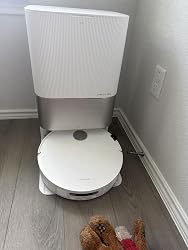
Dreame Aqua10 Roller AE Troubleshooting Guide
Robot Vacuum Will Not Start or Charge
If the robot does not charge, begin with simple checks.
Make sure the dock is receiving power and that the robot is positioned correctly against the charging contacts.
Inspect the contacts for dust or residue and verify that the robot is not obstructed from fully seating on the dock.
If the problem continues, check the app for error messages and restart the robot according to the manufacturer’s instructions.
Bottom Line: Most charging problems should first be approached as a docking, contact, or power issue before assuming the battery has failed.
Robot Is Not Mopping Properly
Poor mopping can result from several causes.
First, check the clean-water supply and confirm that the tank contains sufficient water. Then inspect the roller for debris and confirm that it is installed correctly.
If the roller is excessively dirty, allow the dock to perform a cleaning cycle and inspect the water pathways if the issue persists.
Also review the selected mopping intensity and room-specific settings in the app.
Bottom Line: When mopping performance drops, check water flow, roller condition, settings, and installation before assuming the mop system is defective.
Robot Leaves Streaks, Water or Dirty Marks
Streaks can occur when a roller becomes contaminated, when dirty-water extraction is compromised, or when a floor contains unusually heavy residue.
Inspect the roller and scraper area first.
If the robot leaves excessive moisture, check whether the roller is correctly installed and whether the dock-cleaning process is operating normally.
For sticky or dried stains, remember that even powerful robotic cleaners may require multiple passes.
Bottom Line: A roller mop improves continuous cleaning, but severe dried-on contamination may still require repeated passes or manual treatment.
Navigation, App or Wi-Fi Problems
Connectivity problems should generally be handled systematically.
Restart the robot and app first. Then verify the wireless connection and check whether the robot has received a firmware update.
If the map appears corrupted, rebuilding the map may be necessary.
Avoid moving the robot manually during mapping unless required, because unexpected relocation can interfere with localization.
Bottom Line: Good mapping depends on consistent robot placement, stable connectivity, and current software.
Dreame Aqua10 Roller AE vs Other Dreame Robot Vacuums
Aqua10 Roller AE vs Aqua10 Roller
The AE and standard Aqua10 Roller share the broader roller-mopping concept, but exact specifications and feature availability can vary by market.
The AE’s main selling point is that it preserves the core AquaRoll experience while reducing the price through a simpler technology package.
That makes the AE particularly interesting for buyers who care about floor cleaning more than having every premium navigation feature.
Bottom Line: Choose the AE when the roller mop is the priority; consider the higher model when advanced automation and intelligence matter more.
Aqua10 Roller AE vs Aqua10 Ultra Roller
This is the most important internal comparison.
The Ultra version adds more sophisticated technology, including camera-assisted object recognition, a more advanced climbing system, a larger 6,400mAh battery, and additional roller technology.
The AE keeps 30,000Pa suction and the core roller-mopping approach while removing several of those premium conveniences. HardwareZone’s hands-on review concluded that the AE retained much of the cleaning performance but required more floor preparation and supervision.
The difference is therefore less about whether the AE can clean and more about how intelligently and effortlessly it can clean.
Bottom Line: The Ultra is the better all-around technology package; the AE is the value-oriented choice for buyers who primarily want excellent roller mopping.
Aqua10 Roller AE vs Dreame X50 Ultra
The X50 Ultra represents a different design philosophy within Dreame’s lineup.
The Aqua10 family places unusual emphasis on roller-based wet cleaning, while the X50 focuses heavily on versatile whole-home cleaning and advanced mobility.
For predominantly hard floors, the Aqua10 AE’s fresh-water roller is the more distinctive feature.
For homes with complicated mixed flooring and challenging physical transitions, the broader capabilities of a higher-end model may matter more.
Bottom Line: Choose the Aqua10 AE for roller-mopping specialization; choose a model such as the X50 Ultra when all-around mobility and mixed-surface versatility are higher priorities.
Which Dreame Model Should You Buy?
The answer depends on your home.
For hard-floor-heavy homes, the Aqua10 Roller AE is compelling because its most important technology is retained.
For users who want maximum obstacle recognition, the Ultra is more appropriate.
For buyers dealing with difficult thresholds, the Ultra’s advanced climbing hardware is more attractive.
For users who simply want a robot that can vacuum and mop every day without frequent manual intervention, the AE offers a strong balance.
Bottom Line: Don’t automatically buy the most expensive Dreame model. Buy the model whose expensive technology solves a problem you actually have.
Dreame Aqua10 Roller AE vs Competing Robot Vacuums
Aqua10 Roller AE vs Roborock Flagship Models
Roborock’s premium robotic vacuums compete strongly in navigation, app software, obstacle handling, and automated mopping.
The major Aqua10 advantage is the roller philosophy: continuously refreshed wet cleaning rather than relying exclusively on conventional mop pads.
For users who place a high priority on hard-floor stain maintenance, that distinction can matter more than small differences in app features.
Bottom Line: Roborock remains a major competitor, but the Aqua10 AE’s fresh-water roller is its strongest differentiation.
Aqua10 Roller AE vs Ecovacs Deebot Models
Ecovacs has also pushed advanced mopping, navigation, and automated docking into the premium category.
When comparing these machines, look beyond maximum suction claims. Consider actual mopping design, roller or pad cleaning, carpet protection, navigation, obstacle recognition, and dock maintenance.
The best model depends heavily on floor composition and how much automation you want.
Bottom Line: Compare complete cleaning systems rather than headline suction numbers.
Aqua10 Roller AE vs Narwal Robot Mop/Vacuum Systems
Narwal is particularly associated with sophisticated mopping systems.
The important distinction is again the cleaning mechanism. A roller mop continuously refreshed with water behaves differently from rotating mop pads.
If your home has lots of hard flooring and frequent wet messes, the AquaRoll design deserves serious consideration.
If your priority is a different balance between vacuuming and mopping, a competing system may make more sense.
Bottom Line: Roller versus pad mopping is one of the most useful decision points when comparing premium robot vacuums.
Which Type of Robot Vacuum Is Best?
There is no universal winner.
Roller mops are particularly attractive for continuous hard-floor wet cleaning.
Dual rotating pads can provide strong scrubbing and are widely used in premium systems.
Flat pads remain simpler and often work well for routine light mopping.
A traditional vacuum-and-mop combination still has the advantage when deep cleaning is required and automation is less important.
Bottom Line: The best robot vacuum is the one whose cleaning technology matches the messes and flooring in your home.
Buyer’s Intent — Is the Dreame Aqua10 Roller AE Worth Buying?
Who Should Buy the Aqua10 Roller AE?
The Aqua10 Roller AE makes the most sense for homeowners with substantial hard-floor areas.
It is especially attractive to people who deal with frequent footprints, kitchen messes, pet paw marks, dust, crumbs, and daily floor traffic.
Pet owners with mostly hardwood, tile, marble, vinyl, or parquet can also benefit from the combination of powerful vacuuming and automated wet cleaning.
It is less compelling if you simply want occasional vacuuming and rarely mop.
Bottom Line: Buy it for frequent automated floor maintenance—not merely because it has a large suction number.
Who Should Avoid It?
Budget-conscious buyers should look carefully at whether they need premium roller technology.
If you live in a small apartment with very little floor traffic, a less expensive robotic vacuum may provide nearly all the practical benefit you need.
Similarly, homes dominated by thick carpeting may benefit more from a robot optimized specifically for carpet pickup.
The AE is also not ideal for users who dislike maintaining large docks, water tanks, dust bags, and replacement consumables.
Bottom Line: Its premium automation is valuable only if you will use it frequently.
Best Alternatives at Different Budgets
A sensible AdSense-friendly recommendation strategy should divide alternatives by use case rather than simply declaring one model “best.”
For a budget buyer, prioritize basic vacuuming and simple mopping.
For a mid-range buyer, look for automated dust emptying, reliable mapping, and stronger mopping.
For a premium buyer, compare roller systems, hot-water washing, hot-air drying, obstacle avoidance, multi-floor mapping, and advanced smart-home integration.
For pet owners, brush design and hair pickup should receive more attention than suction claims alone.
For hard-floor cleaning, roller-mop technology should be a major comparison criterion.
Bottom Line: Alternatives should be matched to budget and cleaning priorities rather than selected solely from brand reputation.
Is the Premium Price Justified?
The answer depends on how frequently you clean.
If the robot runs several times each week, the automated dock, fresh-water roller, hot-water cleaning, and drying system can provide meaningful convenience.
If you only use a robot occasionally, the premium hardware becomes harder to justify.
The AE is also more attractive when compared with the Ultra based on actual priorities. HardwareZone found the AE’s basic cleaning results remained close to the Ultra on common hard-floor surfaces, despite the AE’s technological compromises.
Bottom Line: The AE’s value is strongest when its roller mop and automated maintenance eliminate chores you would otherwise perform manually.
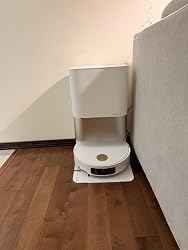
Pros and Cons of the Dreame Aqua10 Roller AE
Major Advantages
- Fresh-water AquaRoll mopping.
- 30,000Pa maximum suction.
- HyperStream Detangling DuoBrush.
- Automated roller washing.
- 100°C / 212°F hot-water cleaning.
- Hot-air roller drying.
- Extending side brush.
- Large 4.0L clean-water tank.
- Large 3.5L dirty-water tank.
- LDS + dual-laser 3D structured-light navigation.
- Up to four-map storage.
- Automated dust emptying.
Important Disadvantages
- Simpler obstacle recognition than the Ultra Roller.
- No retractable LiDAR turret.
- Smaller 5,200mAh battery than the Ultra’s 6,400mAh battery.
- Lower threshold-crossing capability than the Ultra.
- Large docking station.
- Requires periodic manual maintenance.
- Optional detergent hardware may be necessary for users who want automated solution dosing.
- Carpet deep cleaning may still require a conventional vacuum.
Best Features for the Money
The five features that matter most are:
- AquaRoll fresh-water mopping — the main reason to buy this model.
- 30,000Pa suction — gives it substantial dry-cleaning capability.
- Hot-water roller washing — reduces manual mop hygiene work.
- Hot-air drying — helps keep the roller ready for the next run.
- Automated dust emptying and water management — dramatically reduces daily intervention.
Biggest Reasons Not to Buy
Don’t buy it simply because 30,000Pa sounds impressive.
Avoid it if your home has mostly thick carpet, if you rarely mop, if your budget is limited, or if your floor frequently contains cables, toys, clothing, and small objects that require sophisticated recognition.
Also consider the physical size of the dock before purchase.
Bottom Line: The Aqua10 AE is an excellent fit for the right home, but its value decreases quickly when its roller-mopping strengths do not match your cleaning needs.
Final Verdict — Should You Buy the Dreame Aqua10 Roller AE?
Overall Cleaning Performance
The Aqua10 Roller AE’s most compelling characteristic is the way it approaches wet cleaning.
Instead of dragging the same damp pad across the house, the AquaRoll system is designed around continuous fresh-water supply and dirty-water extraction. That gives the robot a distinctly different mopping behavior.
Vacuuming is also strong, with 30,000Pa suction and the HyperStream DuoBrush providing a solid foundation for everyday debris pickup.
Independent observations of the AE found its hard-floor cleaning and roller mopping surprisingly close to the more expensive Ultra model, while the biggest compromises appeared in navigation and convenience features.
Bottom Line: The AE’s cleaning hardware is considerably more important than its missing luxury features, particularly for hard-floor households.
Best Use Cases
The best environment is a home with a large amount of hard flooring, moderate-to-heavy daily traffic, and frequent wet messes.
It is also a strong candidate for households where the robot needs to operate regularly without someone cleaning the mop manually after every run.
Pet owners can benefit from the combination of vacuuming and mopping, although carpet-heavy homes should still maintain a conventional vacuum for deeper cleaning.
Bottom Line: Hard floors, pets, children, kitchens, and frequent everyday messes are where this machine makes the most sense.
Value for Money
The AE’s value depends on how you compare it.
Compared with ordinary robot vacuums, it is expensive.
Compared with a flagship roller-mop system, however, its compromises are more understandable. Dreame has retained the central mopping technology while reducing some of the more advanced intelligence.
That is why the AE can be considered a strategic rather than purely budget-oriented product: it gives buyers access to the core cleaning concept without requiring them to pay for every flagship feature.
Bottom Line: The AE offers its best value when you want premium roller mopping but do not need the Ultra’s most advanced navigation and mobility technology.
Final Rating
| Category | Rating |
|---|---|
| Vacuuming | 9/10 |
| Hard-floor mopping | 9.5/10 |
| Carpet cleaning | 7.5/10 |
| Navigation | 8/10 |
| Obstacle avoidance | 7.5/10 |
| Edge cleaning | 9/10 |
| App experience | 8.5/10 |
| Maintenance automation | 9.5/10 |
| Pet-hair performance | 8.5/10 |
| Value | 8.5/10 |
| Overall | 8.8/10 |
Final Verdict: The Dreame Aqua10 Roller AE is a compelling premium robotic vacuum for people who care deeply about hard-floor mopping. Its AquaRoll system, 30,000Pa suction, automated dock, hot-water roller cleaning, and drying system create a highly automated cleaning experience.
The biggest compromise is not cleaning ability but intelligence. The AE’s simpler navigation and obstacle recognition mean users should keep floors reasonably clear.
For hard-floor-heavy homes, the trade-off is reasonable. For buyers who want the absolute most advanced navigation, threshold climbing, and object recognition Dreame offers, the Ultra remains the stronger choice.
People Also Ask: Dreame Aqua10 Roller AE FAQs
Is the Dreame Aqua10 Roller AE worth buying?
Yes, particularly for homes with mostly hard floors and frequent wet-floor cleaning. Its main advantage is the AquaRoll fresh-water roller, which continuously refreshes the cleaning surface instead of relying on one increasingly dirty mop pad. Buyers who prioritize advanced obstacle recognition may prefer the higher-end Ultra.
How does the Dreame Aqua10 Roller AE mop floors?
The AquaRoll system supplies fresh water to the rotating roller while dirty water is removed as the roller turns. This allows the robot to continuously refresh its mopping surface. The dock subsequently washes the roller with hot water and dries it with heated air.
Does the Dreame Aqua10 Roller AE use fresh water to mop?
Yes. Fresh water is delivered to the roller during operation, while dirty water is collected separately. This is the central difference between the AquaRoll approach and conventional mop-pad systems that can become progressively dirtier during a long cleaning run.
How powerful is the Dreame Aqua10 Roller AE?
The robot is rated for maximum suction of 30,000Pa. That is a very high headline suction specification, but actual cleaning performance also depends on airflow, brush design, floor contact, filtration, and debris type. The AE combines the suction system with its HyperStream Detangling DuoBrush.
Can the Dreame Aqua10 Roller AE clean carpets?
Yes, but carpet performance should be considered separately from hard-floor mopping. The system is designed to protect carpets from its wet roller using the AutoSeal Roller Guard. For thick or high-pile carpets, a conventional vacuum may still provide deeper cleaning.
How does the Aqua10 Roller AE clean its roller?
The robot returns to its docking station, where the roller can be washed using water heated to 100°C / 212°F. After washing, hot air dries the roller. This automated process reduces the amount of manual mop washing required between cleaning cycles.
How often does the Dreame Aqua10 Roller AE need maintenance?
Maintenance frequency depends on usage, pets, floor conditions, and cleaning frequency. Although the dock automates dust emptying and roller cleaning, users should still periodically inspect the roller, brushes, filters, water tanks, and other consumable components.
Can the Aqua10 Roller AE handle pet hair?
It is well suited to everyday pet hair on hard floors because of its powerful suction and HyperStream Detangling DuoBrush. However, carpet pet-hair pickup can be more challenging. Homes with heavy shedding and thick carpets should supplement robotic cleaning with an upright or cordless vacuum.
How high of a threshold can the Aqua10 Roller AE cross?
The AE is specified to cross a 2.2cm single-layer step or a 4cm double-layer obstacle. Exact real-world performance depends on the shape and material of the threshold. Homes with unusually high or irregular transitions should measure them before purchase.
Does the Dreame Aqua10 Roller AE support multiple maps?
Yes. Dreame’s AE specifications support up to four saved maps, making the robot more practical for multi-floor homes. However, the robot still needs to be physically moved between floors because multi-floor mapping does not mean it can climb stairs independently.
What is the difference between the Aqua10 Roller AE and Aqua10 Ultra Roller?
The AE keeps the core roller-mopping concept and 30,000Pa suction but removes or simplifies several premium technologies. The Ultra adds more advanced obstacle recognition, a larger battery, and stronger threshold-climbing hardware. The AE therefore focuses on preserving core cleaning performance at a lower price.
Is the Aqua10 Roller AE better than a conventional robot mop?
For users who want continuous fresh-water roller cleaning, it can be. The roller is designed to remain cleaner during a cleaning run than a conventional pad that becomes progressively soiled. However, conventional mop systems can still offer strong scrubbing performance, and the best choice depends on your floor types and cleaning habits.
Bottom Line: The Aqua10 Roller AE is best understood not as a robot vacuum with a mop attachment, but as an integrated autonomous floor-cleaning system built around continuous roller mopping, high-powered vacuuming, and automated dock maintenance.