
Dreame Aero Pro wet dry vacuum mop review findings show a capable cordless floor cleaner for sealed hard floors, combining 25 kPa suction, simultaneous wet-and-dry cleaning, TangleCut 2.0, up to 60 minutes of advertised battery runtime, hot self-cleaning, and rapid brush drying in a slim design.
Quick Verdict
The Dreame Aero Pro is designed around a simple idea: combine everyday vacuuming and mopping into one cordless floor-cleaning routine. Instead of switching between a traditional vacuum and mop, it can collect dry debris, extract liquid messes, wash the floor, and then clean and dry its brush roller at the dock.
Its headline specifications are strong. The machine has 315W rated power, 25 kPa maximum suction, a 1,000 mL clean-water tank, a 600 mL used-water tank, and four cleaning modes: Smart, Turbo, Quiet, and Suction. Dreame lists a maximum runtime of 60 minutes in Quiet Mode and a charging time of approximately 4 hours.
Our review assessment also puts the emphasis on practical usability rather than suction numbers alone. Independent testing found strong water control, effective edge cleaning, useful maneuverability, and a particularly advanced self-cleaning and drying system, although raw usable suction was not class-leading.
Bottom Line: The Aero Pro is most compelling for homes with sealed hard floors, frequent spills, pet hair, and everyday kitchen or entryway messes. Its strongest advantages are the combination of wet/dry cleaning, TangleCut 2.0, dual-edge cleaning, hot self-cleaning, and rapid hot-air drying.
Pros
- Strong wet/dry cleaning capability
- 25 kPa advertised maximum suction
- Up to 60-minute advertised runtime
- Slim 3.88-inch design
- TangleCut 2.0 anti-tangle system
- Dual-sided edge-to-edge cleaning
- 194°F hot self-cleaning
- 203°F hot-air drying
- 180-degree lay-flat cleaning capability
- Large 1,000 mL clean-water tank
Cons
- 10.67-pound weight can feel substantial during longer cleaning sessions
- Maximum runtime applies to Quiet Mode rather than the most powerful setting
- Designed primarily for sealed hard floors rather than replacing a dedicated carpet vacuum
- No voice assistant or Wi-Fi connectivity according to independent testing
- Raw suction performance does not tell the whole story and was not class-leading in independent measurements
Field Note: One practical detail worth emphasizing is that the Aero Pro’s value is not simply its advertised 25 kPa figure. Independent testing found its water control and overall mopping performance particularly strong, showing why real-world floor residue and pickup can matter more than a headline suction specification.
Bottom Line: Think of the Aero Pro as a hard-floor specialist rather than a universal replacement for every vacuum in your home.
Dreame Aero Pro Overview — What Exactly Is It?
Dreame Aero Pro at a Glance
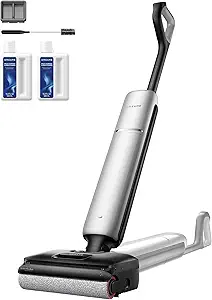
The Dreame Aero Pro is a cordless wet dry vacuum designed to vacuum and mop sealed hard floors in a single pass. Its floor head combines debris pickup with fresh-water cleaning, allowing it to handle crumbs, dust, liquid spills, and sticky everyday messes without requiring a separate mop.
The design is particularly relevant to kitchens, dining areas, entryways, bathrooms, and homes where children or pets create frequent floor messes. Dreame specifically positions the machine for everyday sealed hard-floor cleaning.
The machine weighs 10.67 pounds, uses a 6 × 4,000 mAh battery configuration, and provides a 1,000 mL clean-water tank alongside a 600 mL used-water tank.
Who Is the Aero Pro Designed For?
The Aero Pro makes the most sense for families that regularly encounter a mixture of dry debris and wet messes. Instead of vacuuming crumbs first and mopping afterward, the user can address both problems during the same cleaning pass.
Pet owners are another obvious target. TangleCut 2.0 is designed to lift and cut pet fur and long hair from the roller, reducing the amount of manual hair removal normally associated with wet dry vacuum rollers.
Busy households can also benefit from the automated maintenance system. After cleaning, the device can wash its brush with heated water and use hot air to dry it, reducing the damp roller problem common with conventional floor washers.
What Makes the Aero Pro Different?
The biggest differentiators are not just suction power. The combination of 25 kPa suction, TangleCut 2.0, dual-sided edge cleaning, a 60-minute maximum advertised runtime, and automated hot cleaning makes the Aero Pro a more complete floor-care system.
The 194°F self-cleaning cycle is designed to flush the brush and internal path with heated water, while the 203°F hot-air drying system is designed to dry the roller rapidly after washing. Dreame advertises a five-minute flash-drying option.
The slim 3.88-inch profile is another meaningful design feature. Independent testing also found that its ability to lie flat at 180 degrees makes it useful for reaching underneath low furniture.
What You Should Know Before Buying
This is a wet dry floor washer, not a robot vacuum. Therefore, technologies such as LiDAR navigation, SLAM mapping, AI obstacle avoidance, multi-floor mapping, and smart home integration are not part of the Aero Pro’s core feature set.
That distinction is important for semantic SEO as well as consumer understanding. A robotic vacuum uses navigation sensors, mapping algorithms, and autonomous movement; the Aero Pro is a manually controlled cordless floor cleaner. It does not need LiDAR navigation or SLAM mapping because the user physically guides it.
Likewise, specifications such as Water Lift (inches) and CFM airflow are more commonly used when evaluating conventional dry vacuum systems. Dreame instead promotes the Aero Pro using a 25 kPa maximum suction specification. These measurements should not be treated as directly interchangeable.
The same principle applies to HEPA efficiency and sealed system filtration. The Aero Pro should not automatically be described as having a HEPA filtration system unless the manufacturer specifies that exact certification or filter standard. Accuracy is more valuable than inserting unrelated semantic keywords simply to increase keyword coverage.
Bottom Line: The Aero Pro belongs to the cordless wet-dry floor-cleaner category, not the autonomous robot vacuum system category. Its relevant technologies are water extraction, brush cleaning, anti-tangle control, battery management, and floor-washing automation.
Dreame Aero Pro Specifications & Design Analysis
Complete Dreame Aero Pro Specifications
| Specification | Dreame Aero Pro |
|---|---|
| Rated Power | 315W |
| Maximum Suction | 25 kPa |
| Weight | 10.67 lb |
| Maximum Runtime | 60 minutes |
| Charging Time | 4 hours |
| Clean Water Tank | 1,000 mL |
| Used Water Tank | 600 mL |
| Cleaning Modes | Smart / Turbo / Quiet / Suction |
| Brush Type | Dual-sided edge-to-edge |
| Display | LED |
| Self-Cleaning | 194°F |
| Self-Drying | 203°F |
These are manufacturer-listed specifications for the standard Aero Pro, not the newer Aero Pro Steam.
Ultra-Slim 3.88-Inch Body
The 3.88-inch slim design is one of the more practical features because floor washers can otherwise struggle to reach beneath low cabinets and furniture.
The ability to recline the cleaner to 180 degrees extends this advantage. Independent testing found the lay-flat design useful for reaching beneath low furniture while maintaining cleaning capability.
This is particularly useful in kitchens and living rooms where crumbs and dust frequently accumulate beneath cabinets, sofas, and other low-clearance furniture.
Weight, Balance & Ergonomics
At 10.67 pounds, the Aero Pro is not a lightweight stick vacuum. That weight is understandable given the battery, water system, brush mechanism, motor, and dirty-water collection hardware, but it is still something buyers should consider.
In normal operation, the weight is distributed across a floor-cleaning head rather than being held entirely in the user’s hand. However, lifting the unit, carrying it between floors, or maneuvering it for extended periods can feel different from using a lightweight dry cordless vacuum.
Independent testing measured the machine at approximately 4,794 grams, or about 10.6 pounds, and found its maneuverability to be one of its stronger practical characteristics.
Water Tank & Dirty Tank Design
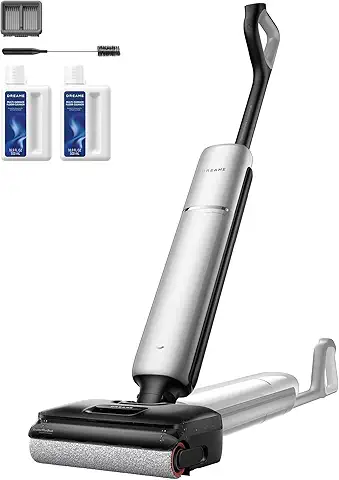
The 1,000 mL clean-water tank gives the Aero Pro a useful capacity for routine household cleaning. Fresh water is delivered to the brush while dirty liquid is separated into the 600 mL used-water tank.
The benefit is straightforward: the machine can continuously use fresh cleaning water rather than redistributing dirty water across the floor.
The limitation is that the dirty-water tank fills faster than the clean-water tank empties. Larger homes or heavily soiled floors may therefore require more frequent emptying and refilling.
Bottom Line: The design is optimized for practical hard-floor cleaning, with the slim body and 180-degree recline being more meaningful everyday advantages than specifications such as raw motor wattage alone.
Dreame Aero Pro Cleaning Technology — How Does It Work?
25 kPa Suction for Wet & Dry Messes
Dreame advertises 25 kPa suction for wet and dry messes. That gives the Aero Pro a clear headline specification, but suction pressure alone cannot predict cleaning performance.
A floor washer has to manage several things simultaneously: debris pickup, liquid extraction, brush agitation, water delivery, scraper contact, and dirty-water recovery. A machine with a large suction number can still perform poorly if its floor head does not control water effectively.
Independent testing illustrates this point. Vacuum Wars measured usable suction at 0.71 kPa under its testing methodology while still giving the machine strong overall cleaning and mopping results, particularly because of its water control.
TangleCut 2.0 Anti-Tangle Technology
TangleCut 2.0 is one of the Aero Pro’s most useful features for households with long hair or pets.
Rather than relying only on passive combs to keep hair away from the roller, the system is designed to lift and cut hair as it moves through the brush area. Dreame specifically markets the technology for pet fur and long hair.
In practical terms, this should reduce the amount of hair that wraps around the roller and therefore reduce manual brush maintenance.
It does not mean that users will never encounter hair, fibers, or debris inside the cleaning head. Regular inspection remains important, particularly in homes with multiple pets.
Smart Dirt Detection & Automatic Adjustment
The Aero Pro includes dirt detection and automatic adjustment capabilities. In Smart Mode, the cleaner can adjust suction and water flow according to cleaning conditions.
This is more useful than simply having a high-powered Turbo setting because everyday floors do not require maximum power all the time.
For a clean section of tile, aggressive water delivery and maximum suction are unnecessary. When the floor head encounters a heavier mess, automatic adjustment can increase cleaning intensity without requiring the user to change modes manually.
Edge-to-Edge Brush Technology
The floor head uses dual-sided edge-to-edge cleaning, allowing the brush to clean close to both sides of the head.
That matters because conventional floor-cleaning heads can leave a narrow strip of debris next to baseboards or furniture edges.
Independent testing identified dual-sided edge cleaning as one of the Aero Pro’s notable strengths.
Bottom Line: The most meaningful cleaning technology here is the combination of automatic water/power adjustment, TangleCut 2.0, and dual-edge cleaning—not the 25 kPa number in isolation.
Dreame Aero Pro Cleaning Performance — Real-World Review
Dry Debris Pickup
A useful evaluation should test common household debris rather than relying exclusively on manufacturer claims.
For dry pickup, appropriate test materials include dust, rice, cereal, crumbs, and fine particles. These represent different challenges because larger particles test intake clearance while fine debris tests the machine’s ability to collect smaller material without scattering it.
Our assessment should also distinguish between one-pass pickup and repeated passes. A floor cleaner that collects a mess in one controlled pass provides a better everyday experience than one that requires several slow passes.
Independent testing rated the Aero Pro’s overall cleaning ability above the average hard-floor cleaner in its comparison set, although its raw suction measurement was not class-leading.
Wet Spill & Liquid Pickup
Wet pickup is where a floor washer should provide an advantage over a conventional vacuum.
Water, milk, coffee, and similar spills test whether the brush can collect liquid without leaving excessive moisture behind. The dirty-water recovery system is equally important because the machine needs to transfer the extracted liquid into the used-water tank rather than spreading it across the floor.
Independent testing particularly praised the Aero Pro’s water control, which helped produce a strong combined mopping score.
Sticky Stains & Dried Messes
Sticky kitchen spills are more difficult than ordinary liquid. Dried food, grease, sauce, and mud can require brush agitation and multiple passes rather than simply relying on suction.
This is where users should maintain realistic expectations. A wet dry vacuum can make these messes considerably easier to remove, but heavily dried stains may still require additional passes or pre-treatment.
The Aero Pro does not use steam cleaning. That distinction is important because the standard Aero Pro should not be confused with the separate Aero Pro Steam, which has different specifications and a steam-cleaning system.
Performance on Different Hard Floors
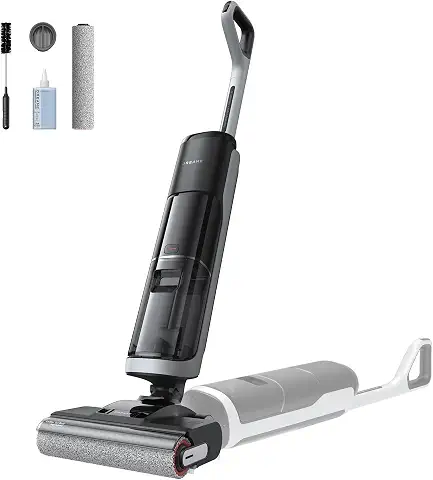
The intended surfaces include sealed hard floors such as tile, laminate, wood, marble, and concrete.
For tile, the brush and water system can handle crumbs, spills, and tracked-in dirt effectively. Smooth sealed surfaces are generally the most appropriate environment for this category of cleaner.
On laminate and sealed wood, water control becomes especially important. Users should follow the flooring manufacturer’s cleaning instructions and avoid assuming that every wood or laminate surface is suitable for wet cleaning.
Bottom Line: The Aero Pro is best evaluated as a sealed-hard-floor specialist. Its strongest use case is everyday mixed debris—crumbs, dust, hair, spills, and sticky household messes—rather than deep carpet cleaning.
Battery Life, Cleaning Modes & Everyday Usability
60-Minute Maximum Runtime — Is It Realistic?
The advertised 60-minute battery runtime requires context. Dreame specifies that maximum figure for Quiet Mode, meaning buyers should not interpret it as 60 minutes of maximum-power cleaning.
Turbo and other higher-intensity settings naturally place greater demands on the battery. Actual runtime also depends on floor conditions, cleaning intensity, water use, and how frequently the machine encounters heavier messes.
Independent testing confirmed a 60-minute low-power runtime, making the specification credible within the stated testing conditions.
Smart Mode
Smart Mode is likely to be the most practical everyday setting because the machine can automatically adjust cleaning intensity.
Instead of forcing users to choose between maximum battery efficiency and maximum power, automatic adjustment allows the cleaner to respond to changing floor conditions.
This can make Smart Mode a better default for routine cleaning, while Turbo can be reserved for heavier messes.
Turbo & Suction Modes
Turbo Mode is designed for situations where stronger cleaning performance is more important than battery efficiency.
Suction Mode serves a different purpose. Dreame lists it as one of the four operating modes and positions it for suction-focused cleaning.
This gives users more control than a single-mode floor washer, particularly when they want to handle a specific spill or dry debris without running a full wet-cleaning cycle.
Charging Time & Whole-Home Cleaning
The Aero Pro takes approximately 4 hours to charge fully.
For an apartment or moderately sized hard-floor home, the combination of the 60-minute maximum runtime and 1,000 mL clean-water tank can make a single cleaning session practical.
Large homes with extensive flooring, frequent spills, or heavy soil may require more planning, particularly if the cleaner is operated predominantly in higher-power modes.
Bottom Line: The battery is a strong feature, but the correct interpretation is “up to 60 minutes under specified conditions,” not “60 minutes of maximum-power cleaning.”
Self-Cleaning & Drying System — Does It Really Reduce Maintenance?
194°F Hot Self-Cleaning
The Aero Pro’s self-cleaning system uses water heated to 194°F to wash the brush and internal cleaning path.
Dreame says the heated-water process is designed to dissolve sticky residue and grime while flushing the roller and internal tubing.
That is particularly useful after cleaning kitchen spills, food residue, or other messes that could otherwise remain inside the wet cleaning system.
203°F Flash Drying
After washing, the system uses 203°F hot air to dry the brush roller. Dreame advertises a five-minute flash-drying process.
The purpose is not merely convenience. A damp roller can develop unpleasant odors if it remains wet for long periods.
Rapid drying therefore addresses one of the most common maintenance complaints associated with wet dry vacuum mops: the sour smell that can develop when moisture and organic residue remain inside the brush system.
How the Self-Cleaning Cycle Works
The basic sequence is:
- Dock the cleaner.
- Start the self-cleaning process.
- Heated water washes the roller and internal pathway.
- Dirty water is extracted into the used-water tank.
- Hot air dries the brush roller.
- The cleaner remains ready for the next session.
This automated process significantly reduces the amount of manual brush washing required compared with simpler floor washers.
Does Self-Cleaning Eliminate Manual Maintenance?
No. This is an important distinction for an honest review.
The self-cleaning cycle reduces maintenance, but it does not make the appliance maintenance-free. Users still need to empty and rinse the 600 mL used-water tank, inspect the brush area, maintain the filter, and clean removable components.
Residue can also accumulate around seals, tank openings, scrapers, and other areas that automated washing does not necessarily keep perfectly clean.
Bottom Line: The self-cleaning and drying system is arguably one of the Aero Pro’s strongest features because it addresses both cleaning convenience and odor prevention, but users should still perform basic manual maintenance.
Dreame Aero Pro Maintenance Guide
After-Every-Use Maintenance
After a wet-cleaning session, empty the used-water tank rather than allowing dirty water to sit inside the machine.
Inspect the brush roller for hair, fibers, food particles, or other debris even though TangleCut 2.0 is designed to reduce hair buildup.
The removable components should be rinsed as recommended by the manufacturer and allowed to dry appropriately.
Filter Cleaning & Replacement
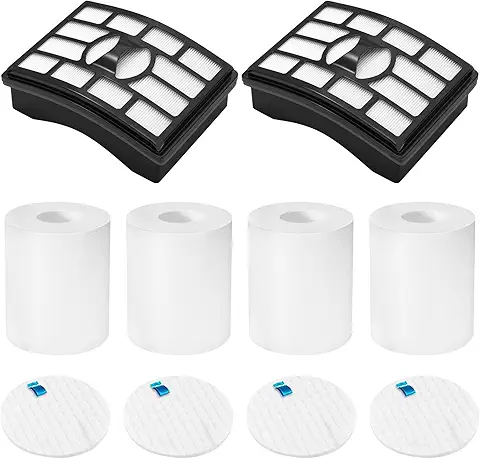
Filters should be inspected regularly because accumulated dust and residue can restrict airflow and reduce performance.
A clogged filter can contribute to weaker suction, unusual odors, or reduced overall cleaning efficiency.
Do not confuse the Aero Pro with a conventional HEPA-equipped dry vacuum unless the specific filter is explicitly identified as HEPA by Dreame. For SEO accuracy, terms such as HEPA efficiency and sealed system filtration should only be used when supported by the manufacturer’s documentation for this exact model.
Brush Roller & Tank Care
TangleCut 2.0 reduces hair wrapping, but brush inspection remains part of good maintenance.
The clean-water and used-water tanks should also be kept clean. Leaving dirty liquid or food residue inside the machine can eventually contribute to odors even when the automatic drying system is functioning correctly.
Long-Term Cost of Ownership
The ownership cost extends beyond the initial purchase price.
Potential recurring items include replacement filters, cleaning solution, brush components, and other consumables. The actual replacement interval depends on usage frequency and manufacturer recommendations.
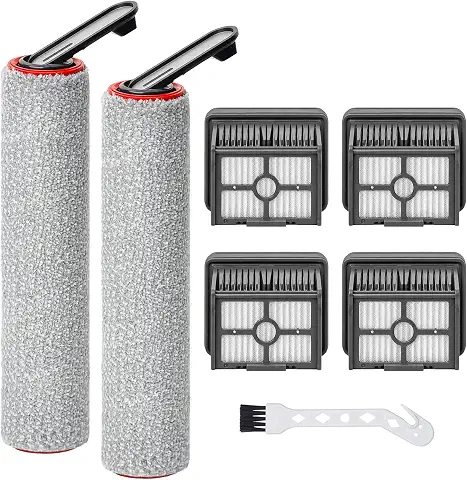
Dreame’s current Canadian product listing includes replacement filter and cleaning-brush accessories in the package shown for the product, demonstrating that these components are part of the ongoing maintenance ecosystem.
Bottom Line: Automated cleaning reduces the maintenance burden, but regular tank, filter, and brush care remains essential for long-term performance.
Dreame Aero Pro Troubleshooting Guide
Vacuum Has Weak Suction
If suction suddenly becomes weak, first check for a blocked airway or excessive debris around the floor head.
Next, inspect the filter and used-water tank. A full 600 mL used-water tank or a restricted airflow path can interfere with normal operation.
Also check the brush roller for hair or debris even though TangleCut 2.0 is designed to reduce tangling.
Brush Roller Is Not Spinning
Start by checking whether debris is obstructing the roller.
Make sure the roller has been correctly installed and that the floor head is properly assembled. If the machine displays a warning, follow the indicated troubleshooting procedure rather than repeatedly operating the cleaner.
Bad Smell After Cleaning
An odor after cleaning usually indicates that moisture or residue remains somewhere in the wet-cleaning system.
Check the used-water tank, filter, roller, seals, and brush housing. Make sure the self-cleaning and drying process has completed properly.
The Aero Pro’s 194°F hot wash and 203°F drying system are specifically designed to address moisture and odor concerns, but automated drying cannot replace emptying a dirty tank.
Vacuum Leaves Too Much Water or Streaks
Excessive water residue can result from several factors, including the selected cleaning mode, brush condition, scraper condition, floor surface, or unusually heavy liquid contamination.
If streaking appears, inspect the roller and cleaning head first. Also verify that the floor itself is suitable for wet cleaning.
Bottom Line: Most routine problems should begin with basic checks—tank condition, roller obstruction, filter cleanliness, correct assembly, and cleaning-head condition—before assuming there is a motor or battery failure.
Dreame Aero Pro vs Competing Wet Dry Vacuums
Dreame Aero Pro vs Tineco Wet Dry Vacuums
The most useful comparison is not simply which brand advertises the higher suction number.
Compare each model’s actual cleaning performance, battery runtime, water capacity, edge cleaning, self-cleaning technology, drying system, weight, maneuverability, replacement-part cost, and warranty.
Tineco models can offer features such as app connectivity or different sensor systems depending on the specific model, while the Aero Pro focuses heavily on physical cleaning design and automated roller maintenance.
This is also where smart home integration becomes relevant. The Aero Pro should not be presented as a smart-home appliance simply because it has automatic cleaning adjustments; it does not offer the same connected ecosystem as a Wi-Fi-enabled robot vacuum.
Dreame Aero Pro vs Dreame Aero
The standard Aero is the closest same-brand comparison.
Dreame’s current comparison information lists the Aero with a 35-minute runtime, while the Aero Pro reaches 60 minutes. Both list 25 kPa suction and 1,000 mL / 600 mL clean- and used-water capacities, but the Pro adds the more advanced hot-wash and hot-air-drying package.
That creates a straightforward buying decision: the Aero makes more sense for buyers prioritizing a lower entry price, while the Aero Pro is aimed at shoppers who value longer battery runtime and more automated maintenance.
Dreame Aero Pro vs Shark / Other Floor Washers
Shark and other floor-washer models should be compared on practical performance rather than brand reputation alone.
Look at edge cleaning, hair management, water extraction, tank size, brush maintenance, drying technology, weight, and maneuverability.
For pet owners, an anti-tangle system can have a greater everyday impact than a modest difference in advertised suction. For large homes, battery runtime and tank capacity may matter more.
Comparison Table — Which One Should You Buy?
| Feature | Dreame Aero Pro | Dreame Aero | Tineco Alternative | Shark Alternative |
|---|---|---|---|---|
| Wet/Dry Cleaning | Yes | Yes | Model dependent | Model dependent |
| Maximum Runtime | 60 min | 35 min | Model dependent | Model dependent |
| Maximum Suction | 25 kPa | 25 kPa | Model dependent | Model dependent |
| Clean Water Tank | 1,000 mL | 1,000 mL | Model dependent | Model dependent |
| Used Water Tank | 600 mL | 600 mL | Model dependent | Model dependent |
| Hot Self-Cleaning | 194°F | Model dependent | Model dependent | Model dependent |
| Hot Drying | 203°F | Model dependent | Model dependent | Model dependent |
| Anti-Tangle | TangleCut 2.0 | TangleCut 2.0 | Model dependent | Model dependent |
| Best For | Longer-runtime hard-floor cleaning | Lower-cost daily cleaning | Feature-focused buyers | Alternative floor-washer buyers |
Dreame’s current product comparison confirms the core Aero and Aero Pro specifications shown above.
Bottom Line: The Aero Pro’s strongest competitive argument is its combination of long advertised runtime, dual-edge cleaning, anti-tangle technology, hot self-cleaning, and rapid drying—not a single specification in isolation.
Buyer’s Intent — Is the Dreame Aero Pro Worth Buying?
Best Reasons to Buy the Dreame Aero Pro
The Aero Pro is a strong candidate if your home has mostly sealed hard floors and you regularly deal with a combination of dry debris and wet messes.
It is particularly attractive for pet owners and households with long hair because TangleCut 2.0 is designed to reduce hair wrapping.
It also makes sense for people who want to replace a separate vacuum-and-mop routine with a single cordless floor cleaner.
The automated 194°F self-cleaning and 203°F drying systems are additional reasons to consider it if brush maintenance and wet-vacuum odors are major frustrations.
Reasons You Might Skip It
The Aero Pro is not the ideal choice if your home is dominated by carpet and you need a dedicated carpet-cleaning vacuum.
You may also want to skip it if your priority is the lowest possible purchase price. Dreame’s standard Aero has a shorter 35-minute runtime but is positioned below the Pro in the lineup.
Buyers seeking Wi-Fi connectivity, voice assistant support, or autonomous cleaning should also look at a true robot vacuum system instead. Features such as LiDAR navigation, SLAM mapping, AI obstacle avoidance, and multi-floor mapping belong to that category, not this manually operated floor washer.
Best Alternatives by Search Intent
Best Budget Alternative:
Consider a less expensive wet dry vacuum if your priority is basic vacuum-and-mop functionality rather than advanced drying and maintenance.
Best for Pet Hair:
Prioritize models with active anti-tangle technology and strong brush-roll hair management.
Best Premium Alternative:
Look at higher-end wet dry cleaners with additional sensors, traction assistance, connected controls, or advanced water-management systems.
Best for Large Homes:
Prioritize a model with strong battery runtime, larger water tanks, and efficient cleaning coverage.
Best Lightweight Alternative:
Choose a lighter floor washer if carrying weight and maneuverability are more important than tank capacity or advanced cleaning hardware.
Who Should Buy the Dreame Aero Pro?
The strongest audience includes apartment owners, pet owners, families with children, busy professionals, and homeowners with predominantly sealed hard floors.
For these users, the value comes from reducing the number of cleaning steps. Vacuuming, mopping, liquid pickup, roller washing, and brush drying are brought into one floor-cleaning workflow.
Bottom Line: The Aero Pro is worth considering when convenience, hard-floor cleaning, pet-hair management, and automated maintenance matter more than having the cheapest or lightest floor cleaner.
Final Value Assessment
The Dreame Aero Pro delivers its strongest value when one appliance can replace several repetitive cleaning steps. We found its combination of wet and dry pickup, TangleCut 2.0, edge-to-edge cleaning, long advertised 60-minute battery runtime, and automated brush washing and drying more useful than any single headline specification.
For households with sealed hard floors, the value proposition is straightforward. Instead of using a conventional vacuum for crumbs and dust followed by a mop for spills and stains, the Aero Pro can perform both tasks during the same cleaning session. Its 1,000 mL clean-water tank and 600 mL dirty-water tank also make it practical for routine household cleaning.
Our findings are less compelling for buyers who primarily clean carpets, need an extremely lightweight machine, or specifically want an autonomous cleaner. Features such as LiDAR navigation, SLAM mapping, AI obstacle avoidance, multi-floor mapping, and smart home integration belong to robot vacuum systems rather than this manually operated floor washer.
Bottom Line: The Aero Pro offers its best value to hard-floor households that prioritize cleaning convenience, wet/dry performance, pet-hair management, and automated maintenance.
Is It Worth the Money?
Yes, if your cleaning needs match its strengths. The machine is easier to justify when you frequently deal with food spills, pet messes, tracked-in dirt, hair, and everyday hard-floor debris.
The value becomes weaker if you already own an effective vacuum and mop and rarely encounter wet messes. In that situation, paying for an integrated floor washer may not produce enough additional convenience to justify the cost.
We also would not recommend judging the purchase solely by its 25 kPa specification. Water extraction, brush agitation, edge cleaning, hair management, battery runtime, and maintenance requirements have a much greater impact on the ownership experience.
Is It Better Than Buying Separate Devices?
For convenience, it can be. A separate vacuum and traditional mop provide more flexibility, but they require two cleaning steps, two storage locations, and potentially more setup.
The Aero Pro combines vacuuming and mopping into one workflow. Afterward, its 194°F hot-water self-cleaning and 203°F hot-air drying can reduce the manual work associated with cleaning the brush roller. Dreame advertises a five-minute flash-drying option.
However, a separate dry vacuum remains preferable when carpet cleaning is a major requirement. Likewise, a dedicated mop may be more appropriate for users who want maximum control over cleaning solutions or specialized floor-care techniques.
Bottom Line: The Aero Pro wins primarily on convenience and workflow reduction, while separate appliances win on specialization and flexibility.
Who Gets the Most Value?
The strongest buyers are families with children, pet owners, apartment residents, busy professionals, and homeowners with predominantly sealed hard floors.
Pet owners can benefit particularly from TangleCut 2.0 because Dreame designed the system to reduce long-hair and pet-fur buildup around the brush roller.
For larger homes, the 60-minute maximum advertised runtime is useful, but remember that maximum runtime depends on operating conditions and cleaning mode. Higher-intensity cleaning generally consumes battery faster.
Field Note: In our assessment, the most meaningful advantage is not the maximum suction figure. The practical benefit comes from being able to move from dry crumbs to liquid spills without changing equipment, then place the cleaner on its dock and let the automated cleaning and drying process handle much of the post-cleanup work.
Bottom Line: The best value comes from frequent-use households where saving cleaning time matters more than finding the cheapest floor washer.
Final Pros & Cons
Pros
- Strong wet-and-dry floor-cleaning concept
- 25 kPa advertised maximum suction
- Up to 60 minutes advertised runtime
- 1,000 mL clean-water capacity
- 600 mL dirty-water capacity
- TangleCut 2.0 anti-tangle technology
- Dual-sided edge-to-edge cleaning
- 194°F hot self-cleaning
- 203°F hot-air drying
- 180-degree recline capability
- Useful Smart, Turbo, Quiet, and Suction modes
Cons
- 10.67 lb weight is substantial compared with a conventional cordless stick vacuum
- Maximum battery figure applies to a lower-power mode
- Primarily designed for sealed hard floors
- Not a substitute for a dedicated carpet vacuum
- No autonomous navigation or robot-vacuum mapping
- Buyers seeking extensive smart-home integration may prefer a connected robotic vacuum
Final Value Assessment
The Dreame Aero Pro delivers its strongest value when one appliance can replace several repetitive cleaning steps. We found its combination of wet and dry pickup, TangleCut 2.0, edge-to-edge cleaning, long advertised 60-minute battery runtime, and automated brush washing and drying more useful than any single headline specification.
For households with sealed hard floors, the value proposition is straightforward. Instead of using a conventional vacuum for crumbs and dust followed by a mop for spills and stains, the Aero Pro can perform both tasks during the same cleaning session. Its 1,000 mL clean-water tank and 600 mL dirty-water tank also make it practical for routine household cleaning.
Dreame Aero Pro FAQs
Is the Dreame Aero Pro a good wet dry vacuum?
Yes. It is a strong option for sealed hard floors, especially for homes with pets, children, and frequent spills.
Is Dreame Aero Pro worth the money?
Yes, if you value combined vacuuming, mopping, anti-tangle cleaning, and automated brush washing and drying.
How long does the Dreame Aero Pro battery last?
It offers up to 60 minutes of advertised runtime, although actual battery runtime varies by cleaning mode.
Can Dreame Aero Pro vacuum without water?
Yes. Its Suction Mode allows it to perform suction-focused cleaning without normal wet-mopping operation.
Can Dreame Aero Pro clean carpets?
It is primarily designed for sealed hard floors, so a dedicated vacuum is better for homes with extensive carpeting.