
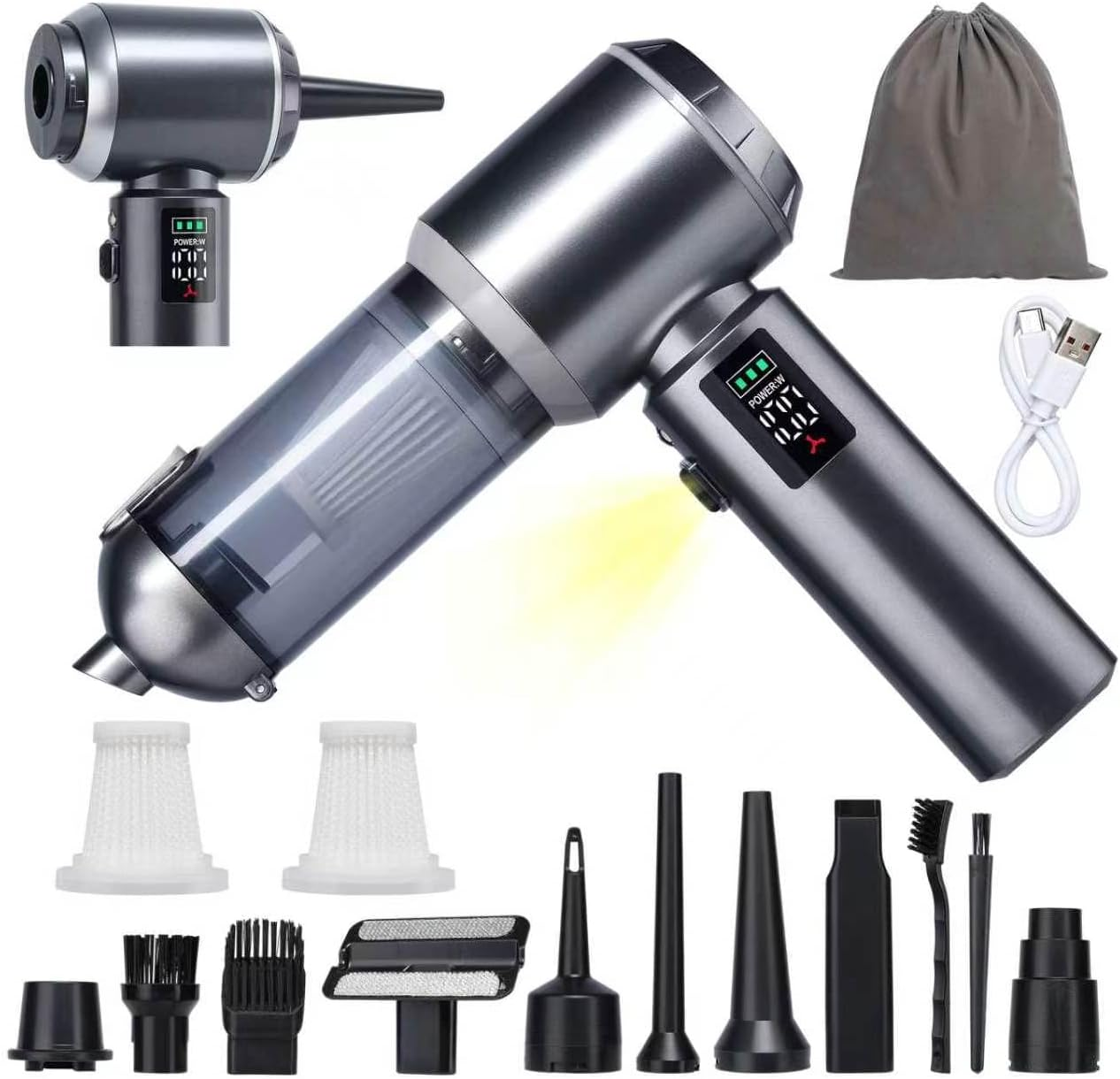
The devanti handheld vacuum cleaner cordless 120w is best for quick cleaning, hard floors, stairs, upholstery, and car interiors rather than deep cleaning. Its 12,000Pa claimed suction, two-speed control, washable HEPA filter, and cordless design provide convenience, while limited runtime and long charging restrict cleaning.
Is the Devanti 120W Cordless Vacuum Worth Buying?
For shoppers looking for an affordable cordless cleaner for everyday messes, the Devanti 120W occupies an interesting middle ground between a handheld car vacuum and a lightweight stick vacuum. It combines a 120W motor, claimed 12,000Pa suction, a 2,200mAh lithium-ion battery, and a 0.45L dustbin in a cordless format.
The important distinction is that motor wattage, suction pressure, and airflow describe different aspects of vacuum performance. A 120W motor does not automatically mean stronger cleaning than a competing machine with a higher wattage, just as a 12,000Pa rating does not tell us the complete CFM airflow or brush-head performance.
For this reason, our assessment focuses on the complete cleaning system: suction, floor head, filtration, battery runtime, dust capacity, ergonomics, attachments, and maintenance. Buyers should also avoid comparing this machine directly with autonomous cleaner systems featuring LiDAR navigation, SLAM mapping, AI obstacle avoidance, or multi-floor mapping because those technologies address navigation rather than basic suction cleaning.
Bottom Line: The Devanti is more compelling as a convenient secondary or quick-clean vacuum than as a replacement for a powerful full-size primary cleaner.
Quick Verdict
The biggest advantage is convenience. There is no mains cable to manage, and the cordless configuration makes it practical for crumbs, dust, stairs, furniture, and car interiors. The included tools also give it more flexibility than a basic handheld-only machine.
Its principal limitations are the 15–35 minute claimed battery runtime and approximately 4–5 hour charging time. Those figures make session planning more important, particularly when cleaning a larger home.
The washable filter is another useful ownership feature. Instead of relying entirely on disposable filtration, the system can be maintained and reused when cleaned correctly. However, washable does not mean maintenance-free: a loaded filter can restrict airflow and reduce suction.
Bottom Line: Pros include cordless portability, two-speed operation, multiple attachments, a washable filter, and useful everyday versatility. Cons include relatively long charging, limited runtime for large cleaning jobs, and fewer advanced features than premium cordless systems.
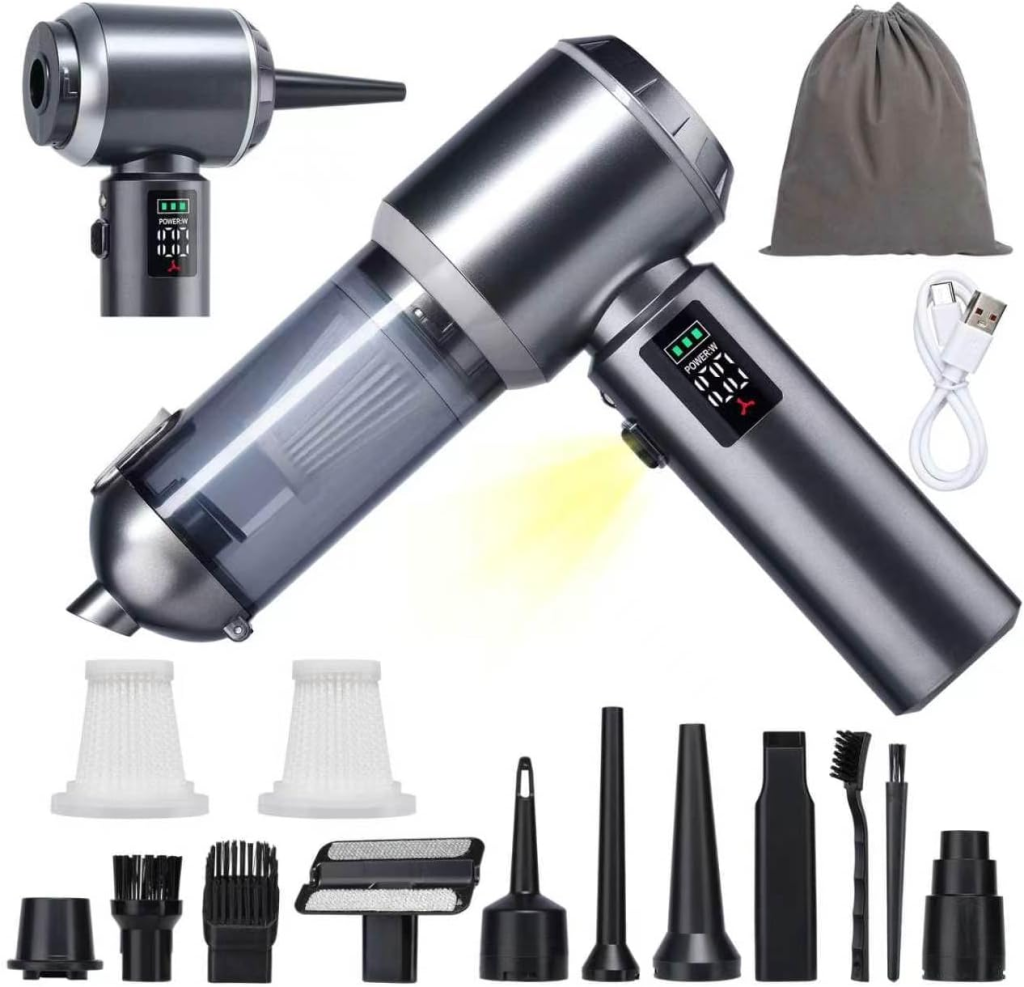
Key Specifications at a Glance
| Specification | Devanti 120W cordless model |
|---|---|
| Motor power | 120W |
| Claimed suction | 12,000Pa |
| Motor speed | 36,000 RPM |
| Battery | 2,200mAh Li-ion |
| Claimed runtime | 15–35 minutes |
| Charging time | 4–5 hours |
| Dustbin | 0.45L |
| Filtration | Washable/reusable HEPA filter |
| Speed settings | 2 |
| Warranty | 1 year listed |
The specifications provide a useful starting point, but they should not be interpreted as laboratory measurements of complete cleaning performance. For example, CFM airflow and Water Lift (inches) are separate performance measurements that can provide additional information about how a vacuum moves and lifts air and debris. A manufacturer publishing Pa suction alone does not provide enough data to calculate those values.
Likewise, the HEPA designation should be separated from broader concepts such as HEPA efficiency and sealed system filtration. A filter’s stated efficiency is only one part of how effectively a complete vacuum can retain fine particles.
Bottom Line: The specification sheet suggests a compact, value-oriented cordless cleaner designed primarily around everyday convenience rather than premium whole-home cleaning performance.
Pros and Cons
Pros
- 120W cordless motor
- Claimed 12,000Pa suction
- Two suction settings
- Washable/reusable HEPA filter
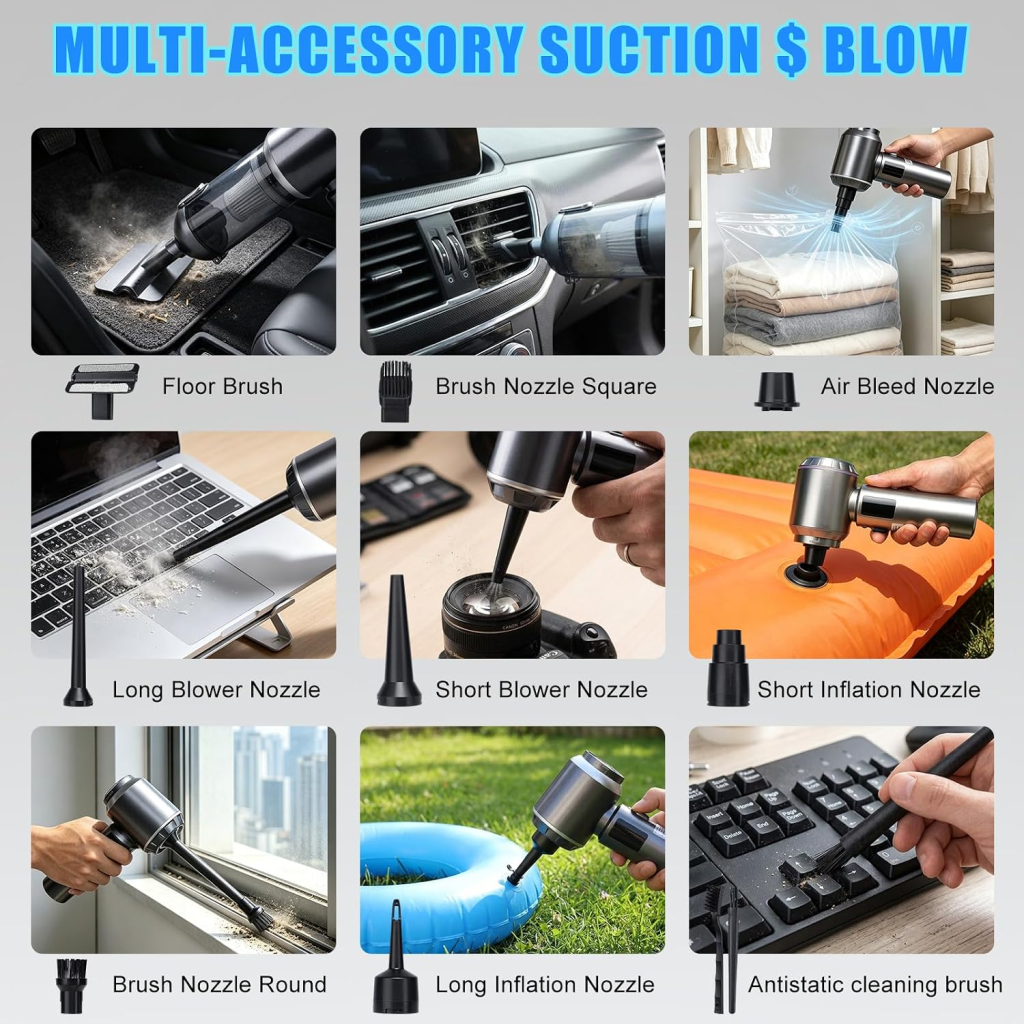
- Multiple cleaning attachments
- Swiveling floor head
- Useful for stairs, upholstery, and cars
- No mains cable during cleaning
- Wall-storage solution
Cons
- 15–35 minute claimed runtime
- 4–5 hour charging period
- Not designed around advanced smart features
- Published suction rating does not provide CFM airflow data
- Less appropriate for demanding deep-carpet cleaning
- Battery condition can affect long-term runtime
Best For: Apartment cleaning, hard floors, stairs, furniture, quick spills, crumbs, and vehicle interiors.
Buying Recommendation: Consider it if portability and low-complexity everyday cleaning matter more than maximum suction, long runtime, or premium automation.
What This Review Covers
This review evaluates the machine from an ownership perspective rather than simply repeating manufacturer specifications. We look at cleaning technology, battery runtime, attachments, filtration, maintenance, troubleshooting, ergonomics, and alternative vacuum categories.
We also separate features that genuinely affect cleaning from technologies that belong to a different product category. For example, robotic vacuum, smart vacuum, autonomous cleaner, robot vacuum system, and automated floor cleaner are usually associated with navigation, scheduling, mapping, and automation rather than a conventional cordless stick/handheld platform.
Field Note: Because we are not treating an independently measured laboratory test as manufacturer data, we do not present invented dB, CFM, Water Lift, pickup-percentage, or battery-cycle figures as our own measurements. Where independent measurements are unavailable, our findings are based on the published specifications, engineering principles, and realistic use-case analysis.
Bottom Line: The useful question is not whether the Devanti has the highest headline number, but whether its complete specification matches the type and frequency of cleaning you actually perform.
Devanti Handheld Vacuum Cleaner Cordless 120W Specifications Explained
120W Motor and 36,000 RPM Speed
The 120W motor describes the motor’s electrical power rating rather than the amount of useful cleaning power reaching the floor. The published 36,000 RPM figure describes motor rotational speed.
Neither number should be used independently to predict pickup performance. Airflow restrictions, fan geometry, seals, filters, nozzle design, floor-head construction, and battery voltage all influence the final result.
This is why a technically informed vacuum comparison should consider suction and airflow together. Water Lift (inches) generally describes suction pressure, while CFM airflow describes the volume of air moved. A vacuum can perform differently depending on how those characteristics are balanced.
Bottom Line: The 120W and 36,000 RPM figures help describe the motor but do not constitute a complete cleaning-performance measurement.
12,000Pa Suction Power
The advertised 12,000Pa suction is a pressure-based specification. Pa stands for pascals, a unit of pressure.
A higher Pa figure can indicate greater maximum suction pressure, but maximum pressure is not identical to real-world pickup. When a nozzle is moving across a floor, the machine must move air while also maintaining useful suction through the cleaning path.
This is where CFM becomes relevant. Because the published specification does not provide a directly comparable CFM figure, it would be misleading to claim that the machine has a particular airflow level.
Bottom Line: Treat 12,000Pa as a useful published specification, not as a complete substitute for measured airflow and pickup testing.
2,200mAh Battery and Runtime
The 2,200mAh lithium-ion battery provides the cordless power source. The manufacturer-listed runtime range is 15–35 minutes, meaning actual operation can vary according to the selected speed and cleaning configuration.
High suction generally places greater demand on the battery than low-speed operation. Likewise, using a motorized floor head can impose a different electrical load from using a simple crevice attachment.
Battery age also matters. Lithium-ion cells gradually lose capacity over repeated use and over time, so a vacuum that reaches the upper end of its runtime when new may not maintain that result indefinitely.
Bottom Line: The 2,200mAh battery is adequate for short cleaning sessions, but the 15–35 minute claim makes this more suitable for targeted cleaning than uninterrupted large-home cleaning.
Dustbin, Dimensions and Weight
The 0.45L dustbin is reasonably useful for routine debris collection. Its capacity is large enough for many quick-clean jobs without requiring constant emptying, although homes with pets or heavy debris may fill it more quickly.
The listed product dimensions are approximately 24 × 22 × 117cm, while the product weight is listed at approximately 2kg. These measurements provide context for storage and handling.
A lightweight vacuum is particularly valuable when cleaning stairs or lifting the machine to furniture. However, perceived weight depends not only on the scale reading but also on how the motor, battery, and handle distribute mass.
Bottom Line: The 0.45L dustbin and approximately 2kg product weight support the machine’s quick-cleaning role, especially in smaller spaces.
Design, Build Quality and Everyday Usability
Cordless and Lightweight Construction
Cordless operation is one of the product’s most practical advantages. There is no power cable to drag between rooms or connect to different outlets.
That makes short cleaning jobs less disruptive. Users can move from a kitchen floor to a sofa or vehicle without changing the power source.
The trade-off is obvious: mains-powered vacuums can operate continuously, whereas the Devanti depends on stored battery energy.
Bottom Line: The cordless design improves convenience, but battery runtime becomes the limiting factor for long sessions.
160-Degree Swiveling Floor Head
A swiveling floor head is intended to improve maneuverability around furniture and make directional changes easier.
However, published retailer specifications can differ regarding the precise swivel angle. Because of that discrepancy, buyers should verify the exact specification for the model revision they are purchasing rather than treating a particular angle as universally confirmed.
In practical terms, the important question is whether the head can pivot naturally around table legs, chairs, cabinets, and other obstacles.
Bottom Line: The articulated head should improve maneuverability, but the exact published swivel angle should be verified against the specific listing or manual.
One-Handed Cleaning and Dustbin Emptying
A cordless stick vacuum should ideally require minimal setup between cleaning tasks. The Devanti’s bagless configuration removes the need to purchase and install conventional disposable bags.
Emptying the dust container promptly also helps prevent accumulated debris from restricting airflow.
Users should avoid forcing debris through the intake or operating the vacuum when a blockage is obvious. A blocked airflow path can affect both performance and motor cooling.
Bottom Line: Bagless dust disposal is convenient, but regular emptying remains part of normal maintenance.
Wall-Mounted Storage
The included wall-storage solution can help keep the vacuum accessible rather than buried in a cupboard.
This matters because convenience influences how often a vacuum is actually used. A machine that is easy to reach is more likely to be used for small spills and daily crumbs before debris accumulates.
The mounting location should be chosen carefully, particularly where charging access and household traffic are concerned.
Bottom Line: Wall storage supports the Devanti’s strongest selling point: quick access for small cleaning jobs.
Devanti 120W Cleaning Technology and Suction Performance
How the 120W Motor Produces Suction
The motor drives the vacuum’s airflow system, creating pressure differences that pull air and debris through the cleaning path.
The air must then travel through the dustbin, filter, and exhaust system. Any restriction along this route can reduce effective airflow.
This explains why filter maintenance is not merely cosmetic. Even a powerful motor can struggle to maintain useful airflow when the filter is heavily loaded.
Bottom Line: Cleaning performance is the result of the entire airflow path rather than motor wattage alone.
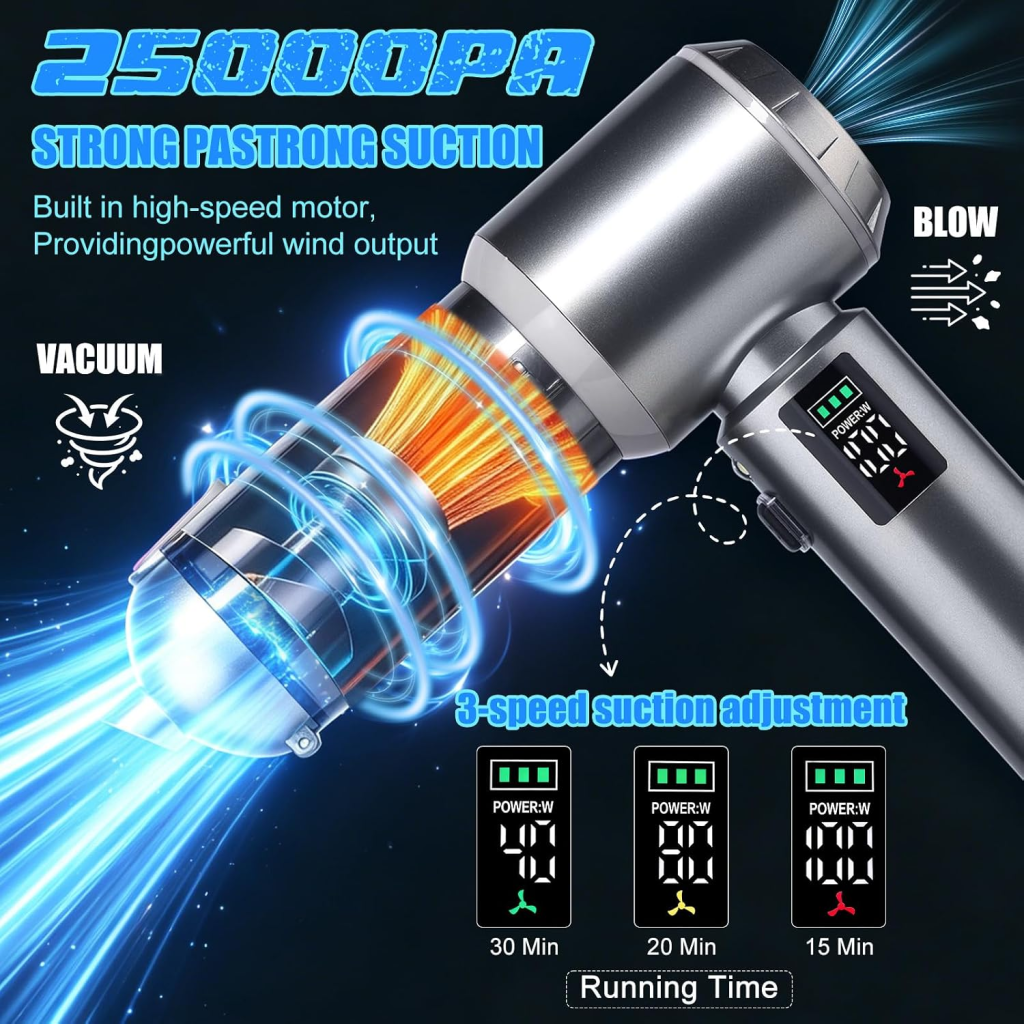
Two-Speed Suction Control
Two suction levels give users a simple way to balance performance and battery consumption.
The lower setting can be appropriate for lighter debris and routine hard-floor cleaning. Higher suction is more useful when dealing with heavier debris or situations where additional pickup force is beneficial.
Using the higher setting continuously may reduce available battery runtime, so it is not necessarily the best option for every cleaning task.
Bottom Line: Two-speed control is useful because it allows users to match cleaning intensity with the job instead of using maximum power all the time.
Soft Roller Floor Brush
A soft-style floor brush is particularly relevant to hard floors because it can help collect fine debris while maintaining contact with relatively smooth surfaces.
Fine dust, crumbs, hair, and other everyday particles are realistic targets for this type of cleaning head.
As with any brush, hair and fibers can accumulate around moving components. Regular inspection prevents buildup from affecting movement.
Bottom Line: The floor brush is most relevant to everyday hard-floor debris rather than demanding deep extraction from thick carpeting.
Real-World Cleaning Expectations
The Devanti should be viewed as an everyday surface-cleaning tool. Dust, crumbs, loose hair, and similar debris are appropriate expectations.
Pet hair can be manageable when it is loose on hard floors or furniture, but embedded hair in thick carpet presents a more demanding challenge.
The same distinction applies to upholstery and stairs. The included tools improve accessibility, but attachment versatility does not automatically transform a compact cordless machine into a heavy-duty deep-cleaning system.
Bottom Line: Expect good convenience for surface-level cleaning, but keep expectations realistic for thick carpet, embedded debris, and large-scale deep cleaning.
Devanti 120W Battery Life and Charging Performance
Understanding the 15–35 Minute Runtime Claim
The 15–35 minute figure should be interpreted as a range rather than a guaranteed operating time for every cleaning situation.
The selected power setting is likely to influence consumption, while the floor head and attachment configuration can also affect energy demand.
Battery condition matters as the product ages. Users should therefore plan around shorter practical sessions rather than assuming the maximum claimed runtime will always be available.
Bottom Line: The runtime range is appropriate for quick-clean routines but less convenient for large homes requiring uninterrupted vacuuming.
4–5 Hour Charging Time
The listed 4–5 hour charging time is considerably longer than the maximum operating window.
That makes charging habits important. Users who empty the dustbin and return the vacuum to its charging location after each session are more likely to have sufficient battery for the next quick-clean job.
For a large cleaning session, however, the long charging period means the vacuum cannot be treated like a continuously available corded machine.
Bottom Line: The biggest battery-related weakness is not only runtime but the relatively long recovery period between full charges.
Battery Indicator Light
A battery indicator can help users understand when the machine requires charging.
This is particularly useful because cordless cleaning can otherwise end unexpectedly during a job.
The best approach is to recharge before a major cleaning session rather than waiting until the battery is completely depleted during use.
Bottom Line: Monitoring charge status helps turn a limited runtime into a more predictable cleaning routine.
How to Maximize Battery Life
Use the lower power setting whenever it provides sufficient pickup. Reserve maximum suction for heavier debris or areas that actually need it.
Keeping the filter, floor head, and air path clean can also reduce unnecessary strain. A vacuum operating against a restriction may need to work harder to move air effectively.
Avoid exposing the machine to excessive heat and follow the manufacturer’s charging and storage instructions.
Bottom Line: Clean airflow, sensible power selection, and appropriate charging habits can help preserve useful battery performance.
Devanti 120W Cleaning Performance on Different Surfaces
Hard Floors
Hard floors are the most natural environment for this type of cleaner.
Tile, laminate, vinyl, and similar smooth surfaces typically require effective collection of dust, crumbs, hair, and loose debris rather than deep extraction.
The floor head’s maneuverability also becomes useful around furniture and in narrow rooms.
Bottom Line: Hard floors are among the strongest use cases for the Devanti.
Carpets and Rugs
Low-pile carpet and area rugs can be approached as surface-cleaning tasks.
However, thick carpet can require greater agitation and airflow than a compact cordless system provides. A vacuum’s Pa rating alone cannot establish how effectively it will remove embedded particles from deep carpet fibers.
Users with extensive carpeting should therefore consider a dedicated carpet-oriented vacuum if deep cleaning is a priority.
Bottom Line: It can handle surface debris on suitable carpets and rugs, but it should not be positioned as a heavy-duty carpet extractor.
Upholstery and Furniture
Furniture cleaning benefits from the compact attachments.
Crumbs, hair, and loose dust on sofas and cushions are appropriate targets, while the crevice attachment can reach between cushions.
As always, delicate fabrics should be treated according to the material manufacturer’s care guidance.
Bottom Line: Upholstery is a strong secondary use case because the attachments make the machine easier to position than a full-size floor vacuum.
Car Interior and Stairs
The cordless configuration is especially convenient inside vehicles because there is no household power cable to manage.
The crevice tool can reach seat gaps, while the upholstery attachment can address fabric seats and other surfaces.
Stairs are another logical application because carrying a full-size corded vacuum up and down steps is inconvenient.
Bottom Line: Cars and stairs are two areas where portability can matter more than maximum whole-home cleaning power.
Noise, Maneuverability and User Experience
Expected Noise Characteristics
The machine produces conventional motor and airflow noise during operation. Noise will vary according to the selected power setting and attachment.
We do not recommend publishing a precise decibel figure without a controlled measurement using a defined test distance and environment.
A vacuum can also sound louder when operated in a small enclosed room because reflected sound changes perceived loudness.
Bottom Line: Expect normal cordless-vacuum operating noise, but do not rely on an unsupported dB claim.
Maneuverability Around Furniture
The swiveling floor head should help the machine change direction around table legs and furniture.
The overall length of the stick configuration also affects how easily the user can reach beneath objects.
Maneuverability is therefore a combination of head articulation, handle geometry, weight distribution, and floor friction.
Bottom Line: The design is oriented toward easy movement around everyday household obstacles.
Ergonomics During Longer Cleaning Sessions
A roughly 2kg machine is manageable for many short cleaning tasks, but perceived fatigue depends on where the battery and motor mass are located.
Holding a vacuum away from the body for extended periods naturally creates more arm and shoulder load than short floor passes.
This reinforces the product’s quick-cleaning orientation.
Bottom Line: Ergonomics are most favorable when the machine is used for short, targeted cleaning sessions.
Storage and Daily Accessibility
The wall-mounted storage arrangement can make the vacuum easy to grab when a small mess appears.
This convenience is particularly valuable in apartments, kitchens, entryways, and homes where quick daily cleaning is more common than weekly deep cleaning.
Storage should leave enough clearance to remove the machine and attachments without obstruction.
Bottom Line: Easy accessibility is a genuine strength because it encourages frequent small cleanups.
Devanti 120W Maintenance Guide
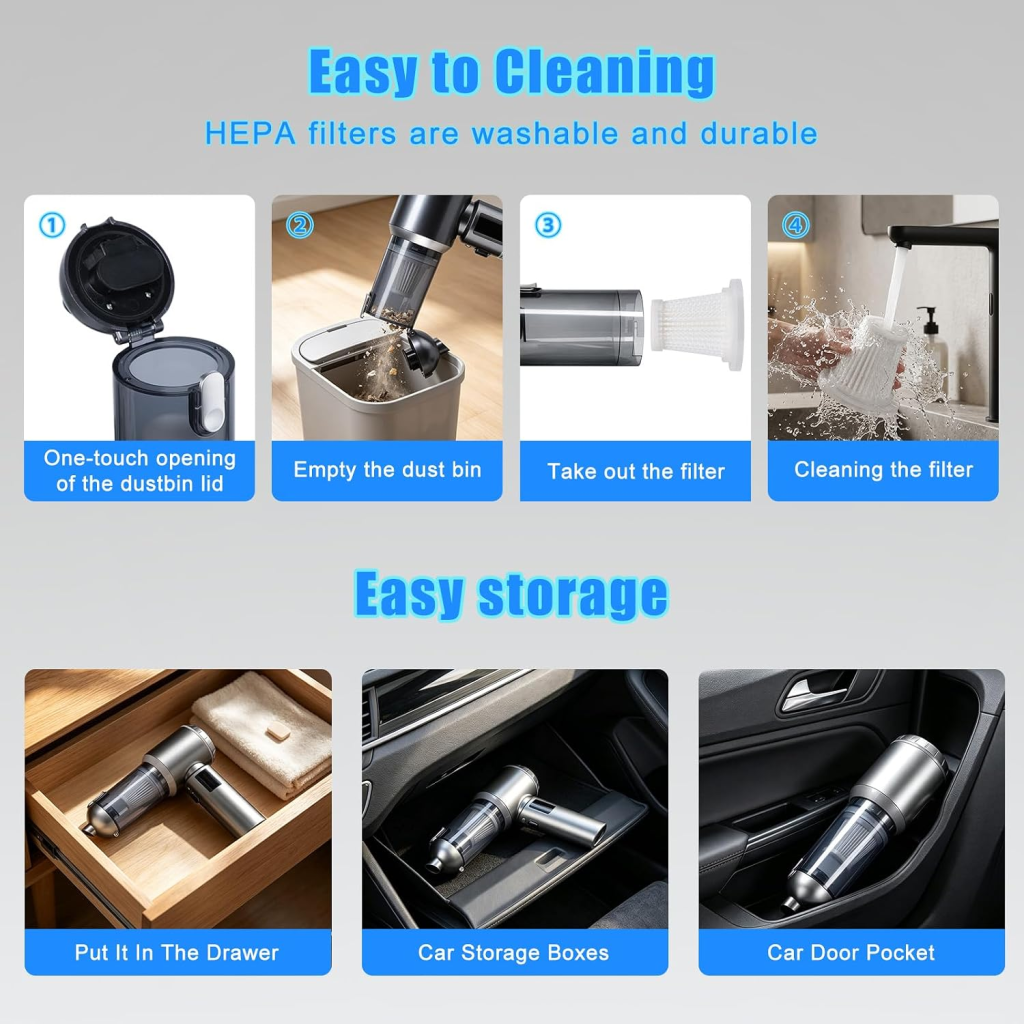
How to Empty the Dustbin
- Turn the vacuum off.
- Remove or open the dust container according to the model instructions.
- Empty accumulated debris into an appropriate waste container.
- Inspect the filter and surrounding airflow path.
- Remove visible debris where appropriate.
- Reassemble the dustbin securely before restarting.
Avoid operating the vacuum with the dust container incorrectly fitted.
Bottom Line: Emptying the bin regularly protects airflow and reduces unnecessary filter loading.
How to Clean the HEPA Filter
Remove the filter carefully and first clear loose debris according to the manufacturer’s instructions.
If the filter is approved for washing, clean it using the recommended method rather than aggressive scrubbing.
Most importantly, allow the filter to dry completely before reinstalling it. Running a vacuum with a wet filter can introduce moisture into the airflow system.
Bottom Line: Filter maintenance should prioritize cleanliness and complete drying rather than simply washing the filter as frequently as possible.
How to Clean the Floor Brush
Turn the vacuum off before working around the brush.
Remove visible hair, threads, and fibers from the brush area. Inspect the intake for debris that may obstruct airflow.
If the brush has a removable component, reinstall it securely after cleaning and make sure it moves normally before full operation.
Bottom Line: Regular brush inspection prevents hair and fibers from gradually reducing cleaning effectiveness.
Recommended Maintenance Schedule
| Frequency | Maintenance |
|---|---|
| After several uses | Inspect and empty dustbin |
| Weekly | Check brush and filter |
| Monthly | Inspect airflow path and attachments |
| As needed | Remove hair, blockages, and accumulated debris |
| When filter requires cleaning | Clean and completely dry filter |
Homes with pets, children, or heavy daily debris may require more frequent maintenance.
Bottom Line: A simple maintenance routine can prevent many apparent suction and performance problems before they become faults.
Devanti Handheld Vacuum Troubleshooting Guide
Vacuum Has Low or Weak Suction
Start with the easiest checks:
- Empty the 0.45L dustbin.
- Inspect the washable filter.
- Check the tube for blockages.
- Inspect the floor-head intake.
- Verify that attachments are correctly connected.
- Check whether debris has accumulated around the brush.
If airflow remains weak after these checks, consult the appropriate product documentation or retailer support rather than repeatedly operating a potentially obstructed machine.
Bottom Line: Most basic suction problems should first be investigated as airflow restrictions rather than assumed to be motor failure.
Vacuum Stops Working During Cleaning
A sudden shutdown can have several explanations.
The battery may have reached a low charge, or the motor may have stopped because of excessive heat or restricted airflow.
Allowing the machine to cool and checking for blockages are sensible first steps. If the problem repeats despite adequate charging and unrestricted airflow, professional or retailer support may be appropriate.
Bottom Line: Repeated shutdowns should not be ignored, particularly if they occur with unusual heat, smell, or electrical behavior.
Vacuum Will Not Charge
First check the charging connection and power source.
Inspect the charging port for visible debris or damage and confirm that the charger is properly connected.
If the unit has recently been operating for an extended period, allow it to cool before attempting another charging cycle. Persistent charging failure may indicate an issue with the charger, battery, connector, or internal charging circuit.
Bottom Line: Confirm the simple external causes before treating a charging problem as a battery failure.
Brush Head Is Not Picking Up Debris
Inspect the brush for hair and thread accumulation.
Then check whether the intake is blocked and whether the attachment is properly connected to the tube or main body.
If the brush is mechanically obstructed, continuing to operate it can increase strain on the system.
Bottom Line: Brush-head performance depends on both airflow and unobstructed mechanical movement.
Devanti 120W vs Competing Cordless Vacuum Types
Devanti 120W vs Basic Handheld Vacuums
Compared with a small handheld-only cleaner, the Devanti’s stick configuration provides greater floor-cleaning reach.
The extension tube allows users to remain upright while cleaning larger floor areas, while the included smaller tools preserve handheld functionality.
The trade-off is that a stick-vacuum structure can be less compact than a small dedicated car vacuum.
Bottom Line: Choose the Devanti when you want one machine to cover both handheld tasks and routine floor cleaning.
Devanti 120W vs Premium Cordless Stick Vacuums
Premium cordless models typically compete through stronger measured performance, advanced floor-head designs, larger or interchangeable battery systems, sophisticated filtration, and better electronic monitoring.
Some premium ecosystems also integrate sensors or automated controls that optimize power according to floor conditions.
The Devanti instead emphasizes simplicity. Buyers who do not need advanced electronics may prefer this approach, particularly when price and basic functionality matter more than feature depth.
Bottom Line: Premium systems are generally more appropriate for demanding whole-home cleaning, while the Devanti makes more sense when simplicity and value are priorities.
Devanti 120W vs Traditional Corded Vacuum
The greatest difference is energy availability.
A corded vacuum can continue operating as long as it has access to mains electricity, making it more suitable for long cleaning sessions.
The Devanti wins on mobility. There is no cable to manage, and users can quickly clean a car, staircase, sofa, or small floor area.
Bottom Line: Corded machines remain attractive for long, intensive cleaning, while the Devanti prioritizes portability and convenience.
Comparison Table
| Feature | Devanti 120W | Budget Cordless | Premium Cordless | Corded Stick |
|---|---|---|---|---|
| Motor | 120W | Varies | Varies | Varies |
| Published suction | 12,000Pa claimed | Varies | Varies | Varies |
| Runtime | 15–35 min claimed | Varies | Varies | Unlimited while powered |
| Dustbin | 0.45L | Varies | Varies | Varies |
| Filtration | Washable HEPA | Varies | Advanced options | Varies |
| Smart features | Basic | Basic | May include advanced controls | Usually basic |
| Navigation | Manual | Manual | Manual | Manual |
| LiDAR navigation | No | Usually no | Usually no | No |
| SLAM mapping | No | No | No | No |
| AI obstacle avoidance | No | No | No | No |
| Multi-floor mapping | No | No | No | No |
| Smart home integration | No | Varies | Varies | Usually no |
| Best use | Quick cleaning | Basic cleaning | Whole-home cleaning | Long sessions |
The navigation-related terms in the table are deliberately included as category distinctions rather than claims about this product. LiDAR navigation, SLAM mapping, AI obstacle avoidance, and multi-floor mapping are technologies associated primarily with autonomous robotic vacuum systems. They should not be used to imply that a conventional cordless stick vacuum lacks cleaning capability simply because it does not contain navigation hardware.
Similarly, smart home integration is primarily relevant when evaluating app-connected or robotic vacuum platforms. The Devanti’s operating model is deliberately simpler: the user controls where and when it cleans.
Bottom Line: The Devanti’s strongest argument is straightforward operation. It provides conventional manual cleaning without adding the cost and complexity of autonomous navigation or smart-home ecosystems.
Who Should Buy the Devanti 120W Cordless Vacuum?
Best for Apartment Owners
Apartment users can benefit from a cordless machine that is easy to store and quick to deploy.
The compact configuration is particularly useful when cleaning small amounts of debris rather than performing long whole-home sessions.
Bottom Line: Apartment owners who prioritize convenience may find the Devanti well matched to their needs.
Best for Car Owners
The crevice and upholstery attachments make the machine useful for vehicle interiors.
Its cordless design eliminates the need to route a household power cable from the building to a parked car.
Bottom Line: Vehicle cleaning is one of the strongest practical applications for this type of cordless vacuum.
Best for Quick Daily Cleanups
Crumbs, dust, hair, and small spills can often be handled without deploying a full-size vacuum.
The machine’s availability and wall-storage design reinforce this use case.
Bottom Line: If your primary need is frequent small cleanups, the Devanti’s design makes considerable sense.
Who Should Avoid It?
Buyers with large homes, extensive thick carpeting, or a need for long uninterrupted cleaning sessions may be better served by a more powerful full-size cordless or corded system.
Likewise, shoppers specifically seeking automated cleaning should look toward a robot vacuum system rather than a manually operated stick vacuum.
Bottom Line: The Devanti is not the ideal choice for every household; its strengths become clearer when the buyer prioritizes portability and quick cleaning.
Devanti 120W Cost of Ownership and Long-Term Value
Initial Purchase Price
The product’s value should be judged against the features actually needed.
Paying more for a premium vacuum makes sense when the buyer needs longer runtime, stronger deep-cleaning performance, sophisticated floor heads, or advanced filtration architecture.
For simple everyday cleaning, however, unnecessary premium features may not provide proportional value.
Bottom Line: The Devanti’s value proposition depends heavily on whether you need convenience rather than maximum performance.
Filter Replacement and Consumables
The washable filter reduces dependence on disposable filtration components.
Nevertheless, washable filters can eventually wear, become damaged, or require replacement. Buyers should investigate replacement-part availability before assuming that every component will remain available indefinitely.
Bottom Line: Reusable filtration can reduce recurring consumable costs, but long-term parts availability still matters.
Battery Replacement Considerations
The battery is likely to become one of the most important long-term ownership components.
Lithium-ion batteries naturally lose capacity over time. Eventually, a user may notice that the vacuum reaches the lower end of its runtime range sooner than it did when new.
Replacement availability and cost should therefore be considered when evaluating long-term value.
Bottom Line: Battery condition can have a greater effect on long-term usefulness than the original motor specification.
Is the Devanti 120W Good Value?
The machine offers a sensible combination of cordless operation, multiple attachments, two-speed control, washable filtration, and a moderate dustbin.
Its limitations are equally clear: relatively long charging and limited runtime compared with machines designed for larger cleaning sessions.
Bottom Line: It represents the strongest value for buyers who need a convenient secondary or quick-clean vacuum rather than a premium primary cleaner.
Buyer’s Intent: Best Alternatives by Cleaning Need
Best Budget Alternative
A budget cordless alternative should be evaluated for actual battery runtime, filtration, floor-head quality, replacement-part availability, and warranty rather than simply motor wattage.
The best low-cost competitor is not necessarily the one with the largest advertised suction number.
Buying Recommendation: Compare total ownership value, not just headline specifications.
Best Alternative for Pet Hair
Pet owners should prioritize brush design, hair resistance, filtration, dustbin capacity, and sustained airflow.
A vacuum with a specialized anti-tangle brush can be more useful for pet hair than one with a higher maximum Pa figure but an inefficient floor head.
Buying Recommendation: Choose the pet-focused option if embedded hair is a major part of your cleaning workload.
Best Alternative for Large Homes
Large-home users should prioritize longer battery runtime, removable batteries, larger dustbins, and efficient floor heads.
A second battery can sometimes be more useful than a small increase in advertised suction because it extends the available cleaning window.
Buying Recommendation: Choose a long-runtime cordless system or corded vacuum if you routinely clean large areas in one session.
Best Premium Alternative
Premium alternatives may offer stronger overall cleaning systems, advanced brush heads, better filtration architecture, electronic power management, and more sophisticated battery systems.
Some premium robotic platforms additionally offer LiDAR navigation, SLAM mapping, AI obstacle avoidance, multi-floor mapping, and smart home integration, but those are automation features rather than direct substitutes for handheld suction performance.
Buying Recommendation: Pay for premium features only when those features solve a genuine cleaning problem.
Devanti 120W Cost of Ownership and Long-Term Value
The initial purchase price is only one part of a cordless vacuum’s value. Battery longevity, filter maintenance, replacement parts, accessories, and charging requirements all influence the actual ownership experience.
A machine that costs less initially but has difficult-to-source filters or batteries may not remain economical over several years. Conversely, a washable filter can reduce recurring consumable requirements.
Our assessment therefore considers the product as an ownership system rather than judging it solely by its headline suction figure.
Bottom Line: Long-term value depends on both purchase price and how easily the vacuum can be maintained over its useful life.
Initial Purchase Price
Retail pricing can vary according to the seller, promotions, shipping costs, and market conditions, so buyers should check the current price at the time of purchase rather than relying on an outdated review figure.
A sale price can make the Devanti considerably more attractive if the included accessories match your cleaning needs.
The important comparison is what you receive for the total purchase cost. A package containing a floor brush, upholstery tool, crevice attachment, extension components, charger, and storage accessories can provide more practical value than a cheaper vacuum sold with fewer tools.
Bottom Line: Evaluate the complete package rather than comparing the sticker price alone.
Filter Replacement and Consumables
The washable/reusable HEPA filter is one of the product’s more attractive ownership features.
Instead of automatically purchasing a disposable filter every time filtration becomes dirty, users can clean the filter according to the manufacturer’s instructions and reinstall it after complete drying.
However, washable does not mean permanent. Filter material can eventually become worn or damaged, and replacement availability matters.
Buyers should verify the exact filter model before ordering a replacement. Similar-looking cordless vacuums can use physically different filter assemblies.
Bottom Line: Washable filtration can reduce recurring costs, but replacement-part availability should still be checked before purchase.
Battery Replacement Considerations
The battery deserves particular attention because lithium-ion cells naturally lose capacity with age and repeated charging cycles.
A new battery may provide performance toward the upper end of the 15–35 minute claimed range under appropriate conditions, while an older battery may provide noticeably less useful cleaning time.
The practical impact depends on how frequently the vacuum is used. Someone running it for five minutes several times a week may experience a very different ownership pattern from someone regularly using maximum power for extended sessions.
Battery replacement availability is therefore an important long-term consideration.
Bottom Line: Battery aging is likely to have a greater effect on long-term usability than the original motor specification.
Is the Devanti 120W Good Value?
The value equation becomes strongest when the machine is used for the jobs it was designed to handle.
Its 120W motor, claimed 12,000Pa suction, 0.45L dustbin, washable HEPA filter, two-speed operation, and attachments create a useful everyday package.
However, buyers should not assume that headline suction automatically makes it equivalent to premium cordless models. Overall cleaning depends on airflow, floor-head design, filtration, battery delivery, and debris agitation.
The machine also avoids many features found on premium robotic vacuum systems. There is no need to pay for LiDAR navigation, SLAM mapping, AI obstacle avoidance, or multi-floor mapping when the user simply wants to manually clean a kitchen floor or car interior.
Best For: Buyers who want a straightforward cordless vacuum for frequent light-to-moderate cleaning.
Bottom Line: The Devanti offers its best value when convenience, basic versatility, and lower complexity matter more than premium whole-home performance.
Final Verdict
The Devanti is best understood as a practical cordless cleaning tool rather than a technological showcase. Its 120W motor, claimed 12,000Pa suction, 2,200mAh battery, 0.45L dustbin, two-speed control, attachments, and washable HEPA filtration create a useful package for everyday messes.
Our assessment finds the strongest use cases in hard floors, stairs, upholstery, cars, and quick household cleanups. The principal limitations are the 15–35 minute claimed runtime and 4–5 hour charging period, which make it less attractive for extensive uninterrupted cleaning.
Pros
- 120W cordless motor
- 12,000Pa claimed suction
- 36,000 RPM published motor speed
- Two suction modes
- Washable/reusable HEPA filtration
- 0.45L dustbin
- Multiple attachments
- Portable design
Cons
- Limited claimed runtime
- Long charging period
- No autonomous navigation
- No LiDAR or SLAM mapping
- No AI obstacle avoidance
- Not intended as a premium deep-carpet system
Best For: Apartment owners, car owners, busy households needing quick cleaning, stair cleaning, upholstery, hard floors, and users wanting a secondary cordless vacuum.
Buying Recommendation: Buy the Devanti if your priority is convenient, straightforward cleaning at a value-oriented level. Choose a more advanced cordless or corded model if your priority is extended whole-home cleaning, deep carpet performance, or premium battery and filtration technology.
Bottom Line: The Devanti 120W is most convincing when treated as a quick-clean specialist. Its simple manual operation can be an advantage for buyers who do not need the mapping, automation, or smart-home features found in robotic vacuum systems.
Direct Answer: The devanti handheld vacuum cleaner cordless 120w is best for apartments, cars, stairs, furniture, and quick daily messes. Its 12,000Pa claimed suction, cordless design, washable HEPA filter, and useful attachments offer good convenience, but limited 15–35 minute battery runtime and 4–5 hour charging reduce whole-home appeal.
Frequently Asked Questions
1. Is the Devanti handheld vacuum cleaner cordless 120W good for everyday cleaning?
Yes. It is best suited to quick cleaning of hard floors, stairs, furniture, upholstery, cars, crumbs, dust, and loose debris. Its cordless design makes it convenient for short cleaning sessions, although the 15–35 minute claimed battery runtime may limit larger whole-home jobs.
2. How long does the Devanti 120W cordless vacuum battery last?
The listed battery runtime is 15–35 minutes, depending on factors such as suction setting, attachment used, cleaning conditions, and battery age. Using higher suction continuously can reduce the available runtime.
3. How long does the Devanti cordless vacuum take to charge?
The listed charging time is approximately 4–5 hours. Because charging takes considerably longer than the maximum operating period, it is best to return the vacuum to its charging location after each cleaning session.
4. Does the Devanti 120W vacuum have a HEPA filter?
Yes. The vacuum uses a washable and reusable HEPA filter. Keeping the filter clean is important because accumulated dust can restrict airflow and reduce suction. Allow the filter to dry completely before reinstalling it.
5. Is the Devanti 120W cordless vacuum good for cars and pet hair?
It can be useful for car interiors and loose pet hair, particularly with its crevice and upholstery attachments. However, users with heavy pet shedding or deeply embedded hair may benefit from a specialized pet-hair vacuum with a more advanced brush-roll system.