
The ecovacs deebot t90 pro omni robot vacuum and mop review shows a premium robotic vacuum system built around high claimed suction, continuous roller mopping, AI obstacle avoidance, and an automated OMNI Station. Its 30,000Pa rating, OZMO ROLLER 3.0, edge cleaning, and hands-free maintenance make it particularly relevant for homes with hard floors, pets, and frequent daily messes.
The T90 Pro Omni combines vacuuming and mopping into one autonomous floor-cleaning system. Rather than relying only on spinning mop pads, its roller-based mop continuously works with water to clean the floor before returning to the station for washing and drying.
Ecovacs lists 30,000Pa maximum suction, 16 L/s airflow, a 4,000mAh battery, and up to 350 minutes of runtime under a specified test condition. These are manufacturer specifications rather than universal real-world guarantees.
Independent testing has also reported strong pet-hair pickup, carpet performance, mopping results, and obstacle avoidance, while identifying some practical limitations. Those distinctions matter because robot-vacuum specifications such as Pa suction do not tell the whole story.
Bottom Line: The T90 Pro Omni is designed for buyers who want extensive automation and advanced vacuum-and-mop functionality, but its suitability depends on floor type, home layout, thresholds, maintenance expectations, and current pricing.
Ecovacs Deebot T90 Pro Omni at a Glance
The T90 Pro Omni is positioned as a premium automated floor cleaner rather than a basic robot vacuum. Its design combines vacuuming, roller mopping, navigation, obstacle recognition, and dock-based maintenance into one system.
The main attraction is the combination of high claimed suction and continuous roller mopping. Instead of treating vacuuming and mopping as completely separate jobs, the system is designed to automate both tasks according to the selected cleaning settings.
Key Specifications
| Feature | T90 Pro Omni |
|---|---|
| Maximum suction | 30,000Pa |
| Airflow | 16 L/s |
| Battery | 4,000mAh |
| Maximum stated runtime | Up to 350 minutes under specified conditions |
| Mop technology | OZMO ROLLER 3.0 |
| Mop roller speed | 200 RPM |
| Roller width | 10.63 inches |
| Clean-water tank | 4L |
| Dirty-water tank | 2.2L |
| Obstacle avoidance | AIVI 3D technology |
| Edge cleaning | TruEdge 3.0 |
| Anti-tangle system | ZeroTangle technology |
Ecovacs’ published specifications should be treated separately from independent laboratory or reviewer measurements. For example, the manufacturer’s runtime figure depends on a particular test configuration rather than representing the amount of cleaning every household should expect.
What’s Included in the Box
The package is centered around the robot and its OMNI Station. Depending on the market and package configuration, buyers can expect the primary robot, charging/cleaning station, mop components, brushes, filtration components, dust-collection equipment, water-management components, power accessories, and documentation.
Consumables deserve attention before purchasing any premium robot vacuum. A buyer should check the availability and cost of replacement filters, dust bags, brushes, mop components, and cleaning solution in their market.
Design and Build Quality
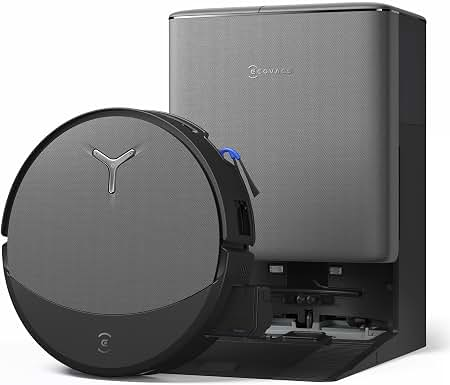
The T90 Pro Omni follows the familiar circular robot-vacuum design, with navigation and sensing hardware integrated into the robot’s upper structure. Its charging station is substantially larger than a simple charging dock because it performs multiple maintenance tasks.
That larger station footprint is the trade-off for automation. Instead of manually removing a mop after every cleaning session, the station is designed to handle dust collection and mop washing and drying.
The robot’s navigation hardware is important when considering furniture clearance. Before installation, measure the available space around and above the station and make sure the robot has a clear route into its dock.
Who Is It Designed For?
The T90 Pro Omni makes the most sense for households looking for extensive automation. Pet owners can benefit from frequent automated vacuuming, while hard-floor households may particularly appreciate the roller-mopping system.
It can also appeal to busy households that would rather schedule routine cleaning than manually vacuum and mop several times a week.
Bottom Line: The T90 Pro Omni’s defining characteristic is not one specification. It is the combination of powerful claimed suction, roller mopping, AI navigation, and an automated maintenance station.
Ecovacs T90 Pro Omni Technology Explained
The technology behind the T90 Pro Omni is where much of its differentiation occurs. Understanding how the individual systems work is more useful than simply comparing the headline suction number with another robotic vacuum.
A robot can have extremely high advertised suction but still perform differently depending on airflow, brush design, floor contact, navigation, software, filtration, and debris-management design.
BLAST Technology and 30,000Pa Suction
Ecovacs lists 30,000Pa maximum suction for the T90 Pro Omni. Pa, or pascals, describes pressure and is commonly used by robot-vacuum manufacturers to communicate maximum suction capability.
However, maximum suction should not automatically be interpreted as equivalent to cleaning performance. Real-world pickup depends on the entire air path and cleaning head.
Airflow is another important measurement. Ecovacs lists 16 L/s airflow, which provides additional information about how air moves through the cleaning system.
For technical readers, this is why specifications such as Water Lift (inches) and CFM airflow can be useful when comparing vacuum systems. However, manufacturers do not always publish these measurements in directly comparable formats for robot vacuums.
A useful review should therefore avoid claiming that one robot is automatically superior simply because it has a larger Pa number.
The practical questions are more important: Does the brush collect debris effectively? Does the robot maintain airflow? Does it perform well on carpets? Can it pick up fine dust without excessive passes?
OZMO ROLLER 3.0 Mopping Technology
The OZMO ROLLER 3.0 is one of the T90 Pro Omni’s most important technologies.
A roller mop differs from traditional dual spinning mop pads. The rotating roller continuously contacts the floor while the system supplies water and manages the resulting dirty water.
Ecovacs specifies a 10.63-inch roller operating at 200 RPM. The manufacturer also describes pressurized water delivery and automated roller cleaning.
The basic concept can be visualized as:
Clean water → wet roller → floor contact → dirty-water removal → OMNI Station washing
This design can be especially useful on hard floors where everyday footprints, food residue, and dried spills are more relevant than deep carpet extraction.
AIVI 3D AI Obstacle Avoidance
The T90 Pro Omni uses AIVI 3D technology to identify and navigate around household objects.
AI obstacle avoidance is important because a robot operating without supervision needs to recognize more than walls and furniture. Real homes contain charging cables, shoes, toys, pet bowls, furniture legs, and other objects that may not appear on a simple map.
The system combines visual and depth-sensing technologies to help the robot identify objects and plan around them.
However, AI obstacle avoidance should not be interpreted as perfect object detection. Small, thin, dark, reflective, or unusual objects can present different challenges depending on their position and the environment.
This is also why preparing the floor before scheduled cleaning can still improve reliability.
TruEdge 3.0 and ZeroTangle
TruEdge 3.0 addresses one of the traditional weaknesses of circular robot vacuums: cleaning close to walls and edges.
The system is intended to bring cleaning closer to room boundaries and furniture edges rather than leaving a wide untouched strip.
ZeroTangle technology addresses hair management. This is particularly relevant for homes with long human hair or pets.
An anti-tangle system can reduce the amount of hair that becomes wrapped around the brush, but it does not eliminate maintenance completely. Long hair should still be periodically checked and removed from areas where debris accumulates.
Bottom Line: The T90 Pro Omni’s technology package is broader than its 30,000Pa headline. Suction, airflow, roller mopping, navigation, edge cleaning, anti-tangle design, and dock automation all contribute to the overall cleaning experience.
Ecovacs T90 Pro Omni Vacuuming Performance
Vacuuming performance should be evaluated separately from mopping because different floor types create different cleaning challenges.
Hard floors usually emphasize fine dust, crumbs, food particles, hair, and larger debris. Carpets require deeper agitation and sustained airflow to remove particles from between fibers.
Hard-Floor Cleaning Performance
On hard floors, the T90 Pro Omni is designed to handle routine household debris automatically.
Typical examples include crumbs around a dining area, dust near furniture, pet food, hair, and particles tracked into an entryway.
The benefit of an autonomous cleaner is frequency. A robot does not necessarily need to remove a week’s worth of accumulated dirt in one session if it is scheduled to clean regularly.
Frequent cleaning can keep visible debris from accumulating.
The T90 Pro Omni’s roller mop adds another layer for hard-floor homes because the robot can address dry debris and wet-floor cleaning within the same overall system.
Carpet and Deep-Cleaning Performance
Carpet presents a more demanding environment.
The robot must maintain adequate suction while its brush system agitates debris from carpet fibers. Carpet type, pile height, debris type, and cleaning settings all affect results.
Low-pile carpets are generally easier for robotic cleaners to navigate than very thick carpeting. Users with multiple carpet types should therefore test the robot’s behavior in each room rather than assuming identical performance everywhere.
Carpet detection is also important because the robot needs to manage its mop appropriately when transitioning between hard floors and carpet.
Pet Hair and Long Hair
Pet owners are one of the most obvious audiences for a robot vacuum with anti-tangle technology.
Dog hair and cat hair can accumulate rapidly, while long human hair can wrap around conventional brush systems.
ZeroTangle is designed to reduce this problem, but the robot should still be inspected periodically.
Independent testing reported 100% pet-hair pickup in that particular test, but a single test result should not be interpreted as a guarantee for every pet, floor, or household.
The practical advantage of a robot system is that frequent scheduled cleaning can prevent hair from accumulating into large quantities.
Large Debris, Fine Dust and Everyday Messes
Different debris sizes reveal different weaknesses.
Large particles such as cereal or pet food require adequate brush clearance and airflow. Fine dust requires filtration and consistent airflow.
A well-rounded review should therefore consider both extremes rather than focusing only on one debris test.
Fine particles also make filtration important. A HEPA efficiency claim should be evaluated alongside the overall sealed system filtration design because filtration performance depends on how the complete system manages air and dust.
Bottom Line: Vacuuming results depend on the complete cleaning system, not suction pressure alone. The T90 Pro Omni’s brush design, airflow, navigation, anti-tangle technology, and cleaning frequency all influence real-world results.
OZMO ROLLER 3.0 Mopping Performance
The roller mop is arguably the most distinctive floor-care feature of the T90 Pro Omni.
Traditional robot mops commonly use rotating or vibrating pads. A roller system takes a different approach by continuously moving a wet cleaning surface across the floor while managing dirty water.
That can be useful for households where mopping performance is just as important as vacuuming.
How the Roller Mop Works
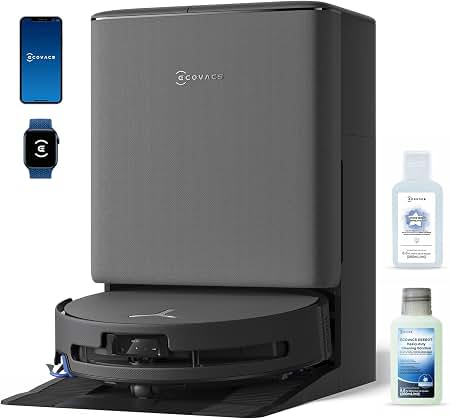
The roller receives water as it rotates and makes contact with the floor.
As it moves, it transfers moisture and cleaning action to the floor while the system works to remove contaminated water.
This differs from a simple damp pad that gradually becomes dirtier during a cleaning cycle.
The OMNI Station then handles the post-cleaning process, reducing the need for the user to manually remove and rinse the mop after every run.
Dried Stains and Kitchen Messes
Kitchen floors are particularly useful for evaluating a mop because they frequently contain sticky or dried residue.
Examples include food splashes, sauce, drink marks, footprints, and other everyday stains.
The T90 Pro Omni’s roller design is intended to provide repeated mechanical contact rather than simply passing a damp cloth over the surface.
Independent testing has reported strong dried-stain performance, although some stubborn contamination may still require another cleaning pass or manual attention.
No robotic mop should be presented as a replacement for every form of deep manual cleaning.
Edge and Corner Mopping
TruEdge 3.0 is intended to improve cleaning around room boundaries.
Edges are challenging because the robot’s circular body cannot naturally place its entire cleaning mechanism against a wall.
Improved edge reach can reduce the amount of manual cleaning required around baseboards and furniture.
Corners remain more difficult because even an edge-focused system cannot completely overcome the geometry of a sharp 90-degree corner.
Carpet Detection and Mop Lifting
Mixed-floor homes require the robot to recognize when it is transitioning from hard flooring to carpet.
Mop management becomes important because users generally do not want a wet roller repeatedly contacting carpet.
The T90 Pro Omni’s carpet-handling system is therefore an important part of its usefulness in homes with both hard floors and carpet.
Bottom Line: The OZMO ROLLER 3.0 makes the T90 Pro Omni particularly relevant to hard-floor households, while carpet users should pay attention to mop-management behavior and the specific carpet types in their home.
OMNI Station, Self-Emptying and Hands-Free Maintenance
The OMNI Station is responsible for much more than charging.
A premium robot vacuum system becomes substantially more convenient when the dock can empty collected debris, wash the mop, dry the cleaning component, and manage water.
This reduces routine intervention, although it does not make maintenance completely unnecessary.
Automatic Dust Emptying
After cleaning, the robot returns to its station where collected debris can be transferred into the station’s dust-collection system.
This is especially useful for pet owners because frequent cleaning can produce substantial amounts of hair and dust.
The advantage is convenience. Instead of emptying the robot’s onboard dustbin after every cleaning session, the user can allow the station to handle routine collection.
However, the dust bag remains a consumable component and eventually needs replacement.
Hot-Water Mop Washing and Drying
Mop washing is one of the biggest convenience features of the OMNI Station.
Ecovacs specifies automatic mop washing with heated water and hot-air drying.
Washing removes accumulated dirt from the roller, while drying helps reduce the moisture that would otherwise remain inside the mop after cleaning.
Drying is particularly relevant when the robot is used frequently. A constantly damp mop component can develop unpleasant odors if it is not properly managed.
Clean and Dirty Water Management
The manufacturer lists a 4L clean-water tank and 2.2L dirty-water tank.
The larger clean-water capacity reduces the frequency of refilling, while the dirty-water tank stores contaminated water collected during mop washing.
Users still need to monitor both tanks.
Clean water eventually runs out, while dirty water eventually needs to be emptied.
The station therefore changes maintenance from frequent manual mop cleaning to occasional water and consumable management.
How Much Manual Maintenance Is Really Required?
Hands-free does not mean maintenance-free.
Owners should still periodically inspect the main brush, side brush, mop roller, filters, sensors, dock area, water tanks, and dust bag.
The exact maintenance interval depends on usage.
A home with two pets may need more frequent inspection than a small household with mostly hard flooring and little hair.
Bottom Line: The OMNI Station substantially reduces routine work, but owners should still plan for water management, consumable replacement, brush inspection, and general cleaning.
Navigation, Mapping, App and Smart-Home Features
A robot vacuum can have excellent hardware and still become frustrating if navigation or software is unreliable.
The T90 Pro Omni therefore needs to be evaluated as a complete robot vacuum system rather than only as a physical cleaning machine.
Mapping and Room Navigation
Modern robotic cleaners use mapping systems to understand the structure of a home.
LiDAR navigation and SLAM mapping are common technologies across the robot-vacuum category, although manufacturers can implement navigation architectures differently.
The T90 Pro Omni uses its own sensing and mapping system to identify rooms, obstacles, and navigable areas.
Multi-floor mapping can also be valuable for households where the robot is used across different levels, although users should verify exactly which mapping capabilities are supported by their current software and configuration.
A good map allows the user to select individual rooms instead of repeatedly cleaning the entire house.
Obstacle Avoidance in Real Homes
The practical test for AI obstacle avoidance is not an empty showroom.
Real homes contain cables, socks, shoes, toys, pet bowls, chair legs, and objects that move between cleaning sessions.
The T90 Pro Omni is designed to identify many of these obstacles and adjust its route.
Independent testing reported strong obstacle-avoidance performance while also finding that it was not perfect.
That distinction is important. AI can reduce intervention, but users should still remove particularly troublesome objects before starting a scheduled cleaning cycle.
Cleaning Schedules and Custom Cleaning
The ECOVACS HOME ecosystem provides controls for routine cleaning.
Depending on supported settings, users can choose rooms, cleaning modes, suction levels, water settings, and schedules.
Vacuum-only cleaning can be useful for carpets or dry debris, while vacuum-and-mop cleaning can be appropriate for hard floors.
The ability to customize cleaning by room is particularly useful when different areas of a home have different flooring.
Voice Control and Smart-Home Integration
Smart home integration adds another layer of convenience.
The T90 Pro Omni ecosystem includes app-based control and voice-oriented features, with compatibility depending on the user’s region, software version, and supported ecosystem.
Buyers should verify current compatibility before purchasing if integration with a particular smart-home platform is a deciding factor.
Bottom Line: Navigation and software determine how autonomous the T90 Pro Omni feels in daily use. Advanced sensors can reduce intervention, but good floor preparation and realistic expectations remain important.
Battery Life, PowerBoost Charging and Cleaning Coverage
Battery runtime is another specification that needs context.
A robot operating at maximum suction does not necessarily consume power at the same rate as one running in a lower-power mode. Mopping, navigation, carpet cleaning, and repeated passes can also affect operating time.
4,000mAh Battery Performance
The T90 Pro Omni uses a 4,000mAh battery.
Ecovacs states a maximum runtime of up to 350 minutes under a specified hard-floor vacuum-and-mop test condition.
That number should not be treated as a universal runtime for every household.
Actual battery runtime can vary with suction power, flooring, navigation, cleaning pattern, mopping settings, and environmental conditions.
A large home with extensive carpet may therefore experience different runtime from a smaller home dominated by smooth hard flooring.
PowerBoost Fast Charging
PowerBoost is intended to reduce downtime when the robot needs additional battery capacity.
Ecovacs states that the system can restore 10% charge in three minutes under its specified charging conditions.
Fast charging becomes particularly useful when the robot cannot finish a larger cleaning job in one battery cycle.
Recharge-and-resume functionality can allow the system to return to the dock, recharge, and continue cleaning instead of requiring the owner to restart the entire job.
Is It Suitable for Large Homes?
Large homes need more than a large battery.
The robot must navigate efficiently, return to the station reliably, manage water, and resume cleaning when necessary.
Dock placement becomes particularly important because the station is the robot’s central operating base.
For multi-floor households, owners should also consider how the robot will be transported between levels and whether the available mapping features fit their home layout.
Bottom Line: The T90 Pro Omni’s battery system is designed for extended autonomous cleaning, but the published maximum runtime should be interpreted as a controlled specification rather than a guaranteed everyday figure.
Ecovacs T90 Pro Omni vs Other Robot Vacuums
Comparison searches are usually made by buyers who have already moved beyond basic research.
They want to know whether a particular model’s features justify choosing it over alternatives.
For that reason, compare actual capabilities rather than simply declaring a winner.
T90 Pro Omni vs Ecovacs T80 Omni
The T90 Pro Omni and T80 Omni both target buyers interested in advanced robot vacuum and mop systems.
The T90’s headline suction specification is 30,000Pa, compared with 18,000Pa listed for the T80.
The more useful comparison goes beyond suction. Buyers should examine roller-mop design, navigation, obstacle avoidance, station automation, battery performance, software, and current pricing.
If two models already meet a household’s cleaning requirements, the lower-priced option may provide enough functionality without requiring every premium feature.
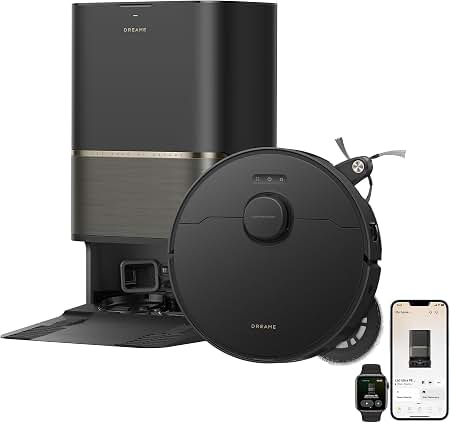
T90 Pro Omni vs Dreame L50 Ultra
The Dreame L50 Ultra represents another premium robot vacuum system competing for buyers who want extensive automation.
Relevant comparison points include carpet cleaning, mopping, navigation, obstacle avoidance, battery operation, docking, and maintenance.
Independent testing can be useful here because laboratory-style results provide additional information that manufacturer specifications cannot.
However, test results should always be interpreted according to the specific test method.
T90 Pro Omni vs Premium Ecovacs X-Series
Ecovacs has multiple premium robot-vacuum models, making internal comparisons especially relevant.
Instead of assuming the newest or highest-specification model is automatically appropriate, compare:
- Cleaning technology
- Navigation
- Threshold handling
- Mop system
- Dock automation
- Battery
- Consumables
- Current price
A buyer should pay for features that address actual household problems rather than specifications that will rarely be used.
Which Features Matter More Than Pa?
Pa is easy to advertise because it produces a simple large number.
But robot-vacuum cleaning involves multiple systems.
Important factors include:
- Airflow
- Brush design
- Floor contact
- Navigation
- Obstacle avoidance
- Mop technology
- Filtration
- Battery runtime
- Dock automation
- Software
For example, CFM airflow, Water Lift (inches), brush agitation, and filtration can provide additional technical context in vacuum comparisons.
Likewise, HEPA efficiency and sealed system filtration matter to buyers concerned about fine-particle containment.
Bottom Line: The right comparison is not “Which robot has the biggest Pa number?” It is “Which combination of vacuuming, mopping, navigation, automation, and maintenance features matches the household?”
Ecovacs Deebot T90 Pro Omni Maintenance Guide
Even highly automated robot vacuums require periodic care.
The purpose of automated maintenance is to reduce work, not eliminate it completely.
Daily and Weekly Maintenance
For frequent users, a quick inspection can prevent small problems from becoming larger ones.
Check the roller and brushes for hair or debris. Inspect the sensors if navigation begins behaving unusually.
The dock should also be kept reasonably clean, especially around water-management and charging areas.
Homes with pets or children may require more frequent inspection because debris levels can be significantly higher.
Main Brush and Side Brush Care
Anti-tangle technology can reduce hair buildup but should not be treated as a permanent solution.
Remove accumulated hair when necessary and inspect the brush for objects that may have become trapped.
The side brush is particularly important for edge cleaning.
If it becomes bent, damaged, or obstructed, cleaning along walls can become less effective.
Filters, Dust Bag and Water Tanks
Filters should be maintained according to the manufacturer’s instructions.
A heavily loaded filter can restrict airflow and reduce cleaning performance.
The dust bag should be replaced when required, while the dirty-water tank should not be allowed to remain neglected for extended periods.
Water tanks should also be maintained according to the manufacturer’s care instructions.
Mop Roller and Dock Maintenance
The mop roller and dock are central to the T90 Pro Omni’s mopping system.
Owners should periodically inspect the roller, water-management areas, and station cleaning surfaces.
If an odor develops, do not assume the drying system has failed immediately. Accumulated residue, dirty water, cleaning solution, or insufficient routine cleaning can all contribute to odors.
Bottom Line: Regular light maintenance protects the performance of an automated cleaner. The less frequently you inspect the robot, the more important it becomes to follow the manufacturer’s maintenance schedule.
Ecovacs T90 Pro Omni Troubleshooting
Most robot-vacuum problems can initially be investigated through simple checks.
Before assuming a hardware failure, inspect the brush system, filter, water supply, dock, sensors, and app notifications.
Robot Is Not Picking Up Dirt Properly
Start by checking the selected suction setting.
Then inspect the brush, filter, dust pathway, and onboard dustbin.
If hair or debris blocks the airflow path, the robot may not perform as expected even though the motor itself is functioning normally.
A dirty filter can also restrict airflow.
Robot Is Not Mopping Properly
Check the clean-water level first.
Then inspect the roller and its contact with the floor.
If the roller is dirty or the water-management system is obstructed, mopping quality may decline.
Also check whether the selected water setting is appropriate for the floor and cleaning task.
Navigation or Mapping Problems
If the robot begins missing rooms or behaving differently from its established map, inspect the navigation sensors and surrounding environment.
Furniture movement can also change the robot’s physical environment.
Cleaning sensors and checking software updates may resolve some issues.
If the map has become unreliable, creating a new map may be appropriate according to the manufacturer’s instructions.
Charging, Docking or Auto-Empty Problems
First verify that the station has power and that the robot can physically reach the dock.
Check charging contacts and remove visible obstructions.
For auto-empty problems, inspect the dust bag and station airflow path.
For mopping-station problems, check water levels and ensure the station’s relevant components are not obstructed.
Bottom Line: Troubleshooting should start with airflow, brushes, water, sensors, dock access, and software before assuming the robot itself has suffered a major failure.
Ecovacs Deebot T90 Pro Omni Pros and Cons
A balanced review should identify both advantages and limitations.
Potential Advantages
- 30,000Pa maximum claimed suction
- OZMO ROLLER 3.0 continuous roller mopping
- Automated dust collection
- Hot-water mop washing
- Hot-air drying
- AIVI 3D AI obstacle avoidance
- TruEdge 3.0 edge cleaning
- ZeroTangle hair-management technology
- PowerBoost fast charging
- Extensive app-based automation
These features make the system particularly interesting for households prioritizing hands-free floor cleaning.
Potential Limitations
- Large OMNI Station footprint
- Small onboard dustbin relative to some conventional vacuum systems
- AI obstacle avoidance is not perfect
- Battery performance varies by cleaning conditions
- Thresholds and unusual floor transitions can still affect navigation
- Replacement consumables require ongoing ownership costs
- Advanced features can increase system complexity
Independent testing measured the onboard dustbin at 250ml and identified its relatively small capacity as a limitation, although automatic emptying reduces the practical frequency with which users need to empty it.
What the Specifications Don’t Tell You
A specification sheet cannot completely describe real-world cleaning.
Pa suction does not directly equal debris pickup.
Battery runtime depends on how the robot is used.
AI obstacle avoidance cannot guarantee that every cable or tiny object will be recognized.
Mopping performance depends on floor material, stain type, water settings, cleaning passes, and maintenance.
Likewise, filtration should be considered as a complete system rather than reduced to a single HEPA efficiency number.
Bottom Line: The T90 Pro Omni has a feature-rich specification sheet, but buyers should evaluate the entire system and its trade-offs rather than purchasing based on one headline number.
Buyer’s Intent — Is the Ecovacs T90 Pro Omni Right for You?
The buyer’s decision should start with the home’s cleaning requirements.
A premium robot vacuum can provide substantial convenience when its features solve real household problems. If those features are unnecessary, a simpler model may provide sufficient cleaning.
Consider It If You Have Pets
Pet owners can benefit from frequent autonomous vacuuming.
Hair, crumbs, litter, and everyday debris can accumulate quickly, making scheduled cleaning useful.
ZeroTangle technology and automatic dust collection are particularly relevant for homes where hair is a regular problem.
However, pet owners should still inspect brushes and filters periodically.
Consider It If You Have Mostly Hard Floors
The T90 Pro Omni’s roller-mopping system is especially relevant to hard-floor homes.
The ability to vacuum and mop while allowing the OMNI Station to handle post-cleaning maintenance can reduce the amount of manual floor care.
Kitchens, dining areas, hallways, and entryways are environments where frequent vacuum-and-mop cleaning can be useful.
Consider Another Model If Your Priority Is…
A different robot may deserve consideration if your primary requirement is unusually long battery capacity, aggressive threshold climbing, specialized carpet performance, a smaller dock, or a lower purchase price.
This is not necessarily a weakness of the T90 Pro Omni. It is simply a reminder that robot vacuums are designed around different combinations of features.
What to Check Before Buying
Before purchasing, check:
- Current purchase price
- Warranty coverage
- Replacement consumable availability
- Dust-bag availability
- Mop-roller availability
- Dock dimensions
- Floor types
- Carpet height
- Door thresholds
- App compatibility
- Smart-home compatibility
- Local service/support availability
Field Note: One of the most useful practical checks before installing a premium robot vacuum is not a suction test—it is the dock location. A large automated station needs a permanent, accessible position with enough surrounding clearance for reliable docking, maintenance, and water management. This is easy to overlook when focusing on headline specifications.
Bottom Line: The T90 Pro Omni is most relevant to buyers who value automated vacuuming and advanced mopping. The final purchase decision should also account for the home’s flooring, layout, thresholds, dock space, consumables, and current price.
Final Verdict — Ecovacs Deebot T90 Pro Omni Review
The T90 Pro Omni combines several technologies that address different parts of household floor cleaning.
Its 30,000Pa maximum claimed suction targets high debris-pickup capability, while OZMO ROLLER 3.0 takes a different approach to mopping through a continuously rotating roller.
The OMNI Station is equally important because it automates dust collection, mop washing, and drying.
What It Does Particularly Well
The overall package is particularly relevant to users who want frequent automated cleaning rather than occasional robotic assistance.
Hard-floor households can benefit from the roller mop, while pet owners may appreciate anti-tangle technology and automatic dust management.
AI obstacle avoidance and mapping can also reduce the amount of supervision required.
Where It Has Trade-Offs
The system still requires maintenance.
Users need to manage water, consumables, brushes, filters, and the dock.
Navigation is not guaranteed to be perfect in every environment, and the robot’s performance can vary according to floor type, cleaning settings, household clutter, and layout.
The large OMNI Station also requires dedicated floor space.
Who Should Consider the T90 Pro Omni?
The T90 Pro Omni is worth investigating for households that prioritize:
- Automated hard-floor cleaning
- Frequent vacuuming
- Roller-based mopping
- Pet-hair management
- Automated mop washing
- Automated dust collection
- AI-assisted navigation
- Smart-home convenience
The most important question is not whether the robot has the largest specification in a particular category. It is whether its combination of vacuuming, mopping, navigation, battery operation, and automation matches the way the household actually cleans.
Bottom Line: The Ecovacs T90 Pro Omni is a highly automated robot vacuum-and-mop platform whose strongest appeal comes from combining powerful claimed suction, roller mopping, AI navigation, and an advanced OMNI Station. Buyers should weigh those capabilities against maintenance, dock size, navigation limitations, flooring, and price.
Frequently Asked Questions
Is the Ecovacs Deebot T90 Pro Omni worth it?
Its value depends on how much the buyer will use its automation and advanced mopping features. Homes with hard floors, pets, frequent messes, and a preference for hands-free cleaning may benefit more from these capabilities than households with simpler cleaning requirements.
How much suction does the T90 Pro Omni have?
Ecovacs lists 30,000Pa maximum suction. Pa measures pressure, but it should not be treated as a complete measurement of cleaning performance. Brush design, airflow, floor contact, filtration, and navigation also influence debris pickup.
Does the T90 Pro Omni vacuum and mop at the same time?
The T90 Pro Omni is designed as a combined robot vacuum and mop system. Cleaning modes and settings can determine how vacuuming and mopping are performed in different areas of the home.
How does the OZMO ROLLER 3.0 work?
The OZMO ROLLER 3.0 uses a rotating roller mop that receives water during cleaning. The roller contacts the floor while the system manages dirty water, after which the OMNI Station can wash and dry the mop.
Can the T90 Pro Omni clean pet hair?
Yes, pet hair is one of the use cases the system is designed to address. ZeroTangle technology is intended to reduce hair wrapping around the brush. Independent testing has reported strong pet-hair pickup, although results can vary according to floor type and household conditions.
Does the T90 Pro Omni work on carpet?
Yes. The robot is designed to vacuum carpets and manage its mop when encountering carpeted areas. Performance can vary with carpet pile, debris type, suction settings, and the specific transition between flooring surfaces.
Does it automatically wash and dry the mop?
The OMNI Station is designed to automatically wash the mop using heated water and dry it with hot air. Users should still perform periodic station and roller maintenance.
How often does the T90 Pro Omni need maintenance?
There is no single interval suitable for every household. Pet owners and high-frequency users may need to inspect brushes, filters, and the roller more often. Water tanks, dust bags, sensors, and the station also require periodic attention.
How long does the T90 Pro Omni battery last?
Ecovacs lists up to 350 minutes under a specified hard-floor vacuum-and-mop test condition. Actual battery runtime depends on suction level, flooring, navigation, mopping, and other operating conditions.
Does the T90 Pro Omni avoid cables and small objects?
Its AIVI 3D system is designed to recognize and avoid many household obstacles. However, obstacle avoidance is not perfect, so users should still remove small or difficult-to-detect objects before scheduled cleaning.
Can the T90 Pro Omni clean edges and corners?
TruEdge 3.0 is designed to improve edge cleaning along walls and furniture. Sharp corners remain challenging for circular robot vacuums because of the physical geometry of the robot.
What is the difference between the T90 Pro Omni and T80 Omni?
One major published specification difference is maximum suction: Ecovacs lists 30,000Pa for the T90 Pro Omni and 18,000Pa for the T80 Omni. Buyers should also compare mopping technology, navigation, dock automation, battery performance, software, consumables, and current pricing.
What are the main disadvantages of the T90 Pro Omni?
Potential drawbacks include the large dock footprint, ongoing consumable and water management, imperfect obstacle avoidance, and performance that can vary with flooring and home layout. Its advanced feature set may also be unnecessary for buyers seeking a simpler robotic cleaner.
Final Bottom Line: The T90 Pro Omni should be evaluated as a complete robot vacuum system rather than by suction alone. Its combination of vacuuming, OZMO roller mopping, AI obstacle avoidance, edge cleaning, automated dust collection, mop washing, drying, and smart controls gives it a broad feature set, while floor type, home layout, maintenance, and price remain important parts of the buying decision.