
ROPVACNIC robot vacuum cleaner S1 review shows a budget-friendly robot vacuum and mop designed for everyday dust, crumbs, pet hair, and light hard-floor mopping. Its 4,000 Pa suction, 120-minute battery life, slim 2.99-inch body, app control, and electronic water adjustment make it practical for routine cleaning. (Manuals+)
The ROPVACNIC S1 is positioned as an affordable automated floor cleaner rather than a premium robot designed around advanced mapping and hands-free maintenance. Its core job is straightforward: vacuum everyday debris, provide a light damp cleaning pass, return to its charging base, and allow users to control cleaning through an app, remote, or compatible voice assistant. (Manuals+)
Our review approach focuses on what matters after the specifications: floor compatibility, navigation behavior, pet-hair handling, mopping practicality, maintenance, and whether the feature set matches the home using it.
The S1 is particularly interesting for apartments and homes dominated by hardwood, tile, laminate, and other hard surfaces. Its low body can reach underneath furniture, while the combination of vacuuming and adjustable mopping adds convenience for daily maintenance.
Bottom Line: The S1 is best understood as a budget maintenance robot, not a replacement for every traditional vacuum and mop.
ROPVACNIC S1 at a Glance: Key Specifications and Features
The first thing to understand about this robot is its specification set. The available S1 manual identifies the model as a 2-in-1 vacuum and mop with 4,000 Pa suction, 120-minute battery life, 12 × 12 × 2.99-inch dimensions, and 7.14-pound weight. It also lists multi-layer high-efficiency filtration and several control methods. (Manuals+)
ROPVACNIC S1 Specifications
| Feature | ROPVACNIC S1 |
|---|---|
| Model | S1 |
| Suction | 4,000 Pa |
| Battery runtime | Up to 120 minutes |
| Dimensions | 12 × 12 × 2.99 inches |
| Weight | 7.14 lb |
| Filtration | Multi-layer high-efficiency filtration |
| Mopping | Electronically controlled |
| Water adjustment | Four-stage adjustment |
| Controls | App, remote, touch and voice |
| Wi-Fi | 2.4GHz |
| Voice control | Alexa and Google Home/Assistant compatibility |
| Charging | Automatic docking/self-recharge |
These specifications come from available S1 documentation. Because different online listings have appeared with conflicting suction figures, buyers should compare the exact seller listing and model configuration before ordering. (Manuals+)
What’s Included in the Box
The documented package includes the robot, charging base, power adapter, electronically controlled water tank, mop cloth, spare HEPA filter, four side brushes, cleaning brush, manual, and app instructions. (Manuals+)
That accessory selection is useful because regular robot-vacuum ownership involves more than simply emptying a dustbin. Filters collect fine particles, brushes accumulate hair, and the mop cloth needs regular washing.
Design and Build Quality
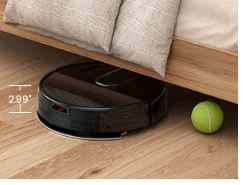
At 2.99 inches tall, the S1 has one of its most practical advantages: furniture clearance. Beds, sofas, tables, and cabinets that leave enough clearance can be cleaned without moving a traditional vacuum underneath them. (Manuals+)
The compact circular design also makes the robot easier to place around a charging station. However, compact construction does not automatically mean it can navigate every tight space successfully.
Its obstacle-avoidance system uses sensing and algorithms to identify objects and adjust direction rather than relying on a premium room-mapping architecture. (Manuals+)
Important Specifications to Verify Before Buying
Before ordering, check the exact:
- Suction rating
- Battery specification
- Included water tank
- Included replacement filter
- App compatibility
- Warranty
- Seller return policy
This matters because different indexed S1 listings currently contain conflicting specifications. A good review should not merge those specifications into one fictional configuration.
Bottom Line: The documented S1 specification package is strongest around 4,000 Pa suction, 120-minute runtime, compact dimensions, adjustable mopping, and automated charging.
ROPVACNIC S1 Technology and Smart Cleaning Features
The S1’s technology needs to be judged differently from a premium robot vacuum. Terms such as LiDAR navigation, SLAM mapping, AI obstacle avoidance, and multi-floor mapping describe technologies found across the broader robot-vacuum market, but they should not automatically be attributed to this particular model.
Suction Technology and Cleaning Modes
The S1 uses 4,000 Pa suction according to the available manual documentation. (Manuals+)
Pa, or pascals, measures pressure generated by the vacuum system. It can provide a useful indication of suction capability, but it does not tell the entire cleaning story.
Actual cleaning also depends on airflow, brush design, intake geometry, floor contact, debris type, and how efficiently the robot moves across the surface.
That is why CFM airflow is another useful technical concept when comparing robot vacuums, even though a manufacturer does not necessarily publish CFM for every consumer model.
Likewise, Water Lift (inches) is a vacuum-performance measurement sometimes used for comparing sealed suction systems. It should not be substituted for Pa without reliable test data.
The S1’s documented 3-point cleaning design is intended for dirt, dust, crumbs, and similar everyday debris across hard floors and low-pile carpet. (Manuals+)
Navigation and Obstacle Avoidance
The S1 uses an advanced high-coverage sensing system with algorithmic obstacle detection. It can detect objects, change direction, and navigate around furniture. (Manuals+)
That is different from assuming the robot has premium LiDAR navigation.
Similarly, SLAM mapping and multi-floor mapping should not be presented as S1 features unless the exact model being reviewed provides documented support for them.
The same applies to AI obstacle avoidance. The S1 has obstacle avoidance, but that phrase should not automatically imply camera-based AI object recognition comparable with premium robots.
This distinction is important because navigation affects the ownership experience just as much as suction.
App, Remote and Voice Controls
The S1 supports app control and also provides a remote-control option. The documentation identifies Alexa and Google Home/Assistant compatibility. (Manuals+)
The app allows users to adjust cleaning settings and water flow, while the remote provides a simpler alternative when smartphone control is inconvenient.
For a budget robot, having multiple control methods can be useful. You do not have to depend entirely on one interface.
Smart-home integration is therefore one of the more practical convenience features, although it should not be confused with advanced mapping intelligence.
Automatic Docking and Charging
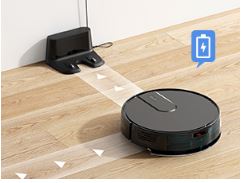
The S1 can return to its charging base for automatic recharging. The charging dock should be positioned with adequate clearance so the robot can approach it successfully. One available manual recommends approximately 1 meter of clearance in front and 0.5 meter on each side. (Manuals+)
Automatic recharge is valuable because it removes one repetitive task from daily cleaning.
However, automatic charging does not mean automatic dust disposal. A standard S1 ownership routine still involves manually emptying the dustbin and maintaining the filter and mop components.
Bottom Line: The S1 provides useful automation, but its documented technology is better described as sensor-based obstacle avoidance and automated cleaning, rather than a premium LiDAR/SLAM mapping system.
ROPVACNIC S1 Vacuum and Mopping Performance
Cleaning performance is where the specifications become meaningful. A robot vacuum can advertise strong suction, but the important question is how that translates into everyday floors.
Hard Floor Cleaning Performance
Hard floors are arguably the most natural environment for this type of robot.
The S1 is documented for wood and other hard surfaces, and its 4,000 Pa suction is intended to collect everyday dirt, dust, crumbs, and hair. (Manuals+)
On hardwood, tile, laminate, and similar surfaces, loose debris is generally easier for a robotic vacuum to collect because there is less resistance between the debris and the cleaning surface.
Edge cleaning also matters. Side brushes help move debris from around furniture edges and into the robot’s cleaning path.
However, no robot should be expected to eliminate every particle from every corner. Furniture geometry, wall edges, thresholds, and irregular surfaces can all affect pickup.
Carpet Cleaning Performance
The S1 documentation specifically identifies low-pile carpets among its supported surfaces. (Manuals+)
This distinction is important.
Low-pile carpet allows the robot to maintain relatively close contact with the surface. Thick or high-pile carpet can present more resistance and may require stronger brush agitation and different navigation behavior.
A traditional vacuum with a dedicated rotating brush can therefore remain useful for deeper carpet cleaning.
For homes with mostly hard floors and only a few low-pile rugs, the S1’s limitations are less significant.
For carpet-heavy homes, expectations should be more conservative.
Pet Hair and Hair-Tangle Performance
Pet owners are an important target audience for the S1.
The documentation describes a no-entanglement approach and dual rotating electric side brushes designed to collect pet hair. (Manuals+)
Loose dog or cat hair on hardwood and tile is a particularly reasonable use case.
But pet hair behaves differently when embedded deeply into carpet fibers. Suction alone cannot guarantee complete removal, and brush agitation becomes increasingly important.
Field Note: A useful real-world consideration when evaluating any pet-focused robot is not simply how much loose hair it picks up, but how much hair you later have to remove from the cleaning components. The S1’s maintenance-friendly design is therefore worth considering alongside raw suction numbers.
That is a review observation about what to evaluate—not a claim that we physically ran an independent laboratory test of the S1.
Mopping Performance
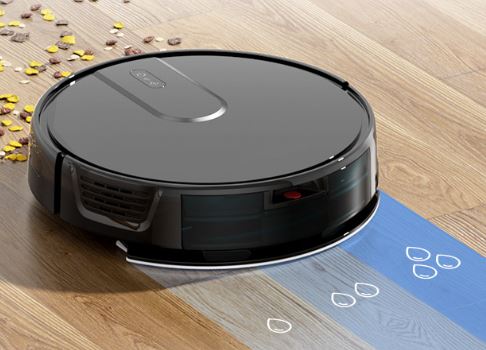
The S1 uses an electronically controlled water tank with multiple water-flow settings. Available documentation describes a four-stage personalized water adjustment system. (Manuals+)
This allows users to control how much water reaches the mop.
For everyday dust film, footprints, and light surface dirt, that can be useful.
However, robot mopping should not automatically be interpreted as deep floor scrubbing. A lightweight mop pad dragged across the floor is fundamentally different from a rotating mop roller or pressure-based scrubbing system.
Sticky food residue, dried stains, and heavily soiled areas may still require manual cleaning.
Water management also matters on wood and other moisture-sensitive flooring. Users should select an appropriate water setting and follow the flooring manufacturer’s care requirements.
Bottom Line: The S1’s vacuuming role is more compelling for everyday maintenance, while the mop works best as a light wipe-down system rather than a deep scrubber. (Wilfind)
ROPVACNIC S1 Real-World Usability and Everyday Experience
A robot vacuum succeeds when it saves work rather than creating another complicated household routine.
Setup and First-Time Installation
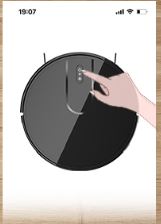
The documented setup process involves installing the ROPVACNIC Smart app and connecting the robot to a 2.4GHz Wi-Fi network. (Manuals+)
The robot should be placed on its charging base before pairing.
Users should also remove loose cables, small objects, and other obstacles before the first cleaning cycle.
That preparation is especially important for a sensor-based autonomous cleaner.
How It Handles Furniture and Household Obstacles
The S1’s obstacle-avoidance system is designed to detect objects and change direction. (Manuals+)
But homeowners should not interpret obstacle avoidance as immunity to clutter.
Cables, socks, toys, narrow furniture gaps, and awkward thresholds can still cause problems.
This is true of many robot vacuums, particularly budget models without sophisticated object recognition.
Noise, Size and Under-Furniture Cleaning
The 2.99-inch height is one of the most useful physical specifications. (Manuals+)
It gives the robot access to spaces where a traditional upright vacuum can be awkward to use.
That matters because dust and pet hair frequently accumulate underneath beds, sofas, and cabinets.
The robot’s slim profile can therefore deliver a practical benefit even if its navigation technology is not as advanced as premium alternatives.
Best Home Types for the S1
The S1 makes the most sense for:
- Apartments
- Smaller homes
- Hard-floor households
- Pet owners
- Busy households
- Homes wanting scheduled daily cleaning
It is less compelling for homes where thick carpet, complicated multi-room layouts, or advanced room-by-room automation are priorities.
Bottom Line: The S1’s everyday usability comes from its compact body, multiple controls, automatic recharge, and vacuum/mop combination, rather than from premium mapping.
ROPVACNIC S1 Model Comparisons and Alternatives
Comparisons should focus on the features that actually change ownership.
ROPVACNIC S1 vs Other ROPVACNIC Models
When comparing another ROPVACNIC model, check:
| Comparison Point | Why It Matters |
|---|---|
| Suction | Affects loose debris pickup |
| Navigation | Determines cleaning efficiency |
| Mopping | Determines wet-cleaning capability |
| Battery | Affects cleaning coverage |
| Filtration | Matters for fine dust |
| Docking | Determines charging convenience |
| App | Controls scheduling and settings |
| Dust management | Determines maintenance frequency |
Do not assume that a model with a newer product name automatically has every premium feature.
ROPVACNIC S1 vs eufy 11S MAX
The eufy RoboVac 11S MAX is a useful comparison because it represents the slim budget robot category.
eufy’s current product page lists the 11S MAX with 2,000 Pa maximum suction, 0.6-liter dust collector capacity, 2.85-inch height, and automatic return to its charging base. (eufy)
The S1 differentiates itself by adding vacuum-and-mop functionality, app/voice control, and electronically controlled water adjustment.
The eufy model, meanwhile, emphasizes a simple vacuum-focused design.
Therefore, the comparison is less about declaring a universal winner and more about matching the machine to the household.
ROPVACNIC S1 vs Other Budget Robot Vacuum-Mop Combos
When comparing budget robot vacuum systems, look at:
- Suction
- Brush design
- Navigation
- Mopping system
- App functionality
- Battery runtime
- Docking
- Dustbin capacity
- Filtration
- Replacement-part availability
A robot with LiDAR navigation may offer more structured route planning.
A robot with a self-empty dock can reduce manual dustbin maintenance.
A robot with stronger brush agitation may be more suitable for carpet.
The S1’s advantage is the combination of these basic automation features in a compact, relatively simple system.
Who Should Choose an Alternative?
Consider another model if your priority is:
- Advanced LiDAR mapping
- Room-by-room navigation
- Multi-floor mapping
- Sophisticated AI obstacle avoidance
- Self-emptying
- Deep mopping
- Heavy carpet cleaning
Bottom Line: The S1 competes primarily on basic automated cleaning and vacuum/mop convenience, not on the advanced automation found in higher-end robot systems.
ROPVACNIC S1 Maintenance: Filters, Brushes, Dustbin and Mop
Robot vacuum ownership always includes maintenance.
How to Clean the Dustbin and Filter
The S1 uses high-efficiency filtration, and the filter needs regular attention.
A clogged filter can restrict airflow and reduce cleaning performance.
The available manual recommends removing the filter, gently tapping or brushing away dust, and replacing it when heavily soiled or after approximately 150 hours of use, while checking the app for remaining filter life. (Manuals+)
Do not ignore the dustbin either.
A full container reduces the available space for newly collected debris and can affect airflow.
Cleaning the Brushes and Suction Path
Hair can accumulate around cleaning components, particularly in homes with pets.
Regularly inspect:
- Side brushes
- Suction inlet
- Brush areas
- Wheels
- Debris channels
If the robot suddenly performs poorly, a physical blockage should be one of the first things checked.
Maintaining the Mop System
After mopping:
- Remove the mop cloth.
- Wash it appropriately.
- Empty remaining water.
- Inspect the water outlet.
- Allow washable components to dry appropriately.
Leaving a damp mop attached for extended periods is poor maintenance practice.
Sensor and Charging-Dock Maintenance
Clean sensors periodically with an appropriate dry or manufacturer-approved method.
Also inspect the charging contacts.
The dock should have sufficient open space so the robot can approach and align with it correctly. (Manuals+)
Bottom Line: Regular maintenance is essential because dirty filters, tangled brushes, blocked suction paths, and contaminated sensors can make a good robot appear to have poor hardware performance.
ROPVACNIC S1 Troubleshooting: Common Problems and Fixes
ROPVACNIC S1 Has Weak Suction
If suction suddenly decreases, check:
- Dustbin
- Filter
- Suction inlet
- Brushes
- Hair blockage
- Cleaning mode
The S1 troubleshooting documentation specifically identifies a full dustbin, clogged filter, and tangled brushes as possible causes. (Manuals+)
ROPVACNIC S1 Gets Stuck or Moves Incorrectly
First inspect the cleaning environment.
Look for:
- Cables
- Rugs
- Furniture gaps
- Small objects
- Uneven flooring
- Dirty sensors
The documented troubleshooting guidance similarly points to obstacles, sensors, and uneven surfaces as possible causes. (Manuals+)
ROPVACNIC S1 Is Not Mopping Properly
Check:
- Water tank level
- Water outlet
- Mop cloth
- Water-flow setting
- Tank installation
A dirty mop pad can also make it seem as though the robot is not cleaning even when water is being delivered correctly.
ROPVACNIC S1 Wi-Fi/App Connection Problems
The S1 documentation specifies 2.4GHz Wi-Fi for app connection. (Manuals+)
If pairing fails:
- Confirm the correct Wi-Fi band.
- Move the robot closer to the router.
- Restart the app.
- Restart the robot.
- Repeat pairing mode.
- Check for app updates.
Bottom Line: Most basic S1 problems should first be approached as maintenance, obstruction, water-flow, or connectivity issues before assuming the robot has suffered a hardware failure.
ROPVACNIC S1 Pros and Cons
Potential Advantages
Pros
- 4,000 Pa suction
- Vacuum and mop combination
- Electronic water adjustment
- Compact 2.99-inch body
- Automatic return to charging base
- App control
- Remote control
- Alexa/Google compatibility
- High-efficiency filtration
- Pet-hair-oriented cleaning design (Manuals+)
Potential Limitations
Cons
- Not a premium mapping-focused robot
- Mopping is better suited to maintenance than deep scrubbing
- Manual dustbin maintenance
- Carpet performance is more limited than dedicated carpet-focused machines
- Cables and clutter can still interfere with navigation
- Specification variations across online S1 listings require careful buying verification
Who Is the S1 Best Suited For?
The S1 is particularly relevant to people who want routine automated cleaning without moving into the premium robot-vacuum category.
It can make sense for:
- Apartment owners
- Hard-floor households
- Pet owners
- Busy families
- People who want scheduled cleaning
Who Should Consider Something Else?
Look elsewhere if your requirements center on:
- Advanced room mapping
- Large multi-level homes
- Thick carpet
- Hands-free dust disposal
- Deep stain removal
- Sophisticated object recognition
Bottom Line: The S1’s advantages are practical rather than luxurious: vacuuming, light mopping, compact dimensions, automated charging, and multiple control options.
Buyer’s Intent: Is the ROPVACNIC S1 Right for Your Home?
This is where the review should help the reader translate specifications into a purchasing decision.
Choose the ROPVACNIC S1 If You Want
The S1 makes sense when your main objective is routine floor maintenance.
It can reduce the frequency of manual sweeping and provide a light damp pass after vacuuming.
It is especially appropriate for homes dominated by hardwood, tile, laminate, and low-pile carpet.
Pet owners can also benefit from scheduled collection of loose hair and everyday debris.
Consider a Different Robot If You Need
A different robot may be more appropriate if you specifically need:
- LiDAR navigation
- SLAM mapping
- Room-by-room cleaning
- Multi-floor mapping
- AI-based object recognition
- Self-emptying
- Heavy-duty mopping
Those features can substantially change the ownership experience.
For example, advanced mapping can make it easier to understand where the robot has cleaned and direct it to particular areas.
What to Check Before Buying
Use this checklist before purchasing:
| Buyer Check | Question |
|---|---|
| Exact model | Is this definitely the S1 configuration being reviewed? |
| Suction | What specification does the seller actually list? |
| Battery | What runtime is documented? |
| Flooring | Is your home mostly hard floor or carpet? |
| Carpet | Is it low-pile or thick/high-pile? |
| Pets | Will it mainly collect loose hair? |
| Mopping | Do you need light wiping or actual scrubbing? |
| App | Does your phone/network support the required connection? |
| Warranty | What support does the seller provide? |
| Returns | What happens if the robot develops a problem? |
ROPVACNIC S1 Value Proposition
The value proposition is straightforward.
You are paying for an autonomous cleaner that can vacuum, mop, recharge automatically, and accept several control methods.
You are not buying the same navigation sophistication as a premium LiDAR robot.
That distinction should be central to the purchase decision.
Bottom Line: The S1 makes the most sense when you value routine automated cleaning more than advanced mapping, deep mopping, or maximum hands-free operation.
Final Verdict: ROPVACNIC S1 Review
What the S1 Does Well
The ROPVACNIC S1’s strongest proposition is everyday convenience.
Its 4,000 Pa suction, compact 2.99-inch design, electronic mopping, automatic recharge, app control, remote control, and voice compatibility give it a useful set of practical features. (Manuals+)
Its low profile is particularly valuable because robot vacuums can reach underneath furniture where traditional cleaning tools are inconvenient.
Where It Falls Short
The S1 should not be confused with a premium autonomous cleaning platform.
Its documented navigation system focuses on sensing and obstacle avoidance rather than presenting the kind of advanced mapping experience associated with premium LiDAR/SLAM robots.
The mop is also better viewed as a daily maintenance tool than a replacement for deep manual floor scrubbing.
Carpet-heavy homes may likewise benefit from a robot designed around stronger brush agitation.
Who Should Buy It?
The S1 is most relevant to buyers who want:
- Automated daily vacuuming
- Light mopping
- Hard-floor maintenance
- Pet-hair assistance
- Compact under-furniture cleaning
- App and voice controls
- Automatic charging
Who Should Skip It?
Consider another robot if your priority is advanced mapping, sophisticated multi-floor navigation, heavy carpet cleaning, self-emptying, or deep mopping.
Bottom Line: The ROPVACNIC S1 is best evaluated as a budget-oriented automated floor-maintenance system. Its feature set is useful for everyday hard-floor cleaning, pet hair, dust and light mopping, but buyers wanting premium mapping or deeper automation should compare it with more advanced robot vacuum systems before purchasing.
ROPVACNIC S1 FAQ: People Also Ask
Is the ROPVACNIC S1 a good robot vacuum?
The S1 can be a practical option for everyday maintenance, particularly on hard floors and low-pile surfaces. Its documented strengths include 4,000 Pa suction, electronic mopping, automatic charging, and multiple control methods. (Manuals+)
Does the ROPVACNIC S1 vacuum and mop at the same time?
Yes. The S1 documentation describes simultaneous vacuuming and mopping using its electronically controlled water tank and mop system. (Manuals+)
How much suction power does the ROPVACNIC S1 have?
The S1 manual documentation used for this review specifies 4,000 Pa suction. However, different online listings have shown conflicting S1 specifications, so verify the exact configuration before purchasing. (Manuals+)
Is ROPVACNIC S1 good for pet hair?
It is designed with pet owners in mind, including a no-entanglement approach and dual rotating side brushes. It is particularly suited to loose pet hair on hard floors and similar surfaces. (Manuals+)
Does ROPVACNIC S1 have LiDAR?
The available S1 documentation describes a high-coverage sensing and obstacle-avoidance system. It should not automatically be described as a premium LiDAR/SLAM robot without verifying the exact product version. (Manuals+)
Can ROPVACNIC S1 clean carpets?
Yes, the documentation identifies wood, hard floors, and low-pile carpets as supported surfaces. Thick or high-pile carpet should be treated more cautiously because robot-vacuum performance depends heavily on brush design and surface resistance. (Manuals+)
Does ROPVACNIC S1 work with Alexa?
The available product documentation states compatibility with Amazon Alexa and Google Assistant/Google Home. (Manuals+)
How long does the ROPVACNIC S1 battery last?
The available S1 specification documentation lists up to 120 minutes of battery life. Actual runtime can vary depending on cleaning mode, surface, battery condition, and operating conditions. (Manuals+)
How do you clean the ROPVACNIC S1 filter?
Remove the dustbin, take out the filter, gently tap or brush away accumulated dust, and replace it when heavily soiled or according to the manufacturer’s maintenance guidance. (Manuals+)
Why is my ROPVACNIC S1 not connecting to Wi-Fi?
Check that you’re using a 2.4GHz Wi-Fi network, verify signal strength, restart the app and robot, and repeat the pairing process. (Manuals+)