
V8 Pro robot vacuum cleaner reviews generally point to a capable budget-friendly robotic vacuum for everyday floor maintenance, especially for homes wanting LiDAR navigation, automated vacuuming and mopping, app control, and long battery runtime. Its 5,000 Pa suction rating is competitive, but real value depends on navigation, brush design, mopping, maintenance, and software performance.
The V8 Pro is designed for people who want to reduce the amount of manual vacuuming required during the week. Rather than replacing every aspect of traditional floor cleaning, it works best as an automated floor cleaner for routine dust, crumbs, hair, and light surface dirt.
Its feature set is centered around three things: automated navigation, vacuuming, and mopping. The robot can map its surroundings, follow planned cleaning routes, return to its charging station, and provide smartphone-based control.
However, specifications alone do not tell the whole story. A robot vacuum can advertise high suction but still perform poorly if its brush cannot agitate carpet fibers, its navigation repeatedly misses areas, or its software makes room cleaning unnecessarily complicated.
Bottom Line: The V8 Pro looks most attractive for buyers seeking a feature-rich robotic vacuum without immediately moving into the premium price category. Its strongest selling points are navigation, automated cleaning, suction power, and the combination of vacuuming and mopping.
V8 Pro Robot Vacuum Specifications at a Glance
Before looking at cleaning performance, it helps to understand what the V8 Pro actually offers on paper. Specifications provide the foundation for a review, but they should be interpreted rather than treated as guaranteed real-world results.
Current V8 Pro specifications commonly associated with the Honiture model include 5,000 Pa maximum suction, LiDAR navigation, a 2600mAh lithium-ion battery, up to 180 minutes of advertised battery runtime, a 290 ml dust cup, a 250 ml water tank, and HEPA filtration.
The exact specification sheet should always be checked against the version and seller being considered because online listings for V8 Pro products are not completely consistent.
| Specification | V8 Pro |
|---|---|
| Maximum suction | 5,000 Pa |
| Navigation | LiDAR navigation |
| Battery | 2600mAh lithium-ion |
| Advertised runtime | Up to 180 minutes |
| Dust capacity | 290 ml |
| Water capacity | 250 ml |
| Filtration | HEPA filter |
| Cleaning | Vacuum + sweep + mop |
| Smart control | App control |
| Voice control | Alexa/Google Assistant compatibility |
| Mapping | Smart room mapping |
What These Specifications Mean in Real-World Use
The most visible specification is usually suction power. A rating of 5,000 Pa sounds impressive, but Pa is only one part of robotic vacuum performance.
Think of suction as the force pulling air and debris toward the cleaning system. The effectiveness of that system also depends on airflow, brush agitation, intake design, seals, filter condition, and how close the robot remains to the floor.
This is why CFM airflow and Water Lift (inches) are useful concepts when comparing vacuum cleaners. CFM can help describe the volume of air moved through a system, while Water Lift can describe suction pressure under a particular test method. If a manufacturer doesn’t publish these measurements, they should not be guessed from a Pa figure.
The same principle applies to HEPA efficiency. Having a HEPA filter is useful, but filtration performance depends on the entire airflow path. A well-designed sealed system filtration arrangement can prevent more captured fine particles from escaping around the filter.
Bottom Line: Don’t judge the V8 Pro solely by its 5,000 Pa rating. Look at suction together with brush design, airflow, filtration, navigation, battery performance, and how consistently the robot covers the floor.
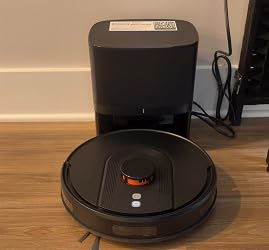
V8 Pro Size, Weight and Floor Clearance
Robot vacuum dimensions matter more than many buyers realize.
A compact robotic vacuum needs to fit beneath beds, sofas, cabinets, and other furniture. If a robot is too tall to reach these areas, its navigation technology won’t compensate for the physical limitation.
Clearance also affects navigation. Furniture with low horizontal supports can create difficult spaces where a robot repeatedly attempts to enter and then reverses.
Floor transitions are another consideration. Door thresholds, rugs, raised edges, and uneven flooring can affect how smoothly the automated cleaner moves between rooms.
What’s Included in the Box?
The exact contents can vary by package and retailer, but a typical V8 Pro package can include the robot, charging station, cleaning accessories, mop components, side brushes, filter-related accessories, and documentation.
Always verify the retailer’s current package before purchasing because accessory bundles can change.
Bottom Line: The basic hardware provides what you need to start automated floor cleaning, but replacement filters, brushes, and mop pads should also be considered when calculating long-term ownership costs.
V8 Pro Cleaning Technology and How It Works
The V8 Pro’s biggest advantage isn’t one isolated feature. Its appeal comes from combining several technologies into one robot vacuum system.
A modern robotic cleaner has to perform several jobs simultaneously: understand where it is, decide where to travel, collect debris, avoid obstacles, manage battery power, and return to its dock.
That makes navigation just as important as suction.
5,000 Pa Suction Performance
The V8 Pro’s advertised 5,000 Pa maximum suction puts it into a range where it should be capable of handling ordinary household debris effectively when the rest of the cleaning system is working properly.
Fine dust is generally easier for robotic vacuums to collect than heavy, embedded debris. Larger crumbs can require sufficient intake clearance, while hair can present an entirely different challenge because it can wrap around brushes.
Hard floors are usually the easiest environment for a robot vacuum. Dust, crumbs, and loose hair sit relatively close to the surface and can be directed toward the intake.
Carpet is more demanding. Dirt can settle between fibers, meaning the robot needs brush agitation as well as suction.
Pet owners should also consider brush maintenance. Even a powerful vacuum can lose effectiveness when hair becomes wrapped around the roller.
Bottom Line: 5,000 Pa suction is a useful specification, but the V8 Pro’s real cleaning ability should be judged by how well its complete cleaning system handles different debris types.
LiDAR Navigation and Smart Mapping
LiDAR navigation is one of the most important technologies in the V8 Pro.
Instead of randomly moving around the room, LiDAR-based navigation allows the robot to detect its surroundings and construct a map. This can help it establish more systematic cleaning routes.
LiDAR is particularly useful in larger homes because random navigation can waste battery power by repeatedly crossing the same areas.
The concept is closely related to SLAM mapping, or simultaneous localization and mapping. In practical terms, the robot needs to understand both where it is and what its environment looks like.
A good mapping system can support room-by-room cleaning, selective cleaning, virtual boundaries, and more efficient routes.
However, LiDAR doesn’t automatically mean perfect navigation. Furniture movement, reflective surfaces, clutter, cables, dark spaces, and objects placed on the floor can still create problems.
Bottom Line: LiDAR and SLAM-style mapping give the V8 Pro a stronger navigation foundation than basic random-path robots, but successful cleaning still depends on sensor performance and the software interpreting the map correctly.
Vacuum, Sweep and Mop 3-in-1 System
The V8 Pro combines vacuuming, sweeping, and mopping into one automated floor-cleaning system.
For daily maintenance, this can be convenient. Instead of separately running a vacuum and then manually wiping hard floors, the robot can handle routine surface cleaning in a single workflow.
The mopping function is most useful on hard floors. It can help remove light surface residue that remains after dry vacuuming.
However, buyers should distinguish maintenance mopping from deep cleaning. A robot’s mop pad isn’t equivalent to a person applying pressure with a traditional mop.
This distinction becomes particularly important in kitchens, entryways, and other areas where sticky or dried-on contamination may occur.
Bottom Line: The 3-in-1 design is one of the V8 Pro’s most practical features, but its mop should be viewed primarily as an automated maintenance tool rather than a replacement for occasional deep floor cleaning.
Automatic Carpet Cleaning
Carpets require a different cleaning strategy from smooth flooring.
When a robotic vacuum identifies carpet, increasing suction can help collect particles that sit deeper within the carpet pile.
The V8 Pro’s automatic carpet-cleaning behavior is therefore useful because users don’t necessarily need to change the cleaning configuration every time the robot moves between hard flooring and carpet.
Low-pile rugs are generally easier for robot vacuums to navigate than thick or heavily textured rugs.
Loose rug edges can also interfere with movement, while tassels may become caught in brushes.
Bottom Line: Automatic carpet management makes the V8 Pro more convenient in mixed-floor homes, but carpet owners should still prepare loose rugs and monitor brush buildup.
V8 Pro Cleaning Performance Tested by Floor Type
Cleaning performance is where specifications become less important and system design becomes more important.
A robotic vacuum doesn’t clean a floor with suction alone. Its side brush, main brush, intake, navigation algorithm, suction setting, and number of passes all influence the final result.
The V8 Pro is therefore best evaluated by the type of floor and debris it encounters.
Hardwood and Other Hard Floors
Hard floors are where most robot vacuums can demonstrate their convenience.
Dust tends to remain exposed on surfaces such as hardwood, tile, laminate, and similar flooring. The V8 Pro can use its side brush to move debris toward the central cleaning path.
Crumbs and loose household debris are also suitable targets for daily automated cleaning.
The main advantage here is consistency. Running the autonomous cleaner regularly can prevent dust and crumbs from accumulating to the point where a larger manual cleaning session becomes necessary.
Edge cleaning remains a limitation common to many circular robot vacuums. A robot can get close to a wall, but its round shape means corners are difficult to reach completely.
Bottom Line: For routine hard-floor maintenance, the V8 Pro’s automated scheduling and systematic navigation can be more valuable than simply having a high maximum suction figure.
Carpet and Area Rugs
Carpet requires more attention because dirt can become embedded between fibers.
The V8 Pro’s maximum suction setting can help with loose debris, while brush agitation contributes to the cleaning process.
Low-pile carpets should generally be more manageable than thick, plush carpeting.
Area rugs introduce additional variables. The robot has to transition from hard flooring onto the rug without getting stuck or pushing the material.
Rug corners should be secured where necessary.
Bottom Line: The V8 Pro can make sense for mixed-floor homes, but buyers with thick carpets should place more emphasis on brush agitation and real-world carpet results than on the advertised Pa number alone.
Pet Hair and Everyday Household Debris
Pet hair is one of the toughest everyday challenges for a robot vacuum.
Long hair can wrap around a brush, reducing cleaning efficiency and eventually creating additional maintenance.
Shorter pet hair may be easier to collect, especially on hard floors.
For homes with pets, scheduled cleaning can be a major advantage. Instead of waiting until hair becomes visible, the robot can run regularly and remove smaller amounts before they accumulate.
However, pet owners should expect more frequent brush and filter maintenance.
Bottom Line: The V8 Pro can be useful for routine pet-hair management, but households with heavy shedding should plan for regular brush cleaning rather than expecting completely maintenance-free operation.
Corners, Edges and Under Furniture
The V8 Pro’s circular body is helpful for maneuvering but inherently limits how deeply it can enter square corners.
Its side brush can sweep debris from wall edges toward the cleaning path, but a small amount of dirt can still remain where two walls meet.
Under-furniture performance depends primarily on clearance.
This is one area where robot vacuums can provide an advantage over conventional upright vacuums: once the robot fits underneath a bed or sofa, it can repeatedly clean that hidden area without the owner manually moving furniture.
Field Note: One of the most useful practical observations when evaluating any LiDAR robot is to watch its behavior around chair legs and clutter rather than simply watching it cross an open floor. Open rooms are easy; tight furniture layouts reveal how intelligently the navigation system actually behaves.
Bottom Line: Expect good routine coverage across accessible floor areas, but keep a conventional vacuum or manual tool available for deep corners and unusually tight spaces.
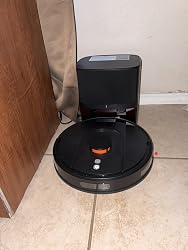
V8 Pro Mopping Performance: Does It Really Replace a Mop?
The mopping feature makes the V8 Pro more versatile than a vacuum-only robot.
Its water tank supplies moisture to the mop attachment, allowing the robot to wipe hard surfaces while moving around the room.
This is particularly convenient for everyday dust and light surface residue.
However, the most important question isn’t whether the robot can mop. It is whether the mopping performance matches your cleaning expectations.
How the V8 Pro Mopping System Works
The V8 Pro uses a water reservoir and mop attachment to apply moisture while traveling across suitable hard floors.
Depending on the cleaning configuration, the robot can vacuum and mop as part of the same cleaning routine.
This is useful for maintaining floors between deeper cleaning sessions.
Water management remains important. Leaving water inside the tank for long periods can create unnecessary odor or hygiene issues.
Bottom Line: The V8 Pro’s mopping function adds meaningful convenience for routine hard-floor maintenance, provided the mop pad and water tank are cleaned regularly.
Hard-Floor Mopping Performance
Mopping is most useful for light contamination.
Dust residue, footprints, and small amounts of surface grime are reasonable targets.
The robot can provide repeated maintenance cleaning that reduces the amount of manual mopping required.
But robotic mopping is not identical to manual scrubbing. The robot’s pad doesn’t provide the same pressure or focused movement that a person can apply to a stubborn mark.
Bottom Line: Think of the V8 Pro mop as a maintenance cleaner rather than a heavy-duty stain-removal machine.
What the V8 Pro Mop Cannot Do
Dried food, sticky spills, grease, and heavily soiled areas may require manual cleaning.
Large liquid spills should also be handled promptly rather than relying on a robot designed primarily for controlled mopping.
The V8 Pro is not intended to eliminate every other floor-cleaning method.
Bottom Line: The best expectation is reduced cleaning frequency—not complete elimination of manual cleaning.
Carpet and Mop-Safety Considerations
Water and carpets generally don’t mix well.
If your home contains rugs or carpeted areas, use appropriate room settings or boundaries to prevent unwanted mopping.
This is where mapping becomes especially valuable. A smart vacuum that knows the difference between rooms can make automated cleaning safer and more predictable.
Bottom Line: Mopping works best when the robot is deliberately configured around your home’s floor types.
V8 Pro App, Smart Features and User Experience
A robot vacuum’s app can determine whether advanced hardware feels genuinely smart or unnecessarily complicated.
The V8 Pro’s smartphone controls allow users to manage cleaning remotely rather than physically pressing buttons on the robot.
That matters because automation is most useful when you can configure it once and let the robot handle recurring cleaning.
Smartphone App Controls
Typical controls include starting and stopping cleaning, selecting rooms, scheduling cleaning sessions, adjusting cleaning behavior, and managing maps.
Scheduling is especially useful for households that want the robot to clean while nobody is home.
Room selection can also reduce unnecessary battery consumption. Instead of cleaning the entire house, users can direct the robot toward a kitchen, living room, bedroom, or other mapped area.
Bottom Line: App control changes the V8 Pro from a simple automatic vacuum into a more configurable smart vacuum.
Mapping, Rooms and No-Go Zones
Mapping allows the robot to divide the home into recognizable areas.
Virtual boundaries can be used to restrict the robot from particular locations.
This becomes useful around pet feeding stations, delicate objects, children’s play areas, or spaces containing cables.
Multi-floor mapping, where supported by the specific software version, can also be valuable in multi-level homes. Buyers should verify the exact mapping capabilities of their model rather than assuming every V8 Pro configuration supports identical map storage.
Bottom Line: Mapping is most valuable when it reduces daily supervision—not simply because the app displays an attractive map.
Voice Control and Smart Home Integration
Smart home integration can make routine cleaning easier.
Voice commands through compatible platforms such as Alexa or Google Assistant can allow users to start or stop cleaning without opening the smartphone application.
This is particularly convenient when the robot is already configured and the user simply wants to initiate a routine cleaning cycle.
Voice control is less important when complicated room selection or cleaning settings are required.
Bottom Line: Smart home integration is a useful convenience feature, but reliable mapping and navigation matter more than voice commands for everyday performance.
App Strengths and Weaknesses
The main strength of app-based robotic cleaning is automation.
The main weakness is complexity. Initial Wi-Fi configuration, mapping, room naming, and permissions can require more setup than a conventional vacuum.
User discussions surrounding V8 Pro models have included both positive reports and complaints about setup or mapping experiences, illustrating why software quality should be evaluated separately from hardware specifications.
Bottom Line: The V8 Pro’s smart features can substantially improve convenience, but buyers should expect an initial setup period rather than assuming completely effortless configuration.
V8 Pro Battery Life, Charging and Cleaning Coverage
Battery runtime determines how much of a home a robot can clean before returning to its dock.
The V8 Pro is advertised with up to 180 minutes of runtime, although actual operating time depends on suction level, floor type, navigation, mopping, battery condition, and other factors.
180-Minute Maximum Runtime
The advertised 180-minute battery runtime should be treated as an upper-condition figure rather than a guaranteed duration for every cleaning cycle.
Maximum suction generally requires more energy than lower-power operation.
Carpets may also increase power consumption compared with easy-to-clean hard floors.
Bottom Line: A long advertised runtime is useful, but actual cleaning coverage depends on how the robot uses that battery.
Automatic Recharge and Resume
Automatic charging is one of the defining conveniences of robotic cleaning.
When the battery becomes low, the robot can return toward its charging station rather than simply stopping in the middle of the floor.
A recharge-and-resume workflow can be particularly useful for larger homes.
The robot’s ability to locate its dock depends on unobstructed navigation and appropriate dock placement.
Bottom Line: Automatic charging turns battery management into a background task, provided the dock remains accessible.
Charging Dock Placement
The dock should be placed in a clear area where the robot can approach and leave without obstacles.
Avoid placing it behind furniture or in a narrow passage.
Keep charging contacts clean because dust accumulation can interfere with electrical contact.
Bottom Line: A poorly positioned dock can make an otherwise intelligent robot appear unreliable.
Battery Life Over Time
Lithium-ion batteries naturally lose capacity as they age.
Cleaning frequency, charge cycles, storage conditions, and battery quality all influence long-term runtime.
If the robot eventually begins returning to the dock much sooner than expected, battery degradation may be one possible cause.
Bottom Line: Battery runtime should be evaluated as an ownership feature, not simply as a number printed on the product page.
V8 Pro Maintenance and Replacement Costs
Every autonomous cleaner still needs human maintenance.
The advantage is that you maintain the machine rather than manually clean the entire floor.
Regular maintenance also protects cleaning performance. A dirty brush or clogged filter can make a powerful robot perform like a much weaker one.
How Often to Empty the Dustbin
The V8 Pro’s 290 ml dust capacity isn’t particularly large compared with some premium systems that use large self-emptying stations.
Homes with pets may fill the container much faster.
For normal households, emptying after several cleaning cycles may be sufficient, depending on debris levels.
The important point is not to wait until the bin is packed tightly with dust and hair.
Bottom Line: Buyers with heavy-shedding pets should expect more frequent dustbin emptying.
Cleaning the Main Brush and Side Brushes
Hair is the main enemy of robot-vacuum brushes.
Check the main roller regularly and remove wrapped hair before it becomes tightly compressed.
The side brush should also be inspected because long hair can accumulate around its central mounting point.
A small amount of routine maintenance is much easier than trying to restore a neglected brush after months of buildup.
Bottom Line: Brush maintenance is one of the simplest ways to preserve cleaning performance.
HEPA Filter Maintenance
The filter captures fine particles before air leaves the vacuum system.
A clogged filter can restrict airflow and potentially reduce cleaning performance.
Follow the manufacturer’s cleaning instructions because not every filter should be washed.
Allow any washable component to dry completely before reinstalling it.
The concept of HEPA efficiency is useful here, but filter efficiency alone doesn’t describe the entire machine. The quality of the seals and airflow path also matters.
Bottom Line: A clean filter supports both airflow and filtration performance.
Mop Pad, Water Tank and Sensors
Mop pads should be cleaned regularly.
The water tank should be emptied and maintained according to the manufacturer’s instructions.
Sensors also require attention. Dust on navigation sensors can interfere with mapping and movement.
LiDAR components should be kept clean and unobstructed.
Charging contacts should receive occasional inspection as well.
Bottom Line: A simple weekly maintenance routine can prevent many common robot-vacuum problems before they become troubleshooting issues.
V8 Pro Troubleshooting: Common Problems and Fixes
Even a well-designed autonomous cleaner can occasionally behave unexpectedly.
Most problems are caused by blocked components, poor dock placement, dirty sensors, connectivity issues, or incorrect settings.
V8 Pro Is Not Picking Up Dirt
Start with the basics.
Check whether the dustbin is full. Inspect the main brush for hair and debris. Examine the filter for excessive dust buildup.
Then verify the suction setting.
A blocked intake can also reduce performance.
If the machine sounds normal but pickup remains poor, inspect the entire debris path rather than assuming the motor has failed.
Bottom Line: Most sudden loss-of-pickup problems should first be investigated through the dustbin, filter, brush, intake, and suction settings.
V8 Pro Is Not Mapping or Gets Lost
Clean the navigation sensors first.
Then inspect the environment. A newly moved piece of furniture can change the robot’s understanding of a room.
Cables, clutter, reflective surfaces, and restricted pathways can also interfere with navigation.
If the map becomes corrupted or inconsistent, recreating the map may resolve the issue.
Bottom Line: LiDAR doesn’t eliminate navigation problems; clean sensors and a predictable environment remain important.
V8 Pro Will Not Connect to Wi-Fi or App
Check that the smartphone and robot are using the appropriate network configuration.
Restarting the robot and application can resolve temporary connection issues.
If the problem persists, repeat the pairing procedure according to the manufacturer’s instructions.
App permissions can also affect setup.
Bottom Line: Treat connectivity as a configuration issue first before assuming the robot itself is defective.
V8 Pro Will Not Charge or Return to Dock
Inspect the charging contacts on both the robot and dock.
Make sure the dock isn’t blocked.
The robot needs enough clear space to approach the station correctly.
If the battery behaves abnormally or the robot repeatedly fails to charge after the contacts and dock are checked, professional support may be necessary.
Bottom Line: Dock placement and clean charging contacts are the first two things to check when automatic charging fails.
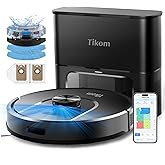
V8 Pro vs Competing Robot Vacuums
The V8 Pro becomes easier to evaluate when placed against competing robotic vacuums.
A buyer shouldn’t ask only, “Which robot has the most suction?”
The better question is, “Which complete cleaning system provides the features I actually need?”
V8 Pro vs Roborock Robot Vacuums
Roborock’s product ecosystem is known for advanced mapping, sophisticated software, and a broad selection of robot vacuum systems.
The V8 Pro can be attractive to buyers who want LiDAR-based navigation and vacuum/mop functionality without necessarily moving into a premium automated dock system.
Roborock models can offer more advanced automation depending on the specific model.
The comparison therefore depends heavily on price and generation.
Bottom Line: Choose the V8 Pro when its feature set meets your needs at a better value; consider Roborock when advanced software, ecosystem features, or premium automation are higher priorities.
V8 Pro vs Dreame Robot Vacuums
Dreame competes strongly in the feature-rich robot vacuum market.
Some Dreame systems focus heavily on advanced mopping, obstacle avoidance, docking automation, and premium cleaning features.
The V8 Pro’s advantage is simplicity and a comparatively straightforward feature package.
Bottom Line: Dreame becomes more attractive when advanced automation and premium mopping are priorities, while the V8 Pro can appeal to buyers focused on core automated vacuuming.
V8 Pro vs Eufy Robot Vacuums
Eufy offers robot vacuums across multiple price levels.
When comparing Eufy against the V8 Pro, pay attention to navigation technology rather than comparing suction numbers alone.
App quality, obstacle detection, battery management, cleaning pattern, brush design, and replacement-part availability can all affect the ownership experience.
Bottom Line: Eufy can be a strong alternative, but the best choice depends on the exact model and current pricing.
V8 Pro vs Other Budget Robot Vacuums
| Feature | V8 Pro | Budget Competitor | Mid-Range Competitor |
|---|---|---|---|
| Maximum suction | 5,000 Pa | Varies | Varies |
| Navigation | LiDAR | May vary | Usually advanced |
| Mopping | Yes | Model dependent | Usually yes |
| App control | Yes | Model dependent | Yes |
| Voice control | Yes | Model dependent | Usually yes |
| Advertised runtime | Up to 180 min | Varies | Varies |
| HEPA filtration | Yes | Model dependent | Model dependent |
| Self-emptying | Model/package dependent | Often unavailable | More common |
| Best suited to | Everyday automation | Basic cleaning | Advanced automation |
Bottom Line: The V8 Pro occupies an interesting middle ground: more sophisticated than basic random-navigation robots, but not necessarily as automated as premium flagship systems.
Buyer’s Intent: Who Should Buy the V8 Pro?
The best product review should help readers decide whether to buy—not simply tell them that a product has impressive specifications.
The V8 Pro makes the most sense when its automation solves a genuine household problem.
V8 Pro Is Best For
The V8 Pro is a logical candidate for busy households that want regular floor maintenance without manually running a vacuum every day.
It’s also worth considering for homes with pets where frequent automated cleaning can help control loose hair and dust.
Hard-floor households may particularly benefit from the vacuum-and-mop combination.
First-time robot vacuum buyers may also appreciate having LiDAR navigation, smartphone control, scheduling, and automated charging in one system.
Bottom Line: The ideal V8 Pro buyer wants consistent daily maintenance more than a completely hands-off premium cleaning station.
Who Should Avoid the V8 Pro?
There are situations where a different robot vacuum may make more sense.
If you want a large self-emptying station, automated mop washing, heated mop drying, advanced object recognition, or highly sophisticated AI obstacle avoidance, a premium system may be worth the additional investment.
Similarly, homes with extensive thick carpeting should prioritize a robot specifically optimized for deep carpet cleaning.
Buyers expecting robotic mopping to replace manual scrubbing may also be disappointed.
Bottom Line: The V8 Pro isn’t necessarily the best choice for users who want every premium automation feature available.
Is the V8 Pro Worth Buying?
The answer depends on price and priorities.
Its 5,000 Pa suction, LiDAR navigation, vacuum/mop combination, app control, and advertised up to 180-minute battery runtime create a compelling feature list.
But the real question is whether those features solve your cleaning needs.
If your primary goal is scheduled daily cleaning on hard floors and normal carpets, the V8 Pro has a sensible feature combination.
If your priority is maximum automation, premium obstacle recognition, or sophisticated dock-based maintenance, look higher in the market.
Bottom Line: The V8 Pro is worth considering when its core automation features matter more to you than premium docking and advanced hands-free maintenance.
V8 Pro Alternatives Worth Considering
Before purchasing, compare it with:
- A premium LiDAR robot for advanced mapping.
- A pet-focused robot for heavy shedding.
- A premium mopping robot for more intensive wet cleaning.
- A budget robot for basic automated vacuuming.
- A self-emptying robot for reduced dustbin maintenance.
The important comparison is system versus system, not one specification versus another.
Bottom Line: A slightly more expensive robot can sometimes provide better long-term value if it eliminates a task you would otherwise perform manually every day.
V8 Pro Pros, Cons and Final Verdict
After looking at the hardware, navigation, cleaning, mopping, software, maintenance, and ownership factors, the V8 Pro presents a reasonably balanced package.
Its strongest advantage is that it combines several desirable robot-vacuum features without requiring the buyer to immediately enter the premium flagship category.
What We Like About the V8 Pro
- 5,000 Pa maximum suction
- LiDAR navigation
- Vacuum, sweep and mop functionality
- Up to 180 minutes advertised runtime
- 2600mAh lithium-ion battery
- Smartphone app control
- Voice-control compatibility
- Automated charging
- Smart mapping capabilities
What Could Be Better
- 290 ml dust capacity requires regular emptying.
- 250 ml water capacity isn’t designed for extremely large cleaning areas without attention.
- Mopping is better for routine maintenance than deep scrubbing.
- App setup may require some learning.
- Advanced AI obstacle avoidance shouldn’t be assumed simply because the robot has LiDAR.
- Long-term ownership depends heavily on replacement-part availability and software support.
Final V8 Pro Rating
| Category | Weight |
|---|---|
| Vacuuming | 25% |
| Navigation | 20% |
| Mopping | 15% |
| App & Smart Features | 15% |
| Battery | 10% |
| Maintenance | 10% |
| Value | 5% |
A balanced review should score the robot according to these categories rather than letting suction power dominate the final rating.
Bottom Line
The V8 Pro is best viewed as an automated floor-maintenance system rather than a complete replacement for every vacuuming and mopping task.
Its combination of 5,000 Pa suction, LiDAR navigation, vacuuming, mopping, app control, and long advertised battery runtime makes it appealing for everyday cleaning.
Its limitations—particularly maintenance requirements, onboard capacity, and the gap between basic automation and premium hands-free systems—should be considered before purchasing.
Final verdict: If your priority is affordable-to-midrange smart automation for routine floor cleaning, the V8 Pro deserves consideration. If you want the most advanced obstacle avoidance, self-emptying, mop washing, and virtually hands-free ownership, a more expensive robot may be a better fit.
Final Verdict: Should You Buy the V8 Pro?
The V8 Pro’s strongest argument is automation.
It brings together 5,000 Pa suction, LiDAR navigation, automated mapping, vacuuming, mopping, app control, smart-home functionality, and an advertised 180-minute battery runtime.
Those features make it particularly interesting for homeowners who want their floors maintained regularly without manually operating a vacuum every day.
The biggest mistake would be judging it entirely by the 5,000 Pa number. A robotic vacuum is an integrated system. Navigation determines where it cleans, brushes determine how debris is agitated, airflow determines how effectively particles move through the system, filtration determines how captured particles are handled, and software determines how much supervision the owner needs.
For that reason, the V8 Pro’s value comes from the combination of technologies, not any single specification.
Bottom Line: The V8 Pro is a compelling option for routine automated floor cleaning, particularly for buyers who value LiDAR mapping and vacuum/mop functionality. Its limitations become more important for buyers wanting premium hands-free maintenance, advanced AI object recognition, or heavy-duty deep-cleaning performance.
Final Verdict: Should You Buy the V8 Pro?
The V8 Pro’s strongest argument is automation.
It brings together 5,000 Pa suction, LiDAR navigation, automated mapping, vacuuming, mopping, app control, smart-home functionality, and an advertised 180-minute battery runtime.
Those features make it particularly interesting for homeowners who want their floors maintained regularly without manually operating a vacuum every day.
The biggest mistake would be judging it entirely by the 5,000 Pa number. A robotic vacuum is an integrated system. Navigation determines where it cleans, brushes determine how debris is agitated, airflow determines how effectively particles move through the system, filtration determines how captured particles are handled, and software determines how much supervision the owner needs.
For that reason, the V8 Pro’s value comes from the combination of technologies, not any single specification.
Bottom Line: The V8 Pro is a compelling option for routine automated floor cleaning, particularly for buyers who value LiDAR mapping and vacuum/mop functionality. Its limitations become more important for buyers wanting premium hands-free maintenance, advanced AI object recognition, or heavy-duty deep-cleaning performance.
Frequently Asked Questions About the V8 Pro Robot Vacuum
Is the V8 Pro robot vacuum worth buying?
The V8 Pro is worth considering for buyers who want LiDAR navigation, automated vacuuming and mopping, app control, and long battery runtime in one system. It is less suitable for buyers demanding premium self-emptying and advanced dock automation.
How much suction power does the V8 Pro have?
The V8 Pro is advertised with 5,000 Pa maximum suction. Pa measures pressure, so it should not be interpreted as a complete measurement of cleaning performance. Brush design, airflow, filtration, and intake design also matter.
Does the V8 Pro vacuum and mop at the same time?
Yes, the V8 Pro is designed as a vacuum-and-mop system. Its mopping function is primarily intended for routine hard-floor maintenance rather than heavy-duty manual-style scrubbing.
Does the V8 Pro use LiDAR navigation?
Yes. The V8 Pro is marketed with LiDAR navigation, which allows the robot to scan its environment and build a map for more systematic cleaning.
Does the V8 Pro use SLAM mapping?
LiDAR robot vacuums commonly use SLAM-style localization and mapping principles to understand their position while building a representation of the environment. However, buyers should distinguish the underlying mapping concept from specific software features advertised by the manufacturer.
How long does the V8 Pro battery last?
The V8 Pro is advertised with up to 180 minutes of battery runtime. Actual runtime varies according to suction level, floor type, navigation activity, mopping, battery condition, and other operating conditions.
Can the V8 Pro clean pet hair?
Yes, it can be used for routine pet-hair cleaning, particularly on hard floors and manageable carpet. Pet owners should expect to clean the main brush and filter regularly because hair can accumulate around moving components.
Can the V8 Pro clean carpets?
Yes. The robot can clean carpets, and higher suction settings can help with debris pickup. Performance will vary according to carpet thickness, debris type, brush design, and how deeply dirt is embedded.
Does the V8 Pro work with Alexa or Google Assistant?
The V8 Pro is marketed with voice-control and smart-home compatibility. Exact functionality can depend on the software version, region, and connected platform, so verify the current compatibility before purchasing.
Does the V8 Pro have AI obstacle avoidance?
LiDAR navigation and obstacle detection should not automatically be described as advanced AI obstacle avoidance. These are separate capabilities. If advanced object recognition is important to you, verify that the exact V8 Pro model explicitly supports the specific obstacle-recognition features you need.
Does the V8 Pro support multi-floor mapping?
This depends on the exact software/model configuration. Buyers with multi-story homes should verify the current mapping features before purchasing rather than assuming that every V8 Pro version stores multiple floor maps.
How do I maintain the V8 Pro?
Regularly empty the dustbin, inspect the main and side brushes, clean or replace the filter according to manufacturer instructions, maintain the mop pad and water tank, clean navigation sensors, and keep charging contacts free of debris.
Why is my V8 Pro robot vacuum getting lost?
Possible causes include dirty navigation sensors, changed furniture, clutter, blocked pathways, mapping errors, or dock-placement problems. Cleaning the sensors and recreating the map can be useful troubleshooting steps.
Why isn’t the V8 Pro picking up dirt?
Check the dustbin, filter, main brush, intake, and suction setting. Hair wrapped around the roller or a clogged filter can significantly reduce cleaning effectiveness even when the motor itself is working correctly.