
Direct Answer: redroad robot vacuum 20 000 pa robot vacuum and mop is a high-suction R11 designed for automated vacuuming, sweeping, and light mopping. Its 20,000 Pa suction, 360° LiDAR navigation, 3,200 mAh battery, multi-floor mapping, and self-emptying base make it particularly appealing for carpets, pets, and busy homes.
redroad robot vacuum 20 000 pa robot vacuum and mop Overview What Kind of Robot Vacuum Is It?
The Redroad R11 is positioned as a relatively affordable autonomous cleaner that puts unusual emphasis on raw suction power. Its headline specification is 20,000 Pa maximum suction, supported by 360° LiDAR navigation, vacuuming, sweeping, mopping, app controls, voice control, and an automatic dust-collection base. (Redroad)
That combination matters because a robot vacuum is no longer judged only by whether it can pick up crumbs. Modern buyers expect a smart vacuum to understand the layout of a home, clean specific rooms, avoid obstacles, return to its dock, recharge, and continue working without constant supervision.
The R11 attempts to cover most of those requirements without moving into the price range of some premium flagship systems. The official Redroad store currently lists the R11 at $299, although sale pricing can vary. (Redroad)
Quick Verdict
The biggest attraction is clearly the 20,000 Pa suction rating. For households dealing with pet hair, tracked-in dirt, crumbs, carpet debris, and heavier particles, that gives the R11 a strong specification advantage on paper.
Its second major strength is navigation. Instead of relying on random movement, the R11 uses 360° LiDAR to map the environment and plan cleaning routes. Redroad also advertises multi-floor memory support, which is useful for homes with more than one level. (Redroad)
The main compromise is the mopping system. This is better understood as a maintenance-mopping feature rather than a replacement for aggressive manual scrubbing. Independent testing similarly characterizes the R11’s mop as useful for routine cleaning but less capable against stubborn dried-on stains. (Vacuum Review Lab)
Bottom Line: The R11 makes the most sense when vacuuming power, LiDAR mapping, pet-hair pickup, and hands-off dust collection matter more than having a sophisticated premium scrubbing system.
Key Specifications Snapshot
| Feature | Redroad R11 |
|---|---|
| Maximum suction | 20,000 Pa |
| Battery | 3,200 mAh |
| Navigation | 360° LiDAR |
| Cleaning | Vacuum + Sweep + Mop |
| Mapping | Multi-floor memory support |
| Base | Automatic dust collection |
| Base capacity | 4L |
| Wi-Fi | 2.4 GHz + 5 GHz according to independent testing |
| Water control | Adjustable |
| Warranty | 24 months |
Redroad’s official listing confirms the 20,000 Pa suction, 3,200 mAh battery, 360° LiDAR, 3-in-1 cleaning, 4L base, multi-floor support, and 24-month warranty. (Redroad)
Field Note: Published independent testing found the R11 particularly effective on carpets and heavy debris, while maximum-power operation was noticeably louder and consumed more battery. That is exactly the trade-off I would watch when evaluating a high-suction robot: headline power is useful only if the machine can deploy it efficiently. (Vacuum Review Lab)
20,000 Pa Suction Technology Explained
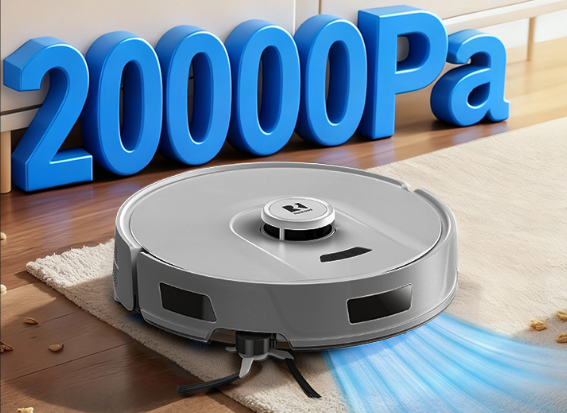
The number 20,000 Pa is the specification most likely to catch a buyer’s attention.
Pa, or pascals, describes pressure. In robot-vacuum marketing, it is commonly used to communicate maximum suction capability. However, it should not be treated as a complete measurement of cleaning performance.
A robot can have impressive maximum suction but still perform poorly if its brush cannot properly agitate carpet fibers, its airflow path is restrictive, or the nozzle does not maintain effective contact with the floor.
That is why our evaluation of a robotic vacuum should consider several pieces together: suction, brush agitation, airflow, navigation, filtration, and how consistently the machine covers the floor.
Suction Versus CFM Airflow
This is an important technical distinction.
Water Lift or suction pressure describes how much negative pressure the vacuum system can generate, while CFM airflow describes the volume of air moved through the system.
Redroad advertises the R11’s maximum suction as 20,000 Pa, but I could not find an official CFM airflow figure or a published Water Lift measurement in inches for this model. That means it would be misleading to convert the 20,000 Pa figure into an invented CFM or Water Lift specification.
For buyers, the practical lesson is simple: 20,000 Pa tells you about maximum suction pressure, not the complete cleaning equation.
Does 20,000 Pa Matter on Carpet?
Yes, potentially.
Independent testing reported particularly strong performance on carpets, including pickup of pet hair and heavier debris. The same testing noted that the highest-power setting increases noise and battery consumption. (Vacuum Review Lab)
Carpet benefits from agitation because dirt becomes trapped between fibers. Suction then has to pull that loosened material upward and into the robot.
The R11’s combination of a strong suction specification and brush agitation is therefore more meaningful than the suction number by itself.
Pet Hair and Heavy Debris
Pet owners are among the clearest potential beneficiaries.
Dog hair, cat hair, litter, crumbs, and tracked-in outdoor debris are exactly the kinds of material that can expose weaknesses in a low-powered robotic vacuum.
Independent testing found the R11 effective with pet hair and heavy debris such as cat litter. (Vacuum Review Lab)
However, high suction doesn’t eliminate maintenance. Hair can still wrap around the brush, and filters can become restricted if the robot regularly collects large amounts of fine debris.
Battery Cost of High Power
The 3,200 mAh battery is one of the R11’s official specifications. (Redroad)
The important question isn’t simply battery capacity; it is how that battery behaves under different cleaning modes.
Independent testing reported approximately 100–120 minutes under standard conditions, with substantially shorter runtime when maximum suction was used continuously. (Vacuum Review Lab)
That makes automatic recharge-and-resume particularly valuable for larger homes.
Bottom Line: The R11’s 20,000 Pa rating is a meaningful advantage for demanding cleaning, but buyers should judge it alongside brush design, airflow, battery runtime, and navigation efficiency rather than treating Pa as a universal performance score.
360° LiDAR Navigation and Mapping
Navigation is arguably as important as suction in an autonomous floor cleaner.
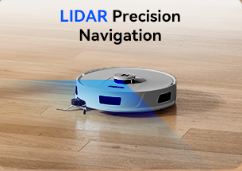
A powerful robot that repeatedly gets stuck underneath furniture or loses its position isn’t particularly useful. The R11 addresses this with a top-mounted 360° LiDAR navigation system.
LiDAR uses laser-based distance measurements to understand the robot’s surroundings and create a map.
Redroad specifically advertises fast mapping and multi-floor memory support for the R11. (Redroad)
LiDAR and SLAM Mapping
You will often see SLAM mapping mentioned when discussing modern robotic vacuums.
SLAM stands for Simultaneous Localization and Mapping. In simple terms, the robot builds a representation of its surroundings while simultaneously determining where it is within that environment.
LiDAR can provide the distance information needed by a mapping/localization system.
However, Redroad’s official R11 listing specifically describes 360° LiDAR smart navigation rather than publishing a detailed algorithmic specification confirming a particular SLAM implementation. Therefore, the technically responsible description is that the R11 uses LiDAR-based mapping/navigation rather than claiming an undocumented SLAM architecture.
Route Planning
Independent testing found the R11’s navigation to be one of its strengths, particularly around furniture and larger obstacles. (Vacuum Review Lab)
That matters because efficient route planning reduces wasted movement.
A random-navigation robot may repeatedly cover the same area while leaving other sections untouched. A mapped robot can divide the floor into rooms and work through a more systematic route.
AI Obstacle Avoidance
The phrase AI obstacle avoidance should be treated carefully.
The R11 clearly provides obstacle detection and LiDAR navigation, but the manufacturer page I found does not provide a detailed AI vision-system specification comparable to robots that explicitly advertise camera-based object recognition.
So the useful buyer question isn’t whether a marketing label says “AI.” It is whether the robot can reliably identify furniture, walls, boundaries, and household obstacles.
Independent testing reported that the R11 slows around larger obstacles and navigates furniture effectively. (Vacuum Review Lab)
Multi-Floor Mapping
For two-story homes, multi-floor mapping can be a major convenience.
Instead of creating a new map every time the robot is moved upstairs, a system with multi-floor memory can preserve separate floor layouts.
Redroad specifically lists multi-floor memory support as an R11 feature. (Redroad)
That makes the model more practical for larger homes where a single-floor robot would otherwise require frequent remapping.
Bottom Line: The R11’s 360° LiDAR is more important to everyday usability than the 20,000 Pa headline alone. Good mapping means less wasted movement, better room coverage, and more useful automation.
Cleaning Performance on Hardwood, Tile and Carpet
A good robotic vacuum needs to handle more than one floor type.
Most American homes combine hard flooring with rugs or carpet, meaning the robot must transition between surfaces without requiring constant manual intervention.
The R11’s high suction specification gives it an obvious advantage on paper, but the actual cleaning experience depends on the combination of suction, brush agitation, side-brush coverage, and navigation.
Hardwood and Hard Floors
Hard floors are generally easier for robotic vacuums because dirt remains on the surface rather than becoming embedded in fibers.
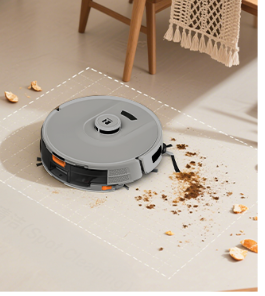
The R11 can target dust, crumbs, pet hair, and larger debris while its side brush helps move material away from edges.
The 20,000 Pa maximum is arguably more than most light hard-floor debris requires, which means buyers should not assume they need maximum power for every cleaning cycle.
Lower settings can make more sense when the floor is already relatively clean.
Carpet and Area Rugs
This is where the R11’s headline specification becomes more relevant.
Independent testing reported strong pickup on low- and medium-pile carpet, including dust, crumbs, and pet hair. Another published review found that the R11 could remove a mix of rice, oats, and dog hair from medium-pile carpet in a single pass. (smarthomesystemslab.com)
That does not mean every carpet will receive the same result.
High-pile and shag rugs create a more difficult environment because the robot has to maintain effective contact while moving through longer fibers.
Pet Hair
Pet hair is one of the most demanding everyday tests for an automated floor cleaner.
The combination of strong suction and brush agitation helps the R11 pull hair from carpets and hard floors.
But there is an important distinction between hair pickup and hair-free maintenance.
Even an effective robot can collect hair around its brush roll. Regular inspection remains necessary, particularly in homes with multiple pets.
Corners and Edges
Robot vacuums are naturally limited by their circular body shape.
A side brush helps sweep debris from edges toward the central cleaning path, but no circular robot can perfectly reproduce the reach of a handheld vacuum nozzle.
The R11 therefore works best as a frequent maintenance cleaner rather than the only vacuuming tool in a home.
Bottom Line: The R11’s strongest cleaning territory is everyday debris, pet hair, carpets, and mixed flooring. It can dramatically reduce manual vacuuming, but occasional edge and corner cleaning should still be expected.
Redroad R11 Mopping Performance — Can It Replace a Traditional Mop?
The R11 is not only a robotic vacuum. It is marketed as a 3-in-1 vacuum, sweep, and mop system with adjustable water control. (Redroad)
That makes it more versatile than a vacuum-only robot.
But there is an important distinction between maintenance mopping and deep floor scrubbing.
How the Mopping System Works
The robot uses a water reservoir and mop pad to wipe hard flooring after or during the cleaning process.
Redroad specifically advertises adjustable water control, allowing the user to alter the amount of moisture delivered. (Redroad)
That is useful because different floors have different moisture requirements.
Everyday Dust and Footprints
This type of mopping is particularly useful for fine dust, light footprints, and everyday surface residue.
If the vacuum removes larger debris first, the mop can then handle the fine film that remains.
That makes the system useful for kitchens, hallways, dining areas, and other high-traffic hard-floor zones.
Dried-On Stains
This is where expectations need to be realistic.
Independent testing characterizes the R11’s mopping as a maintenance mop rather than a deep scrubber. (Vacuum Review Lab)
A robotic mop pad can wipe a floor repeatedly, but it does not necessarily apply the same pressure or mechanical agitation as a person scrubbing a dried spill.
For dried sauce, sticky food, mud, or heavily stained areas, manual cleaning may still be necessary.
Hardwood and Moisture
Users with wood or moisture-sensitive flooring should pay attention to water settings.
The adjustable water-control feature is useful because flooding a delicate floor is obviously undesirable.
The safer strategy is to use the lowest effective water setting and follow the flooring manufacturer’s care requirements.
Bottom Line: The R11’s mop is valuable for routine maintenance, but buyers looking for aggressive stain removal or premium vibrating/rotating mop performance should consider a more specialized robot.
Self-Emptying Base, Battery and Hands-Free Cleaning
The R11 becomes considerably more convenient when paired with its self-emptying station.
Instead of requiring the owner to empty the robot’s small onboard dust container after every cleaning cycle, the docking station automatically transfers collected debris into its larger storage system.
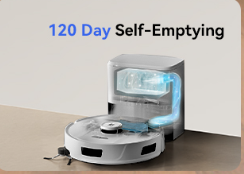
Redroad advertises a 4L base station and up to 180 days of automatic dust collection. (Redroad)
Automatic Dust Collection
The value of auto-emptying becomes obvious in homes with pets.
A robot that collects hair every day can fill its internal bin relatively quickly. Automatic transfer keeps the robot ready for its next cleaning cycle.
It also means fewer direct interactions with dusty debris.
4L Dust Collection Capacity
A 4L dock is substantial for a robot vacuum in this price category.
However, the “180 days” figure should not be interpreted as a guarantee for every household.
A small apartment with one occupant will generate dramatically less debris than a large home with two dogs and several children.
Independent testing reported that heavy-debris homes can require considerably more frequent attention. (Vacuum Review Lab)
3,200 mAh Battery Runtime
The 3,200 mAh battery provides the energy source for vacuuming, navigation, Wi-Fi, and other systems. (Redroad)
Independent testing suggests roughly 100–120 minutes under standard conditions, with maximum-power cleaning reducing runtime. (Vacuum Review Lab)
That is why recharge-and-resume behavior matters more than quoting a single maximum runtime number.
Large Homes
A large home may exceed the robot’s practical runtime in one cycle.
Fortunately, an autonomous cleaner doesn’t necessarily need to finish everything in one charge. Returning to the dock, charging, and continuing the unfinished map is a much more useful approach.
Bottom Line: The combination of 3,200 mAh battery + LiDAR mapping + automatic dust collection makes the R11 better suited to larger and busier homes than a basic budget robot that requires frequent manual intervention.
Redroad App, Wi-Fi and Smart-Home Features
A robot vacuum becomes significantly more useful when its software works well.
The R11 supports app-based control, scheduling, maps, no-go zones, and voice control. Redroad also lists smart app and voice functionality among the product’s core features. (Redroad)
Smartphone Controls
The app allows users to manage cleaning without physically pressing the robot’s buttons.
Typical controls include starting or stopping cleaning, selecting areas, managing schedules, and viewing maps.
For a busy household, scheduling is one of the most valuable functions because the robot can clean while everyone is away.
Dual-Band Wi-Fi
Independent testing reports support for both 2.4 GHz and 5 GHz Wi-Fi. (Vacuum Review Lab)
That can simplify connectivity in homes where many smart devices already compete for 2.4 GHz bandwidth.
However, users should still follow the app’s pairing requirements during initial setup.
No-Go Zones
Virtual boundaries are especially useful for real-world homes.
You might want the robot to avoid:
- Pet food bowls
- Cable clusters
- Children’s play areas
- Fragile objects
- A bathroom with a wet floor
Mapping becomes considerably more valuable when users can customize where the robot is allowed to clean.
Smart Home Integration
The R11 is designed for smart home integration, including voice control. Independent testing specifically reports Alexa and Google Home compatibility. (smarthomesystemslab.com)
Voice control is useful for simple commands, although it should not be confused with a fully autonomous smart-home ecosystem.
Bottom Line: The R11’s smart features support its core purpose: reducing how often the owner has to physically manage floor cleaning.
Redroad R11 vs Other Redroad Robot Vacuums
Redroad has several robotic cleaners in its current lineup, so the R11 shouldn’t be evaluated in isolation. (Redroad)
Redroad R11 vs R10
The biggest obvious difference is suction.
The R11 is marketed with 20,000 Pa, while the current R10 listing has historically positioned that model around 4,000 Pa. (Redroad)
That doesn’t automatically make the R11 four or five times better.
The more powerful model makes more sense for users who prioritize carpet cleaning, pet hair, and heavier debris.
The R10 can be more appropriate for buyers who primarily need basic automated floor maintenance.
Redroad R11 vs R10 Max
The R10 Max occupies a higher-priced position in Redroad’s current lineup. The official store currently lists the R10 Max at $579.99, compared with $299 for the R11 at the time of checking. (Redroad)
This creates an interesting value question.
The R11’s appeal is straightforward: extremely high advertised suction without requiring flagship-level spending.
The R10 Max becomes more relevant when a buyer values additional premium features over raw suction.
Redroad R11 vs G10
The G10 is currently listed by Redroad at $699, putting it substantially above the R11’s current official price. (Redroad)
That price difference means buyers should compare features rather than automatically choosing the most expensive model.
Which Redroad Model Offers the Best Value?
| Model | Positioning | Suction | Navigation | Mopping | Best For |
|---|---|---|---|---|---|
| R11 | High-suction value | 20,000 Pa | 360° LiDAR | Yes | Carpet, pets, heavy debris |
| R10 | Everyday option | 4,000 Pa listing | LiDAR | Yes | Basic automated cleaning |
| R10 Max | Premium option | Check current listing | Advanced | Yes | Feature-focused buyers |
| G10 | Higher-end system | Check current listing | Advanced | Yes | Premium automation |
Only the R11 and R10 suction figures shown above are included where current source information supports them; missing specifications should not be filled with assumptions. (Redroad)
Bottom Line: The R11’s strongest argument isn’t that it beats every Redroad model. Its argument is that 20,000 Pa suction + LiDAR + mopping + auto-emptying creates a compelling feature combination at its current price position.
Redroad R11 vs Competing Robot Vacuums
The R11 sits in an interesting part of the market.
There are budget robots with relatively basic navigation, premium robots with sophisticated docking stations, and increasingly powerful models competing on suction numbers.
Against 10,000–15,000 Pa Robots
If another robot has 10,000 or 15,000 Pa suction, that does not automatically mean it cleans half or one-third as well.
Cleaning performance is multidimensional.
Brush agitation, airflow, navigation, filtration, floor contact, software, and cleaning patterns all influence results.
Against Premium LiDAR Robots
Premium systems may offer more sophisticated obstacle recognition, better mop automation, more advanced docks, or stronger app ecosystems.
That is where the R11 can lose some advantage.
Its value proposition is more focused: strong suction, LiDAR mapping, automated dust collection, and basic mopping.
Pet-Hair Comparison
For pet owners, don’t compare only suction.
Look at:
- Brush design
- Hair tangling
- Filter accessibility
- Dust-bag capacity
- Side-brush behavior
- Carpet performance
- Maintenance frequency
The R11’s high suction makes it particularly interesting for pet households, and independent testing reported good pet-hair performance. (Vacuum Review Lab)
What Matters More Than Pa?
A serious robot-vacuum comparison should examine:
Suction pressure → airflow → brush agitation → filtration → navigation → battery runtime → dock automation.
This is also where HEPA efficiency and sealed system filtration become relevant.
The R11 has been reported with a HEPA filter by independent review sources, but Redroad’s current official product page does not provide a detailed percentage efficiency specification that would justify quoting a particular HEPA capture rate. (Vacuum Review Lab)
Likewise, buyers should not assume that a product is a fully sealed system simply because it uses a HEPA-style filter.
Bottom Line: Compare the R11 as a complete robot vacuum system, not merely as a 20,000 Pa motor attached to wheels.
Redroad R11 Maintenance Guide
Even the most autonomous robotic vacuum requires maintenance.
The advantage is that maintenance becomes periodic instead of daily manual vacuuming.
Cleaning the Main Brush
The main brush should be inspected regularly.
Pet hair is particularly likely to wrap around brush ends and bearings.
If the brush becomes restricted, cleaning performance can drop even though the motor itself remains powerful.
Cleaning the Side Brush and Sensors
LiDAR and navigation sensors need to remain clean.
Dust on sensors can interfere with mapping and obstacle detection.
The side brush should also be checked for wrapped hair or accumulated debris.
Filter and Dustbin Maintenance
A clogged filter can reduce airflow.
This is one reason why CFM airflow matters conceptually even though Redroad does not publish a CFM figure for the R11.
High suction pressure cannot compensate indefinitely for a severely restricted airflow path.
Mop Pad and Water System
The mop pad should be cleaned regularly rather than left damp inside the robot.
Allowing a wet pad to remain dirty can create unpleasant odors.
The water system should also be maintained according to Redroad’s instructions.
Bottom Line: The R11 is low-maintenance, not maintenance-free. A few minutes of regular brush, sensor, filter, and mop care helps preserve cleaning performance.
Redroad R11 Troubleshooting — Common Problems and Fixes
Robot Vacuum Will Not Connect to Wi-Fi
First confirm the Wi-Fi network and follow the pairing procedure in the app.
Because independent testing reports dual-band support, the R11 is less restrictive than many devices limited to 2.4 GHz, but configuration problems can still occur. (Vacuum Review Lab)
If pairing fails:
- Restart the robot.
- Restart the router.
- Reopen the app.
- Follow the network-reset procedure.
- Reattempt pairing.
R11 Is Not Picking Up Dirt
Check the basics first.
Inspect the main brush, side brush, filter, dust pathway, and robot dustbin.
A clogged filter can reduce airflow, while tangled hair can restrict brush movement.
If the problem occurs only on a particular surface, check the selected cleaning mode.
Robot Gets Stuck or Loses Its Map
Start by checking the environment.
Move cables and small objects away from the robot’s path.
Clean the LiDAR area and other navigation sensors.
If the map has become corrupted or inaccurate, rebuilding it may resolve the issue.
R11 Is Not Mopping Properly
Check:
- Water level
- Mop-pad condition
- Water-flow setting
- Correct mop attachment
- Floor suitability
Remember that the R11’s mopping system is intended primarily for routine floor maintenance.
Bottom Line: Most robotic-vacuum problems should be diagnosed from the brush, filter, sensors, water system, map, and connectivity before assuming the motor or battery has failed.
Redroad R11 Buyer’s Intent — Should You Buy It?
This is where the R11 becomes particularly interesting for commercial-intent searches.
The right question isn’t “Is this robot the best?”
The right question is:
Is this the right robot for your specific home?
Buy the R11 If You Need Powerful Carpet Cleaning
The R11 is particularly compelling for carpet-heavy households.
The combination of 20,000 Pa maximum suction, brush agitation, LiDAR navigation, and automatic dust collection gives it a strong profile for homes where dirt and pet hair accumulate quickly. (Redroad)
Buy It If You Want Less Daily Maintenance
The self-emptying dock is one of the most important quality-of-life features.
Instead of emptying the robot after every cycle, the dock handles debris transfer automatically.
The 4L base is especially useful for households that run the robot frequently. (Redroad)
Consider Another Robot If Mopping Is Your Priority
If your primary requirement is aggressive floor scrubbing, don’t buy the R11 simply because it says “mop.”
Its mopping system is useful for routine cleaning, but premium robot vacuums can provide more sophisticated washing and scrubbing systems.
R11 Buyer Checklist
Before buying, consider:
| Question | R11 Fit |
|---|---|
| Do you have carpet? | Excellent candidate |
| Do you have pets? | Strong candidate |
| Do you want automatic emptying? | Yes |
| Do you need LiDAR mapping? | Yes |
| Do you have multiple floors? | Supported |
| Do you want light mopping? | Yes |
| Do you need deep scrubbing? | Look at alternatives |
| Do you want maximum suction? | 20,000 Pa advertised |
| Do you want minimal maintenance? | Strong fit |
Bottom Line: The R11 is easiest to recommend to buyers who want strong vacuuming and high automation at a relatively accessible price, rather than buyers searching primarily for the most advanced mopping technology.
Redroad R11 Pros and Cons
Major Advantages
Pros
- 20,000 Pa maximum suction
- 360° LiDAR navigation
- 3,200 mAh battery
- Multi-floor mapping support
- 3-in-1 vacuum, sweep, and mop
- 4L self-emptying base
- App and voice control
- Dual-band Wi-Fi reported by independent testing
- Strong pet-hair and carpet positioning
Redroad confirms the core suction, battery, LiDAR, mapping, mopping, and self-emptying specifications. (Redroad)
Important Limitations
Cons
- Maximum suction can increase noise.
- High-power operation reduces battery runtime.
- Mopping is better for maintenance than deep scrubbing.
- A circular robot cannot completely replace manual edge cleaning.
- The 20,000 Pa number should not be interpreted as a complete measure of vacuum performance.
- Long-term parts availability and local service can matter more than specifications.
Independent testing specifically identified noise and battery consumption as trade-offs at maximum suction. (Vacuum Review Lab)
Best Use Cases
The R11 is particularly well suited to:
- Pet households
- Carpeted homes
- Mixed-floor homes
- Busy families
- Larger homes
- Users who want scheduled cleaning
- Buyers wanting a self-emptying robot
Poorer Use Cases
It may be less attractive for:
- Buyers focused primarily on advanced mopping
- Users who want extremely quiet operation
- Homes with unusually high clutter
- Buyers who rarely need automated cleaning
Bottom Line: The R11 is a specialized high-suction autonomous cleaner. Its strengths are strongest when the home produces substantial debris and the owner values automation.
Redroad R11 Long-Term Ownership Costs
The purchase price is only one part of robot-vacuum ownership.
A better long-term evaluation includes dust bags, filters, brushes, mop pads, and warranty support.
Replacement Dust Bags
The large dock reduces how frequently users need to deal with dust.
But the replacement interval depends heavily on household conditions.
A pet household will fill the bag faster than a small apartment with minimal debris.
Filters and Brushes
Filters are consumables.
Brushes are wear components.
The more frequently a robot runs, the more important these replacement parts become.
Before purchasing, check whether replacement parts are readily available in your market.
Mop Pads
Mop pads require more frequent attention than many buyers expect.
They should be cleaned regularly and replaced when they stop cleaning effectively.
Warranty and Support
Redroad’s current official R11 listing advertises a 24-month warranty and 30-day money-back policy. (Redroad)
That is useful, but buyers should still verify the warranty terms applicable to their country and seller.
Bottom Line: A low purchase price can become less attractive if consumables are difficult to source, so check the availability of filters, brushes, dust bags, and mop pads before committing.
Final Verdict — Is the Redroad 20,000 Pa Robot Vacuum Worth It?
The Redroad R11 is an unusually specification-heavy robot vacuum for its current price position.
Its most compelling combination is 20,000 Pa suction + 360° LiDAR + multi-floor mapping + automatic dust collection + vacuum/mop functionality. (Redroad)
For carpet, pet hair, crumbs, dust, and everyday debris, the R11 has a strong argument.
Independent testing supports that positioning, particularly for carpet and heavier debris. (Vacuum Review Lab)
However, the R11 should not be purchased solely because “20,000 Pa” sounds bigger than every competing number.
A robot vacuum is a system.
Navigation, brush agitation, airflow, filtration, battery runtime, software, and dock automation all contribute to the final experience.
Who Should Buy the R11?
Buy it if you want:
- Strong suction
- Carpet cleaning
- Pet-hair pickup
- LiDAR mapping
- Multi-floor support
- Automatic dust collection
- Routine mopping
- App-based scheduling
Who Should Skip It?
Consider another model if you primarily want:
- Premium deep-scrubbing mopping
- Extremely quiet operation
- The most sophisticated obstacle recognition
- A highly mature premium smart-home ecosystem
Overall Value Assessment
| Category | Assessment |
|---|---|
| Vacuuming | Excellent on paper; independently reported strong performance |
| Carpet | Strong |
| Pet hair | Strong |
| Navigation | Strong |
| Mopping | Good for maintenance |
| Automation | Strong |
| Battery | Adequate; maximum power reduces runtime |
| Maintenance | Relatively low |
| Value | Potentially strong at current pricing |
Final Verdict: If your priority is a powerful, mapped, self-emptying robotic vacuum that can also handle everyday mopping, the R11 is a compelling option. Its 20,000 Pa specification is genuinely attention-grabbing, but its real value comes from combining that power with LiDAR navigation, automated dust collection, multi-floor mapping, and smart controls.
Frequently Asked Questions About the Redroad R11
Is the Redroad R11 a good robot vacuum?
Yes, particularly for buyers prioritizing strong vacuuming, carpet cleaning, pet-hair pickup, LiDAR navigation, and automated dust collection. Independent reviews have reported strong debris and carpet performance, while the manufacturer confirms its 20,000 Pa suction and 360° LiDAR system. (Vacuum Review Lab)
Is 20,000 Pa suction actually powerful?
Yes. 20,000 Pa is a high advertised maximum suction figure for a robotic vacuum. However, Pa measures suction pressure rather than total cleaning performance. Brush design, airflow, floor contact, filtration, and navigation also matter.
Does the Redroad R11 work well on carpet?
Independent testing reports good results on low- and medium-pile carpets, including dust, crumbs, and pet hair. High-pile or shag carpet can be more challenging for any robot vacuum because of the physical interaction between the robot, brush, and carpet fibers. (smarthomesystemslab.com)
Is the Redroad R11 good for pet hair?
It is a strong candidate for pet households. Its high suction and brush system are designed to collect substantial amounts of debris, while the self-emptying base reduces how frequently owners need to empty the robot manually. Independent testing specifically reported good pet-hair performance. (Vacuum Review Lab)
Does the Redroad R11 mop floors?
Yes. Redroad markets the R11 as a 3-in-1 vacuum, sweep, and mop with adjustable water control. (Redroad)
Can the R11 replace a traditional mop?
Not completely. It is better viewed as a maintenance mop for everyday dust, footprints, and light residue. Dried or stubborn stains may still require manual cleaning. (Vacuum Review Lab)
Does the Redroad R11 have LiDAR navigation?
Yes. The manufacturer specifies 360° LiDAR smart navigation with fast mapping and multi-floor memory support. (Redroad)
Does the R11 support multi-floor mapping?
Yes. Redroad specifically advertises multi-floor memory support. (Redroad)
Does the Redroad R11 empty itself?
Yes. It uses an automatic dust-collection base with a 4L capacity. Redroad currently advertises up to 180 days of automatic dust collection, although actual intervals depend on debris volume and household conditions. (Redroad)
How long does the Redroad R11 battery last?
The R11 has a 3,200 mAh battery. Independent testing reported approximately 100–120 minutes under standard conditions, with maximum suction reducing runtime. (Vacuum Review Lab)
Does the R11 support Wi-Fi?
Yes. Independent testing reports both 2.4 GHz and 5 GHz Wi-Fi, while the R11 supports app-based control. (Vacuum Review Lab)
Does it work with Alexa and Google Home?
Independent testing reports voice compatibility with Alexa and Google Home. (smarthomesystemslab.com)
Does the Redroad R11 have HEPA filtration?
Independent review sources identify a HEPA filter, but Redroad’s current official product page does not provide a specific HEPA efficiency percentage. (Vacuum Review Lab)
What is the R11’s CFM airflow?
Redroad does not currently publish a CFM airflow figure that I could verify. Therefore, a specific CFM number should not be inserted into the article as fact.
What is the R11’s Water Lift in inches?
I could not verify an official Water Lift measurement in inches. The 20,000 Pa figure should not be converted into an assumed Water Lift rating without a validated measurement.
Is the Redroad R11 worth buying in 2026?
For buyers seeking high suction, LiDAR mapping, automatic dust collection, pet-hair capability, and routine mopping, it is worth serious consideration. Its value becomes weaker if advanced mopping or premium obstacle recognition is your highest priority.
Bottom Line: The R11’s appeal is not simply its 20,000 Pa number. It is the combination of high suction, LiDAR navigation, multi-floor mapping, self-emptying, smart controls, and hybrid vacuum/mopping in one relatively affordable robot vacuum system. (Redroad)