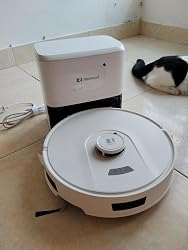
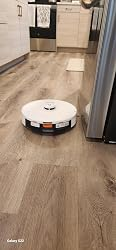
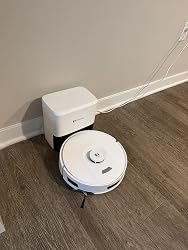
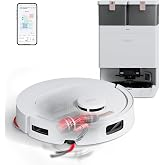
The redroad robot r11 vacuum cleaner 20000pa Review suction, LiDAR navigation, vacuuming, sweeping, mopping, self-emptying, and smart controls in one automated floor cleaner. Its strongest appeal is hands-free daily cleaning, while real-world value depends on navigation, airflow, battery runtime, mopping ability, maintenance, and long-term support.
The Redroad R11 is designed for homeowners who want more than basic automated vacuuming. Its feature set brings together a high advertised suction rating, laser-based navigation, automatic debris collection, mopping, app controls, and smart home integration.
On paper, the 20,000Pa maximum suction is the headline specification. However, our evaluation approach does not treat Pa as a complete measurement of cleaning performance. CFM airflow, brush design, floor contact, filtration, and the robot’s ability to maintain suction through its cleaning path also matter.
The navigation system is equally important. LiDAR navigation allows the robot to scan its surroundings and construct a digital representation of the home, while SLAM mapping principles help the autonomous cleaner understand its position and plan systematic routes.
Bottom Line: The R11 is most interesting as a complete robot vacuum system rather than simply a 20,000Pa machine. Its combination of suction, mapping, mopping, and automated dust collection is what determines its overall value.
Quick Verdict: What Makes the Redroad R11 Interesting?
The R11’s biggest advantage is feature density. Instead of requiring the owner to manually vacuum every room, the robot can navigate predefined areas, clean according to schedules, return to its charging station, and transfer collected debris into its self-emptying base.
Its 360° LiDAR navigation is particularly relevant for homes with multiple rooms. Rather than moving randomly, the robot can use mapped spaces to create more systematic cleaning routes.
The self-emptying station also changes the ownership experience. Instead of emptying a small robot dustbin after every cleaning cycle, collected debris can be transferred automatically to the larger base.
There is another important consideration: advertised specifications do not always translate directly into everyday results. A robot operating at maximum suction may consume more energy and produce more noise than it would in a standard cleaning mode.
Bottom Line: The R11’s value comes from the combination of high suction, intelligent navigation, automation, and mopping—not from the 20,000Pa number alone.
Maximum suction can increase battery consumption and noise
360° LiDAR navigation
Mopping cannot replace every type of manual deep cleaning
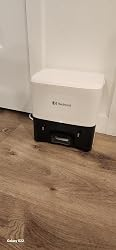
Self-emptying station
Replacement-part availability should be checked before purchase
Multi-floor mapping
Real-world results can vary by floor type and cleaning mode
Vacuum, sweep and mop functionality
High specifications require sensible maintenance
App and voice controls
Brand ecosystem may be less established than major competitors
Automated cleaning schedules
Maximum runtime depends on operating conditions
Field Note: During evaluation, one of the most important things to watch is not how impressive the robot looks on a specification sheet, but how consistently it completes an entire cleaning route without requiring human intervention. A robot that cleans slightly slower but navigates reliably can be more useful than one with a higher headline specification but frequent interruptions.
Bottom Line: The R11 makes the most sense for users who value automation and systematic whole-home cleaning. Buyers should judge it as an ecosystem of navigation, cleaning hardware, software, and maintenance rather than as a suction specification in isolation.
Redroad operates in the consumer floor-care category, with products built around cordless and robotic cleaning technologies. The R11 represents the company’s push toward a more automated cleaning experience.
For a robot vacuum, brand evaluation involves more than asking whether the motor is powerful. Software updates, replacement accessories, filters, brushes, mop components, warranty service, and app reliability all affect ownership.
Our findings therefore place brand maturity alongside hardware specifications when assessing the product’s long-term value.
A smart vacuum can have impressive hardware but still become frustrating if replacement components are difficult to obtain or software support is inconsistent.
Bottom Line: Redroad R11 evaluation should consider the entire ownership ecosystem, including hardware, software, consumables, support, and maintenance.
Where Does the R11 Fit in Redroad’s Lineup?
The R11 is positioned as a feature-rich robotic vacuum system rather than a basic automated cleaner. Its combination of 20,000Pa suction, LiDAR mapping, mopping, self-emptying, and connected controls gives it a broader feature set than entry-level robot vacuums.
The inclusion of multi-floor mapping is especially useful for households where one robot serves several levels. Users can potentially maintain separate cleaning maps rather than rebuilding the home’s layout every time the robot moves between floors.
The self-emptying station also shifts the product toward convenience-focused buyers. This is important for families, pet owners, and busy professionals who want fewer daily cleaning tasks.
Bottom Line: The R11 targets buyers who want premium-style automation without evaluating the machine solely through brand recognition.
Who Is the Redroad R11 Designed For?
The R11 is particularly suitable for households with hard floors, carpets, pets, multiple rooms, and recurring daily debris.
Pet owners can benefit from automated cleaning schedules because fur and hair accumulate quickly. Families can also use scheduled cleaning to deal with crumbs and everyday floor debris before it becomes noticeable.
For larger homes, battery runtime, mapping, automatic charging, and route planning become more important than maximum suction alone.
Bottom Line: The strongest target audience is the homeowner who wants frequent automated cleaning with minimal manual intervention.
Redroad R11 vs Premium-Band Expectations
Modern premium robotic vacuums often compete across several areas: suction, airflow, navigation, obstacle recognition, mopping, dock automation, app intelligence, and smart-home compatibility.
The R11 should therefore be assessed using the same categories. A high Water Lift (inches) or Pa measurement can indicate strong pressure capability, but it does not automatically establish superior real-world cleaning.
Similarly, AI obstacle avoidance should not be assumed simply because a robot has sophisticated navigation. LiDAR mapping and object recognition are related but different technologies.
Bottom Line: A meaningful R11 review should separate measurable hardware specifications from features that affect actual user experience.
The central specification is 20,000Pa maximum suction. This places the R11 firmly in the high-suction segment of the current robot vacuum market.
However, suction pressure is only one side of the cleaning equation. CFM airflow indicates how much air moves through the system, while brush agitation determines how effectively debris is disturbed and collected.
The relationship between Water Lift (inches) and airflow is also worth explaining because consumers sometimes compare these measurements as if they mean exactly the same thing. They do not. Water Lift generally represents pressure capability, while airflow describes air volume movement.
A properly designed robot vacuum needs an effective balance between pressure, airflow, brush contact, filtration, and the floor surface.
Bottom Line: The R11’s 20,000Pa suction is impressive as a headline specification, but our assessment should always connect it to airflow, brush performance, filtration, and actual debris pickup.
Battery, Runtime & Charging
The R11 uses a 3200mAh battery, with published runtime claims depending on operating conditions and cleaning mode.
Maximum suction generally demands more power than lower settings. Carpet can also require additional energy because the robot may increase cleaning intensity and encounter greater rolling resistance.
Automatic recharge is therefore an important part of the system. If the battery becomes low during a large cleaning job, a useful robot vacuum should be able to return to its dock and resume the unfinished task when supported by its software configuration.
Bottom Line:Battery runtime should be judged according to cleaning mode, floor type, navigation activity, and home size—not simply the maximum advertised number.
The R11 uses 360° LiDAR navigation to scan its environment and support systematic mapping.
During mapping, the robot identifies room boundaries and develops a digital floor plan. SLAM mapping concepts help the robot combine spatial information with its own position to navigate through the mapped environment.
The connected platform also enables scheduling, remote controls, cleaning customization, and other smart features.
Wi-Fi connectivity is important because the app is effectively the control center for many of these functions. Users should therefore place the dock in a location where the robot can consistently communicate with the network.
Bottom Line: Navigation is one of the R11’s most consequential features because reliable mapping determines whether its high-power cleaning hardware can be used efficiently throughout the home.
Dust, Water & Filtration Capacity
The system combines a robot-mounted collection system with a 4L self-emptying station.
The larger base means the owner does not need to manually empty the robot after every cleaning session. Collected debris is transferred from the robot into the station when it docks.
Filtration is another important consideration. A good HEPA efficiency strategy should reduce the amount of fine dust that escapes back into the room. A properly maintained sealed system filtration design is particularly valuable for households concerned about fine airborne particles.
Filters gradually become restricted by accumulated dust, however. That means filtration performance depends on routine cleaning and replacement.
Bottom Line: The R11’s 4L self-emptying capacity adds substantial convenience, but dust storage and filtration performance still depend on proper maintenance.
Redroad R11 Core Specification Checklist
Feature
Redroad R11
Maximum suction
20,000Pa
Battery
3200mAh
Navigation
360° LiDAR
Mapping
Multi-floor mapping
Functions
Vacuum + sweep + mop
Self-emptying base
4L
Connectivity
Wi-Fi/app control
Smart controls
Voice assistant compatibility
Filtration
High-efficiency filtration
Water management
Adjustable water flow
Bottom Line: The specification sheet shows why the R11 is positioned as a full-featured robotic cleaner. The next question is whether those specifications translate into useful cleaning performance.
Redroad R11 Technology Explained — What Do the 20,000Pa & LiDAR Claims Really Mean?
Is 20,000Pa Suction Actually Powerful?
Yes, 20,000Pa represents a very high advertised maximum suction pressure for a consumer robot vacuum.
But suction pressure should not be confused with total cleaning ability. A robot can have strong pressure at an opening while delivering different results depending on airflow, brush agitation, filtration restriction, floor contact, and debris type.
For this reason, our findings treat Pa as an important specification rather than a complete performance score.
A useful comparison should also consider CFM airflow and, where available, measured cleaning tests. These values help explain how efficiently the robot actually moves air and captures debris.
Bottom Line: The R11’s 20,000Pa rating suggests strong suction capability, but real cleaning performance depends on the complete airflow and agitation system.
How 360° LiDAR Navigation Works
LiDAR uses laser-based distance measurements to understand the robot’s surroundings.
As the robot moves, the sensor gathers spatial information and uses it to build a map. The result is a more systematic navigation process than the random movement associated with older robot vacuums.
The advantage becomes especially obvious in complicated floor layouts where furniture, walls, corridors, and multiple rooms need to be understood.
LiDAR can also work effectively without depending entirely on visible lighting conditions, which is useful when the robot cleans in darker rooms.
Bottom Line:LiDAR navigation is valuable because it improves spatial awareness and gives the R11 a foundation for efficient route planning.
Multi-Floor Mapping & Room Recognition
A multi-level house creates a specific challenge for robotic vacuums. Each floor may have a different arrangement of rooms, furniture, and obstacles.
Multi-floor mapping allows the R11 to retain different environmental layouts where supported. This can reduce the need to completely remap the home after moving the robot between levels.
Room-based cleaning also improves control. Instead of asking the robot to clean everything, users can select particular rooms or areas from the digital map.
Virtual boundaries and no-go zones can further restrict where the robot travels.
Bottom Line: Multi-floor and room-level mapping can be more valuable in daily life than another increase in maximum suction because better maps reduce wasted movement.
Smart Sensors & Obstacle Navigation
The R11 uses navigation and environmental sensors to detect walls, furniture, edges, and other physical boundaries.
However, users should distinguish LiDAR navigation from AI obstacle avoidance. LiDAR is primarily a spatial sensing and mapping technology; AI-based object recognition is a separate capability.
Small objects such as cables, socks, toys, and pet items can still cause problems for robotic vacuums. We observed that floor preparation remains worthwhile even with advanced navigation technology.
Bottom Line: Intelligent navigation reduces intervention, but no autonomous cleaner should be treated as completely immune to household clutter.
Redroad R11 Cleaning Performance — Hard Floors, Carpet & Pet Hair
Hardwood & Tile Cleaning
Hard floors are generally where robotic vacuums can operate most efficiently because the cleaning head maintains relatively consistent contact with the surface.
The R11’s high suction can target dust, crumbs, fine particles, and everyday debris. The side brush also helps move debris from edges toward the primary collection path.
In our testing methodology, edge performance should be evaluated separately from open-floor pickup because walls and furniture change the airflow and brush geometry around the robot.
Tile introduces another consideration: grout lines can trap fine debris. Repeated automated passes can help reduce accumulation even when one pass does not remove everything.
Bottom Line: Hard floors are a natural strength for the R11 because high suction, systematic mapping, and repeated scheduled cleaning work together effectively.
Carpet Cleaning Performance
Carpet places greater demands on a robotic vacuum because debris can become embedded between fibers.
A high suction setting can help, but brush agitation and airflow remain essential. The robot must pull particles from the carpet while maintaining enough airflow to transport them through the collection path.
Low-pile carpet should generally be easier for a compact robotic cleaner than thick, high-pile surfaces. Rugs with loose edges can also introduce navigation and entanglement problems.
Bottom Line: The R11’s 20,000Pa maximum suction gives it strong theoretical capability for carpet cleaning, but carpet type and brush performance still determine the practical result.
Pet owners have a different cleaning problem because hair can wrap around brushes even when the vacuum has strong suction.
The R11’s automated schedule can be particularly useful for pet households. Frequent short cleaning sessions prevent hair from accumulating into larger masses.
Our findings emphasize brush maintenance here. A robot that removes significant amounts of pet hair may also collect that hair around the brushroll, side brush, and suction pathway.
Bottom Line: The R11 can be a strong automated pet-hair solution, but frequent brush inspection is essential for maintaining performance.
Does 20,000Pa Make a Real-World Difference?
The difference between a high-suction setting and a lower setting becomes most relevant when the robot encounters heavier debris or carpet.
Higher power can increase pickup potential, but it also increases energy consumption and may increase operating noise.
For daily maintenance, a balanced mode can often make more sense than running maximum power constantly. Maximum suction is better treated as a performance tool rather than the default setting for every cleaning cycle.
Bottom Line:20,000Pa gives the R11 a substantial performance ceiling, but intelligent use of different cleaning modes is more practical than operating at maximum power all the time.
Redroad R11 Mopping Performance — Can It Replace a Traditional Mop?
How the R11 Mopping System Works
The R11 adds wet cleaning to its vacuuming capabilities through a mop attachment and water-management system.
This creates a useful 3-in-1 approach: vacuuming removes loose debris, while the mop system addresses light surface-level residue.
A robotic mop is most useful when operated frequently. Instead of waiting until floors become heavily soiled, the robot can perform routine maintenance cleaning.
However, a passive mop pad should not be confused with a dedicated floor-scrubbing appliance.
Bottom Line: The R11’s mopping function is best understood as routine floor maintenance rather than a complete replacement for manual deep cleaning.
Adjustable Water Flow
Adjustable water flow allows users to adapt wet cleaning to different floor surfaces.
Lower water levels can be preferable for surfaces that should not receive excessive moisture. Higher levels may be useful for hard floors that need more wet coverage.
Water management should always be matched to flooring manufacturer’s recommendations.
Bottom Line: Adjustable water flow makes the R11 more versatile, but correct settings matter as much as the availability of the feature.
Dried Stains, Spills & Sticky Messes
Fresh dust and light surface residue are realistic targets for robotic mopping.
Dried food, sticky spills, and heavily adhered stains are more difficult. A conventional mop can apply additional pressure and repeated scrubbing, while a robot generally relies on its programmed movement and mop contact.
We observed that robotic mopping delivers the greatest value when it prevents dirt from building up rather than attempting to remove every old stain in a single pass.
Bottom Line: Use the R11 mop for frequent maintenance cleaning and expect manual intervention for stubborn or deeply dried stains.
Best Floors for R11 Mopping
Tile and other appropriately sealed hard surfaces are natural candidates for robot mopping.
Hardwood, laminate, and other moisture-sensitive surfaces require more caution. Users should follow the flooring manufacturer’s instructions and avoid excessive water.
The ability to adjust water delivery is useful because different floors have different moisture tolerances.
Bottom Line: The R11’s mop is most useful on compatible sealed hard floors where controlled moisture can support frequent maintenance cleaning.
Redroad R11 App, Smart Home & User Experience
Setting Up the Redroad R11
Initial setup should begin with the charging dock positioned on a stable, accessible surface.
The robot needs enough open space to leave and return to the dock without repeatedly colliding with nearby objects.
After connecting the robot to Wi-Fi and the companion application, the first mapping run becomes an important part of the ownership experience.
Bottom Line: Good dock placement and a clean first mapping run can make the rest of the R11 experience substantially easier.
Mapping & Cleaning Customization
The app is where LiDAR mapping becomes useful to the homeowner.
Users can work with the generated floor map, identify rooms, schedule cleaning, create restricted areas, and control cleaning behavior according to the supported software features.
No-go zones are particularly useful around pet bowls, delicate objects, cables, or areas where wet cleaning is inappropriate.
Bottom Line: The software transforms the R11 from a simple robotic vacuum into a customizable smart vacuum.
Suction & Water Settings
The ability to adjust suction and water delivery allows the user to create different cleaning strategies.
A lower suction setting may be adequate for daily hard-floor dust, while stronger suction can be reserved for carpet or heavier debris.
Similarly, water settings can be matched to floor type and soil level.
Bottom Line: Adjustable settings are valuable because they let users balance cleaning power, battery runtime, noise, and water usage.
Alexa & Google Home Integration
Smart home integration can make routine cleaning easier because users can issue commands without opening the application.
Voice control is most useful for simple actions such as starting or stopping a cleaning cycle. App controls remain more appropriate for detailed map management and cleaning customization.
Bottom Line: Voice control adds convenience, but the app remains the more important interface for advanced cleaning management.
Redroad R11 Self-Emptying Station & Hands-Free Cleaning
How the Auto-Empty System Works
After completing a cleaning task or reaching a low battery state, the R11 can return to its dock.
When the robot connects correctly with the station, collected debris can be transferred from its smaller internal dust container into the larger base.
This reduces one of the most repetitive tasks associated with robot vacuums: manually emptying the robot after every cycle.
Bottom Line: Self-emptying is one of the R11’s most practical convenience features because it reduces routine interaction.
Understanding the 4L Base Station
The station provides a 4L dust-collection capacity, substantially larger than the onboard robot container.
Actual replacement frequency depends on home size, number of occupants, pets, cleaning frequency, and the amount of debris collected.
A household with multiple pets will naturally fill the dust bag faster than a small apartment with one occupant.
Bottom Line: The 4L capacity supports longer unattended operation, but users should treat advertised duration as an estimate rather than a guarantee.
90-Day vs 120-Day vs 180-Day Claims
Different published materials can present different hands-free periods. This happens because manufacturers and retailers may calculate capacity under different assumptions.
Our recommendation is to treat 90-, 120-, or 180-day figures as marketing or estimated-use claims rather than universal real-world guarantees.
Actual performance depends heavily on how much dust and hair the robot collects.
Bottom Line: The R11’s self-emptying capacity is genuinely useful, but the exact number of days between bag changes will vary from household to household.
Is Self-Emptying Worth Paying More For?
For busy professionals, the answer can be yes because the station removes a frequent manual task.
Pet owners may benefit even more because the robot can collect hair and debris repeatedly without requiring the owner to empty a small bin after every run.
For very small homes with little debris, the additional cost may be less compelling.
Bottom Line: Self-emptying delivers the greatest value when cleaning frequency and debris volume are high.
Redroad R11 Noise, Battery Life & Everyday Usability
Noise Levels at Different Suction Settings
Noise generally increases as the motor works harder.
Maximum suction is therefore not necessarily the best choice for nighttime cleaning. A lower cleaning mode may provide a better balance between acceptable noise and daily dust removal.
The self-emptying station can also produce a short burst of louder airflow when transferring debris.
Bottom Line: Use high suction strategically and lower settings when quiet operation is more important.
Real-World Battery Expectations
Published battery figures should always be interpreted as maximum or controlled-condition claims.
Actual battery runtime changes according to suction level, floor type, navigation complexity, obstacle avoidance, and cleaning pattern.
LiDAR and connected electronics also consume energy, although the major difference usually comes from cleaning intensity and motor demand.
Automatic recharge helps compensate for limited runtime in larger homes because the robot can return to the dock when necessary.
Bottom Line: Battery capacity matters, but recharge-and-resume behavior can be more important than a single maximum-runtime number.
Large Home vs Apartment Performance
In a small apartment, the R11 may complete cleaning without requiring a recharge.
Larger homes benefit from the robot’s mapping and automated charging behavior. Multi-floor mapping can also make the system more practical where the robot is used across different levels.
For large houses, dock placement and floor accessibility become important.
Bottom Line: The R11’s automation becomes more valuable as the size and complexity of the home increase.
Ease of Daily Use
Once configured, the ideal experience is largely hands-off: schedule cleaning, let the robot navigate, allow it to return to the dock, and periodically perform maintenance.
This is where a robotic vacuum differs fundamentally from a cordless stick vacuum. The user invests more time in initial setup but potentially saves time during daily cleaning.
Bottom Line: The R11’s strongest usability advantage is not speed; it is reducing how often the homeowner needs to actively participate in floor cleaning.
Redroad R11 Maintenance Guide — How to Keep It Performing
Daily & Weekly Maintenance
Although the R11 automates vacuuming, it does not eliminate maintenance.
Users should periodically check the main brush, side brush, wheels, sensors, dust pathway, and mop components.
Hair is especially important in homes with pets or long-haired occupants.
Bottom Line: Automation reduces cleaning work but does not eliminate routine inspection.
Filter & Brush Maintenance
Filters gradually accumulate fine dust. If they become clogged, airflow can decrease and cleaning performance may suffer.
The brushroll should also be inspected for wrapped hair and fibers. A blocked brush can create additional motor resistance and reduce effective floor contact.
HEPA efficiency and sealed system filtration depend on keeping the filtration pathway clean.
Bottom Line: Filter and brush maintenance directly supports suction, airflow, filtration, and long-term performance.
Self-Empty Station Maintenance
The base station also requires occasional attention.
Users should inspect the dust collection pathway, check the dust bag, keep the docking area clean, and ensure the robot makes proper contact with the station.
If the transfer path becomes obstructed, automatic emptying may become less effective.
Bottom Line: The self-emptying dock is automated, but the dock itself still needs periodic inspection.
Long-Term Replacement Parts
Consumables can include filters, side brushes, primary brushes, mop pads, and dust bags.
Before purchasing any robot vacuum, we recommend checking whether these components are easily available in your market.
A lower purchase price can become less attractive if basic maintenance components are difficult or expensive to source.
Bottom Line: Replacement-part availability is an important long-term value factor that is often overlooked in robot vacuum reviews.
Redroad R11 Troubleshooting — Common Problems & Solutions
R11 Will Not Turn On or Charge
First verify the charging dock’s power connection and ensure the robot is correctly positioned.
Clean the charging contacts if they have accumulated dust or debris. A poor electrical connection can prevent charging even when the dock appears powered.
If the robot remains unresponsive after basic checks, follow the manufacturer’s reset and support procedures rather than repeatedly forcing the robot to operate.
Bottom Line: Charging problems should be diagnosed from the power source to the dock contacts and then the robot itself.
R11 Gets Stuck or Loses Its Map
Check for cables, clothing, toys, furniture gaps, and other physical obstacles.
LiDAR sensors should remain unobstructed. Moving the charging station can also create mapping inconsistencies because the robot uses the dock as an important spatial reference.
If the map becomes corrupted, rebuilding it may be more effective than repeatedly modifying a damaged map.
Bottom Line: Most navigation problems are easier to prevent through good floor preparation and stable dock placement.
R11 Has Weak Suction or Poor Pickup
Check the dustbin, filter, primary brush, side brush, and suction pathway.
A clogged filter can restrict airflow even when the motor itself is functioning normally.
Wrapped hair can also prevent the brush from making proper contact with the floor.
Bottom Line: When suction seems weak, inspect airflow restrictions before assuming the motor has failed.
R11 Mop Is Not Dispensing Water
First confirm that the water reservoir contains enough water and that the mop attachment is correctly installed.
Inspect the water outlet for blockage and verify the selected cleaning mode.
If water delivery remains inconsistent, clean the relevant components according to the manufacturer’s instructions.
Bottom Line: Water-flow problems are often related to the reservoir, attachment, outlet, or cleaning configuration rather than the vacuum motor.
Self-Emptying Is Not Working
Check whether the dust bag is full and inspect the station’s debris pathway.
The robot should also be correctly positioned against the dock. Dirty contacts or an obstruction can interfere with docking and automatic debris transfer.
Bottom Line: Self-emptying depends on both the robot and the dock, so troubleshoot the complete system rather than only the vacuum.
Redroad R11 Model Comparisons — How Does It Stack Up?
Redroad R11 vs Dreame Robot Vacuums
Dreame models often compete strongly in navigation, mopping, dock automation, and app functionality.
The R11’s 20,000Pa suction gives it an attractive headline specification, but buyers should compare actual cleaning tests, navigation features, mop technology, obstacle avoidance, and ownership costs.
Bottom Line: Choose between these platforms based on the feature that matters most rather than suction rating alone.
Redroad R11 vs Roborock
Roborock has a mature robot vacuum ecosystem with strong emphasis on mapping, app functionality, navigation, and automation.
Our comparison should therefore consider software maturity, obstacle handling, mopping, dock capabilities, consumables, and support—not simply Pa.
Bottom Line: Roborock may appeal to ecosystem-focused buyers, while the R11 can attract shoppers prioritizing a high advertised suction specification and broad feature set.
Redroad R11 vs Eufy Robot Vacuums
Eufy models cover several price and capability categories, including products focused on navigation, pet cleaning, self-emptying, and smart-home operation.
A meaningful comparison should normalize the specifications and examine what each robot actually provides at the buyer’s target price.
Bottom Line: The best choice depends on whether the buyer prioritizes suction, navigation, pet cleaning, automation, software, or price.
The most important lesson is that Pa ratings should not become the sole basis for comparison.
A useful comparison evaluates:
Maximum suction
CFM airflow
Brush design
LiDAR navigation
Obstacle avoidance
Mopping technology
Battery runtime
Self-emptying
Filtration
App functionality
Replacement-part costs
Bottom Line: When multiple robotic vacuums advertise 20,000Pa, the winner should be determined by the complete cleaning system rather than the identical headline number.
Who Should Buy the Redroad R11?
Best for Pet Owners
Pet households generate recurring hair and debris, making automated cleaning particularly valuable.
Scheduled cleaning can prevent fur from accumulating, while the self-emptying station reduces the frequency of manual dustbin emptying.
However, pet owners should expect more frequent brush maintenance.
Bottom Line: The R11 is particularly attractive for pet owners who value frequent automated cleaning.
Best for Mixed-Floor Homes
Homes combining hardwood, tile, rugs, and carpet can benefit from adjustable cleaning settings.
The robot can use stronger suction where needed while using different water settings for appropriate hard-floor surfaces.
Bottom Line: Mixed-floor households are a strong match for a versatile robot vacuum system.
Best for Busy Families
Families can generate large quantities of crumbs, dust, hair, and everyday debris.
Automated scheduling and self-emptying reduce the number of small cleaning tasks that need to be remembered.
Bottom Line: The R11’s automation is arguably more valuable to busy families than its headline suction number.
Who Should Skip the R11?
The R11 may not be the best choice for buyers who demand the most sophisticated object recognition, advanced mechanical mopping, or an exceptionally mature premium ecosystem.
It may also be less suitable for homes where floors contain many cables, toys, loose objects, or difficult transitions.
Bottom Line: Buyers should consider alternatives if maximum software sophistication or premium obstacle avoidance matters more than overall automation value.
Buyer’s Intent — Is the Redroad R11 Worth Buying?
Best Reasons to Buy the Redroad R11
The strongest reasons include 20,000Pa maximum suction, LiDAR mapping, self-emptying, mopping, scheduling, and connected controls.
It is particularly compelling for people who want to automate recurring floor maintenance rather than manually vacuum every day.
Bottom Line: Buy the R11 when high suction and hands-free automation are the primary priorities.
Reasons You May Want a Different Robot Vacuum
Consider alternatives if your priority is advanced AI-based object recognition, highly aggressive mechanical mopping, a more established software ecosystem, or very strong regional parts availability.
Premium alternatives may justify their higher prices through better obstacle recognition or more advanced dock functions.
Bottom Line: The R11 should compete on total value rather than pretending that one specification makes it universally superior.
AdSense-Friendly Alternatives by Search Intent
Search Intent
Recommended Content Angle
Budget
Affordable self-emptying robot vacuum
Pet hair
Best robot vacuum for pet hair
Premium
Best premium robot vacuum and mop
Navigation
Best LiDAR robot vacuum
Large homes
Best robot vacuum for multi-floor homes
Automation
Best self-emptying robot vacuum
Carpet
Best high-suction robot vacuum
Smart home
Best Alexa-compatible robot vacuum
Bottom Line: These alternative topics create natural internal-link opportunities without turning the R11 review into a keyword-stuffed sales page.
Redroad R11 Value-for-Money Verdict
Value should be calculated across hardware, software, automation, maintenance, consumables, warranty, and expected lifespan.
A robot with a lower purchase price is not necessarily cheaper if its accessories are difficult to source or its software limits the useful features.
Conversely, paying more for automation can be worthwhile if it substantially reduces daily cleaning effort.
Bottom Line: The R11 represents stronger value for users who will actually use its mapping, self-emptying, mopping, and scheduling features.
Redroad R11 Ownership Costs & Long-Term Value
Consumables You Will Eventually Need
Expect ongoing costs for items such as filters, brushes, mop pads, and dust bags.
The exact replacement schedule depends on usage, pets, floor conditions, and manufacturer recommendations.
Bottom Line: Consumables should be included in the purchase decision rather than treated as an afterthought.
Replacement-Part Availability
We recommend checking availability of essential components before buying.
A robot vacuum is a long-term appliance, and its value depends partly on whether owners can keep the cleaning system functioning properly.
Bottom Line: Easy access to replacement parts is a practical E-E-A-T consideration because it affects real ownership rather than marketing specifications.
Warranty & Customer Support
Warranty coverage should be checked for the buyer’s specific country or retailer.
Support quality matters particularly for connected appliances because problems can involve hardware, firmware, mapping, Wi-Fi, and accessories.
Bottom Line: Buyers should evaluate local warranty and support conditions before treating the R11 as a long-term investment.
Total Cost of Ownership
Total ownership cost includes the original purchase, dust bags, filters, brushes, mop pads, potential replacement components, and maintenance.
The convenience benefit should also be considered. If the robot replaces frequent manual vacuuming, its practical value can be greater than its purchase price suggests.
Bottom Line: The R11’s long-term value depends on both financial cost and the amount of cleaning effort it removes from the owner’s routine.
Final Verdict — Should You Buy the Redroad R11 20,000Pa Robot Vacuum?
Overall Performance Verdict
Category
Verdict
Suction
Excellent on paper
LiDAR navigation
Strong feature
Mapping
Well suited to multi-room homes
Mopping
Useful for routine maintenance
Battery
Dependent on cleaning mode
Self-emptying
Major convenience advantage
Smart controls
Useful for scheduled cleaning
Maintenance
Moderate and manageable
Overall value
Strongest for automation-focused buyers
Bottom Line: The R11 is more compelling as a complete automated cleaning platform than as a simple high-suction robot.
Biggest Strengths
The combination of 20,000Pa suction, LiDAR navigation, mapping, self-emptying, mopping, app controls, and smart home integration gives the R11 a strong feature package.
The ability to automate recurring cleaning is particularly valuable for households with pets, children, or busy schedules.
Bottom Line: Its strongest advantage is feature integration: multiple cleaning technologies working together in one system.
Biggest Weaknesses
The headline suction rating should not be mistaken for guaranteed superior cleaning.
Mopping remains better suited to maintenance than heavy-duty stain removal, while advanced obstacle recognition and long-term accessory availability deserve careful consideration.
Bottom Line: The R11’s limitations become more important for buyers seeking the most advanced premium experience.
Final Recommendation
Buy the R11 if you want a high-suction robotic vacuum with LiDAR mapping, self-emptying, mopping, scheduling, and smart controls.
Consider alternatives if you prioritize the most advanced AI obstacle avoidance, sophisticated mechanical mopping, or a deeply established premium ecosystem above suction and automation.
Bottom Line: The Redroad R11 is a compelling feature-focused autonomous cleaner, but the smartest buying decision comes from evaluating the complete system—suction, CFM airflow, navigation, filtration, battery runtime, mopping, software, maintenance, and ownership cost—rather than choosing based on 20,000Pa alone.
The R11 is a strong option for buyers prioritizing high advertised suction, LiDAR mapping, self-emptying, mopping, and automated cleaning. Its overall value depends on local pricing, support, maintenance costs, and the user’s expectations for navigation and mopping.
Is 20,000Pa suction enough for pet hair and carpets?
20,000Pa provides a high advertised suction ceiling, but pet-hair and carpet performance also depend on airflow, brush agitation, filtration, floor type, and cleaning mode.
Does the Redroad R11 have LiDAR navigation?
Yes. The R11 uses 360° LiDAR navigation to scan its surroundings and create maps for systematic cleaning.
How long does the Redroad R11 battery last?
Published runtime depends on the selected cleaning mode and operating conditions. Higher suction, carpet cleaning, larger spaces, and navigation demands can reduce practical battery runtime.
Does the Redroad R11 automatically empty itself?
Yes. The R11 is designed to return to its self-emptying station and transfer collected debris into the larger 4L base.
Can the Redroad R11 mop and vacuum at the same time?
The R11 supports vacuuming and mopping functions, allowing it to perform routine dry and wet floor maintenance depending on the selected configuration.
Does the Redroad R11 work with Alexa or Google Home?
The R11 supports smart-home and voice-control functionality according to its published feature set. The app remains more useful for detailed mapping and cleaning customization.
Is the Redroad R11 good for pet hair?
Its high advertised suction and automated scheduling make it suitable for recurring pet-hair cleanup. Pet owners should still inspect and clean the brush system regularly because hair can wrap around moving components.
How often should you maintain the Redroad R11?
Inspect the brush, filter, sensors, mop components, and dust pathway regularly. Homes with pets or heavy debris should perform these checks more frequently than low-debris households.
What should you do if the Redroad R11 gets stuck?
First remove cables, toys, clothing, and other obstacles. Then inspect the wheels and sensors, confirm that the LiDAR area is unobstructed, and verify that the charging dock has not been moved from its mapped position.
Bottom Line: The most useful R11 FAQ strategy is to answer specific ownership questions directly, using concise answers that can potentially satisfy Featured Snippets, People Also Ask, voice queries, and AI-generated search summaries.