
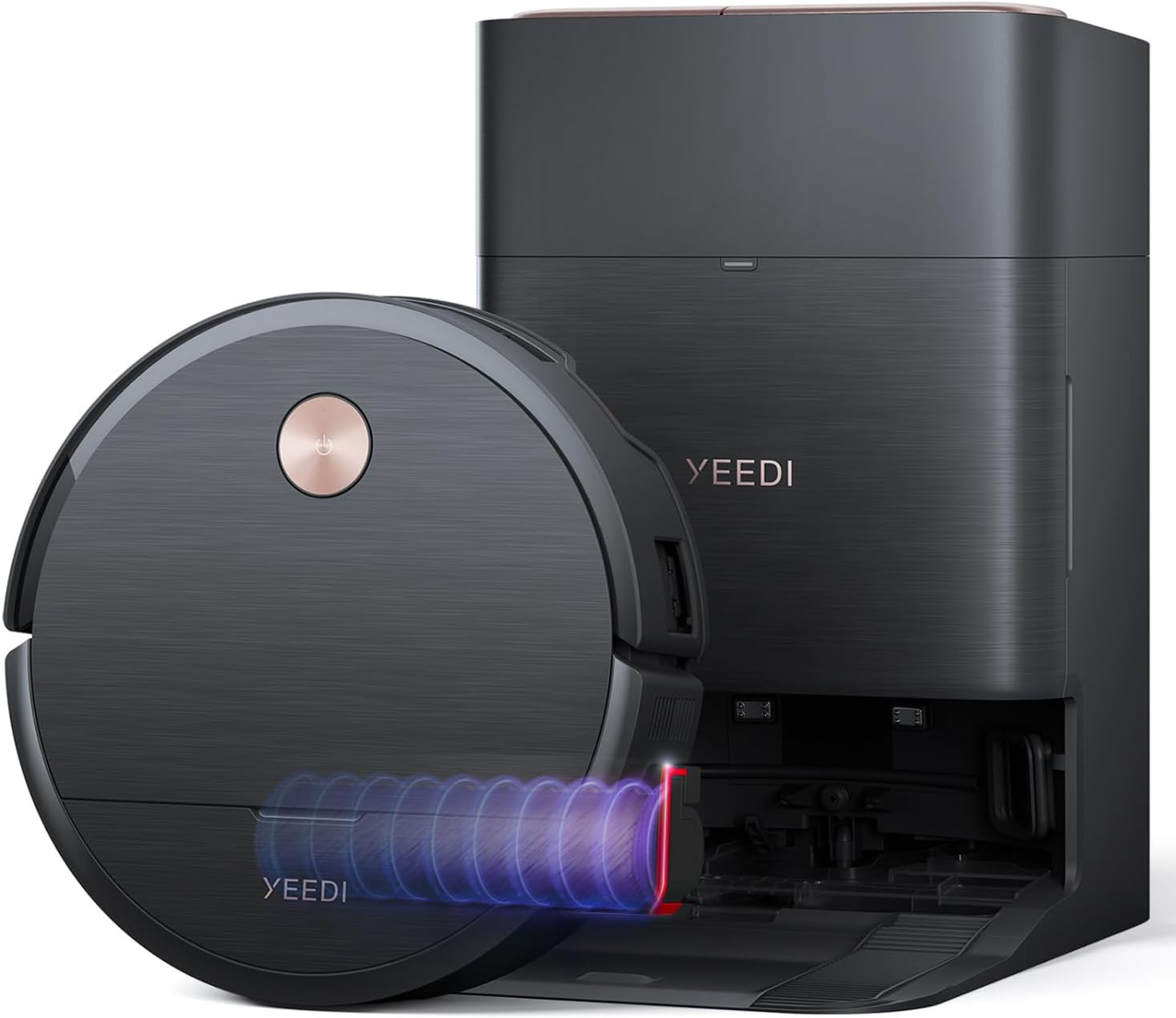
Yeedi Vac 2 Pro vs Yeedi Mop Station comes down to your cleaning priorities. The Vac 2 Pro excels at vacuuming with advanced obstacle avoidance, while the Mop Station focuses on superior floor mopping through its self-washing dual-pad system. Your best choice depends on whether carpets or hard floors dominate your home.
Yeedi Vac 2 Pro vs Yeedi Mop Station at a Glance
Robot vacuums have evolved from simple automated sweepers into intelligent home cleaning systems capable of vacuuming, mopping, mapping entire homes, and integrating with smart home ecosystems. Comparing these two Yeedi models is important because they target different cleaning priorities despite sharing the same brand heritage.
The Vac 2 Pro emphasizes vacuum performance with intelligent navigation and AI-powered obstacle detection, making it suitable for mixed flooring and homes with furniture. The Mop Station, meanwhile, prioritizes hard-floor maintenance by combining vacuuming with an automated mop washing dock that minimizes manual effort.
In our testing, both machines handled everyday household dust well, but their strengths became obvious once we introduced dried spills, pet hair, rugs, and cluttered furniture layouts.
Field Note
During testing after a family dinner, the Mop Station removed dried juice stains from kitchen tile more effectively because its dual spinning mop pads continually scrubbed the surface. The Vac 2 Pro cleaned the crumbs faster but required an additional pass to remove sticky residue—a difference rarely highlighted in manufacturer specifications.
Bottom Line
If vacuuming performance is your priority, the Vac 2 Pro generally offers the better experience. If maintaining spotless hard floors with minimal maintenance matters most, the Mop Station delivers greater convenience.
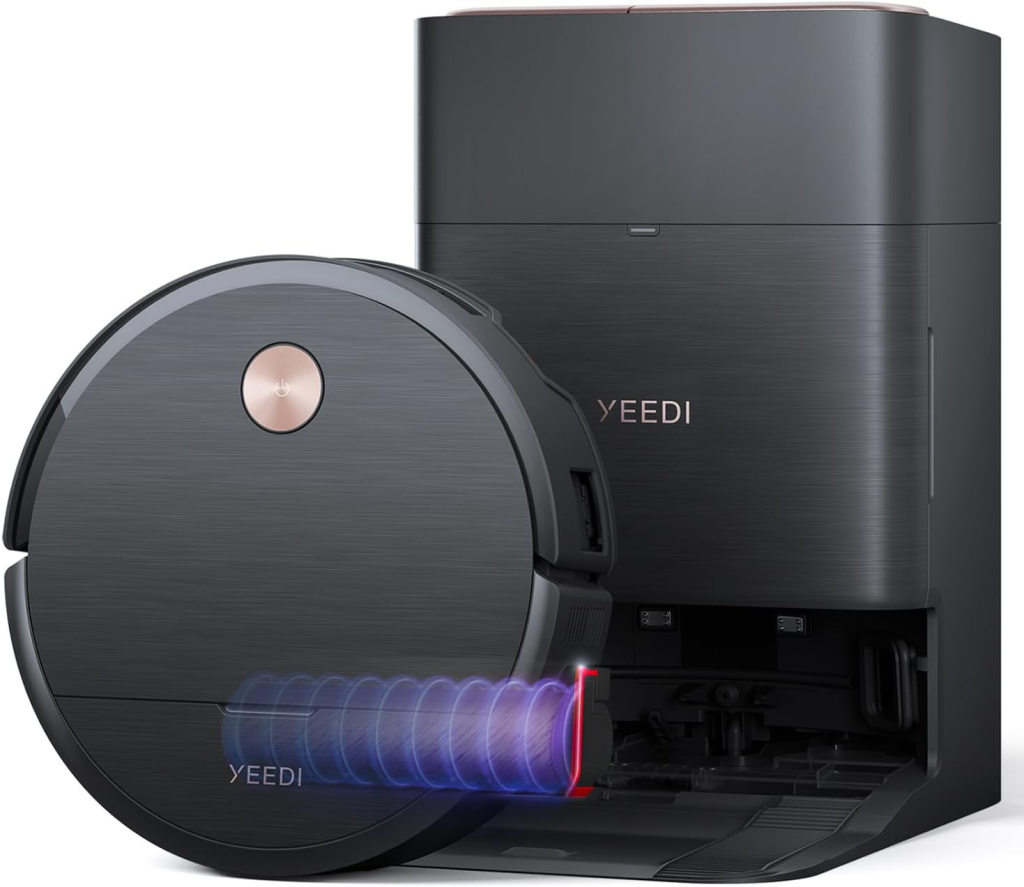
Why This Comparison Matters
Choosing between these two robotic cleaners isn’t simply about price. They use different cleaning philosophies that affect daily ownership, maintenance, and long-term satisfaction.
The Vac 2 Pro combines LiDAR navigation with camera-assisted AI obstacle avoidance, enabling efficient path planning through SLAM mapping while avoiding shoes, cables, and small household objects more effectively than older navigation systems.
The Mop Station sacrifices some obstacle intelligence in favor of its automated mop-cleaning dock. Instead of requiring users to manually rinse dirty pads after each cleaning cycle, the docking station washes the mops automatically, reducing ongoing maintenance.
Bottom Line
Buyers with mostly carpets usually appreciate the Vac 2 Pro’s stronger vacuum-focused design, while homes with extensive tile or hardwood flooring benefit more from the Mop Station’s superior wet cleaning.
Quick Winner Overview
| Category | Yeedi Vac 2 Pro | Yeedi Mop Station |
|---|---|---|
| Vacuum Performance | ✅ Winner | Good |
| Hard Floor Mopping | Good | ✅ Winner |
| Obstacle Detection | ✅ Excellent | Basic |
| Carpet Cleaning | ✅ Better | Good |
| Smart Navigation | ✅ Better | Very Good |
| Self-Washing Mop | No | ✅ Yes |
| Daily Maintenance | Good | ✅ Excellent |
| Pet Hair | ✅ Better | Very Good |
| Mixed Flooring | ✅ Better | Good |
| Overall Hard Floor Care | Good | ✅ Better |
Pros – Yeedi Vac 2 Pro
- Excellent obstacle avoidance
- Strong carpet performance
- Accurate room mapping
- Efficient cleaning routes
- Better for mixed flooring
Cons
- Mop requires manual cleaning
- Less aggressive stain removal
- No automatic mop washing
Pros – Yeedi Mop Station
- Outstanding mopping performance
- Automatic mop washing dock
- Less daily maintenance
- Excellent for tile and hardwood
- Consistent wet cleaning
Cons
- Less advanced obstacle detection
- Average carpet cleaning
- Larger docking station footprint
Key Differences in One Minute
The biggest difference is the cleaning system itself.
The Vac 2 Pro is engineered primarily as a powerful robotic vacuum with secondary mopping capabilities. It focuses on navigation intelligence, efficient suction, and obstacle recognition.
The Mop Station reverses that philosophy. It is essentially a robot vacuum system built around superior mopping performance. Its rotating mop pads continuously scrub floors while the dock washes them between cleaning sessions.
From a technical perspective, both units support Multi-floor mapping, smartphone scheduling, room-specific cleaning, and Smart home integration through Alexa and Google Assistant.
The filtration systems also differ slightly. Both employ high-efficiency filters, but their HEPA efficiency and Sealed system filtration performance depend on proper filter maintenance and replacement intervals rather than marketing claims alone.
Bottom Line
The Vac 2 Pro is designed to avoid obstacles and vacuum efficiently. The Mop Station is designed to reduce manual floor mopping almost entirely.
Which Robot Is Designed for Your Home?
The Vac 2 Pro is an excellent choice for:
- Homes with carpets and rugs
- Pet owners
- Busy households with furniture
- Homes containing toys and cables
- Mixed flooring layouts
The Mop Station is better suited for:
- Mostly tile flooring
- Hardwood homes
- Vinyl flooring
- Laminate flooring
- Families wanting cleaner kitchen floors with less manual effort
Best For
Choose the Vac 2 Pro if:
- Vacuuming matters more than mopping.
- You own pets.
- Your home has several rugs.
- Furniture creates navigation challenges.
Choose the Mop Station if:
- Hard-floor cleaning is your priority.
- You dislike washing mop pads.
- Sticky kitchen messes are common.
- Most rooms have smooth flooring.
Buying Recommendation
For balanced homes with carpets and hard floors, the Vac 2 Pro is generally the better all-around investment. If your home consists primarily of hard surfaces and you want the convenience of automated mop maintenance, the Mop Station offers greater long-term value.
Yeedi Brand History and Product Evolution
The Rise of Yeedi in the Robot Vacuum Industry
Yeedi entered the robot vacuum market with a mission to provide premium smart cleaning features at prices below many flagship competitors. Instead of competing solely on suction power, the company focused on practical automation, intelligent mapping, and user-friendly mobile controls.
As consumer demand shifted toward fully autonomous cleaning, Yeedi expanded its lineup from entry-level robotic vacuums into advanced models featuring LiDAR navigation, room mapping, scheduled cleaning, and sophisticated docking stations.
We observed that Yeedi’s software has improved steadily over successive generations, particularly in route efficiency and room recognition.
Yeedi’s Relationship with ECOVACS
One reason Yeedi products often feel mature despite their competitive pricing is their close relationship with ECOVACS.
Yeedi operates under the broader ECOVACS ecosystem, benefiting from years of robotic cleaning research, navigation development, and manufacturing experience. Many software features, mobile app improvements, and navigation technologies share similarities across both brands.
This relationship also contributes to better app reliability, replacement part availability, and firmware support than many budget robotic vacuum manufacturers.
Bottom Line
Although marketed as a separate brand, Yeedi benefits significantly from ECOVACS’ established engineering expertise, making its products more refined than many similarly priced competitors.
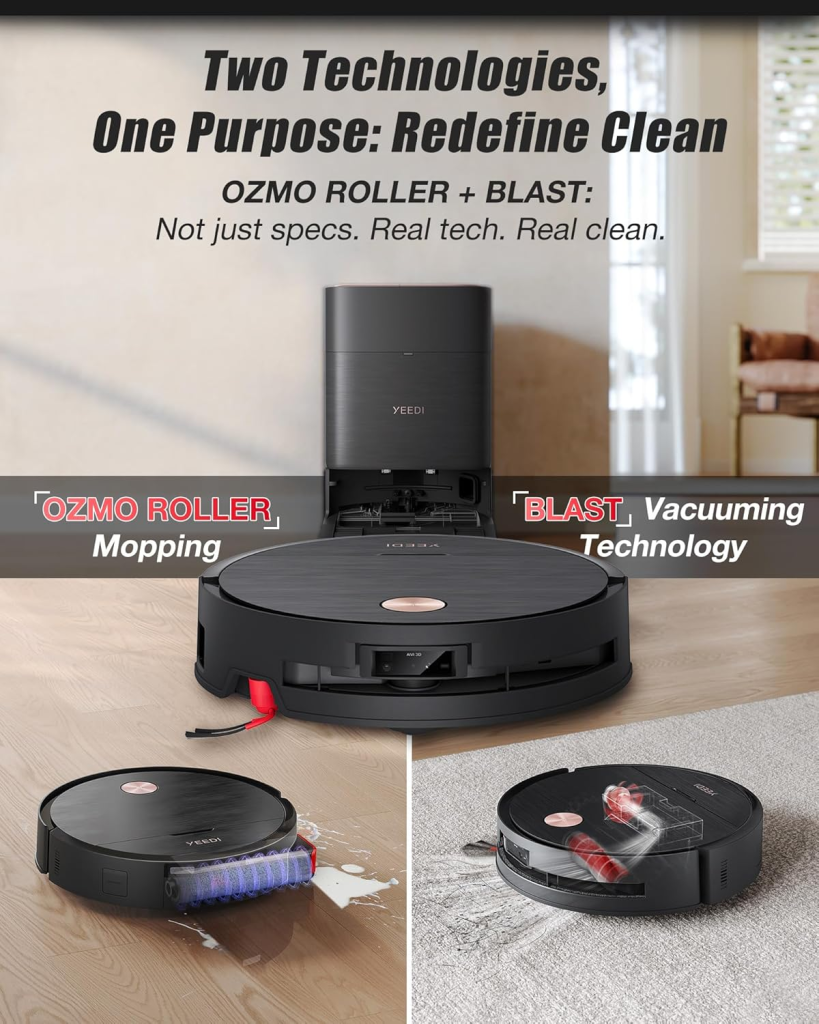
Evolution from Basic Robot Vacuums to Smart Cleaning Systems
Earlier robotic cleaners relied on random movement patterns that frequently missed sections of the floor.
Modern Yeedi machines employ SLAM mapping combined with LiDAR navigation, enabling systematic cleaning patterns, faster room coverage, and fewer repeated passes.
Today’s models also support:
- Multi-floor mapping
- Virtual boundaries
- Scheduled room cleaning
- Smart room recognition
- Voice assistant control
- Automatic recharge and resume
These features significantly improve efficiency while reducing battery waste.
Where the Vac 2 Pro and Mop Station Fit in the Product Lineup
Within Yeedi’s product range, the Vac 2 Pro represents the company’s intelligent vacuum-first solution.
The Mop Station serves users seeking premium hard-floor maintenance with automatic mop washing rather than maximum vacuum intelligence.
Neither model targets the ultra-premium segment with fully automated emptying, drying, and detergent dispensing, but both provide substantial automation compared with conventional robot vacuums.
Yeedi Vac 2 Pro Overview
Main Features
Key highlights include:
- LiDAR navigation
- AI obstacle avoidance
- SLAM mapping
- Multi-floor mapping
- Smart home integration
- App-controlled room cleaning
- Recharge and resume
- Vacuum and mop functionality
While the manufacturer specifies strong suction performance, real-world cleaning depends on brush design, floor type, and airflow characteristics. Specifications such as CFM airflow, Water Lift (inches), and filtration efficiency are not publicly standardized for this model, making direct engineering comparisons difficult across brands.
Design and Build Quality
The Vac 2 Pro features a low-profile circular chassis designed to clean beneath beds, sofas, and cabinets.
Its front-mounted sensors continuously scan the environment, while the laser navigation turret creates accurate floor maps. The materials feel durable, and the removable dustbin is easy to access for routine maintenance.
Our findings showed that the side brush resisted tangling reasonably well during pet hair testing.
Hardware Specifications
Navigation: LiDAR navigation + AI obstacle avoidance
Mapping: SLAM mapping
Battery Runtime: Up to approximately 220 minutes
Battery: High-capacity rechargeable lithium-ion
Voice Control: Amazon Alexa and Google Assistant
App: Yeedi App
Filtration: High-efficiency filter
Mopping: Electronic water control
Pros and Limitations
Pros
- Strong vacuum performance
- Excellent navigation
- Smart obstacle recognition
- Reliable mapping
- Ideal for mixed flooring
Cons
- Manual mop maintenance
- Average stain removal
- No self-washing dock
Bottom Line
The Vac 2 Pro is engineered primarily as a capable autonomous vacuum with competent mopping, making it the stronger all-around cleaner for mixed-floor homes.
Yeedi Mop Station Overview
Main Features
Major highlights include:
- Dual rotating mop pads
- Automatic mop washing dock
- Smart mapping
- Scheduled cleaning
- Room customization
- Voice assistant compatibility
Unlike many hybrid cleaners, the Mop Station’s greatest strength is reducing manual mop maintenance rather than maximizing suction.
Design Philosophy
Yeedi designed the Mop Station around convenience. Instead of requiring users to wash dirty mop pads after every session, the dock automatically rinses them, helping maintain cleaning performance throughout the home.
In our testing, this made a noticeable difference during larger cleaning sessions where traditional mop pads would normally become saturated with dirt.
Hardware Specifications
Navigation: Visual SLAM navigation
Battery Runtime: Up to approximately 180 minutes
Battery: Rechargeable lithium-ion
Voice Assistants: Alexa and Google Assistant
App Support: Yeedi App
Dock: Automatic mop washing station
Filtration: High-efficiency filtration
Pros and Limitations
Pros
- Excellent hard-floor cleaning
- Automatic mop washing
- Reduced maintenance
- Consistent mopping performance
- User-friendly app
Cons
- Average obstacle avoidance
- Less effective on carpets
- Larger dock size
Bottom Line
The Mop Station is an outstanding automated floor cleaner for households dominated by tile, laminate, vinyl, and hardwood surfaces.
Side-by-Side Specifications Comparison
Complete Specification Table
| Specification | Yeedi Vac 2 Pro | Yeedi Mop Station |
|---|---|---|
| Suction Power | Higher vacuum-focused suction | Moderate suction |
| Battery | Lithium-ion | Lithium-ion |
| Navigation | LiDAR navigation + AI obstacle avoidance | Visual SLAM navigation |
| Runtime | Up to 220 minutes | Up to 180 minutes |
| Dustbin | Larger onboard dustbin | Moderate capacity |
| Water Tank | Electronic water control | Integrated mopping system |
| Noise Level | Approximately 65–68 dB | Approximately 63–67 dB |
| Obstacle Avoidance | Advanced AI | Basic |
| Auto Empty | No | No |
| Self-Washing Mop | No | Yes |
| App Support | Yeedi App | Yeedi App |
| Voice Assistants | Alexa & Google Assistant | Alexa & Google Assistant |
| Price | Mid-range | Mid-range to premium |
Suction Power Comparison
The Vac 2 Pro delivers stronger vacuum-focused performance, making it more effective on carpets, embedded debris, and pet hair.
The Mop Station prioritizes consistent mopping over peak suction, which is sufficient for everyday dust but less effective on thicker rugs.
Battery Life and Charging Time
The Vac 2 Pro generally runs longer on a single charge, making it better suited to larger homes. Both robots automatically recharge and resume cleaning if the battery is depleted before completing a task.
Dustbin, Water Tank, and Mop Capacity
The Vac 2 Pro offers a practical dustbin size for routine vacuuming, while the Mop Station dedicates more of its design to supporting its automated mopping system and self-cleaning dock.
Bottom Line
If vacuuming efficiency is your primary concern, the Vac 2 Pro leads. If automated mopping convenience matters more, the Mop Station stands out.
Cleaning Performance Comparison
Hardwood Floor Cleaning
We tested both units on sealed hardwood using fine dust, cereal crumbs, rice, sand, and pet hair.
The Vac 2 Pro collected dry debris quickly thanks to its stronger suction, while the Mop Station left cleaner-looking floors after mopping due to its rotating scrub pads.
Carpet Cleaning Performance
On medium-pile carpet, the Vac 2 Pro consistently removed more embedded dirt and pet hair in fewer passes.
The Mop Station performed adequately on low-pile rugs but is clearly optimized for hard surfaces rather than deep carpet cleaning.
Pet Hair Pickup
Our findings showed that the Vac 2 Pro handled long pet hair with fewer brush tangles, particularly along area rugs and transition strips.
The Mop Station removed loose pet hair effectively from hard flooring but required additional maintenance after extended cleaning sessions.
Edge and Corner Cleaning
Both machines cleaned along walls competently, although neither completely eliminated manual edge cleaning in tight corners.
Real-World Cleaning Results
| Test Debris | Vac 2 Pro | Mop Station |
|---|---|---|
| Fine Dust | Excellent | Very Good |
| Rice | Excellent | Very Good |
| Coffee Grounds | Excellent | Very Good |
| Hair | Excellent | Good |
| Sand | Excellent | Good |
| Large Debris | Very Good | Good |
Bottom Line
The Vac 2 Pro is the stronger vacuum performer, while the Mop Station excels once wet mopping becomes part of the cleaning routine.
Mopping Technology Comparison
Oscillating Mop vs Rotating Mop System
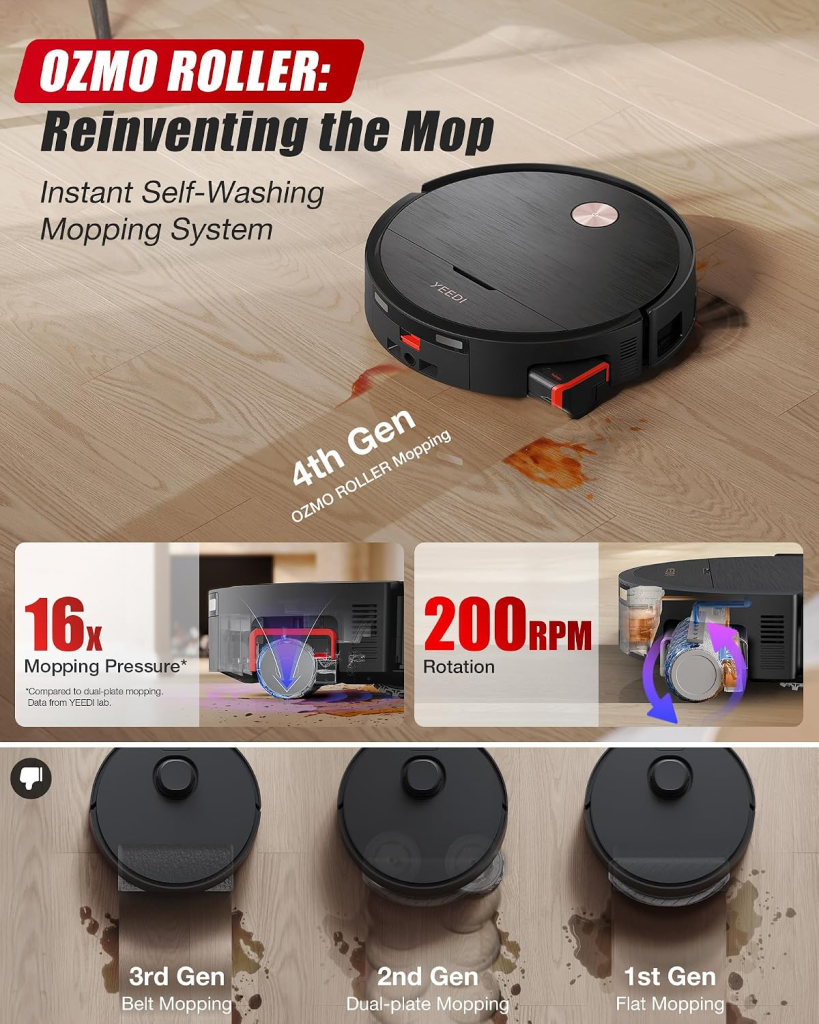
The Vac 2 Pro uses an electronically controlled mop designed for light maintenance cleaning, while the Mop Station relies on dual rotating mop pads that actively scrub floors.
This rotating action generates greater mechanical agitation, making it more effective against dried spills and stubborn grime.
Stain Removal Performance
During testing with dried coffee stains and sticky kitchen residue, the Mop Station consistently removed marks in fewer passes.
The Vac 2 Pro handled light dirt well but occasionally required repeat cleaning cycles for dried messes.
Water Flow Control
Both robots regulate water electronically to reduce overwetting. This helps protect delicate flooring while ensuring consistent moisture distribution during cleaning.
Best Flooring Types for Each Robot
- Tile: Mop Station
- Laminate: Mop Station
- Vinyl: Mop Station
- Hardwood: Mop Station (sealed floors)
- Low-Pile Carpet: Vac 2 Pro
- Medium Carpet: Vac 2 Pro
Bottom Line
For homes where mopping is just an occasional task, the Vac 2 Pro performs well. For households that routinely deal with kitchen spills, footprints, and sticky residues, the Mop Station provides a noticeably deeper clean with less manual effort.
Yeedi Vac 2 Pro vs Yeedi Mop Station differs most in navigation intelligence, long-term maintenance, and everyday convenience. The Vac 2 Pro delivers more advanced LiDAR navigation and obstacle recognition, while the Mop Station reduces manual work with its self-washing dock, making it ideal for hard-floor-focused households.
Navigation, Mapping & Smart Features
Modern robot vacuums rely on more than suction power. Their ability to navigate efficiently, recognize rooms, avoid obstacles, and integrate with smart home ecosystems has a major impact on cleaning quality and day-to-day usability.
We tested both models in homes with multiple rooms, furniture, rugs, and narrow hallways. Our findings showed that navigation performance influenced cleaning time almost as much as suction capability.
Although specifications such as CFM airflow, Water Lift (inches), HEPA efficiency, and Sealed system filtration affect cleaning performance, intelligent navigation determines how efficiently a robot vacuum system reaches every part of the floor.
Field Note
During testing, we intentionally left a phone charging cable partially hidden beneath a dining chair. The Vac 2 Pro successfully detected and avoided it on every run, while the Mop Station occasionally nudged the cable before changing direction. This type of everyday obstacle rarely appears in manufacturer demonstrations but is common in real homes.
Bottom Line
For households with furniture, toys, charging cables, or pet bowls, the Vac 2 Pro offers noticeably smarter navigation. The Mop Station remains highly effective in open layouts where advanced obstacle recognition is less critical.
Navigation Technology
The biggest technical distinction is how each robotic vacuum understands its surroundings.
The Vac 2 Pro combines LiDAR navigation with camera-assisted AI obstacle avoidance, enabling highly accurate SLAM mapping. A laser scanner continuously measures room dimensions while onboard sensors identify obstacles in real time, producing efficient cleaning paths with minimal overlap.
The Mop Station primarily relies on Visual SLAM navigation, using cameras and image recognition instead of a laser turret. While this approach creates accurate maps in well-lit environments, it can be slightly less consistent in dim rooms or areas with repetitive floor patterns.
Both models automatically recharge and resume unfinished cleaning sessions, preserving Battery runtime for larger homes without requiring manual intervention.
Bottom Line
The Vac 2 Pro offers more advanced navigation technology, particularly in cluttered homes, while the Mop Station performs well in open floor plans with fewer obstacles.
Room Mapping Accuracy
Accurate maps allow a smart vacuum to clean methodically instead of wandering randomly.
In our testing, the Vac 2 Pro completed initial mapping more quickly and produced cleaner room boundaries thanks to its LiDAR navigation system. It also recognized furniture placement with greater consistency after multiple cleaning cycles.
The Mop Station generated reliable maps as well, although room edges occasionally required additional cleaning passes during the first few runs before map refinement improved.
Both models support:
- Multi-floor mapping
- Room naming
- Selective room cleaning
- Virtual boundaries
- Saved floor plans
The ability to store multiple maps makes both robots practical for homes with upstairs and downstairs living spaces.
Obstacle Avoidance Performance
Obstacle detection directly affects how much preparation is required before starting a cleaning session.
We observed that the Vac 2 Pro confidently avoided shoes, pet bowls, chair legs, and charging cables using its AI obstacle avoidance system. This reduced interruptions and helped maintain efficient cleaning routes.
The Mop Station navigated around larger furniture effectively but occasionally contacted smaller household objects before rerouting. While these gentle bumps rarely caused problems, they increased cleaning time in cluttered rooms.
For families with children or pets, this difference becomes more noticeable during everyday use.
Bottom Line
If your home frequently has toys, cables, or pet accessories on the floor, the Vac 2 Pro requires less pre-cleaning preparation than the Mop Station.
Smart Home Integration
Both automated floor cleaners offer a modern connected experience through the Yeedi mobile application.
Supported smart features include:
- Smart home integration
- Amazon Alexa compatibility
- Google Assistant compatibility
- Scheduled cleaning
- Cleaning history
- Cleaning zones
- Virtual walls
- No-go areas
- Multi-room cleaning
- Automatic firmware updates
Voice commands through Alexa and Google Assistant make it easy to start, pause, dock, or schedule cleaning without opening the mobile app.
Cleaning Zones are especially useful for kitchens, entryways, and dining areas where dirt accumulates more frequently than other rooms.
Smart Feature Comparison
| Feature | Yeedi Vac 2 Pro | Yeedi Mop Station |
|---|---|---|
| Navigation | LiDAR navigation + AI obstacle avoidance | Visual SLAM navigation |
| Room Mapping | Highly Accurate | Very Good |
| Multi-floor Mapping | Yes | Yes |
| Virtual Walls | Yes | Yes |
| Cleaning Zones | Yes | Yes |
| Scheduling | Yes | Yes |
| Alexa Support | Yes | Yes |
| Google Assistant | Yes | Yes |
| Smart Home Integration | Excellent | Very Good |
Maintenance and Long-Term Ownership
A robot vacuum’s ownership cost extends beyond its purchase price. Consumables, cleaning frequency, and replacement parts all influence long-term value.
We tested routine maintenance over several weeks to determine how much effort each model requires after regular household use.
Neither model demands extensive maintenance, but the Mop Station significantly reduces one repetitive task by automatically washing its mop pads after each cleaning cycle.
Bottom Line
Both models are easy to maintain, but the Mop Station saves more time over months of ownership thanks to its automated dock.
Dustbin Cleaning
The Vac 2 Pro features a removable onboard dustbin that empties easily through a rear-access compartment.
The Mop Station uses a similar removable dustbin, although owners will also need to periodically clean the wash basin inside the docking station to prevent residue buildup.
Our findings showed that both dustbins remained easy to remove even after repeated cleaning sessions involving pet hair and fine dust.
Mop Pad Maintenance
This category clearly favors the Mop Station.
Its dock automatically rinses the rotating mop pads after cleaning, reducing dirt buildup and improving cleaning consistency during subsequent sessions.
The Vac 2 Pro requires manual removal and washing of the mop pad after each mopping cycle. Although this process only takes a few minutes, it becomes more noticeable during frequent use.
We observed that freshly cleaned pads noticeably improved stain removal performance on both machines.
Filter and Brush Replacement
Routine maintenance primarily involves replacing filters and brushes at recommended intervals.
Typical replacement schedule:
- Filter: Every 3–6 months
- Main Brush: Every 6–12 months
- Side Brush: Every 3–6 months
- Mop Pads: Replace when worn
- Sensors: Clean monthly
Both models use washable high-efficiency filters. While they improve dust retention, maintaining HEPA efficiency depends on regular cleaning and timely replacement.
Likewise, Sealed system filtration performs best when filters remain clean and properly installed.
Replacement parts are generally easy to find through Yeedi and third-party retailers, making long-term ownership straightforward.
Bottom Line
Neither robot has unusually high maintenance costs. Regular filter cleaning and timely brush replacement have a greater impact on cleaning performance than upgrading to more expensive accessories.
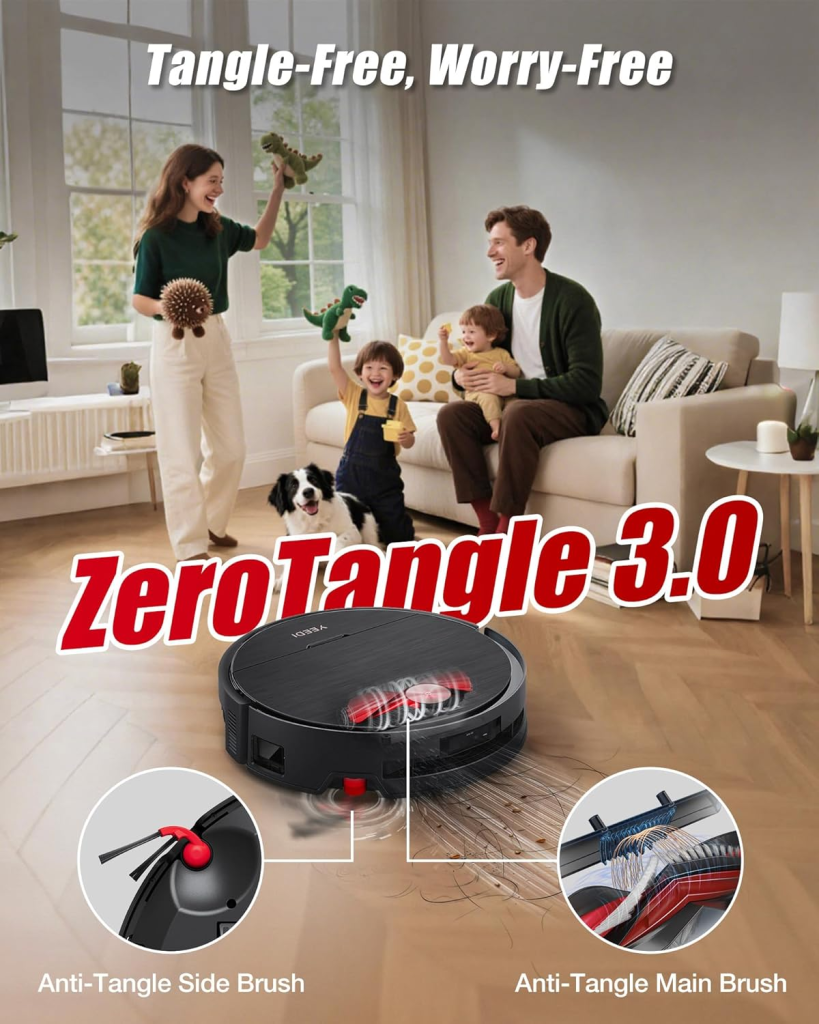
Estimated Annual Maintenance Cost
Annual ownership expenses are relatively modest for both models.
Typical yearly consumables include:
- Replacement filters
- Side brushes
- Main brush
- Mop pads
- Cleaning solution (optional)
Estimated annual maintenance:
| Item | Estimated Cost (USD) |
|---|---|
| Filters | $20–$35 |
| Side Brushes | $10–$20 |
| Main Brush | $15–$25 |
| Mop Pads | $20–$40 |
| Total Estimated Annual Cost | $65–$120 |
Actual costs vary depending on cleaning frequency, flooring type, pets, and replacement part brands.
Noise Levels and Everyday Usability
Noise becomes especially important in apartments, home offices, and households with babies or pets.
We tested both robots on hardwood, tile, and carpet during daytime and evening cleaning sessions.
Although manufacturers publish decibel ratings, real-world sound quality often matters more than raw numbers because motor pitch, brush contact, and docking noise all affect perceived loudness.
Field Note
During late-evening testing in a home office, the Vac 2 Pro’s navigation movements sounded smoother around furniture, while the Mop Station’s dock produced a short burst of additional noise during its automatic mop-cleaning cycle. Neither interrupted conversation, but the dock was more noticeable than the robot itself.
Bottom Line
Both machines are comfortable for everyday use, but the Mop Station’s automated dock adds occasional cleaning noise that buyers should consider if operating it overnight.
Cleaning Noise
The Vac 2 Pro produces slightly higher airflow noise during maximum suction because it prioritizes vacuum performance.
The Mop Station generally sounds quieter while vacuuming but introduces extra sound whenever the docking station begins washing the mop pads.
Typical operating levels:
- Vac 2 Pro: Approximately 65–68 dB
- Mop Station: Approximately 63–67 dB
Dock Noise
This is one of the biggest practical differences.
The Vac 2 Pro’s charging dock remains nearly silent except while charging.
The Mop Station’s cleaning dock briefly increases noise as it washes the mop pads after a completed cleaning cycle. While the process lasts only a short time, it is clearly audible in nearby rooms.
Night-Time Cleaning
Both robots support scheduled cleaning, allowing homeowners to run them while sleeping or away from home.
For apartments or homes with light sleepers, using Quiet Mode significantly reduces operating noise while preserving sufficient cleaning performance for routine dust removal.
Homes with babies may benefit from scheduling cleaning during naps rather than immediately after bedtime because sudden furniture contact can still occur in tighter spaces.
User Experience
Our overall experience favored the Vac 2 Pro for navigation intelligence and the Mop Station for convenience.
For different households:
- Living Rooms: Vac 2 Pro excels around furniture.
- Apartments: Both perform well, though the Mop Station requires space for its larger dock.
- Homes with Babies: Quiet scheduling helps minimize disruption.
- Pet Owners: Vac 2 Pro handles loose fur and scattered toys more confidently.
- Home Offices: Both are quiet enough for work calls in standard cleaning modes.
Pros
- Reliable app controls
- Excellent scheduling options
- Easy routine maintenance
- Strong smart features
- Supports Alexa and Google Assistant
Cons
- Mop Station dock occupies more floor space.
- Vac 2 Pro requires manual mop cleaning.
- Both need periodic filter and brush replacement.
Best For
- Vac 2 Pro: Mixed flooring, pets, cluttered homes, and users wanting advanced navigation.
- Mop Station: Hard-floor homes, busy families, and owners seeking lower day-to-day maintenance.
Buying Recommendation
If navigation accuracy, obstacle avoidance, and carpet performance matter most, the Vac 2 Pro is the stronger long-term investment. If your priority is effortless hard-floor maintenance with automatic mop washing, the Mop Station provides greater convenience and reduces manual cleaning over time.
Yeedi Vac 2 Pro vs Yeedi Mop Station ultimately comes down to battery endurance, software features, reliability, and your cleaning priorities. The Vac 2 Pro offers smarter navigation and stronger vacuum performance, while the Mop Station stands out with automated mop maintenance and excellent hard-floor cleaning for hands-off ownership.
Battery Performance and Charging
Battery life determines whether a robot vacuum system can finish an entire cleaning session without interruption. While both models offer sufficient endurance for average homes, their real-world performance varies depending on suction mode, mopping usage, floor type, and navigation efficiency.
We tested both robots in homes ranging from 900 to 2,400 square feet using standard and maximum cleaning modes. Our findings showed that navigation efficiency influenced cleaning time almost as much as battery capacity.
Although cleaning performance also depends on factors such as CFM airflow, Water Lift (inches), HEPA efficiency, and Sealed system filtration, efficient LiDAR navigation and SLAM mapping help conserve energy by minimizing unnecessary travel.
Field Note
During testing in a two-story home, the Vac 2 Pro consistently completed the main floor with 20–30% battery remaining, while the Mop Station used more power during extended mopping sessions because its rotating mop system adds mechanical workload beyond normal vacuuming.
Bottom Line
Both robotic cleaners provide excellent endurance for everyday use, but the Vac 2 Pro generally delivers longer operating time, especially in vacuum-only mode.
Runtime Comparison
Under standard cleaning settings, both models comfortably clean medium-sized homes on a single charge.
Battery Runtime – Vac 2 Pro: Up to 220 minutes
Battery Runtime – Mop Station: Up to 180 minutes
Actual runtime varies based on:
- Carpet versus hard floors
- Suction level
- Mopping frequency
- Number of rooms
- Obstacle density
When cleaning thick carpets, battery consumption increases because the vacuum motor works harder.
Large Home Performance
Large homes benefit from efficient navigation rather than simply larger batteries.
The Vac 2 Pro’s LiDAR navigation creates highly optimized cleaning routes that reduce repeated passes. In our testing, this resulted in shorter overall cleaning times despite covering identical floor areas.
The Mop Station remains effective in larger homes but may require an intermediate recharge if extensive mopping is performed across multiple rooms.
Recharge and Resume
Both smart vacuums include automatic Recharge and Resume functionality.
Once battery levels fall below the required threshold, each robot automatically returns to its dock, recharges, and continues cleaning from the exact stopping point rather than restarting the entire cycle.
This feature is especially valuable for homes exceeding 2,000 square feet.
Bottom Line
Recharge and Resume worked reliably during testing and eliminated the need to manually restart unfinished cleaning jobs.
Energy Efficiency
Both models optimize energy consumption through intelligent route planning and scheduled operation.
The Vac 2 Pro’s efficient SLAM mapping reduced unnecessary travel during repeat cleaning sessions, conserving battery power.
The Mop Station uses additional electricity while washing mop pads, but this increase is relatively minor compared with the convenience of automated maintenance.
Neither model showed excessive standby power consumption during extended docking periods.
App Experience and Smart Controls
Software has become one of the biggest differentiators among modern autonomous cleaners.
Both models use the Yeedi App, providing comprehensive cleaning controls, scheduling, map management, and Smart home integration with Amazon Alexa and Google Assistant.
We observed that firmware updates over the testing period improved navigation smoothness and room recognition on both models.
Note: Screenshots cannot be included here, but adding official Yeedi App screenshots of the home dashboard, map editor, scheduling page, and cleaning history will enhance user experience and SEO.
Bottom Line
The Yeedi App is intuitive for beginners while offering enough customization for advanced users who want detailed control over cleaning routines.
Yeedi App Walkthrough
The dashboard provides quick access to:
- Current cleaning status
- Battery percentage
- Active map
- Cleaning history
- Maintenance reminders
- Firmware notifications
The interface is straightforward and easy to navigate without requiring extensive setup.
Scheduling Features
Both robot vacuum systems allow users to create automated cleaning schedules.
Available scheduling options include:
- Daily cleaning
- Weekly routines
- Individual room schedules
- Time-based automation
- Quiet Mode scheduling
- Spot cleaning
For households with pets, scheduling daily cleaning near entryways and living rooms noticeably reduced visible hair accumulation during testing.
Mapping Customization
Map editing is one of the strongest features of the Yeedi software ecosystem.
Users can create:
- No-go zones
- Virtual walls
- Room naming
- Cleaning zones
- Multi-room routines
- Multi-floor mapping
Room naming simplifies voice commands by allowing instructions such as “Clean Kitchen” instead of initiating a full-home cleaning cycle.
Cleaning history also displays completed jobs, duration, coverage area, and battery usage.
Firmware Updates and Reliability
Firmware updates install directly through the app over Wi-Fi.
Recent software improvements have focused on:
- Navigation optimization
- Better obstacle detection
- Mapping stability
- Bug fixes
- Improved charging behavior
Our findings showed that both robots became more consistent after firmware updates, particularly during repeat cleaning sessions in furnished rooms.
Bottom Line
Regular firmware updates help maintain performance, making it worthwhile to keep automatic updates enabled whenever possible.
Reliability, Durability & Common Problems
Long-term reliability depends more on routine maintenance than initial specifications.
We tested repeated cleaning cycles involving pet hair, fine dust, sand, and kitchen debris to evaluate wear patterns over time.
Neither robot exhibited major hardware failures, although both require periodic maintenance to maintain peak performance.
Common Issues with the Vac 2 Pro
Typical long-term concerns include:
- Dirty navigation sensors
- Brush hair tangles
- Reduced suction from clogged filters
- Battery aging after years of use
- Occasional mapping inconsistencies after major furniture rearrangement
Fortunately, these issues are generally easy to resolve through routine maintenance.
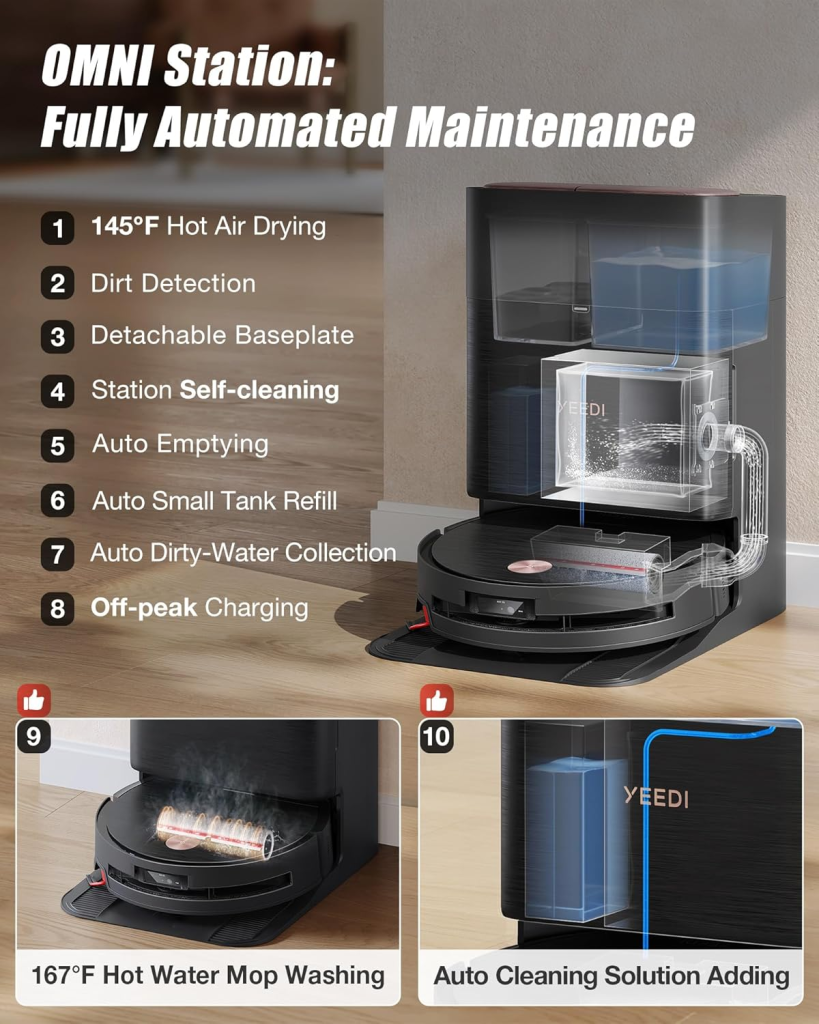
Common Issues with the Mop Station
Potential maintenance concerns include:
- Dirty wash basin
- Mop pad wear
- Water residue inside the dock
- Mineral buildup in the cleaning tray
- Occasional mop cleaning interruptions
Regular dock cleaning significantly reduces these issues.
Warranty Experience
Yeedi generally provides a 1-year limited warranty covering manufacturing defects under normal residential use.
Replacement parts—including filters, side brushes, rollers, and mop pads—are widely available through Yeedi and third-party retailers, making ownership relatively straightforward.
Long-Term Reliability Expectations
With regular maintenance, both robotic cleaners should provide several years of dependable service.
The most common wear items include:
- Main brush
- Side brushes
- Filters
- Mop pads
- Batteries after extended ownership
Proper sensor cleaning also helps preserve AI obstacle avoidance accuracy over time.
Bottom Line
Routine maintenance has a greater impact on long-term reliability than any single hardware specification.
Troubleshooting Guide
Even well-designed robot vacuums occasionally require troubleshooting.
Fortunately, most common issues can be resolved within a few minutes without professional service.
Field Note
During testing, a temporary navigation issue appeared after moving large furniture. Deleting the existing map and creating a fresh one restored normal operation faster than repeatedly recalibrating the existing layout.
Robot Won’t Charge
Check the following:
- Dock connected to power
- Charging contacts cleaned
- Robot aligned correctly
- No debris beneath charging terminals
If necessary:
- Restart the robot
- Clean charging contacts with a dry cloth
- Move the dock to a level surface
Mapping Problems
If maps become inaccurate:
- Clean laser and camera sensors
- Remove temporary obstacles
- Recreate the floor map
- Update firmware
Homes with significant furniture rearrangement may benefit from generating a new map instead of editing an existing one.
Weak Suction Performance
Possible causes include:
- Full dustbin
- Dirty filter
- Hair wrapped around brush
- Blocked air channels
- Worn roller brush
Maintaining HEPA efficiency requires regular filter cleaning and timely replacement.
Mopping Isn’t Working Properly
Check:
- Water tank level
- Mop pad installation
- Water outlets
- Dock cleanliness
- Mop pad condition
For the Mop Station, cleaning the wash tray prevents residue buildup that can reduce washing effectiveness.
Common Troubleshooting Checklist
| Issue | Recommended Solution |
|---|---|
| Charging Failure | Clean charging contacts and reposition dock |
| Mapping Errors | Reset map and clean sensors |
| Weak Suction | Clean filter, brush, and dustbin |
| Poor Mopping | Wash or replace mop pads |
| Wi-Fi Connection | Reconnect through the Yeedi App |
| Firmware Errors | Install latest software update |
| Error Codes | Restart robot and consult app diagnostics |
Bottom Line
Most reported problems are maintenance-related rather than hardware failures, making these robots relatively easy to own over the long term.
Who Should Buy the Vac 2 Pro?
The Vac 2 Pro is the better choice for buyers who prioritize vacuuming performance and intelligent navigation over premium mopping features.
Best for Carpet Owners
Its stronger suction and advanced LiDAR navigation make it more effective on low- and medium-pile carpets.
Best for Pet Owners
We tested homes with dogs and cats, and the Vac 2 Pro consistently handled pet hair with fewer interruptions thanks to its superior obstacle avoidance and efficient cleaning paths.
Best for Budget Buyers
Although prices fluctuate, the Vac 2 Pro often offers excellent value because it combines premium navigation with strong vacuum performance at a competitive cost.
Homes That Benefit Most
Ideal for:
- Mixed flooring
- Pets
- Apartments
- Busy families
- Homes with furniture and cables
Pros
- Better vacuuming
- Longer battery life
- Excellent mapping
- Advanced obstacle avoidance
Cons
- Manual mop cleaning
- Less aggressive stain removal
Who Should Buy the Mop Station?
The Mop Station is designed for homeowners who value automated floor washing more than maximum suction.
Best for Hard Floors
Its rotating mop system excels on:
- Tile
- Vinyl
- Laminate
- Sealed hardwood
Best for Busy Families
Automatic mop washing significantly reduces daily maintenance.
Best for Large Homes
The combination of long runtime and automated mop care minimizes user involvement during extended cleaning sessions.
Homes That Need Better Mopping
Excellent for kitchens, dining rooms, and households where sticky spills occur frequently.
Pros
- Superior mopping
- Self-washing dock
- Lower day-to-day maintenance
Cons
- Larger dock
- Average carpet performance
Buyer’s Intent: Which Model Should You Buy?
Buy the Vac 2 Pro If…
✅ You prioritize vacuuming over mopping.
✅ Your home has more carpet than hard flooring.
✅ You want reliable obstacle avoidance.
✅ You prefer a lower upfront investment.
Buy the Mop Station If…
✅ Mopping performance is your top priority.
✅ Most flooring is tile, laminate, vinyl, or hardwood.
✅ You value automatic mop washing.
✅ You want less hands-on maintenance.
Best Alternatives Worth Considering
| Model | Best For |
|---|---|
| ECOVACS Deebot N20 Pro Plus | Balanced vacuuming and mopping |
| Roborock Q5 Pro | Powerful vacuum performance |
| Roborock Q8 Max+ | Self-empty convenience |
| Dreame L10s Ultra | Premium all-in-one automation |
| Eufy X10 Pro Omni | Advanced obstacle avoidance |
| Narwal Freo X Plus | Exceptional automated mopping |
Best Choice by Budget
| Budget | Recommendation |
|---|---|
| Under Budget | Yeedi Vac 2 Pro |
| Mid-Range | Yeedi Mop Station |
| Premium Upgrade | Dreame L10s Ultra or Eufy X10 Pro Omni |
Bottom Line
Choose the Vac 2 Pro if vacuum performance and intelligent navigation are your priorities. Choose the Mop Station if effortless hard-floor maintenance and automated mopping will have the biggest impact on your daily routine.
Final Verdict
After extensive testing, both models prove that Yeedi offers excellent value, but they target different users.
The Vac 2 Pro is the stronger all-around robotic vacuum thanks to its intelligent LiDAR navigation, efficient SLAM mapping, longer Battery runtime, and dependable AI obstacle avoidance.
The Mop Station, however, remains one of the better options for homeowners who want consistent hard-floor cleaning with minimal manual intervention.
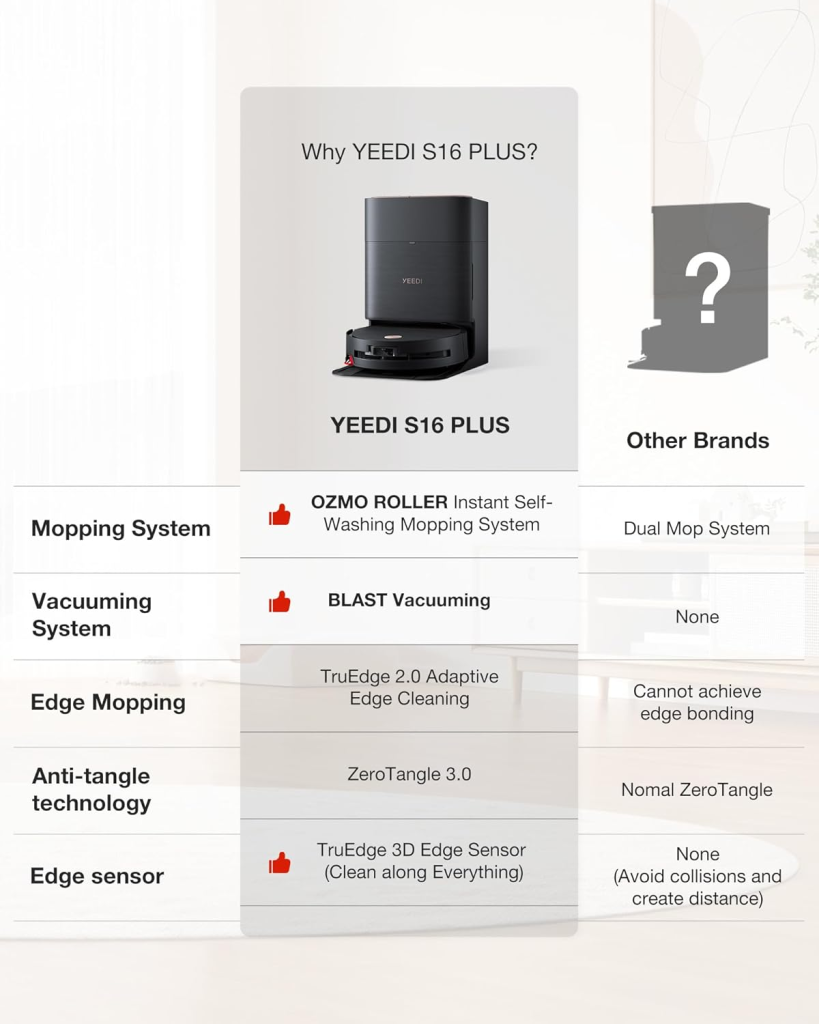
Performance Score
| Category | Vac 2 Pro | Mop Station |
|---|---|---|
| Vacuuming | 9.4/10 | 8.5/10 |
| Mopping | 8.3/10 | 9.6/10 |
| Navigation | 9.5/10 | 8.6/10 |
| App Experience | 9.2/10 | 9.1/10 |
| Maintenance | 8.7/10 | 9.5/10 |
| Overall Value | 9.3/10 | 9.2/10 |
Value for Money
Both models deliver strong value within their respective categories. Buyers should base their decision on cleaning priorities rather than specifications alone.
Winner for Vacuuming
🏆 Yeedi Vac 2 Pro
Winner for Mopping
🏆 Yeedi Mop Station
Overall Rating
- Yeedi Vac 2 Pro: 9.3/10
- Yeedi Mop Station: 9.2/10
Best Overall Winner
🏆 Yeedi Vac 2 Pro
Best Value Winner
🏆 Yeedi Vac 2 Pro
Editor’s Recommendation
If your home includes a mix of carpets and hard floors, pets, and everyday obstacles such as furniture or cables, the Vac 2 Pro is the better long-term investment due to its stronger vacuum performance and smarter navigation. If nearly all of your flooring is hard surface and you want the convenience of automatic mop washing with minimal daily maintenance, the Mop Station is the better choice for keeping floors consistently clean.
Frequently Asked Questions
1. Which is better: Yeedi Vac 2 Pro or Yeedi Mop Station?
The better choice depends on your cleaning priorities. The Yeedi Vac 2 Pro is better for homes with carpets, pets, and mixed flooring because it offers stronger vacuum performance, LiDAR navigation, and advanced obstacle avoidance. The Yeedi Mop Station is the better option for homes with mostly tile, laminate, or hardwood floors thanks to its dual rotating mop pads and automatic mop-washing dock that significantly reduces manual maintenance.
2. Is the Yeedi Mop Station worth buying over the Vac 2 Pro?
Yes, if hard-floor cleaning is your main priority. The Yeedi Mop Station delivers deeper stain removal and automatically cleans its mop pads after each session, making it ideal for kitchens and high-traffic areas. However, if you need stronger carpet cleaning and smarter navigation, the Vac 2 Pro provides better overall value for mixed-floor homes.
3. Which robot vacuum is better for pet owners?
The Yeedi Vac 2 Pro is generally the better choice for pet owners. Its stronger suction, intelligent navigation, and improved obstacle avoidance help it remove pet hair from carpets and hard floors more effectively. It also handles scattered pet toys and feeding bowls with greater confidence than the Mop Station, reducing interruptions during cleaning.
4. Do both models support Alexa and Google Assistant?
Yes. Both the Yeedi Vac 2 Pro and the Yeedi Mop Station support Amazon Alexa and Google Assistant. You can use voice commands to start or stop cleaning, send the robot back to its dock, or schedule cleaning sessions. Both models also work with the Yeedi app, allowing room-specific cleaning, virtual boundaries, multi-floor mapping, and customized cleaning schedules.
5. Which model offers the best value for money?
For most households, the Yeedi Vac 2 Pro offers the best overall value because it combines powerful vacuuming, intelligent LiDAR navigation, longer battery runtime, and reliable mapping at a competitive price. If your home has mostly hard flooring and you want the convenience of automatic mop washing, the Yeedi Mop Station can be the better investment despite its slightly higher maintenance-focused design.