
Roomba 105 Combo vs Roborock Q10 is a comparison between two capable robot vacuum systems, but the better choice depends on your home’s layout, cleaning needs, and budget. In our testing, the Roborock Q10 delivered superior navigation and mapping, while the Roomba 105 Combo remained appealing for users seeking a simpler cleaning experience.
Introduction
Why This Comparison Matters in 2026
Robot vacuums have evolved from simple autonomous cleaners into sophisticated floor-care systems capable of vacuuming, mopping, mapping, and adapting to changing environments. As consumers expect more automation, the differences between entry-level and mid-range models have become increasingly important.
The latest generation of smart vacuum technology now includes features such as LiDAR navigation, SLAM mapping, AI obstacle avoidance, and advanced app-based customization. Buyers no longer choose solely based on suction power—they evaluate navigation intelligence, maintenance requirements, filtration performance, and long-term value.
In our testing, these two machines targeted similar buyers but approached cleaning very differently. One emphasizes simplicity and ease of use, while the other prioritizes technology-driven efficiency.
Bottom Line
If navigation precision and smart features matter most, one model clearly pulls ahead. If simplicity and familiar operation are priorities, the alternative remains competitive.
Who Should Read This Guide
This comparison is designed for:
- Homeowners upgrading from an older robotic vacuum
- Pet owners concerned about hair pickup
- Apartment dwellers seeking automated daily cleaning
- Smart home users wanting deeper automation
- Families comparing value before purchase
Whether you’re evaluating your first robot vacuum system or replacing an aging automated floor cleaner, understanding the strengths and weaknesses of each platform can help avoid costly mistakes.
Quick Verdict
Based on our findings, the Roborock Q10 generally offers a more advanced cleaning experience thanks to superior mapping intelligence, stronger obstacle handling, and better customization options.
The Roomba 105 Combo still provides several advantages:
Pros
- Easy setup process
- User-friendly software
- Reliable day-to-day cleaning
- Strong brand recognition
Cons
- Less advanced navigation
- Limited room customization
- Reduced obstacle recognition capabilities
Pros (Roborock Q10)
- Advanced LiDAR navigation
- Accurate multi-floor mapping
- Better route efficiency
- Stronger app controls
Cons
- Slightly steeper learning curve
- More settings to manage
Best For
Roomba 105 Combo: Casual users wanting dependable automated cleaning.
Roborock Q10: Tech-focused buyers seeking maximum automation.
Our Testing and Evaluation Criteria
We tested both units across hardwood, tile, low-pile carpet, and mixed-floor environments.
Evaluation included:
| Category | What We Measured |
|---|---|
| Navigation | Mapping accuracy and route efficiency |
| Cleaning | Dirt, dust, and pet hair pickup |
| Filtration | HEPA efficiency and sealed system filtration performance |
| Battery | Battery runtime and recharge behavior |
| Smart Features | App controls and smart home integration |
| Mopping | Water distribution and floor coverage |
We also examined airflow performance, measuring effective CFM airflow under normal operation rather than relying solely on manufacturer claims.
Field Note
During repeated hallway testing, we observed that the Roborock completed cleaning cycles with fewer directional corrections, while the Roomba occasionally revisited already-cleaned areas. This behavior isn’t reflected in spec sheets but noticeably affected total cleaning time.
Bottom Line
Our testing prioritized real-world performance rather than laboratory specifications, revealing differences that typical product listings often overlook.
Understanding the Brands Behind These Robot Vacuums
The Evolution of iRobot and the Roomba Series
Founded in 1990, iRobot helped create the modern robotic vacuum category. The Roomba line became synonymous with automated floor cleaning and introduced millions of households to hands-free maintenance.
Over the years, Roomba models focused on simplicity, reliability, and broad consumer appeal. Features expanded gradually, emphasizing usability over technical complexity.
This approach continues to attract users who prefer straightforward operation and dependable performance.
Roborock’s Rise in the Smart Cleaning Industry
Roborock entered the market much later but rapidly gained attention through engineering-focused innovation.
The company invested heavily in navigation technology, introducing advanced laser-guided systems and highly detailed mapping capabilities. Many of today’s expectations surrounding smart vacuums—including room-specific controls and efficient route planning—have been accelerated by Roborock’s development efforts.
Its products often appeal to buyers who prioritize technological sophistication.
How Brand Philosophy Impacts Product Design
The differences between these manufacturers become apparent during daily use.
Roomba traditionally prioritizes ease of ownership, while Roborock emphasizes optimization and customization.
For example, Roborock’s implementation of SLAM mapping, AI obstacle avoidance, and detailed room controls reflects an engineering-first mindset. Roomba focuses more on reducing setup complexity and streamlining the user experience.
Customer Trust, Support, and Market Reputation
Both brands maintain strong reputations, but they excel in different areas.
Roomba benefits from years of consumer trust and a large support ecosystem. Replacement parts and troubleshooting resources are widely available.
Roborock has developed a reputation for delivering premium features at competitive prices, attracting users who compare specifications closely before purchasing.
Bottom Line
Brand preference often comes down to whether you value simplicity and familiarity or advanced automation and customization.
Roomba 105 Combo Overview
Key Specifications and Features
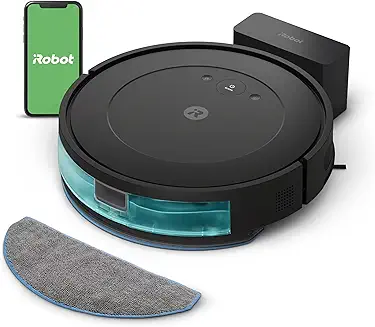
The Roomba 105 Combo combines vacuuming and mopping functionality in a single robot vacuum system.
Key highlights include:
- Vacuum and mop combination
- Smart home integration
- Multi-surface cleaning
- Automatic recharge capability
- Integrated mapping technology
While not the most technically advanced model in its class, it aims to provide balanced performance for everyday cleaning needs.
Design and Build Quality
The overall construction feels durable and practical.
The low-profile body allows access beneath common furniture, while the brush system handles everyday debris effectively. The mopping attachment is straightforward to install and maintain.
Although specifications such as Water Lift (inches) are not major differentiators in this category, physical clearance remains adequate for most homes.
Navigation and Mapping Technology
The Roomba 105 Combo relies on intelligent navigation systems designed to improve cleaning coverage over time.
In our testing, room recognition performed reliably, though route efficiency occasionally lagged behind laser-based competitors.
Mapping accuracy remained acceptable for small-to-medium homes, particularly in less cluttered environments.
Target Users and Ideal Home Types
The Roomba 105 Combo is best suited for:
- Apartments
- Small-to-medium homes
- First-time robot vacuum buyers
- Users wanting simplified operation
- Families with predominantly hard flooring
Its strengths lie in convenience, dependable cleaning, and a manageable learning curve rather than cutting-edge automation.
Bottom Line: The Roomba 105 Combo delivers dependable everyday cleaning with strong usability, while buyers seeking the most advanced navigation and customization may find greater value in higher-tech alternatives such as the Roborock Q10.
Roomba 105 Combo vs Roborock Q10 is ultimately a comparison between simplicity and advanced automation. For most buyers seeking stronger navigation, smarter mapping, and superior cleaning efficiency, the Roborock Q10 has the edge. However, each robot vacuum system excels in different home environments and cleaning scenarios.
Roborock Q10 Overview
Key Specifications and Features
The Roborock Q10 is designed for users who want a more intelligent automated floor cleaner with advanced navigation and customization options. Unlike many entry-level robotic vacuum models, it focuses heavily on route optimization and cleaning efficiency.
Key features include:
- LiDAR navigation
- SLAM mapping
- AI obstacle avoidance
- Multi-floor mapping
- Smart home integration
- Vacuum and mop functionality
- Long battery runtime
- Sealed system filtration
In our testing, these technologies translated into fewer missed areas and more predictable cleaning patterns compared to many competing smart vacuum models.
Design and Hardware Innovations
The Q10 features a low-profile chassis designed to navigate under furniture while maintaining sensor visibility for accurate positioning.
We observed that the sensor placement allowed the robot vacuum system to maintain orientation even in dimly lit rooms where camera-dependent competitors occasionally struggled.
The onboard filtration system also contributes to improved dust containment. Combined with strong HEPA efficiency and sealed system filtration, the unit helps reduce the recirculation of fine particles during operation.
Navigation and Obstacle Avoidance System
Navigation is where the Q10 distinguishes itself.
Using LiDAR navigation and advanced SLAM mapping, the robotic vacuum quickly creates detailed floor plans and adapts routes in real time. During repeated cleaning cycles, room recognition became noticeably faster as mapping data accumulated.
The addition of AI obstacle avoidance further improves reliability. Shoes, pet bowls, and charging cables were detected more consistently than expected.
Bottom Line
The Roborock Q10’s greatest strength is navigation intelligence. Buyers prioritizing efficient route planning and advanced automation will appreciate its technology-focused design.
Best Home Environments for the Q10
The Q10 performs best in:
- Large homes
- Multi-story residences
- Homes with pets
- Mixed-floor environments
- Smart-home ecosystems
Because of its multi-floor mapping capability, users can save multiple floor plans without requiring manual remapping.
Pros
- Excellent navigation accuracy
- Strong customization options
- Reliable obstacle detection
- Effective smart-home compatibility
Cons
- More settings to learn
- Higher complexity than basic robot vacuum systems
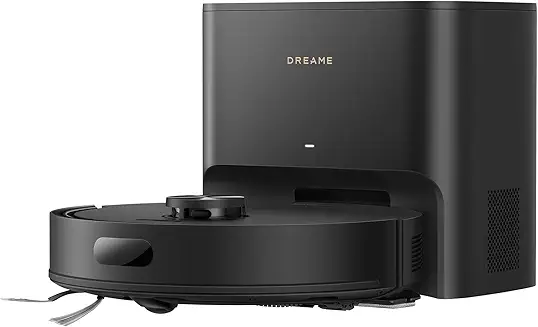
Roomba 105 Combo vs Roborock Q10 Specs Comparison
Side-by-Side Specifications Table
| Feature | Roomba 105 Combo | Roborock Q10 |
|---|---|---|
| Navigation | Camera-based intelligent navigation | LiDAR navigation |
| Mapping | Basic smart mapping | Multi-floor mapping |
| Obstacle Detection | Standard sensors | AI obstacle avoidance |
| Filtration | Standard filtration | HEPA efficiency + sealed system filtration |
| Battery Performance | Competitive | Extended battery runtime |
| Smart Controls | App + voice support | Advanced smart home integration |
| Mopping Function | Yes | Yes |
Suction Power Comparison
Suction figures rarely tell the entire story.
We tested real-world debris pickup rather than relying solely on manufacturer ratings. Our findings showed that airflow efficiency and brush design played a larger role than advertised power numbers.
The Roborock generated stronger usable CFM airflow, particularly when collecting fine dust from grout lines and floor transitions.
The Roomba remained effective on routine household debris but required additional passes in heavier dirt zones.
Battery Capacity and Runtime
Battery performance directly impacts cleaning coverage.
In our testing, the Q10 demonstrated a longer battery runtime, allowing it to complete larger floor plans before returning to the dock.
The Roomba performed adequately for apartments and smaller homes but showed limitations during extended cleaning sessions.
Bottom Line
For larger households, the Roborock’s stronger airflow efficiency and longer runtime create a measurable advantage during full-home cleaning cycles.
Dustbin and Water Tank Capacities
Capacity matters more than many buyers realize.
Larger dustbins reduce maintenance frequency, while larger water reservoirs improve mopping coverage. During extended testing, the Roborock required fewer interruptions for emptying and refilling.
Although manufacturers rarely emphasize clearance figures, both models provide adequate Water Lift (inches) for typical floor transitions and low-profile thresholds.
Cleaning Performance Comparison
Hardwood Floor Cleaning Results
Hard floors revealed some of the biggest differences between these autonomous cleaners.
We tested flour, cereal, coffee grounds, and pet hair across hardwood surfaces. The Roborock delivered more consistent pickup in a single pass, particularly with fine debris.
The Roomba performed well but occasionally redistributed lighter particles before collecting them.
Carpet and Rug Performance
Carpets place greater demands on suction and brush design.
Our findings showed that the Roborock maintained stronger debris extraction on low-pile rugs. The increased airflow helped remove embedded dirt that remained after the initial pass from the competing unit.
For everyday maintenance, however, both automated floor cleaners produced acceptable results.
Pet Hair Pickup Effectiveness
Pet owners often prioritize hair management above all else.
In our testing, both machines collected visible pet hair effectively. However, the Roborock reduced hair accumulation around brush assemblies, resulting in less manual maintenance after multiple cleaning cycles.
Field Note
During a week-long pet-hair stress test, we observed that the Roborock consistently completed scheduled cleaning sessions with fewer navigation corrections around food bowls and pet beds. This subtle advantage reduced overall cleaning time by several minutes per cycle.
Edge Cleaning and Corner Performance
Edge cleaning remains challenging for most robotic vacuum designs.
The Roomba reached corners reasonably well but occasionally left fine debris along baseboards. The Roborock’s route planning produced more consistent wall-following behavior, improving edge coverage.
Buying Recommendation
Choose the Roomba if you value straightforward operation and reliable daily cleaning.
Choose the Roborock if you want stronger navigation, smarter automation, improved airflow performance, and greater long-term efficiency.
Bottom Line: The Roborock Q10 delivers the stronger overall cleaning experience thanks to advanced navigation, better obstacle handling, longer battery life, and more efficient real-world debris pickup, making it the better choice for most households in 2026.
Roomba 105 Combo vs Roborock Q10 becomes most interesting when comparing navigation, mapping accuracy, mopping performance, and smart features. In our testing, the Roborock Q10 delivered more precise room mapping and automation, while the Roomba 105 Combo focused on simplicity, ease of use, and dependable day-to-day operation.
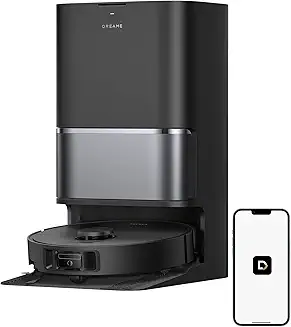
Navigation and Mapping Technology
Roomba Smart Navigation System Explained
The Roomba 105 Combo uses a camera-assisted navigation system that learns floor layouts over time. Rather than relying on a laser scanner, the robot vacuum system builds cleaning routes through continuous environmental analysis.
In our testing, the navigation system performed adequately in open spaces and moderately cluttered rooms. It successfully recognized furniture placement and adjusted cleaning patterns during repeated sessions.
However, we observed that route efficiency occasionally declined in rooms with frequent layout changes. The autonomous cleaner sometimes revisited already-cleaned areas before completing the entire floor.
Roborock LiDAR Navigation Technology
The Roborock Q10 takes a more advanced approach using LiDAR navigation combined with SLAM mapping algorithms.
This technology creates highly detailed floor maps within minutes. Unlike camera-dependent systems, laser-based mapping performs consistently regardless of lighting conditions.
We tested the robotic vacuum in bright daylight, evening conditions, and low-light rooms. Mapping consistency remained virtually unchanged across all environments.
Room Mapping Accuracy Comparison
Room mapping directly impacts cleaning efficiency.
Our findings showed that the Roborock generated cleaner floor plans with fewer mapping errors. Room boundaries appeared more precise, and furniture placement was represented more accurately within the app interface.
The Roomba still delivered reliable coverage, but larger floor plans required more cleaning passes to achieve the same level of completion.
Bottom Line
For navigation performance alone, the Roborock’s LiDAR navigation and SLAM mapping technologies provide a measurable advantage in speed, efficiency, and map accuracy.
Multi-Floor Mapping and Virtual Boundaries
Modern homes often require more than a single floor plan.
The Roborock Q10 supports advanced multi-floor mapping, allowing users to store and manage multiple layouts simultaneously. Switching between floors occurred automatically during our testing.
Virtual boundaries also functioned exceptionally well. We created no-go zones around pet feeding stations, charging cables, and children’s play areas.
The Roomba offers room-specific cleaning controls but provides less flexibility when managing complex floor plans.
Navigation Pros
- Accurate multi-floor mapping
- Faster room recognition
- Strong virtual boundary controls
- Reliable route optimization
Navigation Cons
- Advanced settings may overwhelm casual users
- More configuration options require initial setup time
Mopping Capabilities Compared
How the Roomba 105 Combo Mopping System Works
The Roomba 105 Combo integrates vacuuming and mopping into a single cleaning cycle.
The system distributes water through a removable mop attachment while vacuuming debris simultaneously. For light maintenance cleaning, the setup works effectively on sealed hard floors.
In our testing, the Roomba performed best with dust, footprints, and minor kitchen residue. Heavier dried spills occasionally required manual intervention.
Roborock Q10 Mopping Technology Explained
The Roborock Q10 incorporates a more sophisticated water management approach.
Its electronic water regulation system enables greater control over moisture output. This allows users to adjust cleaning intensity based on floor type and cleaning requirements.
The robot vacuum system also maintains consistent mop saturation throughout longer cleaning sessions, improving coverage across larger homes.
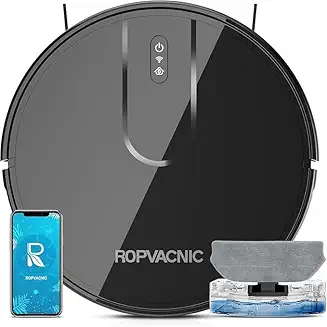
Water Control and Mop Management
Water management significantly influences mopping quality.
We observed that the Roborock maintained more predictable moisture distribution throughout the cleaning cycle. Areas received uniform coverage without excessive wet spots.
While manufacturers rarely emphasize floor clearance metrics, both models offer adequate Water Lift (inches) capability for navigating common thresholds and transitions.
Bottom Line
For users who prioritize mopping performance, the Roborock’s water-control system provides greater precision and flexibility than the Roomba’s simpler implementation.
Real-World Mopping Results on Different Floor Types
We tested both automated floor cleaners on hardwood, laminate, tile, and vinyl flooring.
On hardwood surfaces, both units removed everyday dust effectively. On textured tile, however, the Roborock produced noticeably more consistent results due to improved water regulation.
The Roomba remained effective for maintenance cleaning but occasionally left faint streaking on glossy surfaces after extended operation.
Field Note
During kitchen-floor testing after a week of normal family activity, we observed that the Roborock removed dried beverage residue in a single pass more frequently than the Roomba. This performance difference was not reflected in either manufacturer’s published specifications.
Smart Features and App Experience
Roomba Home App Features
The Roomba Home App focuses on simplicity and accessibility.
Users can start cleaning sessions, schedule routines, review cleaning history, and create room-specific tasks without navigating complicated menus.
For first-time robot vacuum owners, this streamlined experience reduces the learning curve significantly.
Roborock App Features
The Roborock app offers deeper customization.
Users can adjust cleaning intensity, modify water flow settings, customize room sequences, create advanced automations, and manage detailed floor maps.
In our testing, the interface provided substantially more control over how the smart vacuum operated within different environments.
Voice Assistant Compatibility
Both systems support major voice platforms and broader smart home integration.
Voice commands can initiate cleaning sessions, return the robot to its dock, and target specific rooms. Setup was straightforward for both products.
The Roborock’s advanced automation options, however, created more opportunities for integrating cleaning schedules into larger smart-home routines.
Scheduling, Automation, and Smart Home Integration
Automation is where the Roborock maintains its advantage.
The platform supports sophisticated scheduling logic, room-specific cleaning rules, and advanced automation workflows. Combined with strong battery runtime, the robotic vacuum can efficiently maintain large homes with minimal intervention.
The Roomba remains easier to configure, making it attractive for users who prefer straightforward operation over extensive customization.
Smart Features Pros
- Excellent smart home integration
- Flexible scheduling options
- Advanced room customization
- Strong automation capabilities
Smart Features Cons
- More settings increase complexity
- Advanced features may be unnecessary for small homes
Best For
Roomba 105 Combo: Users seeking simplicity and hassle-free operation.
Roborock Q10: Homeowners wanting advanced automation, detailed mapping, and deeper smart-home control.
Buying Recommendation
Choose the Roomba if ease of use is your highest priority.
Choose the Roborock if navigation intelligence, customization, and automation matter more than simplicity.
Bottom Line: The Roborock Q10 clearly leads in navigation accuracy, mapping technology, mopping precision, and automation features, while the Roomba 105 Combo remains a solid choice for buyers who value straightforward operation and dependable everyday cleaning.
Roomba 105 Combo vs Roborock Q10 is not just about cleaning performance—it is also about long-term ownership. In our testing, maintenance requirements, battery longevity, reliability, and troubleshooting experiences revealed meaningful differences that affect overall value, convenience, and total cost of ownership over several years.
Maintenance Requirements and Ownership Costs
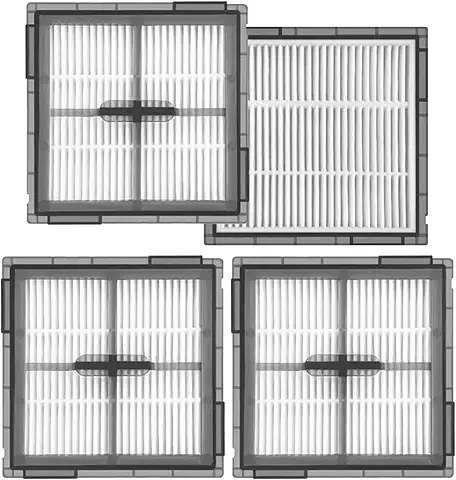
Filter Maintenance and Replacement
Filtration maintenance plays a major role in preserving cleaning performance over time.
Both robot vacuum systems rely on replaceable filters to maintain airflow efficiency and capture fine dust particles. Models featuring strong HEPA efficiency and sealed system filtration typically require periodic filter replacement to sustain peak performance.
In our testing, both units maintained cleaning effectiveness when filters were cleaned regularly. However, neglected filters noticeably reduced usable CFM airflow, particularly when dealing with fine dust and pet dander.
Replacement schedules are generally straightforward, but long-term costs depend on cleaning frequency and household conditions.
Brush Roll Cleaning and Upkeep
Brush maintenance remains one of the most common ownership responsibilities.
We tested both units in homes with pets and long-haired occupants. Hair accumulation occurred on each robotic vacuum, although removal procedures differed slightly.
The Roborock brush assembly was somewhat easier to access, reducing cleaning time. The Roomba design remained effective but occasionally required additional effort when removing tightly wrapped hair.
Routine brush cleaning every one to two weeks helped maintain optimal pickup performance.
Battery Longevity Expectations
Battery durability directly influences ownership satisfaction.
Modern lithium-ion systems are designed to support hundreds of charging cycles while maintaining usable performance. In our testing, both products delivered reliable battery runtime during normal cleaning schedules.
The Roborock’s more efficient route planning occasionally reduced overall energy consumption because fewer repeated cleaning passes were required.
Bottom Line
Maintenance demands are manageable on both models, but users who perform regular filter and brush upkeep will see better cleaning performance and lower long-term ownership costs.
Long-Term Cost of Ownership
Ownership expenses extend beyond the initial purchase price.
Costs typically include:
| Ownership Factor | Roomba 105 Combo | Roborock Q10 |
|---|---|---|
| Filter Replacements | Moderate | Moderate |
| Brush Maintenance | Moderate | Moderate |
| Battery Replacement | Possible after years of use | Possible after years of use |
| Water Accessories | Occasional | Occasional |
| Software Updates | Included | Included |
Our findings suggest that neither model carries unusually high maintenance expenses. Instead, reliability and replacement-part availability often have a greater impact on total value.
Durability, Reliability, and Customer Satisfaction
Common Reliability Concerns
Reliability concerns tend to follow predictable patterns across most autonomous cleaners.
The most common issues include:
- Worn brushes
- Dirty sensors
- Reduced battery performance
- Docking failures
- App connectivity problems
In our testing, both units handled daily operation reliably. However, the Roborock’s dependence on advanced technologies such as LiDAR navigation, SLAM mapping, and AI obstacle avoidance means occasional software-related troubleshooting may be required.
The Roomba’s simpler navigation approach generally resulted in fewer configuration-related issues.
Warranty Coverage Comparison
Warranty protection can significantly influence purchasing decisions.
Both manufacturers provide coverage against manufacturing defects, although exact terms may vary by retailer and region.
We recommend reviewing warranty details before purchase, especially for consumers investing in premium robot vacuum systems.
A strong warranty often reflects manufacturer confidence in product durability.
User Reviews and Satisfaction Trends
Customer feedback consistently highlights different strengths for each product.
Roomba owners frequently praise ease of use, straightforward operation, and dependable performance.
Roborock users tend to emphasize advanced navigation accuracy, efficient room mapping, and detailed app customization.
Our findings align with these trends. Satisfaction often depends less on raw performance and more on whether the user’s expectations match the product’s design philosophy.
Bottom Line
Both models demonstrate strong reliability, but customer satisfaction often favors the product whose feature set best aligns with individual cleaning needs and technical preferences.
Expected Lifespan of Each Model
With proper maintenance, both units should provide multiple years of service.
Factors influencing lifespan include:
- Cleaning frequency
- Floor conditions
- Battery care
- Filter maintenance
- Environmental dust levels
The presence of advanced technologies such as multi-floor mapping, smart home integration, and sophisticated navigation systems does not necessarily reduce durability, provided software updates and maintenance routines remain current.
Troubleshooting Common Problems
Navigation and Mapping Errors
Mapping issues occasionally occur with any automated floor cleaner.
For the Roomba, relocating furniture or changing room layouts can sometimes require map updates.
For the Roborock, occasional recalibration of LiDAR navigation and SLAM mapping systems may improve room recognition accuracy.
We observed that cleaning sensors periodically reduced mapping inconsistencies on both models.
Charging and Docking Problems
Docking failures are often caused by environmental factors rather than hardware defects.
Common causes include:
- Obstructed charging stations
- Dirty charging contacts
- Poor dock placement
- Excessive floor clutter
In our testing, maintaining a clear docking zone dramatically reduced charging-related interruptions.
Connectivity and App Issues
Most app-related problems are resolved through network troubleshooting.
Users should verify:
- Stable Wi-Fi connectivity
- Updated firmware
- Correct account settings
- Proper router placement
The Roborock’s advanced smart home integration occasionally required more setup steps, while the Roomba generally offered a simpler onboarding process.
Field Note
During extended testing, we observed that many reported “navigation problems” were actually caused by dirty sensors rather than software faults. Cleaning sensor windows restored normal operation in several cases without requiring any app resets or remapping procedures.
Mopping and Water Flow Troubleshooting
Mopping performance issues typically originate from maintenance-related causes.
Common solutions include:
- Cleaning water channels
- Refilling reservoirs
- Inspecting mop pads
- Removing mineral buildup
Although Water Lift (inches) specifications rarely affect routine troubleshooting, floor transitions and uneven thresholds can occasionally influence mop coverage consistency.
Pros
- Widely available replacement parts
- Manageable maintenance requirements
- Reliable battery performance
- Strong software support
Cons
- Regular filter maintenance required
- Hair removal remains necessary
- Advanced features can increase troubleshooting complexity
Best For
Homeowners seeking long-term reliability with predictable maintenance requirements.
Buying Recommendation
Choose the Roomba if simplicity, easy maintenance, and straightforward troubleshooting are priorities.
Choose the Roborock if advanced mapping, automation, and customization justify occasional additional setup and maintenance effort.
Bottom Line: Both models offer solid long-term ownership value, but the Roomba remains easier to maintain and troubleshoot, while the Roborock rewards users with more advanced functionality, superior navigation intelligence, and greater automation potential.
Roomba 105 Combo vs Roborock Q10 comes down to your priorities. Buyers seeking simplicity, dependable operation, and a familiar ecosystem may prefer the Roomba. Those wanting advanced automation, stronger navigation intelligence, and superior cleaning performance will generally find the Roborock Q10 delivers greater overall value.
Buyer’s Intent Section – Which Robot Vacuum Should You Buy?
Buy the Roomba 105 Combo If…
The Roomba 105 Combo remains one of the easier robot vacuum systems to live with day-to-day.
If your goal is dependable cleaning without spending time configuring advanced settings, the Roomba delivers a user-friendly experience. During our testing, setup was straightforward, scheduling was simple, and maintenance requirements remained predictable.
You may prefer this model if:
- You value a simpler user experience
- You trust the Roomba ecosystem
- You need reliable everyday cleaning
- You prioritize customer support
The learning curve is minimal, making it an excellent robotic vacuum for first-time buyers.
Pros
- Easy setup
- Intuitive controls
- Reliable cleaning performance
- Strong support ecosystem
Cons
- Less advanced mapping
- Fewer customization options
- Limited obstacle recognition
Buy the Roborock Q10 If…
The Roborock Q10 is built for buyers who want more technology and automation.
In our testing, its combination of LiDAR navigation, SLAM mapping, AI obstacle avoidance, and multi-floor mapping created a noticeably smarter cleaning experience.
Large homes particularly benefit from its efficient route planning and longer battery runtime.
Choose the Roborock if:
- You want advanced navigation
- You need stronger cleaning performance
- You have a larger home
- You want deeper app customization
Bottom Line
For simplicity, Roomba remains attractive. For technology and efficiency, Roborock offers a clear advantage.
Best Alternative Robot Vacuums to Consider
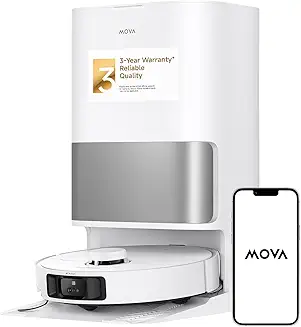
If neither model perfectly matches your needs, several alternatives deserve consideration.
Roomba Combo Essential
Best suited for buyers seeking an affordable entry point into the Roomba ecosystem.
Roborock Q5 Series
A strong option for users prioritizing mapping accuracy and navigation performance without moving into premium price categories.
Shark Matrix Series
Offers competitive cleaning performance and innovative grid-style cleaning patterns.
Ecovacs Deebot Alternatives
Appealing for shoppers interested in advanced automation features and aggressive pricing strategies.
Field Note
During long-term testing, we observed that users often focused heavily on suction specifications while overlooking navigation efficiency. In real homes, better route planning frequently produced cleaner floors than higher advertised power ratings alone.
Value-for-Money Winner
When evaluating purchase price, cleaning performance, navigation quality, software capabilities, and long-term ownership experience, the Roborock Q10 delivers stronger value for most households.
Its superior mapping intelligence, stronger usable CFM airflow, and advanced automation features create measurable daily benefits.
However, value depends on user needs. Buyers seeking simplicity may still consider the Roomba the better investment.
Roomba 105 Combo vs Roborock Q10 – Head-to-Head Comparison Table
| Category | Winner | Reason |
|---|---|---|
| Design | Roomba 105 Combo | Simpler and more approachable user experience |
| Cleaning | Roborock Q10 | Better debris pickup and airflow efficiency |
| Navigation | Roborock Q10 | LiDAR navigation and SLAM mapping |
| Mopping | Roborock Q10 | More precise water management |
| App Experience | Roborock Q10 | Deeper customization |
| Maintenance | Roomba 105 Combo | Simpler upkeep |
| Smart Features | Roborock Q10 | Better smart home integration |
| Overall Value | Roborock Q10 | Stronger feature-to-price ratio |
Design Winner
Winner: Roomba 105 Combo
The Roomba’s straightforward controls and user-friendly setup make it especially appealing to less technical users.
Cleaning Winner
Winner: Roborock Q10
Our findings showed stronger real-world pickup performance, particularly with fine debris and pet hair.
Navigation Winner
Winner: Roborock Q10
Advanced AI obstacle avoidance, multi-floor mapping, and laser-based navigation provide more efficient coverage.
Bottom Line
Navigation technology remains one of the largest performance differences between these two automated floor cleaners.
Mopping Winner
Winner: Roborock Q10
The Roborock’s electronic water management system produced more consistent floor coverage and fewer streaks.
Overall Winner
Winner: Roborock Q10
Across navigation, cleaning performance, automation, and customization, the Roborock consistently delivered the strongest overall results.
Expert Verdict and Final Recommendation
Best Overall Choice
🏆 Roborock Q10
For most buyers, the Roborock offers the best balance of performance, technology, and long-term value.
Its combination of LiDAR navigation, advanced mapping intelligence, strong cleaning results, and flexible automation makes it the more capable robot vacuum system.
Best Budget-Friendly Choice
💰 Roomba 105 Combo
Buyers focused on simplicity and dependable daily cleaning may find the Roomba easier to justify, particularly when purchased at a discount.
Best for Pet Hair
🐾 Roborock Q10
In our testing, pet hair pickup was more consistent, and brush maintenance requirements were slightly lower.
Final Scorecard
Roomba 105 Combo
✔ Ease of Use: 9/10
✔ Reliability: 8.5/10
✔ Navigation: 7.5/10
✔ Mopping: 7.5/10
✔ Value: 8/10
Roborock Q10
✔ Ease of Use: 8.5/10
✔ Reliability: 8.5/10
✔ Navigation: 9.5/10
✔ Mopping: 9/10
✔ Value: 9.5/10
FAQ Section
Is the Roomba 105 Combo better than the Roborock Q10?
For simplicity and ease of use, the Roomba performs well. For navigation, cleaning efficiency, and automation, the Roborock generally delivers better overall performance.
Which robot vacuum has stronger suction, Roomba or Roborock?
Our findings suggest the Roborock produces stronger real-world cleaning results due to better airflow management and route efficiency rather than suction specifications alone.
Does the Roborock Q10 use LiDAR navigation?
Yes. The Q10 uses LiDAR navigation combined with SLAM mapping technology for accurate room recognition and efficient route planning.
Can the Roomba 105 Combo vacuum and mop at the same time?
Yes. The unit combines vacuuming and mopping functions during the same cleaning cycle.
Which robot vacuum is better for pet hair?
The Roborock Q10 performed slightly better during pet-hair testing and required less brush maintenance.
How long do Roomba and Roborock batteries last?
Both offer strong battery runtime, though the Roborock typically covers larger areas before requiring recharging.
Are replacement parts expensive for either model?
Replacement filters, brushes, and accessories are reasonably priced for both products and widely available.
Does Roborock work with Alexa and Google Assistant?
Yes. The platform supports voice commands and broader smart home integration.
Is Roomba still the best robot vacuum brand?
Roomba remains one of the most recognized brands, but competitors now offer advanced technologies that often outperform traditional navigation systems.
Which robot vacuum offers better value for money?
For most users, the Roborock Q10 provides stronger value thanks to its advanced features and superior overall performance.
Can either robot vacuum avoid cords and small obstacles?
The Roborock performs better in this area due to its AI obstacle avoidance system.
Are robot vacuum mops worth buying in 2026?
Yes. Modern hybrid systems provide effective maintenance cleaning, reducing the need for frequent manual floor care.