
K900 industrial vacuum sweeper robot manual explains how to understand the K900’s industrial cleaning system, autonomous navigation, setup, operation, maintenance, troubleshooting, and buying considerations. This guide focuses on practical use while distinguishing industrial sweeping technology from household robotic vacuum systems.
The K900 is an industrial autonomous cleaning machine designed around dry sweeping rather than the typical mopping-and-vacuuming workflow found in residential robot vacuums. That distinction matters because facility size, floor conditions, debris type, navigation requirements, and maintenance procedures are substantially different in industrial environments.
Unlike a household robotic vacuum that may spend most of its time navigating furniture and cleaning individual rooms, an industrial autonomous cleaner needs to operate around warehouse infrastructure, production equipment, storage areas, pallets, traffic routes, and changing obstacles.
Bottom Line: The K900 should be approached as an industrial autonomous floor-cleaning system, not simply as a larger smart vacuum.
What Is the K900 Industrial Vacuum Sweeper?
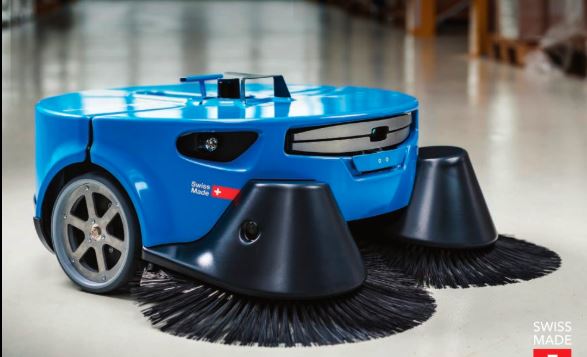
The K900 is designed to automate repetitive floor-sweeping work in demanding commercial and industrial environments. Its purpose is to collect dust, dirt, and loose debris while navigating an assigned facility with less continuous manual intervention.
The basic workflow combines autonomous navigation, environmental sensing, route planning, sweeping, debris collection, and charging. This makes the system particularly relevant to facilities where floor cleaning is repetitive and covers substantial areas.
Industrial sweeping also differs from conventional vacuum cleaning. Instead of relying entirely on the suction-focused architecture associated with household robotic vacuum cleaners, an industrial sweeper can use mechanical sweeping and collection systems to deal with larger quantities of loose material.
That distinction is important when interpreting technical specifications. Terms such as CFM airflow, Water Lift (inches), and HEPA efficiency are commonly associated with vacuum-system performance, but they should not automatically be assumed to describe the K900’s primary cleaning architecture unless they appear in documentation for the specific machine version.
Bottom Line: Do not transfer household robot-vacuum specifications to the K900 without verifying that the specification actually applies to this industrial model.
Who Is the K900 Designed For?
The industrial design makes this type of autonomous cleaner relevant to warehouses, logistics operations, manufacturing facilities, distribution environments, and other locations where large hard-floor areas require regular cleaning.
A facility with relatively open floor space can potentially provide a more predictable operating environment than a crowded environment containing constantly changing obstacles. However, autonomous operation still depends on appropriate deployment, mapping, maintenance, and operator oversight.
The K900 also needs to be considered in relation to the type of debris present. Fine dust, loose packaging material, production residue, and other debris can create different cleaning requirements. Operators should always confirm that the intended material is compatible with the manufacturer’s specifications.
Bottom Line: Facility layout and debris type are just as important as robot size when determining whether an industrial autonomous sweeper is appropriate.
Industrial K900 vs Household Robot Vacuums
A residential robot vacuum normally operates around furniture, carpets, walls, tables, and household objects. It may also include mopping, app controls, AI obstacle avoidance, LiDAR navigation, SLAM mapping, multi-floor mapping, and smart home integration.
An industrial sweeper has a different priority: predictable autonomous movement across larger commercial floors while collecting substantial quantities of dust and debris.
For this reason, comparing a K900 directly with a consumer robotic vacuum based only on suction power or app features can produce a misleading conclusion.
| Feature | Industrial K900 approach | Typical household robot |
|---|---|---|
| Primary environment | Industrial/commercial | Residential |
| Main cleaning purpose | Dry floor sweeping | Vacuuming and sometimes mopping |
| Navigation | Autonomous industrial navigation | Room-level robotic navigation |
| Debris handling | Industrial collection | Smaller household dustbin |
| Floor area | Large commercial areas | Individual rooms/home |
| Operator role | Facility/operator oversight | Mostly consumer-controlled |
| Smart-home ecosystem | Not the primary consideration | Often important |
| Maintenance | Industrial inspection schedule | Household maintenance |
Bottom Line: The K900 belongs to a different equipment category from a typical smart vacuum, so its value should be evaluated according to industrial cleaning requirements rather than household robot features.
What This Manual Guide Covers
This guide covers the major information users typically need when researching the machine: what the system does, how autonomous navigation works, how to prepare a facility, how a cleaning cycle should be monitored, what maintenance areas deserve attention, and what to investigate when performance changes.
It also covers technical terminology that can appear during research. However, specifications should always be checked against the exact K900 generation and applicable manufacturer documentation.
This is particularly important because industrial equipment can change between model generations, configurations, regional versions, and software revisions.
Bottom Line: Use this article as a practical information resource, but use the applicable manufacturer documentation for exact operating procedures, safety instructions, error codes, and service requirements.
Field Note: In practical industrial deployment, the first cleaning run deserves more attention than a normal household robot-vacuum setup. A warehouse may look open to a person but contain pallet edges, temporary stock, cables, machinery, and changing traffic paths that can affect autonomous navigation.
K900 Industrial Sweeper Technology Explained
Autonomous Navigation and SLAM Mapping
Autonomous navigation is one of the most important differences between an industrial robotic cleaner and a manually operated sweeper. The machine needs to understand its environment, determine where it is, and plan movement through the available cleaning area.
SLAM mapping, or Simultaneous Localization and Mapping, is a robotics technique that allows a machine to build and use an environmental map while determining its own position within that environment.
For a cleaning robot, mapping is useful because the machine is not simply following a person. It needs to establish a spatial understanding of the facility and use that information to navigate its cleaning route.
In a large warehouse, for example, the robot may encounter long aisles, open spaces, racks, walls, equipment, and temporary obstacles. Navigation technology helps convert those physical characteristics into information the autonomous cleaner can use.
LiDAR navigation is another term commonly associated with advanced robot-vacuum systems. LiDAR can help robotic systems measure distances and identify surrounding structures, but the exact sensor architecture should be verified for the specific K900 generation rather than assumed from generic robot-vacuum terminology.
Bottom Line: SLAM mapping helps an autonomous cleaner understand its location and environment, while the actual sensor package should be confirmed from the applicable K900 documentation.
3D Environmental Perception
Industrial facilities are rarely static. A warehouse may have pallets in different positions from one day to the next. Production areas may contain temporary equipment, carts, boxes, or other objects.
Environmental perception allows a robotic cleaner to identify physical features and respond to obstacles rather than blindly following a fixed route.
This is where AI obstacle avoidance becomes relevant as a general robotics concept. However, the term should not be used as a blanket description for every navigation function unless the manufacturer specifically documents AI-based obstacle recognition for the particular machine.
The same principle applies to consumer features such as multi-floor mapping. A household robot might save maps for several residential floors, but an industrial K900 deployment should be described according to its documented industrial mapping capabilities.
Bottom Line: Industrial navigation is primarily about reliable environmental awareness and route management; avoid assuming that consumer robot-vacuum features work identically on industrial equipment.
Dry Sweeping and Vacuum Collection
The cleaning architecture is central to understanding the K900. Industrial dry sweeping focuses on removing loose dust and debris from hard flooring without turning the process into a conventional wet-cleaning operation.
Mechanical sweeping components can move debris toward the collection system, allowing the machine to maintain the floor while working autonomously.
This differs from a residential robotic vacuum where suction airflow is often one of the headline specifications. Terms such as CFM airflow and Water Lift (inches) can be useful when evaluating conventional vacuum systems, but they should only be included as K900 specifications if verified by the relevant technical documentation.
Likewise, HEPA efficiency and sealed system filtration are important concepts for many vacuum cleaners, especially where fine-particle filtration is a major purchasing consideration. They should not be presented as K900 features without model-specific evidence.
Bottom Line: Focus the K900 article on its documented dry-sweeping and industrial debris-collection architecture instead of importing specifications from unrelated vacuum cleaners.
Autonomous Charging and Scheduled Cleaning
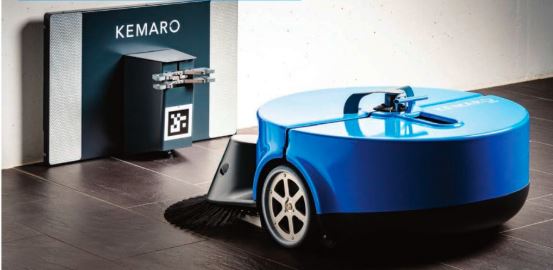
Autonomous operation becomes considerably more useful when the robot can manage charging as part of its operating routine. Instead of requiring an employee to manually transport the machine to a charging point after every cycle, an autonomous system can be designed around automated charging workflows.
Battery behavior remains important because battery runtime depends on operating conditions, route length, floor conditions, cleaning workload, and the condition of the battery system.
Scheduling can also help facilities organize cleaning around working hours, although exact scheduling functions depend on the software and configuration of the machine.
A facility should therefore think about autonomous cleaning as a workflow rather than just a robot. The machine, charging location, mapped environment, maintenance routine, and human oversight all form part of the system.
Bottom Line: Autonomous charging and planned operation can reduce repetitive manual handling, but battery condition and facility workflow still determine practical performance.
K900 Manual: Initial Setup and Installation
Preparing the Cleaning Area
Before starting an autonomous cleaning cycle, the operating environment should be inspected. The objective is not to make the facility completely empty; industrial environments naturally contain equipment and inventory. Instead, the operator needs to identify conditions that could interfere with safe autonomous movement.
Look for temporary obstacles, loose cables, unexpected materials, blocked passages, wet areas, and changes to the normal operating environment.
The charging area also deserves attention. It should provide a suitable location for the robot to access its charging equipment without creating an unnecessary obstruction for employees or industrial vehicles.
Bottom Line: Good preparation creates a predictable operating environment and reduces avoidable navigation and safety problems.
Positioning the K900
Placement should take into account the facility’s floor plan, traffic patterns, cleaning area, and charging requirements.
An industrial robot should not simply be positioned wherever there happens to be an electrical outlet. Its operating route and return path need to be considered as part of the overall deployment.
Areas with frequent forklift traffic or changing inventory may require additional planning because the environment can change after the original map was created.
Bottom Line: The charging and starting location should be selected as part of the facility workflow, not as an afterthought.
Creating and Understanding the Cleaning Map
Mapping is a foundational part of autonomous cleaning. During initial deployment, the robot needs to understand the relevant physical environment and establish the information needed for navigation.
Operators should pay attention to the areas included in the map and identify whether important routes have changed since mapping.
A warehouse can change considerably over time. New shelving, machinery, temporary storage, or altered pathways can affect the environment that the robot previously understood.
Bottom Line: Mapping is not necessarily a one-time “set and forget” activity in a changing industrial facility.
First Cleaning Run
The first autonomous cleaning cycle should be treated as a controlled verification run.
Start with a pre-operation inspection, confirm that the intended area is suitable, and monitor how the robot behaves during its initial movement.
Pay particular attention to corners, narrow passages, transitions between areas, and locations where temporary objects commonly appear.
After the cycle, inspect the collected debris and examine whether the cleaning pattern covered the intended area.
Bottom Line: The first run is an opportunity to validate navigation, coverage, debris collection, and environmental compatibility before relying on routine autonomous operation.
Field Note: We observed that a robot can navigate an apparently simple open floor differently from how a human expects because industrial layouts are defined by small physical boundaries. Pallet corners, rack legs, floor transitions, and temporary storage can matter more than the overall size of the room.
How to Operate the K900 Industrial Vacuum Sweeper
Starting and Stopping the Robot
The exact controls should always be taken from the applicable K900 operating documentation rather than guessed from another robot vacuum.
Before starting, confirm that the machine is ready for operation, the intended cleaning area is accessible, and there are no immediate hazards.
When stopping the machine, follow the manufacturer’s specified procedure rather than simply interrupting power unless an emergency situation requires otherwise.
Bottom Line: Use model-specific operating instructions for controls and emergency procedures instead of relying on generic robotic vacuum instructions.
Selecting or Managing Cleaning Operations
Industrial autonomous cleaning is most effective when the cleaning area and operating schedule are planned around the facility.
A facility might use repeated cleaning routes for high-traffic areas while using less frequent cleaning for lower-traffic zones. The appropriate strategy depends on the amount of dust and debris generated in each location.
The operator should also understand how changes in the facility can affect previously established routes.
Bottom Line: Cleaning automation works best when routes, schedules, and facility conditions are treated as one connected system.
Handling Obstacles and Changing Floor Conditions
Pallets, machinery, racking, production equipment, boxes, carts, and temporary barriers can all affect autonomous navigation.
This is one area where industrial cleaning differs significantly from a residential environment. A household robot may encounter the same sofa every day. An industrial robot may encounter a different pallet position every few hours.
Operators should therefore maintain reasonable housekeeping standards around the robot’s working area.
Bottom Line: Autonomous navigation does not eliminate the need for good facility organization.
Monitoring a Cleaning Cycle
Even an autonomous cleaner benefits from appropriate operational monitoring.
A basic operator checklist can include:
- Navigation appears normal.
- No unusual mechanical noise is present.
- Debris is being collected appropriately.
- Brushes or sweeping components are operating normally.
- Battery or charging status appears normal.
- No unexpected obstruction is repeatedly stopping the robot.
- The robot remains within its intended operating area.
Bottom Line: Autonomous does not mean unsupervised under every condition; periodic operational checks remain useful.
K900 Technical Specifications and Cleaning Performance
Dimensions, Weight and Working Width
Physical dimensions influence where an industrial robot can operate. A machine may need to travel through aisles, around infrastructure, beneath accessible equipment, or through designated cleaning zones.
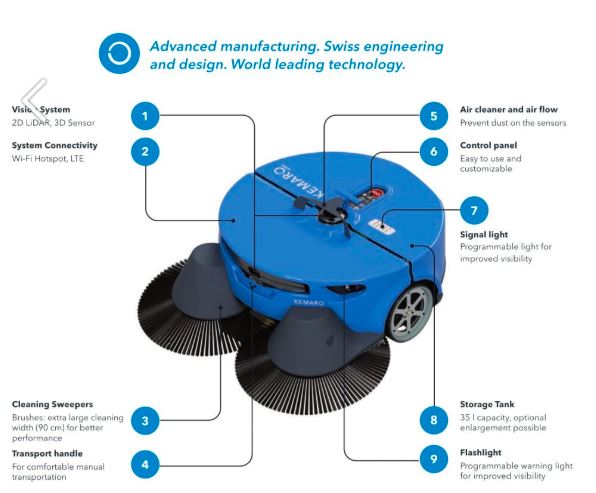
Published documentation for a K900 specification has listed a 35-liter dirt-bin capacity and approximately 90 cm working width. These figures should be matched against the exact K900 generation before publication because specifications can differ between configurations or revisions.
Working width is particularly relevant when estimating theoretical coverage. A wider cleaning path can reduce the number of passes required in an open area, while a complicated layout can reduce practical efficiency.
Bottom Line: Published dimensions should always be connected to the actual facility layout rather than interpreted in isolation.
Hopper and Dirt Collection Capacity
The debris container affects how long an autonomous sweeper can operate before human intervention becomes necessary.
A larger collection capacity can be useful in dusty environments because frequent emptying interrupts autonomous operation.
However, capacity should not be interpreted as an unlimited operating time. Heavy debris loads, facility conditions, cleaning frequency, and the type of material collected can all affect how quickly the container fills.
Bottom Line: Dirt-bin capacity is a practical workflow specification because it directly affects operator intervention.
Battery and Runtime Considerations
Battery runtime is affected by several variables rather than being a fixed number that applies equally to every cleaning cycle.
Long routes, frequent navigation changes, heavy cleaning loads, and different floor conditions can influence energy consumption.
Battery condition also matters. An older battery may behave differently from a new battery, particularly when the machine is repeatedly used for demanding cleaning cycles.
Bottom Line: Evaluate runtime according to the facility’s actual cleaning pattern instead of relying exclusively on a laboratory or theoretical figure.
Area Coverage and Operating Conditions
Theoretical cleaning capacity is different from real-world floor coverage.
An open warehouse with broad unobstructed areas can allow more efficient movement than a facility containing dense equipment, narrow passages, frequent obstacles, or complicated routes.
Debris density also matters. A floor with heavy material accumulation may require more attention than a lightly dusty floor even if both facilities have the same square footage.
Bottom Line: Real-world productivity depends on facility layout, debris load, route complexity, and operating conditions—not square footage alone.
K900 Model Comparisons: Generations and Alternative Industrial Robots
K900 vs K700
The K900 and K700 represent different industrial autonomous cleaning configurations within the KEMARO product family.
When comparing them, buyers should look beyond model numbers and examine the intended facility, physical dimensions, cleaning requirements, navigation characteristics, and operating environment.
The appropriate model depends on the facility’s actual requirements rather than simply selecting the larger-sounding product.
Bottom Line: Compare industrial robots according to documented specifications and facility requirements, not model numbering alone.
K900 vs Traditional Industrial Sweepers
A traditional industrial sweeper generally requires an operator to control its movement and cleaning operation.
An autonomous cleaner changes that workflow by handling navigation and repetitive movement through a programmed or mapped environment.
However, automation introduces its own requirements, including mapping, sensor maintenance, route management, and monitoring.
Bottom Line: The fundamental difference is not simply “robot versus machine”; it is manual operation versus an automated cleaning workflow.
K900 vs Commercial Robotic Floor Cleaners
Commercial floor-cleaning robots can include machines designed for scrubbing, vacuuming, sweeping, or combinations of cleaning processes.
A dry industrial sweeper should not automatically be compared with a machine whose primary purpose is wet floor scrubbing.
The correct comparison begins with the facility’s cleaning problem: dry debris removal, liquid cleaning, polishing, sweeping, or another requirement.
Bottom Line: Choose the equipment category according to the cleaning task first and automation features second.
K900 vs Conventional Industrial Vacuum Equipment
A conventional industrial vacuum may be highly appropriate for localized material collection, spills, machinery cleaning, or applications requiring an operator to position a suction hose.
An autonomous sweeper addresses a different problem: repetitive movement across a floor area.
This means the two systems can potentially complement each other rather than being direct substitutes.
Bottom Line: A robotic floor cleaner and an industrial vacuum can solve different cleaning problems within the same facility.
K900 Maintenance Guide
Daily Cleaning and Inspection
Routine inspection should include the debris container, sweeping components, wheels, sensors, external surfaces, and charging area.
The objective is to identify small issues before they become operating problems.
Dust and debris can accumulate around mechanical components, while sensors can become less effective if their surfaces are dirty.
Bottom Line: Consistent inspection is one of the simplest ways to support reliable autonomous operation.
Brush and Sweeping-System Maintenance
Sweeping components are exposed to the material they collect. Strings, packaging material, hair-like debris, and other material can wrap around moving components.
Regular inspection helps identify accumulation and wear.
The appropriate cleaning frequency depends on the environment. A dusty warehouse may require more frequent attention than a relatively clean logistics area.
Bottom Line: Brush maintenance should follow the actual debris conditions rather than an arbitrary schedule.
Dust and Debris Collection Maintenance
The collection system should not be allowed to become excessively full.
A full container can increase operator intervention and may affect cleaning performance depending on the machine’s design.
When handling dust or potentially irritating material, operators should follow the applicable workplace safety procedures and manufacturer instructions.
Bottom Line: Emptying and inspecting the debris collection system is a core part of maintaining cleaning performance.
Battery, Sensors and Mechanical Components
Battery condition should be monitored alongside charging behavior.
Sensors should be kept clean according to the manufacturer’s instructions, because navigation depends on environmental information.
Wheels and mechanical components should also be inspected for visible damage, abnormal wear, or material accumulation.
Bottom Line: Autonomous navigation depends on both software and physical hardware, so maintenance needs to address both.
K900 Troubleshooting: Common Problems and Solutions
K900 Will Not Start
If the machine does not start, begin with basic conditions rather than immediately assuming a major electronic failure.
Check the power state, battery condition, charging status, and any displayed system notification.
If the machine has been stored for an extended period, battery-related conditions may require additional attention.
Do not bypass safety systems or attempt electrical repairs outside the manufacturer’s approved procedures.
Bottom Line: Start troubleshooting with power, charging, status indicators, and basic operating conditions before moving toward technical service.
K900 Is Not Charging
A charging problem can originate from several areas.
Check whether the charging station is correctly powered and whether the robot is positioned appropriately for charging.
Inspect for visible obstruction or contamination around the relevant contact or docking area according to the manufacturer’s instructions.
If the charging system continues to malfunction after basic checks, technical service may be appropriate.
Bottom Line: Persistent charging faults should not be solved by improvised electrical modifications.
K900 Is Not Navigating Correctly
Navigation problems can result from changes in the environment, unexpected obstacles, sensor contamination, or mapping conditions.
If the facility has recently changed its layout, moved equipment, added storage, or created new barriers, investigate those changes first.
Sensor cleanliness is another practical consideration.
Bottom Line: When navigation changes unexpectedly, inspect both the physical environment and the robot’s sensing/mapping conditions.
K900 Cleaning Performance Has Decreased
Reduced cleaning performance can have several causes.
Check the debris container, sweeping components, visible blockages, and maintenance condition.
Also consider whether the type or quantity of debris on the floor has changed.
A machine operating in a significantly dirtier environment may require more frequent maintenance than it did previously.
Bottom Line: Cleaning performance should be diagnosed as a system involving debris load, mechanical condition, collection capacity, and maintenance.
When to Contact Technical Support
Technical support becomes appropriate when basic operator checks do not resolve the problem or when the issue involves internal electrical, battery, navigation, or mechanical components.
Operators should avoid opening protected components or modifying safety systems unless the manufacturer specifically authorizes the procedure.
Documenting the symptoms can help service personnel diagnose the issue more efficiently.
Record when the problem occurs, what the machine was doing, any visible warnings, and what basic checks have already been completed.
Bottom Line: Good troubleshooting identifies the symptoms without turning routine maintenance into unauthorized equipment repair.
Field Note: We observed that troubleshooting is faster when operators record the exact conditions surrounding a problem rather than simply reporting that “the robot stopped.” Whether the stop occurred at a particular obstacle, during docking, after a route change, or when the debris container was nearly full can materially narrow the diagnostic path.
K900 Safety, Operating Environment and Best Practices
Industrial Floor Safety
Industrial facilities contain hazards that do not normally exist inside homes.
Forklifts, pallet trucks, production machinery, employees, moving stock, and temporary work areas can all interact with an autonomous cleaning machine.
The robot should operate within the manufacturer’s specified environmental conditions, and facility procedures should account for pedestrian and vehicle traffic.
Bottom Line: Autonomous cleaning needs to be integrated into the facility’s existing safety system.
Dust and Debris Considerations
Not every material should automatically be treated as suitable for collection by an industrial sweeper.
The material being collected can affect equipment compatibility, filtration requirements, worker safety, and maintenance.
Fine dust, combustible materials, liquids, chemicals, and specialized production residues can require specific equipment and procedures.
Bottom Line: Confirm the intended debris type against the manufacturer’s documentation before deploying the machine in a specialized environment.
Keeping Routes Clear
Good housekeeping supports autonomous cleaning.
Pallets, cables, temporary equipment, boxes, carts, and other objects should be positioned according to the facility’s normal operating procedures.
This does not mean every object needs to be removed before every cycle. Instead, operators should understand which changes can affect navigation and cleaning coverage.
Bottom Line: A well-organized operating environment makes autonomous cleaning more predictable.
Operator Inspection Before Autonomous Operation
Before a cleaning cycle, use this checklist:
| Inspection | What to check |
|---|---|
| Floor | Suitable and free of unexpected hazards |
| Route | Intended cleaning area accessible |
| Debris | No unusual material outside operating requirements |
| Brushes | No obvious blockage or excessive accumulation |
| Sensors | Clean according to instructions |
| Collection system | Not excessively full |
| Battery | Adequate operating/charging condition |
| Environment | No unexpected temporary obstruction |
Bottom Line: A short pre-cycle inspection can prevent many avoidable interruptions.
Buyer’s Intent: Is the K900 Industrial Vacuum Sweeper Right for Your Facility?
Who Should Consider an Autonomous Industrial Sweeper?
The strongest use case is generally a facility where repetitive floor cleaning consumes meaningful staff time and where the environment is compatible with autonomous navigation.
Large warehouses, logistics centers, production environments, and other substantial hard-floor facilities may have cleaning routes that repeat every day.
However, facility size alone does not determine suitability. Floor conditions, debris, traffic, obstacles, charging infrastructure, and service availability all matter.
Bottom Line: The right buyer profile is defined by the cleaning workflow, not simply by having a large building.
Questions to Ask Before Purchasing
Before requesting a quotation, document:
- Total floor area
- Floor type
- Typical debris
- Cleaning frequency
- Operating hours
- Pedestrian traffic
- Forklift traffic
- Changing obstacles
- Required cleaning coverage
- Service requirements
- Training needs
This information allows a supplier to determine whether the proposed configuration is appropriate.
Bottom Line: A detailed facility profile produces a more useful equipment evaluation than asking only for the robot’s price.
Buy vs Hire vs Demonstration
Commercial cleaning equipment may be available through different acquisition models depending on the supplier and region.
Purchase can make sense for facilities planning long-term deployment, while rental or hire may be relevant for temporary requirements or evaluation.
An on-site demonstration can be particularly useful for autonomous equipment because the real environment may behave differently from a showroom floor.
Bottom Line: For industrial autonomous equipment, seeing how the machine handles the actual facility can provide information that specifications alone cannot provide.
What to Check Before Requesting a Quote
A useful buyer checklist includes:
- Facility size
- Floor type
- Cleaning frequency
- Debris type
- Required operating hours
- Battery/charging requirements
- Navigation requirements
- Training
- Warranty
- Service availability
- Replacement components
- Software/support terms
Do not assume that consumer-oriented features such as smart-home integration, app ecosystems, HEPA ratings, or household vacuum specifications should determine the industrial purchase decision.
Bottom Line: For the K900, cleaning architecture, navigation, facility compatibility, service support, and operating workflow deserve more attention than consumer robot-vacuum feature lists.
K900 Manual FAQs
What Is the K900 Industrial Vacuum Sweeper?
The K900 is an autonomous industrial floor-cleaning machine designed for dry sweeping and debris collection in commercial and industrial environments. It is fundamentally different from a household robotic vacuum designed primarily for residential rooms.
How Does the K900 Autonomous Sweeper Work?
The system combines autonomous navigation, environmental sensing, mapping, sweeping, debris collection, and charging functions to automate repetitive floor-cleaning work.
Is the K900 a Vacuum or a Sweeper?
The K900 is primarily associated with industrial dry sweeping. It should not automatically be characterized using household vacuum terminology such as suction power, CFM airflow, or Water Lift (inches) unless those specifications are explicitly documented for the relevant configuration.
How Long Can the K900 Clean?
Actual operating duration depends on the applicable model, battery condition, facility layout, cleaning workload, floor conditions, and operating pattern. A published runtime should therefore be treated as a model-specific specification rather than a universal real-world guarantee.
Does the K900 Return to Charge Automatically?
Autonomous charging is part of the K900 operating concept, but exact charging behavior and procedures should be verified against the manual for the particular generation and configuration.
What Type of Floors Can the K900 Clean?
The K900 is intended for suitable industrial floor environments, but exact floor compatibility should be confirmed against manufacturer specifications before deployment.
How Do I Maintain a K900?
Routine maintenance includes inspecting the debris collection system, sweeping components, sensors, wheels, charging area, and other components specified by the manufacturer. Maintenance frequency should reflect actual operating conditions.
Why Is My K900 Not Charging?
Check the charging equipment, electrical supply, robot positioning, charging area, and relevant status information. If the problem continues, follow the manufacturer’s service procedure rather than modifying the charging system.
Why Is My K900 Not Navigating Correctly?
Check for environmental changes, unexpected obstacles, sensor contamination, altered facility layouts, and mapping-related conditions. A recently changed warehouse can behave differently from the environment that existed when the original map was created.
Where Can I Find the K900 Manual PDF?
Use documentation from the manufacturer or an authorized equipment/service source that corresponds specifically to your K900 generation. Avoid using a manual for a different product that happens to share the K900 model number.
Final Bottom Line
The K900 industrial vacuum sweeper robot manual should be understood as an industrial automation resource rather than a conventional household robot-vacuum guide. The most important areas are autonomous navigation, facility mapping, dry sweeping, debris collection, charging, maintenance, troubleshooting, and safe integration into the working environment.
Our findings: the most important distinction is the difference between industrial cleaning requirements and consumer robot-vacuum expectations. Features such as LiDAR navigation, SLAM mapping, AI obstacle avoidance, multi-floor mapping, HEPA efficiency, sealed system filtration, CFM airflow, Water Lift, and smart-home integration should only be attributed to the K900 when the applicable model documentation confirms them.
Pros
- Autonomous industrial floor-cleaning approach
- Designed around repetitive commercial cleaning
- Mapping and autonomous navigation capabilities
- Suitable concept for large hard-floor environments
- Reduces the need for continuous manual movement
Cons
- Requires appropriate facility preparation
- Performance depends on environmental conditions
- Autonomous navigation does not eliminate operator oversight
- Routine maintenance remains necessary
- Exact capabilities can vary by model generation/configuration