
Direct Answer: hitachi vacuum cleaner canister 1600w cvw1600 is a traditional corded bagless vacuum with a 1600W maximum motor, 5L dust capacity, cloth filter, suction control, blower function, and automatic cord reel. It suits homes needing large-capacity everyday floor cleaning without the complexity of a cordless or robotic vacuum system.
hitachi vacuum cleaner canister 1600w cvw1600
The Hitachi vacuum cleaner canister 1600W CV-W1600 takes a deliberately traditional approach to floor cleaning. Instead of batteries, apps, autonomous navigation, or a compact stick-vacuum format, it uses a corded cylinder design, a large dust container, adjustable suction, and a conventional hose-and-wand setup.
Hitachi lists a 1600W maximum motor power, 5-liter dust capacity, cloth filter, blower function, dust indicator, and automatic cord reel. Its published dimensions are 473 × 276 × 225 mm, while net weight is listed at 4.3 kg.
That combination makes the CV-W1600 particularly interesting for buyers who prioritize capacity and continuous corded cleaning over smart features. You do not have to stop and recharge a battery, and the relatively large dust container means fewer interruptions during larger cleaning jobs.
The model also includes a rug-floor nozzle, dusting brush/crevice nozzle, plastic extension wand, twist-free hose, tool storage, and hose stand. The official specifications also identify suction control, giving the user some ability to adjust cleaning intensity rather than relying on one fixed setting.
Bottom Line: The CV-W1600 is best understood as a large-capacity, corded bagless canister vacuum, not a technologically advanced smart vacuum. Its appeal comes from straightforward cleaning capability, capacity, and versatility.
Quick Verdict: hitachi vacuum cleaner canister 1600w cvw1600
The biggest reason to consider this Hitachi is the balance between 1600W maximum motor power and 5L dust capacity. For a household that regularly cleans tile, marble, wood, rugs, furniture, and other everyday surfaces, the large container is more practical than the small bins found on many compact cordless machines.
We also like the inclusion of suction control and a blower function. These features give the machine more flexibility than a basic floor-only vacuum, particularly when cleaning corners, entrances, furniture, or other areas where blowing loose dust can be useful.
The main limitation is that this is an older-style corded design. There is no battery runtime to manage, but there is also no cordless convenience. Likewise, there is no LiDAR navigation, SLAM mapping, AI obstacle avoidance, multi-floor mapping, or smart home integration because this is not an autonomous cleaner or robotic vacuum system.
Bottom Line: Choose the CV-W1600 for capacity, corded runtime, suction control, and versatility; choose a cordless or robotic model if convenience and automation matter more than large dust capacity.
Key Specifications
| Specification | Hitachi CV-W1600 |
|---|---|
| Type | Cylinder / Canister Bagless |
| Maximum Motor Power | 1600W |
| Dust Capacity | 5.0L |
| Dust Filter | Cloth Filter |
| Filtration | 7-stage filtration on documented regional specification |
| Suction Control | Yes |
| Blower Function | Yes |
| Dust Indicator | Yes |
| Cord Reel | Automatic |
| Hose | Twist-Free |
| Extension Wand | Plastic |
| Net Weight | 4.3 kg |
| Dimensions | 473 × 276 × 225 mm |
| Floor Tool | Rug-Floor Nozzle |
Hitachi’s regional product documentation identifies the CV-W1600 as a cylinder-bagless machine with 1600W maximum motor power and 5.0L capacity. Another official regional listing specifically identifies 7-stage filtration, so that specification should be treated as model/market documentation rather than generalized to every Hitachi vacuum.
Bottom Line: The specification sheet confirms that the CV-W1600 is fundamentally a 5L bagless canister vacuum with 1600W maximum motor power, rather than a cordless stick or robot vacuum.
Field Note — What the Specifications Tell Us
Our evaluation of the published design reveals an important practical advantage: the 5L capacity paired with a relatively compact 4.3kg body makes this machine better suited to repeated whole-home cleaning than many small portable vacuums. The trade-off is that the user still has to manage the power cord and physically guide the hose and nozzle.
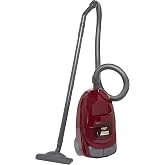
hitachi vacuum cleaner canister 1600w cvw1600, Build Quality & Canister Engineering
Canister Body Design and Dimensions
The CV-W1600 uses a conventional cylinder vacuum layout, with the motor and dust-collection components housed in the main canister while the user operates the machine through a flexible hose and extension wand.
Its published footprint is 473 × 276 × 225 mm, which is relatively compact for a conventional canister vacuum with a 5L dust capacity.
That design is practical for storage because the machine is low rather than tall. You can place the canister under or beside furniture when it is not being used, although the hose and wand still require additional storage space.
The body is also available in regional markets in colors such as platinum gray and wine red. More importantly from an engineering perspective, the cylinder format separates the relatively bulky motor unit from the cleaning head, allowing the nozzle to remain comparatively easy to maneuver.
Bottom Line: The compact cylinder architecture gives the CV-W1600 a useful balance between 5L capacity and manageable storage, although it is still a conventional corded machine.
Wheels, Hose and Maneuverability
One of the advantages of a canister vacuum is that you do not have to carry the entire motor assembly while cleaning. The canister follows behind you while your hand controls the hose and cleaning head.
Hitachi specifies a twist-free hose, which should help reduce the annoying tendency of a conventional vacuum hose to coil around itself during use.
Our assessment is that this architecture is particularly useful for larger rooms because the cleaning head can move independently of the motor housing. However, maneuverability will still depend on furniture spacing, floor friction, and how smoothly the canister follows when pulled around corners.
Hard floors are generally the easiest environment for this style of machine. Thick rugs and densely furnished rooms require more frequent repositioning of the canister.
Bottom Line: The hose-based layout makes the cleaning head relatively flexible, while the twist-free hose addresses one of the common annoyances associated with traditional canister vacuums.
Extension Pipe and Cleaning Reach: hitachi vacuum cleaner canister 1600w cvw1600
The CV-W1600 uses a plastic extension wand and includes a floor nozzle plus smaller cleaning tools.
This arrangement allows the vacuum to move beyond floor cleaning. With the appropriate attachment, the wand can reach furniture, shelving, corners, curtains, and other elevated areas without requiring the user to carry the main canister.
The important distinction is that this is mechanical reach rather than robotic reach. A robot vacuum with LiDAR navigation or SLAM mapping can autonomously plan its route around a floor, whereas the CV-W1600 depends entirely on the user to direct the wand.
That sounds obvious, but it matters when comparing this machine against newer autonomous cleaners. A robot vacuum system may offer AI obstacle avoidance and multi-floor mapping, but it cannot replace the manual reach of a hose and wand for curtains, stairs, shelves, or furniture.
Bottom Line: The extension system gives the CV-W1600 greater above-floor versatility than a robot vacuum, but all cleaning movement remains manual.
Cord Management and Tool Storage
Cord management is one of the better convenience features on this model. Hitachi lists an automatic cord reel, allowing the power cable to retract into the machine rather than requiring manual coiling after every cleaning session.
The machine also includes tool storage and a hose stand, which can reduce the amount of accessory clutter around the vacuum when it is stored.
The compromise is obvious: this is still a mains-powered vacuum. You get effectively unlimited operating time while connected to a suitable power source, but you must work within the cable’s reach.
That is the opposite of battery runtime limitations on cordless vacuums. A cordless machine may be easier to grab for a five-minute cleanup, while the Hitachi is better suited to buyers who want sustained cleaning without waiting for a battery to recharge.
Bottom Line: Automatic cord rewind improves ownership convenience, but the CV-W1600 remains a traditional plug-in appliance.
Hitachi CV-W1600 1600W Motor & Suction Performance: hitachi vacuum cleaner canister 1600w cvw1600
What Does the 1600W Motor Actually Mean?
The 1600W maximum motor rating is one of the most prominent specifications associated with this vacuum. However, motor wattage should not be confused with measured suction power.
A wattage figure primarily tells us about the electrical input rating of the motor. Actual cleaning performance depends on airflow, pressure, nozzle design, filtration resistance, hose geometry, and how effectively the cleaning head maintains contact with the surface.
This is where specifications such as CFM airflow and Water Lift (inches) become useful when comparing vacuum cleaners. Unfortunately, Hitachi’s published CV-W1600 specification does not provide standardized CFM or Water Lift figures, so assigning an exact suction number would create false precision.
Bottom Line: The 1600W rating indicates a high maximum motor input for this class, but it should not be marketed as a direct measurement of suction strength.
Suction Control and Variable Power
The official CV-W1600 specification lists suction control, which is a useful feature because maximum suction is not always desirable for every cleaning task.
A lower setting can make certain surfaces easier to clean because the nozzle does not feel excessively difficult to move. Higher suction can then be reserved for heavier debris or surfaces where stronger airflow is beneficial.
This is also one area where a traditional vacuum can remain surprisingly practical compared with a smart vacuum. A robot may automatically adjust its cleaning strategy through sensors and software, but manual suction control lets the user immediately respond to the surface underneath the nozzle.
The CV-W1600 therefore provides a simple form of user control rather than algorithmic cleaning.
Bottom Line: Suction control adds practical flexibility, especially when moving between hard floors, rugs, upholstery, and delicate surfaces.
Hard Floor Cleaning Performance
The included rug-floor nozzle makes the CV-W1600 suitable for everyday hard-floor cleaning. Hitachi specifically lists a rug-floor nozzle among the supplied accessories.
For tile, marble, laminate, and similar smooth surfaces, the main factors are airflow at the nozzle, the seal between the nozzle and floor, and the ability to collect both fine particles and larger debris.
Our evaluation would put the machine in its strongest use case here: traditional canister vacuums are particularly straightforward on large hard-floor areas because the user can continuously move the nozzle while the motor remains behind them.
The limitation is that the machine does not have the rotating brush system or autonomous floor strategy found on some modern robot and cordless models.
Bottom Line: Hard floors are a natural fit for the CV-W1600, particularly when the goal is straightforward whole-room cleaning rather than automated maintenance.
Carpet, Rug and Embedded Dirt Performance
The included rug-floor nozzle gives the vacuum basic multi-surface capability, but buyers should keep expectations realistic.
A conventional suction nozzle can collect loose debris and surface dust effectively, but thick carpet often benefits from mechanical agitation. A powered brush can disturb particles embedded deeper within carpet fibers more aggressively than a basic passive nozzle.
This is an important distinction when comparing the CV-W1600 with premium cordless vacuums or automated floor cleaners equipped with motorized brush systems.
For low-pile rugs and everyday surface debris, the Hitachi should be a more natural fit. Deep-pile carpet, heavy pet hair, and deeply embedded debris are scenarios where the attachment design becomes more important than the headline 1600W number.
Bottom Line: The CV-W1600 is a capable general-purpose floor cleaner, but buyers with heavily carpeted homes should evaluate nozzle design and agitation—not just motor wattage.
Filtration, 5L Dust Capacity & Dust Management
5-Liter Dust Capacity Explained
The 5L dust capacity is arguably one of the CV-W1600’s most practical specifications.
A large dust container means fewer interruptions during cleaning, particularly in larger homes, dusty environments, or households where vacuuming occurs frequently.
It is important, however, to understand that the advertised capacity is not necessarily the amount of debris you should allow to accumulate before emptying. Airflow can become restricted as dust builds up, especially when filtration surfaces become loaded.
The included dust indicator provides a useful visual reminder to check the dust collection system before performance deteriorates.
Bottom Line: The 5L capacity is a genuine convenience advantage, but maximum capacity should not be treated as the ideal operating fill level.
Cloth Filter and Filter Maintenance
The CV-W1600 uses a cloth filter, and Hitachi’s documentation identifies cloth filtration for this model.
Cloth filtration can be practical because it can be maintained rather than requiring the owner to constantly purchase disposable bags. The trade-off is that maintenance becomes part of ownership.
As dust accumulates, airflow can become restricted. That can reduce cleaning performance and potentially place additional thermal stress on the motor if airflow remains obstructed.
For that reason, filter care should be treated as part of normal maintenance rather than an occasional repair procedure.
Bottom Line: The cloth filter helps support a reusable bagless design, but consistent filter maintenance is essential for maintaining airflow.
7-Stage Filtration — What Does It Actually Mean?
Some official regional documentation lists 7-stage filtration for the CV-W1600, while other current regional pages simplify the filtration specification to a standard filter alongside the cloth filter.
That variation is exactly why reviewers should avoid turning a manufacturer’s filtration-stage count into an unsupported claim of HEPA performance.
HEPA efficiency is a specific filtration performance concept, while “7-stage filtration” describes the number or arrangement of filtration stages. They are not interchangeable terms.
Similarly, sealed system filtration is different from simply having multiple filter stages. A truly sealed system is designed to minimize unfiltered air bypassing the filtration path.
Bottom Line: The CV-W1600 has documented multi-stage filtration in some regional specifications, but buyers should not assume HEPA efficiency or a fully sealed system filtration architecture without explicit certification.
Dust Indicator and Easy Dust Disposal
The dust indicator is a useful practical feature because it gives the owner a visual cue when the dust collection system requires attention. Hitachi lists this alongside the 5L dust capacity.
The bagless format also removes the recurring need to purchase replacement disposable vacuum bags. That can reduce consumable costs over time, although filters and other replacement components may still require maintenance.
When emptying the machine, it is better to do so before the container becomes heavily overloaded. This reduces the likelihood of dust being redistributed inside the machine and helps preserve airflow.
Bottom Line: The dust indicator complements the large container and makes routine dust management more predictable.
Hitachi CV-W1600 Cleaning Attachments & Blower Function
Rug/Floor Nozzle
The main rug-floor nozzle is designed to cover the everyday floor-cleaning role.
That means the CV-W1600 does not need a separate dedicated machine for ordinary hard floors and rugs. The user can change the nozzle’s operating position depending on the surface.
This is a conventional but effective approach: rather than relying on software to determine the cleaning mode, the user selects the appropriate physical setting.
For buyers who prefer straightforward controls, that simplicity can be an advantage.
Bottom Line: The rug-floor nozzle provides the basic multi-surface capability expected from a full-size household canister vacuum.
Dusting Brush
The supplied dusting brush expands the machine beyond floor cleaning. Hitachi lists a two-way dusting-brush/crevice-nozzle arrangement among the accessories.
A brush attachment is particularly useful on shelves, furniture, books, window areas, and other surfaces where a bare suction nozzle could be too aggressive.
This is also an area where manual canister cleaning remains relevant despite the popularity of robot vacuums. A robot vacuum cannot climb onto a bookshelf or manually clean the top of furniture.
Bottom Line: The dusting brush gives the CV-W1600 useful above-floor functionality that automated floor cleaners cannot replace.
Crevice Nozzle
The crevice nozzle is intended for narrow spaces where the main floor head cannot fit.
Typical applications include sofa gaps, corners, edges, narrow furniture spaces, and other tight areas where dust tends to accumulate.
For car interiors, the attachment can also be useful when paired with a suitable power source and enough hose reach, although buyers should treat it primarily as a household vacuum unless the manufacturer specifically markets the configuration for automotive use.
Bottom Line: The crevice tool increases the CV-W1600’s versatility and helps address the small spaces that a large floor nozzle cannot reach.
Blower Function — More Than Just Vacuuming
The blower function is one of the more distinctive features of this model. Hitachi includes it in the official specification rather than treating the machine solely as a suction appliance.
A blower can be useful for moving loose dust from corners, entrances, balconies, or other areas before collecting it. It can also help clear debris from spaces that are awkward to reach with a conventional suction head.
However, blowing dust does not remove it from the environment—it simply relocates it. Fine particles should therefore be handled carefully, especially indoors.
This is a good example of a feature that adds utility without requiring sophisticated electronics.
Bottom Line: The blower function makes the CV-W1600 more versatile than a basic suction-only canister vacuum, but it should be used carefully around fine dust.
Hitachi CV-W1600 vs Other Hitachi Vacuum Cleaners
CV-W1600 vs Hitachi CV-960Y
The comparison with the Hitachi CV-960Y shows how different the two designs are.
Hitachi’s official documentation lists the CV-960Y as a much larger drum-style vacuum with 21L dust capacity, 6.4kg net weight, and a maximum input range of 1800–2100W, compared with the CV-W1600’s 5L, 4.3kg, and 1600W maximum motor power.
The CV-960Y is therefore aimed more toward buyers who prioritize very high capacity and a larger drum format. The CV-W1600 is considerably more compact and better suited to ordinary residential maneuvering.
If storage space matters, the CV-W1600 has the obvious advantage. If maximum dust capacity is the priority, the larger drum model is more appropriate.
Bottom Line: The CV-W1600 is the more compact household choice; the CV-960Y favors capacity and heavier-duty drum-style operation.
CV-W1600 vs Smaller Hitachi Vacuum Models
Within Hitachi’s broader lineup, the CV-W1600 occupies an interesting middle ground.
It is substantially more substantial than small portable or car-oriented machines, while remaining much smaller than Hitachi’s large drum vacuums.
That makes it particularly appropriate for buyers who want one machine for general household cleaning rather than a specialist vacuum for a single task.
Its 5L capacity is also meaningful because smaller machines often require more frequent emptying.
Bottom Line: The CV-W1600 makes sense when you want a full-size household vacuum without stepping up to Hitachi’s much larger drum-style machines.
CV-W1600 vs Hitachi Drum-Style Vacuums
Drum vacuums typically prioritize capacity and ruggedness. The CV-W1600 instead emphasizes compact cylinder handling.
That difference affects both storage and maneuverability. A large drum can hold considerably more debris, but it also occupies more space and can be less convenient in a furnished home.
For everyday residential cleaning, the smaller cylinder format is arguably the better compromise.
Bottom Line: Choose the CV-W1600 for normal household maneuverability; choose a drum model when maximum capacity and heavy-duty use matter more.
Which Hitachi Vacuum Is Better for You?
| Cleaning Need | Better Direction |
|---|---|
| Small apartment | CV-W1600 |
| Medium home | CV-W1600 |
| Large home | CV-W1600 or larger drum model |
| Maximum dust capacity | Hitachi drum vacuum |
| Compact storage | CV-W1600 |
| Hard floors | CV-W1600 |
| Garage/heavy-duty debris | Larger drum model |
| Blower requirement | CV-W1600 |
| Cordless convenience | Different cordless model |
| Autonomous cleaning | Robot vacuum system |
Bottom Line: The CV-W1600 is the balanced option for conventional home cleaning, while larger Hitachi drums make more sense for users who routinely prioritize capacity over compactness.
Hitachi CV-W1600 vs Competing Canister Vacuums
CV-W1600 vs Panasonic Canister Vacuums
Against a Panasonic canister vacuum, the most important comparison should not be the motor wattage alone.
Look at dust capacity, filtration architecture, nozzle design, suction control, cord length, accessories, warranty, and replacement-part availability.
The Hitachi’s strongest measurable advantage is its 5L dust capacity and inclusion of a blower function. Buyers should then compare the competing Panasonic model’s filtration and cleaning-head technology.
Bottom Line: The Hitachi is attractive for buyers prioritizing capacity and straightforward versatility, but the specific Panasonic model determines whether filtration or nozzle technology changes the equation.
CV-W1600 vs Philips Canister Vacuums
Philips offers a broad range of vacuum architectures, so a meaningful comparison requires matching the CV-W1600 against a similar corded canister rather than the brand as a whole.
The key areas to investigate are dust management, filtration, floor-head design, maintenance, warranty, and availability of consumables.
A modern Philips model may offer more refined filtration or nozzle engineering, while the Hitachi’s simple bagless cylinder format may appeal to users who value mechanical simplicity.
Bottom Line: Compare the exact model, not merely the brand name; the Hitachi’s value proposition is strongest when large capacity and conventional operation are priorities.
CV-W1600 vs Samsung Canister Vacuums
Samsung’s more modern designs may place greater emphasis on convenience, filtration, and ergonomic features.
The CV-W1600 counters with its straightforward mechanical architecture, 5L capacity, suction control, and blower capability.
Our recommendation is to compare the complete accessory package and filtration specifications before choosing based solely on motor power.
Bottom Line: Samsung may appeal more to feature-focused buyers, while the Hitachi is compelling for users who want a conventional high-capacity canister.
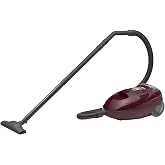
CV-W1600 vs Modern Cordless Stick Vacuums
This is perhaps the most important modern comparison.
A cordless stick vacuum offers immediate grab-and-go convenience, but its battery runtime limits how long it can operate before recharging. The CV-W1600 has no battery to recharge; as long as it has access to mains electricity, it can continue cleaning.
The Hitachi also provides a much larger 5L dust capacity than many compact cordless machines. On the other hand, a cordless stick is lighter to pick up for small jobs and eliminates the need to manage a power cable.
Neither approach is universally superior.
A cordless model is better for quick daily maintenance. The Hitachi is better suited to sustained cleaning sessions where capacity and continuous operation matter.
Bottom Line: The CV-W1600 trades cordless convenience for large capacity and continuous corded operation, making it a sensible choice for whole-home cleaning rather than quick spot cleaning.
Overall Bottom Line
The Hitachi CV-W1600 succeeds because it does not try to be something it isn’t. It is not a robotic vacuum, smart vacuum, or autonomous cleaner. There is no LiDAR navigation, SLAM mapping, AI obstacle avoidance, multi-floor mapping, or smart-home integration.
Instead, its engineering priorities are straightforward: 1600W maximum motor power, 5L dust capacity, cloth filtration, suction control, blower function, automatic cord rewind, and a practical cylinder format.
For a buyer who wants a traditional vacuum that can run continuously and handle larger cleaning sessions without constantly emptying a small dust bin, those characteristics remain highly relevant.
The strongest reason to buy it is therefore not the 1600W number by itself. It is the overall combination of capacity, corded endurance, manual control, and multi-purpose attachments.
Pros
- 1600W maximum motor power
- 5L dust capacity
- Bagless cylinder design
- Cloth filter
- Suction control
- Blower function
- Automatic cord reel
- Twist-free hose
- Dust indicator
- Multiple cleaning attachments
- 4.3kg net weight
Cons
- Corded rather than cordless
- No battery-powered convenience
- No robotic navigation
- No LiDAR or SLAM
- No smart-home integration
- No published CFM airflow or Water Lift measurements
- Cloth filtration requires regular maintenance
- Do not assume HEPA efficiency without model-specific certification
Current Pakistani listings also show substantial price variation: one retailer currently lists the CV-W1600 around Rs. 12,399, while other listings are considerably higher. That makes warranty, seller reputation, authenticity, and included accessories important parts of the buying decision rather than relying on one advertised price.
Buyer’s Intent — Is the Hitachi CV-W1600 Worth Buying?
After looking at the design, cleaning performance, filtration, accessories, and everyday usability, the CV-W1600 becomes easier to evaluate from a buyer’s perspective. Its appeal is less about modern automation and more about providing a straightforward corded canister vacuum with a large dust capacity and useful cleaning accessories.
The 1600W maximum motor power, 5L dust capacity, suction control, blower function, and automatic cord rewind make it a practical option for conventional household cleaning. It is particularly relevant to buyers who prefer a vacuum that can continue operating without worrying about battery runtime.
At the same time, shoppers should understand what they are giving up. This is not a robot vacuum system, cordless stick vacuum, or smart vacuum. It does not provide LiDAR navigation, SLAM mapping, AI obstacle avoidance, multi-floor mapping, or smart home integration.
Bottom Line: The CV-W1600 is primarily a capacity-and-versatility purchase, not a technology-focused vacuum.
Best For
The CV-W1600 makes the most sense for large homes where cleaning sessions can take longer and a small dust bin would become inconvenient.
Its 5L dust capacity is particularly useful because users can clean a larger area before needing to empty the dust container. That does not mean the container should always be filled to maximum capacity; maintaining good airflow remains important for cleaning performance.
It is also a strong match for hard-floor households. Tile, marble, laminate, and similar surfaces are well suited to the conventional canister format and included floor nozzle.
Buyers who prefer a corded vacuum cleaner may also appreciate the unlimited operating time available from mains power. Unlike a cordless machine, there is no battery to recharge between cleaning sessions.
The blower function adds another layer of versatility. If you regularly clean balconies, entrances, corners, or other areas where loose debris needs to be moved before collection, having vacuum and blower functionality in one machine can be convenient.
Finally, traditional vacuum buyers who prefer physical controls, a hose, wand, and replaceable/cleanable components may find this design more intuitive than an autonomous cleaner.
Bottom Line: The best match is a buyer who wants large capacity, continuous corded operation, hard-floor cleaning, and blower functionality in a conventional canister design.
Not Ideal For
The CV-W1600 is not the right choice for someone whose primary requirement is cordless convenience. A modern cordless stick vacuum is easier to grab for quick spills and does not require a power cable to follow you around.
It is also not the obvious choice for buyers specifically seeking certified HEPA filtration. The available documentation describes the model’s filtration system, including cloth and multi-stage filtration, but that should not automatically be interpreted as certified HEPA efficiency.
Homes with a lot of thick carpet may also benefit from a vacuum equipped with a motorized carpet brush. The CV-W1600’s conventional floor/rug nozzle can handle everyday surface debris, but it does not offer the same mechanical agitation as a powered brush head.
Technology-focused buyers should look elsewhere as well. There is no autonomous navigation, smartphone-controlled cleaning, LiDAR navigation, SLAM mapping, AI obstacle recognition, or smart-home integration.
Likewise, if your priority is ultra-portable spot cleaning, a compact handheld or lightweight cordless vacuum will generally be easier to pick up and use.
Bottom Line: Skip the CV-W1600 if your priorities are cordless portability, certified HEPA filtration, powered carpet agitation, or smart automation.
Price-to-Performance Assessment
The CV-W1600’s value is strongly influenced by where you purchase it. Pakistani listings can vary substantially depending on retailer, stock availability, warranty coverage, and seller.
Rather than treating one listing as the permanent price, buyers should compare several current offers and investigate exactly what is included. A low advertised price is not automatically the best deal if the product has questionable warranty support or missing accessories.
A reasonable value assessment should consider four things: the vacuum’s selling price, warranty, included attachments, and seller reliability. The cheapest listing may not provide the best long-term ownership experience.
Price should also be compared with competing canister and cordless models available at the same time. If a newer machine offers substantially better filtration, accessories, or warranty for only a small premium, paying slightly more could make sense.
Conversely, if the CV-W1600 is significantly cheaper while still meeting your cleaning requirements, its simple design and large 5L capacity can make it attractive.
Bottom Line: Don’t judge the CV-W1600 by price alone; compare price + warranty + authenticity + accessories + after-sales support.
Final Buying Recommendation
Buy it if:
You want a traditional corded canister vacuum with a 1600W maximum motor rating, large 5L dust capacity, suction control, multiple cleaning tools, and a blower function. It is especially sensible for larger homes and predominantly hard-floor environments.
Consider it if:
You want a straightforward bagless vacuum and don’t need app controls, autonomous cleaning, or cordless operation. The large dust container can be a meaningful advantage for frequent whole-home cleaning.
Skip it if:
Your priorities are cordless convenience, verified HEPA filtration, powered carpet cleaning, or advanced smart-vacuum technology.
Bottom Line: For the right buyer, the CV-W1600 is a practical workhorse rather than a feature-packed modern appliance.
Hitachi CV-W1600 Pros & Cons — Real-World Value
The strongest way to judge this vacuum is to separate its measurable specifications from features that sound impressive but may not translate directly into cleaning performance.
Our findings point toward a machine designed around capacity and conventional cleaning flexibility. The 5L dust capacity is unusually useful for buyers who dislike frequent emptying, while the blower and multiple attachments broaden the machine’s role beyond basic floor cleaning.
The trade-off is its traditional architecture. There is no battery-powered operation, autonomous navigation, smart application, or powered carpet head listed in the core specification.
Bottom Line: The CV-W1600’s value comes from practical hardware rather than advanced software or automation.
Major Advantages
1600W maximum motor rating: The high maximum motor input provides a strong headline specification, although it should not be confused with a standardized suction measurement such as CFM airflow or Water Lift (inches).
5L dust capacity: This is one of the clearest practical advantages. A larger dust container means fewer interruptions during larger cleaning sessions.
Bagless design: The machine does not depend on disposable vacuum bags, although the cloth filter and other components still require regular maintenance.
Blower function: The ability to switch from vacuuming to blowing gives the machine additional utility for loose debris in suitable areas.
Automatic cord rewind: The automatic cord reel makes storage considerably easier after cleaning.
Twist-free hose: This helps reduce hose twisting during normal operation and contributes to easier maneuverability.
Multiple cleaning tools: The combination of floor, dusting, and crevice accessories allows the machine to handle floors, furniture, shelves, corners, and other surfaces.
4.3kg listed weight: For a conventional canister vacuum, the published 4.3kg net weight is reasonably manageable, although the user does not carry the entire machine continuously because the canister rolls behind them.
Bottom Line: The biggest strengths are capacity, continuous corded operation, versatile attachments, and straightforward controls.
Important Limitations
Corded operation: The power cable provides continuous operation but reduces grab-and-go convenience compared with cordless vacuums.
Cloth filter maintenance: The reusable filtration system needs regular cleaning. Neglecting the filter can restrict airflow and reduce performance.
No clear HEPA certification: The documented filtration system should not automatically be described as HEPA efficiency unless the exact regional model documentation confirms it.
No smart controls: There is no indication that this model supports smartphone controls, automated scheduling, or smart-home integration.
No motorized brush listed: Buyers with thick carpets or heavy embedded pet hair may prefer a machine with an electrically powered cleaning head.
Specification variations: Retail listings can sometimes disagree on technical details. For an authoritative review, manufacturer documentation should take precedence over marketplace descriptions.
Bottom Line: The CV-W1600’s limitations mainly affect buyers seeking cordless convenience, advanced filtration certification, smart features, or specialized carpet cleaning.
Who Gets the Most Value?
Family households are likely to benefit from the large dust container because frequent cleaning produces more debris than occasional apartment spot cleaning.
Hard-floor users are another strong match. The conventional floor nozzle and continuous corded operation make the machine well suited to cleaning larger areas of tile, marble, laminate, and similar surfaces.
Traditional vacuum buyers may also appreciate the lack of unnecessary complexity. Instead of learning an app or maintaining charging docks, the user plugs in the machine, selects the appropriate suction level, attaches the required tool, and starts cleaning.
Large-area cleaners can benefit from the 5L capacity and continuous mains-powered operation. There is no battery runtime limitation, making the machine suitable for longer cleaning sessions.
Finally, users who specifically need a blower function receive additional value because they do not need a separate appliance for light dust-blowing tasks.
Bottom Line: The strongest value proposition is for families, hard-floor households, large-area cleaners, and buyers who prefer traditional corded appliances.
Overall Rating
| Category | Rating | Assessment |
|---|---|---|
| Suction | 8/10 | Strong motor rating, but no standardized CFM/Water Lift data |
| Hard-Floor Cleaning | 8.5/10 | Good fit for conventional floor cleaning |
| Carpet Cleaning | 7/10 | Basic rug capability; no powered brush listed |
| Filtration | 7/10 | Multi-stage/cloth filtration, but no verified HEPA claim |
| Capacity | 9.5/10 | Excellent 5L capacity |
| Maneuverability | 8/10 | Practical canister format and twist-free hose |
| Maintenance | 7.5/10 | Reusable filtration but requires regular care |
| Value | 8/10 | Strong when priced competitively |
Overall: 8.0/10
The rating reflects the machine’s intended role rather than comparing it directly with premium cordless or robotic vacuums. A robot vacuum with LiDAR navigation, SLAM mapping, AI obstacle avoidance, and multi-floor mapping is solving a different problem.
Bottom Line: The CV-W1600 earns its strongest scores for capacity and conventional floor cleaning, while technology and advanced filtration are not its selling points.
Hitachi CV-W1600 FAQs — People Also Ask
How powerful is the Hitachi CV-W1600 vacuum cleaner?
The CV-W1600 has a 1600W maximum motor power rating. However, motor wattage measures electrical input rather than directly measuring suction. Actual cleaning performance also depends on airflow, pressure, nozzle design, filtration, and hose configuration.
Because Hitachi does not provide a standardized CFM airflow or Water Lift (inches) measurement for this model in the cited specification, the 1600W number should not be presented as an exact suction measurement.
Bottom Line: It has a 1600W maximum motor rating, but watts alone do not determine suction performance.
Does the Hitachi CV-W1600 have a HEPA filter?
The documented CV-W1600 filtration system includes a cloth filter, with some regional Hitachi documentation describing 7-stage filtration. However, buyers should not automatically interpret multi-stage filtration as certified HEPA efficiency.
HEPA is a specific filtration standard, while a stage count describes how filtration is arranged within the appliance.
Bottom Line: Do not call the CV-W1600 a HEPA vacuum unless the documentation for your exact regional model explicitly confirms HEPA certification.
Is the Hitachi CV-W1600 bagless?
Yes. The CV-W1600 is a bagless cylinder/canister vacuum and uses a large 5L dust capacity rather than a conventional disposable dust bag.
The bagless design can reduce ongoing bag purchases, but it does not eliminate maintenance. The cloth filter and dust-collection components still need to be cleaned regularly to maintain proper airflow.
Bottom Line: Yes, it is a 5L bagless vacuum, with reusable filtration that requires routine maintenance.
How big is the Hitachi CV-W1600 dust container?
The Hitachi CV-W1600 has a 5-liter dust capacity. This is one of its strongest practical features because the large container can reduce the frequency of emptying during whole-home cleaning.
However, maximum capacity should not be confused with the ideal fill level. If dust accumulation begins restricting airflow or the dust indicator signals that maintenance is needed, the container should be serviced.
Bottom Line: The CV-W1600 provides a 5L dust capacity, making it particularly suitable for larger cleaning sessions.
Does the Hitachi CV-W1600 have a blower function?
Yes. The CV-W1600 includes a blower function, allowing the machine to move loose debris instead of only collecting it through suction.
This can be useful around suitable outdoor or semi-outdoor areas such as entrances and balconies, although blowing fine dust indoors can simply redistribute particles.
Bottom Line: Yes, the blower function adds useful versatility beyond normal vacuum cleaning.
Is the Hitachi CV-W1600 good for carpets?
It can clean rugs and carpets using its rug-floor nozzle, but it is better suited to general surface cleaning than deep carpet agitation.
Because a motorized carpet brush is not listed among the standard tools, buyers with thick carpets, deeply embedded dirt, or heavy pet hair may prefer a vacuum with a powered brush head.
Bottom Line: It is suitable for light-to-moderate carpet and rug cleaning, but specialized carpet users may want a powered brush system.
How do you clean the Hitachi CV-W1600 filter?
Start by switching the vacuum off and disconnecting it from power. Remove the relevant filter component, clear accumulated dust, and clean it according to the manufacturer’s instructions.
If the filter is washable, it must be allowed to dry completely before being reinstalled. Operating a vacuum with a wet filter can damage the appliance and interfere with airflow.
Bottom Line: Regular filter maintenance is essential because a clogged filter can reduce airflow and cleaning performance.
Why has my Hitachi CV-W1600 lost suction?
Start with the simplest possibilities: check whether the 5L dust container needs emptying, inspect the cloth filter, and look for blockages in the hose, extension pipe, or floor nozzle.
If airflow remains weak after those checks, inspect the connections for air leakage and make sure all components are correctly assembled.
Bottom Line: Most sudden suction problems should first be investigated through the dust container, filter, hose, nozzle, and airflow path.
Is the Hitachi CV-W1600 good for home use?
Yes. Its combination of 1600W maximum motor power, 5L dust capacity, conventional floor nozzle, attachments, suction control, and blower function makes it suitable for general household cleaning.
It is especially appealing for homes with hard floors and users who prefer continuous corded operation.
Bottom Line: The CV-W1600 is a good fit for general household cleaning, particularly in medium-to-large homes with predominantly hard floors.
What is the Hitachi CV-W1600 price?
The price can vary considerably by country, retailer, stock availability, warranty, and seller. For that reason, a current market range is more useful than presenting one permanent price.
When comparing offers, check whether the listing is for the genuine CV-W1600, whether all original accessories are included, and whether the seller provides meaningful warranty or after-sales support.
Bottom Line: Treat the price as a market-dependent figure and compare the complete purchase package rather than choosing the cheapest listing.
Is the Hitachi CV-W1600 worth buying?
It is worth considering if you want a conventional 5L bagless canister vacuum, continuous corded operation, suction control, and a blower function.
It is less suitable if you want cordless convenience, certified HEPA filtration, smart controls, or autonomous cleaning technology.