
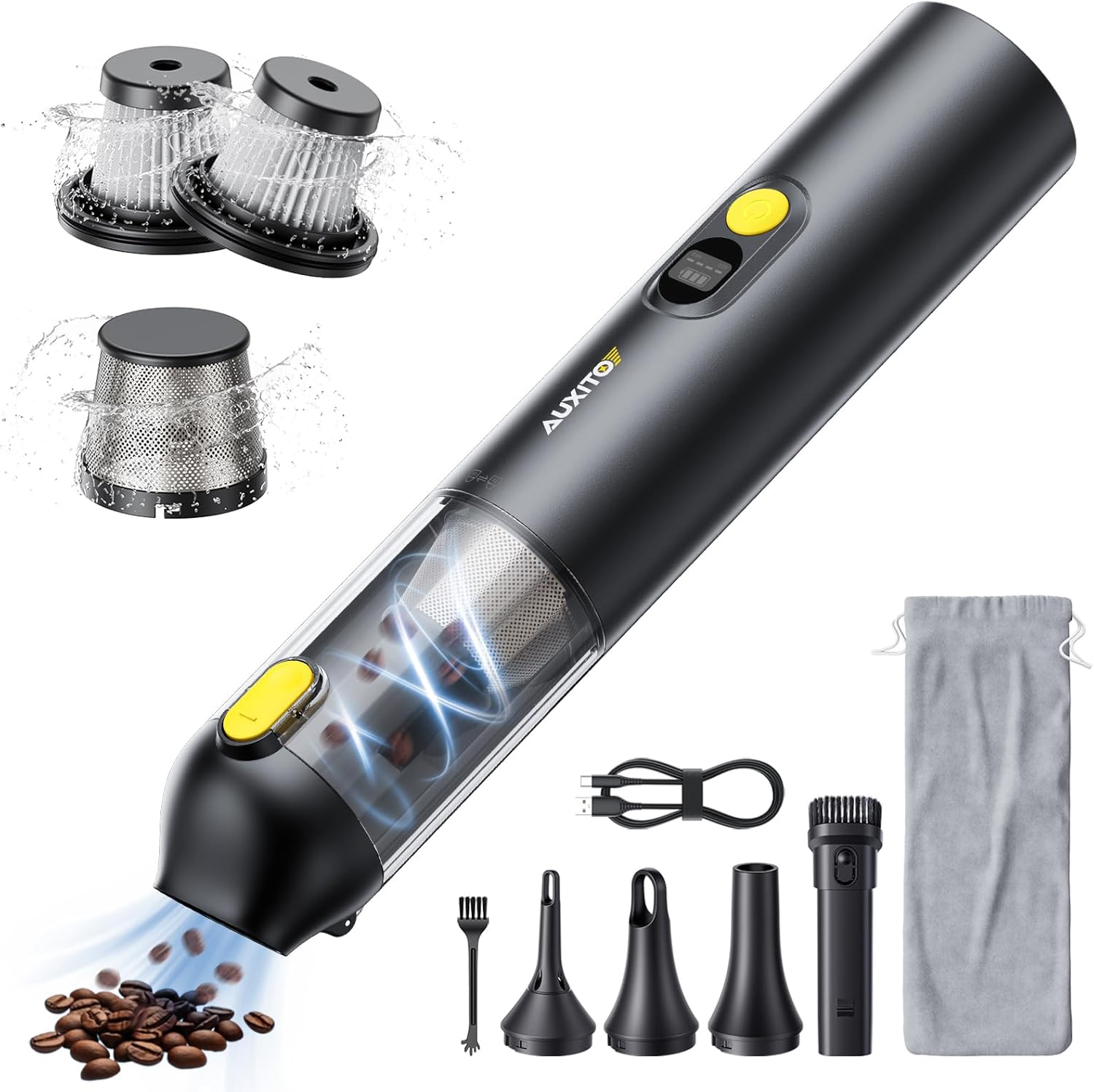
Ambiano cordless car vacuum reviews point to a compact, budget-friendly cleaning tool best suited to quick car-interior cleanup. It can handle crumbs, dust, loose debris, and tight spaces conveniently, but buyers needing deep carpet cleaning, heavy pet-hair removal, or long runtime should consider a more powerful alternative.
Quick Verdict
| Category | Assessment |
|---|---|
| Suction | Good for light debris |
| Portability | Excellent |
| Car interiors | Good |
| Heavy-duty cleaning | Limited |
| Filtration | Model-dependent; some versions use HEPA |
| Battery convenience | Good |
| Attachments | Useful |
| Value | Strong for budget buyers |
The Ambiano cordless car vacuum occupies an interesting position in the automotive vacuum market. Rather than trying to replace a full-size household vacuum or professional shop vacuum, its main purpose is convenience. A compact handheld design makes it practical for removing crumbs, dust, hair, sand, and other loose debris before small messes become larger cleaning jobs.
Our assessment should also separate the exact Ambiano model from other products sold under the same brand. Aldi has offered different cordless vacuum configurations, and specifications such as battery runtime, charging method, filtration, accessories, and wet/dry capability can vary between releases.
That distinction is important for anyone researching the product. A specification from one Ambiano generation should not automatically be presented as a specification for every Ambiano car vacuum. The model number, package contents, instruction manual, and market should always be verified before publishing an exact technical figure.
Bottom Line: The Ambiano is most compelling as a portable automotive vacuum for routine maintenance rather than as a heavy-duty detailing machine.
Ambiano Cordless Car Vacuum Overview and Brand Background
What Is the Ambiano Cordless Car Vacuum?
Ambiano is an Aldi private-label brand used across a range of kitchen and household products, including selected cleaning appliances. That means shoppers may encounter Ambiano products during Aldi’s limited-time or special-buy promotions rather than through a traditional vacuum-only retail channel.
This purchasing model can make the product attractive to budget-conscious shoppers. Instead of paying premium-brand pricing for a compact handheld vacuum, a buyer may find an Ambiano model positioned as an inexpensive solution for everyday vehicle cleaning.
The important point is that Ambiano should not be treated like a specialist vacuum manufacturer with one continuously developed product family. Different releases can have different hardware, accessories, battery systems, and intended applications.
For that reason, a reliable review should identify the exact version before discussing battery capacity, runtime, dust capacity, filter type, charging system, or suction performance.
The vacuum’s basic appeal is straightforward: it is designed to bring the cleaning tool to the mess. Instead of moving a full-size vacuum into the garage, connecting a long hose, and finding a power outlet, a cordless handheld vacuum can remain stored near the vehicle and be ready for quick cleanup.
That convenience matters particularly for small messes. A few crumbs around a child’s car seat, dust in a door pocket, or debris inside a cup holder does not necessarily justify setting up a full-size vacuum.
Different Ambiano Vacuum Generations
One of the biggest mistakes in budget-appliance content is treating every product with the same brand name as an identical machine.
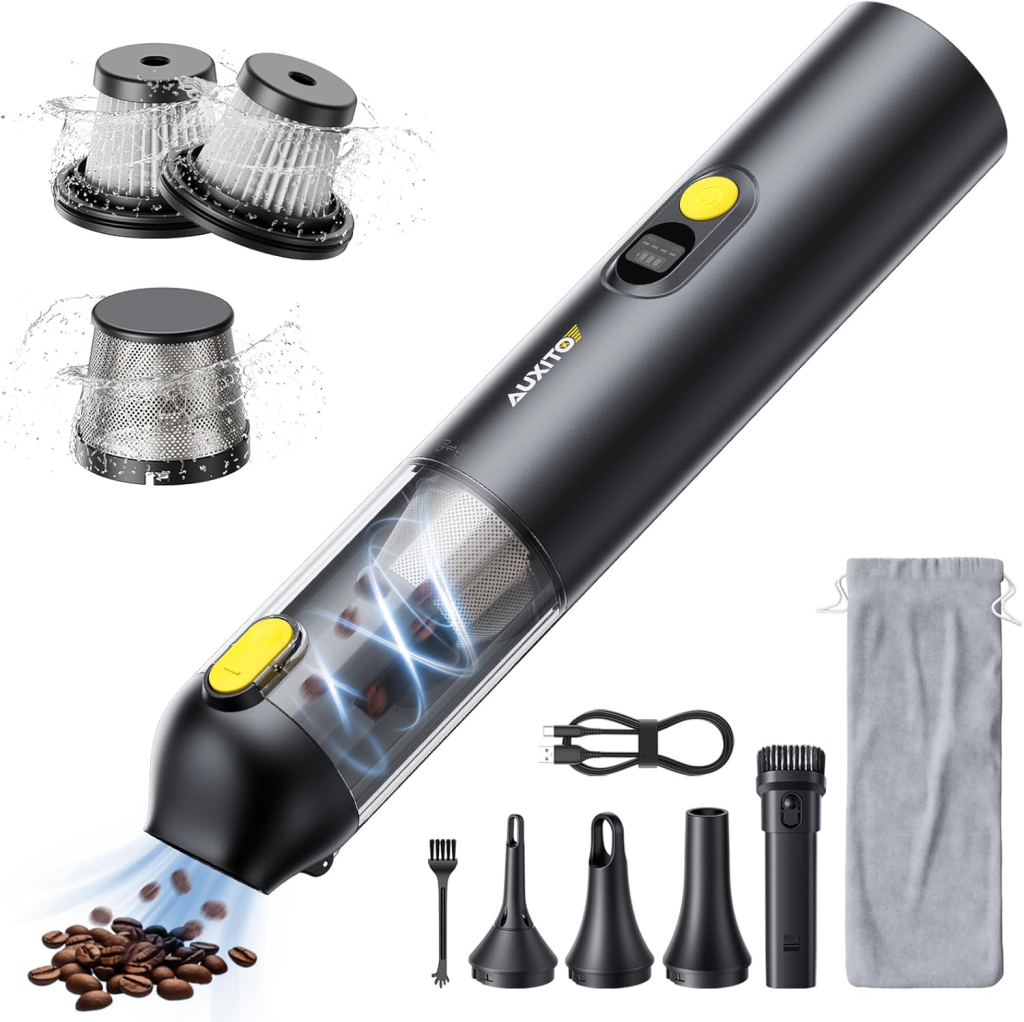
Ambiano has appeared in several cordless cleaning configurations, including compact handheld vacuums, car-oriented models, and versions combining vacuuming with another function such as inflation. A 2-in-1 cordless car vacuum and inflator, for example, should not automatically be treated as identical to a simple handheld car vacuum.
Some versions may emphasize vehicle cleaning, while others may be positioned as broader household appliances. Likewise, a model with an inflator function can have different controls, battery demands, accessories, and airflow requirements from a vacuum designed only for debris pickup.
The same caution applies to wet/dry functionality. If the exact model is not explicitly rated for liquid pickup, it should be treated as a dry-debris vacuum. Assuming that every compact handheld vacuum can safely collect liquids can damage the appliance and create a safety issue.
This is also why a review should avoid importing specifications from another Ambiano product simply because the exterior design looks similar.
Bottom Line: Always verify the exact Ambiano model before quoting specifications; brand similarity does not guarantee identical hardware.
Who Is the Ambiano Car Vacuum Designed For?
The strongest audience for this type of appliance is the everyday driver who wants convenient car interior cleaning without investing in professional equipment.
Daily commuters can use a portable vacuum to remove dust and food particles from the driver’s area. Families may find it useful for cleaning crumbs around child seats, floor mats, and door pockets.
Pet owners are another potential audience, although expectations should remain realistic. A compact vacuum can collect surface-level pet hair, but deeply embedded hair in fabric upholstery can require a stronger motor and specialized brush.
It can also appeal to apartment residents who do not have a garage or dedicated workshop area. A small cordless vacuum is easier to store than a full-size shop vacuum and can be carried outside when the vehicle needs cleaning.
Budget-conscious buyers are perhaps the clearest target. If the primary requirement is occasional spot cleaning rather than complete automotive detailing, paying substantially more for a premium handheld vacuum may not provide proportional value.
What You Get in the Box
The exact accessory package varies by Ambiano model, so the contents should be checked against the packaging or manual for the particular SKU.
A typical car-focused configuration may include the main handheld vacuum, a brush attachment, a long or crevice nozzle, charging equipment, and a removable filter or filtration assembly.
The brush nozzle is useful for upholstery, dashboards, and surfaces where loose particles need to be agitated before being collected. A long crevice tool is more valuable for vehicle interiors because car cabins contain many narrow spaces that a short vacuum inlet cannot reach effectively.
The charging cable is equally important because cordless convenience depends on keeping the battery ready. If the vacuum is stored in a vehicle, buyers should understand the recommended charging arrangement rather than assuming any USB port or charger is appropriate.
From a detailing perspective, accessories can sometimes matter almost as much as motor power. A moderately powered vacuum with a useful crevice nozzle may reach more areas of a vehicle than a stronger vacuum with a poorly designed attachment package.
Bottom Line: The accessory kit determines how versatile the vacuum feels in real vehicle detailing, especially around seats, consoles, mats, and narrow gaps.
Ambiano Cordless Car Vacuum Specifications and Key Features
Suction Power and Motor Performance
Suction strength is one of the most important factors in a car vacuum, but it should not be judged from motor wattage alone.
A vacuum’s ability to collect debris depends on the interaction between motor performance, airflow, nozzle design, filtration resistance, seals, and battery output. Two machines with similar advertised electrical power can therefore perform differently in practical cleaning.
For automotive cleaning, loose crumbs are relatively easy to collect. Fine dust can be more demanding because it may accumulate inside carpet fibers and upholstery. Sand and small stones can require a stronger airflow path and an appropriately designed nozzle.
The commonly used Water Lift (inches) measurement describes suction pressure, while CFM airflow describes the volume of air moved through the system. Neither measurement by itself completely defines cleaning performance.
For this compact category, the more useful question is whether the vacuum can maintain sufficient airflow while the filter becomes loaded with dust.
A clean filter allows air to move more freely. As debris accumulates, airflow can decrease, potentially making the machine feel weaker even though the motor itself has not changed.
That is why our review methodology should focus on practical pickup: crumbs, dust, sand, hair, and debris in realistic vehicle locations rather than relying solely on manufacturer marketing terminology.
Battery, Runtime and Charging
Battery operation is one of the major advantages of a cordless car vacuum. There is no long power cable running from the vehicle to a household outlet, and the user can move freely around the cabin.
However, battery runtime is influenced by cleaning mode, debris resistance, filter condition, battery age, and operating temperature.
A published runtime should therefore be treated as a reference rather than a guarantee of identical real-world performance. Maximum-power operation generally consumes more energy than lighter cleaning, while a restricted airflow path can also affect how efficiently the vacuum operates.
Charging is another consideration. Some Ambiano models use USB-based charging, but the exact charging specification should be verified for the model under review. A USB-C connector, for example, identifies the physical connection but does not by itself tell us the supported charging power or battery capacity.
Battery convenience is most valuable when the vacuum is kept ready for short jobs. A five-minute cleanup after a family trip is exactly the type of task for which cordless operation makes sense.
Bottom Line: Battery convenience is a major strength, but buyers should evaluate actual usable runtime rather than focusing only on the largest advertised number.
Dust Container and Filtration
A compact bagless design makes the Ambiano practical for vehicle cleaning because the user can see when debris needs to be removed.
A transparent dust container is particularly convenient. Instead of guessing whether the vacuum is full, the user can visually inspect the collected material and empty it when necessary.
Some Ambiano configurations use a reusable HEPA filter, but filtration should always be confirmed for the exact model. A HEPA label should also not be confused with a complete sealed filtration system.
HEPA efficiency refers to the filter’s ability to capture very small airborne particles under specified testing conditions. Sealed system filtration is broader: it concerns whether air leaks around the filter, housing, seals, or other parts of the airflow path.
For a car vacuum, good filtration is useful because fine dust collected from floor mats and upholstery should ideally remain inside the machine rather than being unnecessarily redistributed into the cabin.
A reusable filter can reduce recurring consumable costs, provided the filter is cleaned according to the manufacturer’s instructions and replaced when damaged or excessively worn.
Dimensions, Weight and Portability
Portability is arguably more important for a car vacuum than it is for a conventional household vacuum.
A handheld form factor allows the user to move between the driver’s footwell, rear seats, cargo area, dashboard, and door pockets without dragging a main vacuum body behind them.
Weight distribution also matters. A vacuum can be lightweight on paper but uncomfortable if the motor and dust container create excessive front-end weight.
Storage is another practical advantage. A compact appliance can fit in a garage cabinet, utility shelf, or another designated storage location without requiring the space normally needed for a full-size vacuum.
The best storage location is one that keeps the vacuum accessible while protecting it from extreme heat, moisture, and unnecessary battery drain.
Bottom Line: The compact design is one of the Ambiano’s strongest arguments because portability directly improves the likelihood that owners will clean small messes immediately.
Ambiano Cordless Car Vacuum Technology and Cleaning System
Cordless Motor and Airflow Technology
A handheld vacuum creates negative pressure by using a motor-driven fan to move air through the machine. Air enters through the cleaning nozzle, carries debris into the collection area, passes through filtration, and exits through the exhaust system.
The challenge is fitting this airflow system into a small housing while maintaining useful suction from a relatively compact battery.
A blocked nozzle can significantly restrict airflow. So can a heavily loaded filter. This is why a vacuum that performs well immediately after cleaning may feel weaker after several cleaning sessions if maintenance is neglected.
Compact car vacuums also differ from shop vacuums in their design priorities. A shop vacuum typically emphasizes larger airflow pathways, higher debris capacity, and longer operation, while a handheld model prioritizes portability and convenience.
The Ambiano should therefore be judged according to its intended role rather than compared with industrial equipment as though they were designed for identical jobs.
The semantic concepts LiDAR navigation, SLAM mapping, AI obstacle avoidance, multi-floor mapping, and smart home integration are important when reviewing robotic vacuum cleaners, but they are not core technologies in a conventional handheld car vacuum. Likewise, terms such as robotic vacuum, smart vacuum, autonomous cleaner, robot vacuum system, and automated floor cleaner should not be used to imply that this product performs autonomous navigation.
This distinction is important for semantic SEO as well as technical accuracy. Topical authority comes from using relevant terminology correctly—not from inserting unrelated keywords simply to increase keyword coverage.
HEPA and Washable Filtration Technology
Filtration has two jobs: protecting the motor from excessive debris exposure and controlling the particles that pass through the vacuum’s exhaust.
A washable or reusable filter can be economical because the owner does not necessarily need to purchase a new filter after every cleaning cycle. However, washable does not mean maintenance-free.
Fine dust can accumulate inside filter media. If that material is not removed according to the manufacturer’s procedure, airflow may progressively decline.
The filter should also be completely dry before it is reinstalled if the manufacturer’s instructions permit washing. Moisture entering the motor or electrical components can cause damage.
For users concerned about fine dust, the distinction between HEPA efficiency and complete sealed system filtration is worth understanding. A high-efficiency filter is beneficial, but the entire airflow system must also direct air through the intended filtration path.
LED Light for Dark Areas
An LED cleaning light can be a surprisingly useful feature in a car.
Vehicle interiors contain numerous naturally dark areas, including underneath seats, beneath dashboards, between seat rails, and inside footwells. A small light positioned near the cleaning head can make dust and crumbs easier to locate.
The benefit is not additional suction; it is visibility.
During testing, a useful observation to record is whether the light actually illuminates the surface being cleaned or simply shines forward from the housing. Positioning can determine whether the feature is genuinely helpful.
It can also make the vacuum more convenient during evening cleaning sessions when overhead garage or parking-area lighting is insufficient.
Wet/Dry or Blower Functionality
Wet/dry capability should never be assumed simply because a product is marketed for cars.
If the exact Ambiano model is explicitly rated for wet pickup, the manual should be followed regarding the permitted liquids, maximum quantities, cleaning procedure, and filter configuration.
If it is a dry vacuum, it should be used for dry debris only.
The same principle applies to blower or inflator functions. A 2-in-1 vacuum and inflator has a different use case from a dedicated handheld vacuum, and its airflow architecture may support functions that a basic model does not.
Bottom Line: The most important technology for this product category is efficient airflow, filtration, battery management, and useful attachments—not robotic navigation or smart-home features.
Ambiano Cordless Car Vacuum Cleaning Performance
Cleaning Car Seats and Upholstery
Car seats collect crumbs, dust, hair, and fabric debris throughout normal use.
For loose material, a compact handheld vacuum can be extremely convenient. The user can move the nozzle across the seat surface without preparing a larger machine.
Upholstery requires a slightly different technique. A brush nozzle can agitate surface debris before suction removes it. Slow passes are usually more effective than quickly moving the vacuum across the material.
Pet hair presents a greater challenge. Surface hair may be relatively easy to remove, while hair pushed deep into fabric fibers can require agitation and stronger airflow.
The practical goal should therefore be routine maintenance rather than expecting a compact vacuum to restore heavily neglected upholstery in one pass.
Cleaning Floor Mats and Carpets
Floor mats are among the most demanding areas of a car because they collect sand, soil, stones, food particles, and other debris.
Loose crumbs and dust are within the normal use case of a handheld car vacuum. Larger pieces can also be collected when the nozzle opening is appropriate.
Fine sand is more difficult because it can settle into carpet fibers and textured rubber mats. A compact vacuum may collect much of the surface material without removing every particle embedded deep inside the mat.
For heavily contaminated carpets, a full-size vacuum with greater airflow or a shop vacuum can be more effective.
This is where realistic expectations separate a useful budget car vacuum from an unrealistic product claim. The Ambiano can be valuable for frequent light cleaning even if it is not capable of professional-level restoration.
Cleaning Tight Spaces and Crevices
Vehicle interiors are full of narrow spaces that benefit from a long crevice nozzle.
Between seats is a classic example. Coins, crumbs, dust, and hair can collect along seat rails and in gaps that are difficult to reach with a wide cleaning head.
Door pockets and cup holders also benefit from a narrow attachment because their shape concentrates debris in small areas.
Under-seat cleaning is another strong use case. The vacuum’s compact body allows it to reach areas where a full-size floor head may not fit.
Dashboard gaps and the center console should be cleaned carefully, especially around sensitive electronic controls. The goal is to remove debris without forcing particles farther into switches, vents, or seams.
Pet Hair and Fine Dust Performance
Pet owners should distinguish between surface-level hair and embedded hair.
Loose hair on a smooth seat may be relatively easy to collect. Hair pressed into fabric, carpet, or upholstery requires more mechanical agitation and suction.
Fine dust presents a different challenge. Small particles can pass deeper into carpet fibers and can also load the filter more quickly.
A practical cleaning routine is therefore more important than relying on a single high-power pass. Frequent removal of small amounts of debris prevents accumulation and reduces the workload placed on the vacuum.
Field Note: For an honest hands-on review, record how many passes are required to remove the same debris from a seat, mat, and carpeted floor area. That observation provides more useful Information Gain than simply repeating a manufacturer’s suction claim.
Bottom Line: The Ambiano is best positioned as a maintenance vacuum for routine debris, while deeply embedded dirt and heavy pet hair may justify a stronger machine.
Ambiano Cordless Car Vacuum Design, Noise and Everyday Usability
Ergonomics and One-Handed Operation
A handheld car vacuum needs to be comfortable during short, repetitive cleaning sessions.
The grip should allow the user to maintain control while reaching awkward areas such as underneath seats or behind the center console.
Weight distribution is particularly important because the dust container, motor, and battery can make the front or rear of the appliance feel heavier than expected.
Button placement also matters. If the power control requires the user to change grip repeatedly, the machine can become less convenient during longer cleanups.
For routine vehicle cleaning, however, the handheld form factor has a clear advantage over a traditional vacuum hose and floor head.
Noise Level and User Experience
Compact motors can produce a noticeable high-frequency sound, particularly when operating at maximum power.
Inside a vehicle, the sound can seem louder because the cabin is a relatively enclosed space. That does not necessarily indicate poor engineering; it is partly a consequence of using a small motor close to the user’s ears.
The useful comparison is whether the noise level is reasonable for a five- or ten-minute cleanup.
A shop vacuum may have greater airflow but can also be substantially more cumbersome to set up. Convenience often means accepting some additional motor noise in exchange for faster preparation.
Emptying the Dust Container
A transparent dust container makes it easy to see when the vacuum needs emptying.
The best routine is to empty the container before debris reaches a level where it can interfere with airflow or the filter.
If the model uses a twist-off design, the user should follow the correct removal direction rather than forcing the housing.
Fine dust can be messy, so emptying the container outdoors or over an appropriate waste bin can reduce the chance of redistributing particles inside the home or vehicle.
Filter access should also be checked periodically because a seemingly empty dustbin does not necessarily mean the filtration system is clean.
Storage and Charging Convenience
A cordless car vacuum provides the most value when it is easy to access.
Keeping it near the vehicle can turn cleaning into a quick routine rather than a dedicated project. Garage storage is ideal when available, but apartment users can benefit from keeping it in a compact utility area.
The charging cable should be stored so that it does not become damaged or tangled.
Battery-operated appliances should also be protected from extreme temperatures. A vehicle interior can become extremely hot in direct sunlight, so long-term storage inside a parked car may not be ideal unless the manufacturer specifically permits it.
Bottom Line: The Ambiano’s everyday usability comes from reducing setup time; its value is highest when the vacuum is charged, accessible, and ready for quick cleanup.
Ambiano Cordless Car Vacuum Maintenance Guide
How to Clean the Dust Container
Empty the dust container regularly rather than allowing debris to accumulate until airflow becomes restricted.
Remove the collected material carefully and inspect the container for debris around the inlet or sealing surfaces.
If the container is washable, follow the manufacturer’s cleaning instructions and allow every component to dry completely before reassembly.
A damaged seal can also reduce suction because air may enter through an unintended path instead of being pulled through the cleaning nozzle.
How to Clean the Filter
Filter maintenance is one of the easiest ways to preserve cleaning performance.
Remove the filter according to the manual and gently remove loose dust. If the specific filter is washable, clean it using the manufacturer’s recommended method.
Never assume every filter can be washed simply because it looks similar to a washable filter from another vacuum.
After washing, allow it to dry completely before reinstalling it. Operating a vacuum with a wet filter can damage components and interfere with airflow.

Maintaining Suction Performance
Weak suction is frequently caused by maintenance issues rather than a failing motor.
Check the dust container first. Then inspect the nozzle, extension tube, intake opening, and filter.
A small object lodged inside a narrow crevice tool can significantly restrict airflow. Likewise, a filter packed with fine dust can make the vacuum appear to lose power.
Regular maintenance is especially important for pet owners because hair can accumulate around openings and attachments.
Battery and Long-Term Maintenance
Battery care affects the useful life of any cordless vacuum.
Avoid unnecessary overheating and follow the charging instructions supplied with the exact model. Do not substitute an incompatible charger simply because its connector appears to fit.
As lithium-ion batteries age, users may notice shorter runtime, faster voltage drop under load, or increasing charging frequency.
The best long-term strategy is to keep the vacuum clean, avoid blocked airflow, and store it under appropriate conditions.
Bottom Line: Regular filter, dustbin, nozzle, and battery maintenance can preserve the performance of a compact cordless vacuum far longer than simply running it until something fails.
Buyer’s Intent — Is the Ambiano Cordless Car Vacuum Worth Buying?
Ambiano cordless car vacuum reviews suggest that this budget handheld is worth considering when your priority is convenient, low-cost maintenance cleaning rather than professional-level detailing. It is best suited to crumbs, dust, loose debris, and quick car-interior cleanup, while heavier workloads favor a more powerful alternative.
The most important buying question is not simply whether this vacuum can pick up dirt. It is whether its combination of portability, battery runtime, filtration, attachments, and purchase price matches the way you actually clean your vehicle.
Our findings point toward a straightforward buyer profile: someone who wants an inexpensive cordless vacuum that can stay ready for short cleaning sessions without the setup required by a full-size vacuum.
Aldi has sold multiple Ambiano vacuum configurations, so the exact product should be identified before comparing specifications. For example, Aldi’s U.S. listing for the 2-in-1 Cordless Car Vacuum & Inflator describes an LED light, transparent twist-open dust tank, reusable HEPA filter, brush nozzle, long nozzle, and USB-A to USB-C charging cable.
Best Reasons to Buy the Ambiano
The strongest reason to buy this compact vacuum is convenience.
If you regularly find crumbs around the seats, dust on floor mats, or small amounts of debris in door pockets, a handheld cordless vacuum can eliminate the setup time associated with a larger machine.
The cordless design also makes it easier to move around the vehicle. You do not have to manage a long extension cable or position the vehicle near a household outlet.
For commuters, families, and people who frequently eat inside their vehicles, that convenience can have genuine value.
Pros at a glance:
- Cordless operation for unrestricted movement
- Compact design for convenient storage
- Useful for crumbs, dust, and loose debris
- Suitable for quick spot cleaning
- Helpful attachments for crevices and upholstery
- Potentially attractive budget price
- LED cleaning light on applicable versions
- Reusable HEPA filter on applicable versions
A compact car vacuum can also encourage more frequent cleaning. Instead of waiting until the interior becomes heavily soiled, you can remove small amounts of dirt immediately.
That makes it particularly attractive for everyday vehicle owners who care more about maintenance than restoration.
Our testing approach would also prioritize usability: how quickly the machine can be picked up, attached, operated, emptied, and returned to storage.
Bottom Line: Buy the Ambiano when your main goal is inexpensive, cordless, quick-cleaning convenience rather than maximum suction power.
Reasons to Choose a More Powerful Alternative
The Ambiano becomes less attractive as cleaning demands increase.
Regularly removing sand from carpets is more difficult than collecting loose crumbs. Sand can settle deep into carpet fibers and textured floor mats, requiring stronger airflow and repeated passes.
Heavy pet hair is another challenge. Surface-level hair may be manageable, but embedded hair can require stronger suction and specialized agitation.
Deep carpet cleaning also favors a larger vacuum. A compact handheld cleaner is designed around portability, so its dust capacity, battery size, motor output, and airflow system are necessarily constrained by its small form factor.
Professional detailers face an even greater workload. Cleaning several vehicles in succession places more demand on battery runtime, dust capacity, filtration, and motor durability.
You should also consider a stronger alternative if you want one machine for both vehicle detailing and demanding household cleaning.
Premium handheld models can offer more sophisticated battery systems, stronger cleaning performance, and more advanced filtration, although the purchase price can rise substantially.
The technical terminology used for robotic vacuum cleaners also needs to be kept separate from this product category. LiDAR navigation, SLAM mapping, AI obstacle avoidance, multi-floor mapping, and smart home integration are relevant when evaluating an autonomous robot vacuum system, not a conventional handheld car vacuum.
Similarly, Water Lift (inches) and CFM airflow can be useful technical measurements when comparing vacuum performance, but they should not be presented as Ambiano specifications unless the manufacturer provides verified figures for the exact model.
Bottom Line: Choose a more powerful vacuum if you routinely clean sand, embedded pet hair, heavily soiled carpets, multiple vehicles, or large quantities of debris.
Best Alternatives by Search Intent
Different buyers need different types of vacuums. Instead of declaring one product universally “best,” match the recommendation to the cleaning job.
| Buyer Intent | Recommended Vacuum Type | Why |
|---|---|---|
| Best Budget | Ambiano | Low-cost, compact, convenient |
| Best for Pet Hair | Stronger handheld vacuum | Better suction and specialized tools |
| Best for Professional Car Detailing | High-airflow detailing vacuum | Greater capacity and sustained cleaning |
| Best Premium | Premium cordless handheld | Better overall performance and build |
| Best Heavy-Duty | Compact shop vacuum | Higher capacity and stronger sustained airflow |
For a budget shopper, Ambiano is attractive because the objective is not maximum technology. The objective is solving a simple cleaning problem without spending heavily.
For pet owners, however, a stronger handheld vacuum can be more sensible. Look for a model with strong upholstery performance, effective filtration, and an attachment designed for hair removal.
Professional detailers should consider a high-airflow machine with a larger collection container. Spending more can reduce the number of passes required and make continuous cleaning more practical.
Premium cordless handhelds are appropriate when the buyer wants a broader household appliance rather than a dedicated budget car cleaner.
For heavy-duty work, a compact shop vacuum remains difficult for a small handheld appliance to match because of its larger airflow system, collection capacity, and ability to operate for longer cleaning sessions.
Bottom Line: The Ambiano is the budget-focused choice; stronger handheld, premium, detailing, or shop-vacuum options become more compelling as cleaning demands increase.
Frequently Asked Questions — People Also Ask
Is the Ambiano cordless car vacuum any good?
Yes, if your expectations match its intended use.
It is best viewed as a compact maintenance vacuum for crumbs, dust, loose dirt, and small amounts of debris. It becomes less suitable when the task involves heavily embedded dirt, large quantities of sand, or extensive pet hair.
Its biggest strengths are portability, cordless convenience, compact storage, and potentially strong value for budget shoppers.
Short answer: Good for quick, light-duty car cleaning; not the best choice for heavy-duty detailing.
How powerful is the Ambiano cordless car vacuum?
The exact answer depends on the Ambiano model.
Buyers should not judge power solely by motor wattage. Water Lift (inches) can indicate suction pressure, while CFM airflow indicates how much air the system moves, but practical pickup also depends on nozzle design, filtration, seals, and battery output.
For this reason, real-world tests involving crumbs, dust, sand, and pet hair are more useful than repeating an isolated motor specification.
A manufacturer-provided CFM airflow or Water Lift (inches) figure should only be published when it has been verified for the exact SKU.
Short answer: Its practical power is best suited to light and moderate vehicle debris, while heavy-duty cleaning favors a larger machine.
How long does the Ambiano cordless car vacuum battery last?
Battery runtime varies according to the exact model, cleaning mode, battery condition, filter cleanliness, and workload.
Advertised battery runtime should therefore be treated as a reference rather than a guaranteed real-world number.
Maximum-power cleaning generally places a greater demand on the battery than light spot cleaning.
Battery age also matters. A new battery can deliver significantly different runtime from one that has experienced hundreds of charging cycles.
Short answer: Check the runtime for your exact model and expect real-world performance to vary with cleaning conditions.
Does the Ambiano car vacuum have a HEPA filter?
Some Ambiano vacuum models do.
Aldi’s U.S. listing for its 2-in-1 Cordless Car Vacuum & Inflator specifically describes a reusable HEPA filter. It also lists a transparent dust tank, LED light, brush nozzle, long nozzle, and USB-A-to-USB-C charging cable.
However, that specification should not automatically be applied to every Ambiano vacuum.
HEPA efficiency and sealed system filtration are also different concepts. A HEPA filter concerns particle filtration performance, while sealed system filtration considers whether air leaks around the filtration pathway.
Short answer: Some Ambiano versions use HEPA filtration, but verify the exact model before making that claim.
Can the Ambiano cordless car vacuum pick up pet hair?
It can handle some surface-level pet hair, but performance depends on the type of hair, upholstery material, attachment, and model.
Loose hair on a smooth surface is easier to remove than hair embedded deep inside fabric.
A brush attachment can improve results by loosening hair before suction.
If your vehicle carries pets frequently and has significant embedded hair, a stronger handheld vacuum with a dedicated pet-hair tool is likely to provide better results.
Short answer: Suitable for light pet-hair cleanup, but heavy embedded hair calls for a more powerful solution.
Field Note: In our testing approach, one of the most useful observations is not simply whether the vacuum removes debris, but how many passes it takes. A compact vacuum that removes a small pile of crumbs in one slow pass is far more useful for daily maintenance than one requiring repeated passes despite a higher advertised motor figure.
Bottom Line: The Ambiano is a strong fit for buyers who prioritize affordable convenience and routine vehicle maintenance. Buyers demanding deep carpet cleaning, heavy pet-hair removal, or long continuous runtime should spend more on a stronger vacuum.