
A freezer meal chef near me in USA with prices helps households plan, prepare, portion, and store make-ahead meals for convenient future use. Total costs depend on chef fees, groceries, meal quantity, ingredients, packaging, and location. Compare service options and request an itemized local quote.
What Is a Freezer Meal Chef and What Services Do They Offer?
A freezer meal chef is a personal chef or meal-preparation professional who helps households prepare meals in advance for later storage and use. Instead of cooking from scratch every day, customers can arrange for several dishes to be prepared, divided into portions, packaged appropriately, and labeled with storage and reheating instructions.
For busy American households, freezer meal preparation can make weekly meal planning more manageable. It can also help families organize meals before a demanding work period, a new baby’s arrival, a family visit, or an extended trip.
The precise service depends on the chef’s offerings. Some professionals prepare and cook complete meals, while others specialize in assembling freezer-ready ingredients that customers cook later. Before booking, clarify which approach is included.
What Does a Freezer Meal Preparation Chef Do?
A freezer meal preparation chef typically begins by discussing the customer’s preferences, schedule, budget, and household size. Based on that information, the chef can recommend suitable recipes and organize a preparation plan.
Depending on the agreed service, the work may include:
- Planning a menu around preferred foods and household routines.
- Creating ingredient lists and coordinating grocery shopping.
- Preparing ingredients and cooking meals in batches.
- Dividing food into family-sized or individual portions.
- Selecting suitable storage containers or freezer bags.
- Labeling meals with names, preparation dates, and relevant instructions.
- Explaining appropriate storage, thawing, and reheating procedures.
- Cleaning the designated preparation area according to the service agreement.
For example, a household that wants convenient dinners throughout the workweek might request several casseroles, soups, sauces, and cooked protein dishes. The chef would discuss the recipes, serving sizes, ingredients, storage requirements, and preparation schedule before providing a quote.
Not every chef includes every task. Grocery shopping, ingredient costs, containers, transportation, and kitchen cleanup may be charged separately. Customers should confirm these details before agreeing to the service.
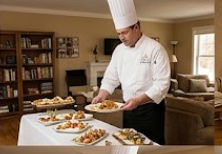
In-Home Freezer Meal Preparation vs. Off-Site Cooking
Freezer meal chefs may offer different preparation arrangements, and the distinction can affect convenience, pricing, and food-handling responsibilities.
In-home preparation takes place in the customer’s kitchen. The chef uses the agreed workspace and available equipment to prepare the meals. This arrangement allows the customer to discuss ingredients directly and observe the preparation process if desired.
Before booking an in-home chef, confirm whether the kitchen has enough counter space, cookware, refrigeration, and freezer capacity for the planned work.
Off-site preparation takes place in a kitchen other than the customer’s home. The chef or business may offer pickup or delivery, depending on its operating arrangements. Customers should ask where the meals are prepared, how they are transported, and whether the business is authorized to prepare and distribute food under applicable local requirements.
Not every personal chef is permitted to prepare food in every type of kitchen or deliver every type of prepared meal. Requirements can vary by state, city, county, and jurisdiction.
When comparing providers, focus on the complete service: preparation location, food handling, packaging, delivery arrangements, and total cost.
Who Benefits From Professional Freezer Meal Preparation?
A freezer meal chef may be useful for several types of households.
Busy families: Parents who manage work, school schedules, and family responsibilities may prefer having meals prepared ahead of time. Family-sized portions can make weekday dinners easier to organize.
Working professionals: People with demanding schedules may want to reduce the time spent shopping, cooking, and cleaning after work.
New parents: Families preparing for a newborn’s arrival may arrange meals in advance to reduce everyday cooking responsibilities. Dietary or medical requirements should be discussed with an appropriate healthcare professional when necessary.
Older adults: Some older adults may appreciate help with shopping, meal preparation, portioning, and organizing food for later use. The service should reflect the person’s preferences, abilities, and specific needs.
People preparing for a busy period: Customers facing travel, an upcoming family event, or a particularly demanding work schedule may arrange a one-time batch-cooking session.
Households with specific food preferences: Customers who prefer home-cooked meals, vegetarian recipes, or particular ingredients may benefit from a chef who can accommodate their requests.
The suitability of the service depends on the customer’s budget, freezer space, food preferences, and the chef’s actual capabilities.
What Types of Meals Can a Chef Prepare for Freezing?
Freezer-friendly options may include:
- Soups, stews, and broths.
- Casseroles and baked pasta dishes.
- Cooked meats, poultry, and suitable plant-based proteins.
- Sauces and selected cooking bases.
- Rice, grains, and other suitable side dishes.
- Some breakfast items and make-ahead family meals.
- Prepared components that can be assembled or finished later.
Not every recipe freezes equally well. Certain vegetables may soften, dairy-based sauces may separate, and some cooked foods may lose their preferred texture after thawing.
An experienced chef can help select recipes that suit the household’s preferences and intended storage period. Customers should also discuss whether they want fully cooked meals that require reheating or prepared ingredients that need further cooking.
How Does Professional Freezer Meal Preparation Work?
Understanding the process helps customers prepare for an appointment, estimate their budget, and avoid misunderstandings about what the chef will deliver.
A typical arrangement involves an initial consultation, menu planning, ingredient purchasing, preparation, packaging, and handover. The details should be agreed upon before work begins.
Initial Consultation and Household Meal Assessment
The consultation establishes what the customer needs and what the chef can reasonably prepare.
The chef may ask about:
- The number of people in the household.
- The number of meals or servings required.
- Preferred cuisines and familiar family recipes.
- Foods the household avoids or dislikes.
- Dietary preferences and allergies.
- Available kitchen equipment and freezer capacity.
- The intended preparation date.
- The customer’s budget and preferred pricing arrangement.
Customers should describe their needs as specifically as possible. Requesting ten individual servings, for example, is different from requesting ten family-sized meals.
It is also helpful to explain how the meals will be used. Some households need ready-to-reheat dinners, while others prefer ingredients prepared in advance for cooking on a later date.
The consultation should conclude with a shared understanding of the menu, preparation location, estimated workload, grocery responsibilities, and expected deliverables.
Menu Planning, Recipes, and Grocery Shopping
After assessing the household’s needs, the chef can suggest a suitable menu.
A practical menu should consider ingredient overlap, preparation time, storage space, and the household’s actual eating habits. Using some ingredients across several recipes may simplify shopping, although the final menu should prioritize suitable meals rather than ingredient reuse alone.
Customers should review the proposed menu before ingredients are purchased. They should also confirm whether the chef will:
- Shop for ingredients.
- Use ingredients already available at home.
- Purchase specialty or preferred brands.
- Provide receipts for reimbursement.
- Obtain approval before making substitutions.
- Charge a separate shopping or travel fee.
For example, if a customer requests dairy-free meals, the chef should confirm ingredient requirements and discuss how the customer’s restrictions will be handled. Customers with food allergies should disclose them before the menu is finalized.
A written menu and ingredient list reduce confusion and help both parties understand the agreed service.
Batch Cooking, Portioning, and Packaging
Batch cooking involves preparing multiple dishes or portions within an organized session. The chef coordinates ingredient preparation, cooking, portioning, packaging, and labeling.
The process should account for food safety as well as efficiency. Cooked food must be handled and cooled appropriately before storage, and containers should be suitable for the intended use.
Customers should agree on portion sizes in advance. Individual portions may be convenient for lunches, while larger containers may suit family dinners.
Packaging arrangements should also be clear. Some chefs supply containers, while others ask customers to provide them or charge separately for supplies.
Each container should be identifiable, with useful information such as the dish name, preparation date, and appropriate storage or reheating instructions.
The number of meals produced will depend on recipe complexity, ingredient quantities, equipment, preparation time, and the chef’s service model. Avoid assuming that a particular number of meals can always be produced in a fixed session.

Meal Handover and Reheating Instructions
The service should include a clear handover so customers know what has been prepared and how to handle the meals afterward.
A useful handover may include:
- A list of completed dishes.
- The number of portions in each container.
- Preparation or packaging dates.
- Relevant ingredient and allergen information.
- Freezing and storage instructions.
- Safe thawing and reheating guidance.
- Instructions for meals that require additional cooking.
Customers should know which meals are fully cooked and which are assembled for later cooking. The distinction affects how the food must be handled.
Before the chef leaves or a delivery is accepted, check that the containers are properly identified and that the storage arrangements are clear.
Key takeaway: A well-defined freezer meal preparation service should explain the menu, number of portions, preparation location, ingredient costs, packaging, and food-storage responsibilities before the appointment.
Types of Freezer Meal Chef Services Available Near You
When searching for a freezer meal chef near you, compare the service model rather than assuming every provider offers the same arrangement.
In-Home Personal Chef for Freezer Meals
An in-home personal chef prepares meals in the customer’s kitchen, subject to the agreed scope of work and applicable requirements.
This arrangement may suit customers who want to use their own ingredients, discuss recipes in person, or avoid transporting prepared meals from another location.
Before hiring, ask whether the chef provides groceries, brings specialized equipment, supplies storage containers, and cleans the preparation area.
Customers should also consider whether their kitchen can accommodate multiple recipes and whether enough freezer space is available for the planned batch.
Weekly and Monthly Batch Cooking Services
Some chefs offer recurring meal-preparation appointments. Customers may arrange weekly, monthly, or otherwise scheduled sessions according to their needs and the provider’s availability.
Recurring arrangements can simplify menu planning and reduce the need to organize a new service from scratch each time. They may also allow the chef to learn the household’s preferences.
However, recurring service does not automatically mean a lower price. The customer should compare the total cost, preparation scope, and scheduling terms with those of a one-time appointment.
Ask how menu changes, missed appointments, grocery reimbursements, and cancellations are handled.
Family-Sized and Individual Portion Preparation
The right portioning arrangement depends on how the household intends to use the meals.
Individual containers can be useful for lunches, single-person households, or meals taken to work. Larger portions may suit families who prefer to share a dish.
The number of containers and the size of each portion affect ingredient quantities, packaging needs, freezer space, and sometimes preparation time.
When requesting a quote, specify the number of people and the approximate number of servings required. Do not rely on the phrase “ten meals” alone, because providers may interpret it differently.
Customized and Special-Diet Meal Preparation
A personal chef may be able to customize recipes around vegetarian, vegan, dairy-free, or other food preferences.
Customers should explain restrictions before the chef develops the menu. They should also ask about ingredient substitutions, food labels, preparation surfaces, utensils, and the possibility of cross-contact with allergens.
An allergy-sensitive request is not the same as a guarantee of an allergen-free environment. Customers with serious allergies should discuss the risks directly and determine whether the provider can safely accommodate their needs.
For medically prescribed diets, customers may need guidance from a qualified healthcare professional or registered dietitian. A chef can prepare food according to agreed instructions but should not be assumed to provide medical nutrition treatment.
Freezer Meal Delivery and Prepared-Meal Alternatives
Some customers want ready-made meals delivered rather than hiring someone to cook in their home.
A prepared-meal delivery service may offer convenient ordering, while a personal chef may offer more direct involvement in menu selection and household preferences. A meal-kit service generally provides ingredients and instructions for the customer to prepare.
These options are not interchangeable. Before choosing, compare:
- Whether food is cooked or supplied as ingredients.
- How much menu customization is available.
- Whether groceries are included.
- Whether the customer must cook or assemble the meals.
- How packaging, delivery, and storage are handled.
- The complete cost for the required number of servings.
The appropriate choice depends on the household’s budget, schedule, desired level of customization, and willingness to handle food preparation.
What Affects Freezer Meal Quality, Storage, and Food Safety?
Food quality and safe handling are essential considerations when hiring a professional to prepare meals for future use. Customers should understand the basics even when a chef is responsible for the preparation.
Choosing Freezer-Friendly Ingredients and Recipes
Freezing can affect food texture, moisture, and consistency. A dish that tastes excellent when freshly prepared may change after freezing and thawing.
Soups, stews, casseroles, and many cooked sauces are commonly suitable for make-ahead preparation, although the result depends on the recipe and ingredients.
Some vegetables soften during freezing, and certain dairy-based sauces may separate. Fresh garnishes and delicate ingredients may be better added after thawing or reheating.
Ask the chef which recipes are intended for freezing and whether any finishing steps should be completed just before serving.
The aim is not simply to prepare as many meals as possible. It is to prepare meals that remain practical and appealing when the household is ready to eat them.
Food Cooling, Packaging, and Freezer Organization
Food must be handled safely between cooking and freezing. Large quantities of hot food should not be left at room temperature for extended periods.
Appropriate shallow containers can help food cool more efficiently. Follow established food-safety guidance for cooling and refrigeration rather than relying on appearance or touch alone.
Packaging should be appropriate for freezer storage, properly closed, and suitable for the intended reheating method. Labels should help customers identify the contents and preparation date.
Freezer organization also matters. The freezer should have enough space for the planned quantity, and hot containers should not be stacked in a way that interferes with safe cooling or freezing.
Before booking a large batch, check the available freezer space and discuss how the meals will be stored after preparation.
Safe Freezing, Thawing, and Reheating
The USDA Food Safety and Inspection Service recommends keeping a freezer at 0°F or below for long-term frozen storage. Leftovers should generally be reheated to an internal temperature of 165°F, measured with a food thermometer. The correct handling method depends on the food and how it was prepared.
Freezing helps preserve food, but it does not make food safe if it was mishandled beforehand. Customers should follow safe cooling, storage, thawing, and reheating practices.
For thawing, the refrigerator is a suitable method for many prepared meals. Other approved methods may be appropriate depending on the food and its intended preparation. Avoid leaving perishable food at room temperature to thaw.
Ask the chef for practical instructions specific to each dish. Some meals may require thawing before reheating, while others may be suitable for reheating from frozen if the recipe and packaging allow it.
For authoritative guidance, consult the USDA’s Freezing and Food Safety guide.
Allergens, Cross-Contamination, and Ingredient Communication
Food allergies require clear communication before preparation begins.
Customers should identify known allergens and explain whether the requirement involves avoiding an ingredient or managing a potentially serious allergic reaction.
Ask the chef how ingredients are sourced, how substitutions are approved, and what precautions are used to reduce cross-contact. Shared kitchens, utensils, equipment, and storage areas may introduce risks.
Do not assume that removing a listed ingredient automatically makes a meal safe for someone with an allergy.
If the chef cannot meet the required safety conditions, discuss alternatives rather than proceeding with an arrangement that could put someone at risk.
What Customers Should Confirm Before Meals Are Stored
Before the service is completed, confirm:
- The meals are labeled clearly.
- The preparation dates are recorded.
- Storage instructions are available.
- The containers are suitable for the intended storage and reheating methods.
- The freezer has adequate capacity.
- Any allergy or ingredient information has been communicated.
- The customer understands which meals are fully cooked.
- Responsibility for cooling, freezing, transportation, and storage is clear.
These details should be included in the service discussion rather than left until the end of the appointment.
How Much Does a Freezer Meal Chef Cost in the USA?
The cost of hiring a freezer meal chef depends on the service arrangement, location, meal quantity, ingredient choices, and amount of work involved. There is no single price that applies to every household or every U.S. market.
Some providers charge by the hour, others offer a fixed preparation session, and some quote according to the number of meals or portions. Grocery costs and other expenses may be separate.
The most useful way to compare services is to look at the complete cost of producing the required meals, not simply the advertised chef fee.
Common Pricing Models for Freezer Meal Preparation
Personal chefs may use several pricing structures.
Hourly pricing: The customer pays for the chef’s agreed working time. Confirm whether menu planning, shopping, travel, preparation, and cleanup are included in the billable hours.
Flat-rate sessions: The provider quotes a set fee for a defined scope of work. The estimate should specify the expected menu, portions, preparation tasks, and any exclusions.
Per-meal or per-serving pricing: The cost is based on the number of meals or servings prepared. Ask how the provider defines a meal and whether ingredients, packaging, and delivery are included.
Recurring packages: A provider may offer a scheduled series of meal-preparation appointments. Confirm the service frequency, cancellation terms, and whether pricing changes with the menu or quantity.
Customized quotes: Larger batches, specialty recipes, extensive shopping, or unusual preparation requirements may require an individualized estimate.
A published estimate from a provider should be treated as an example of that provider’s pricing model, not a universal national benchmark. For an accurate budget, request a quote that reflects your actual service requirements.
Chef Labor vs. Grocery and Ingredient Costs
One of the most important questions to ask is whether the quoted fee includes groceries.
Some arrangements cover the chef’s labor but require the customer to pay for ingredients separately. Other providers may shop on the customer’s behalf and bill the grocery expense separately.
The customer should establish who is responsible for:
- Purchasing ingredients.
- Paying for groceries.
- Providing receipts.
- Approving premium or specialty ingredients.
- Paying for containers and labels.
- Covering travel or delivery.
- Handling unused ingredients.
For example, a chef’s service fee may appear lower than another provider’s quote because groceries and packaging are excluded. A more expensive-looking quote may include additional work or supplies.
Compare the same service scope before deciding which option fits your budget.
How Household Size and Meal Quantity Affect the Price
The number of meals and portions affects ingredient quantities, preparation time, packaging, and storage requirements.
A single person may need several individual meals, while a family may prefer larger containers. A menu with many different recipes may also require more preparation and coordination than a menu built around a smaller number of dishes.
More meals do not necessarily mean a lower cost per serving. Some recipes scale efficiently, while others require additional preparation time or more expensive ingredients.
When requesting a quote, explain how many people will eat the meals, how many servings are needed, and whether the portions should be individual or family-sized.
This information helps the chef provide an estimate that reflects the actual workload.
Premium Ingredients, Packaging, Travel, and Other Fees
Additional expenses may affect the total cost of a freezer meal preparation service.
Ingredient choices: Organic produce, specialty products, particular brands, and premium proteins may cost more than standard alternatives.
Packaging: Freezer-safe containers, bags, labels, and other supplies may be included or charged separately.
Shopping and travel: A chef may charge for grocery shopping, travel time, mileage, or delivery where applicable.
Kitchen requirements: Limited workspace or specialized preparation needs may affect the time required.
Menu customization: Extensive recipe changes or specialized ingredient sourcing may require additional planning.
Scheduling: Minimum booking requirements, cancellation fees, or changes to an agreed appointment may affect the final amount.
Not every provider charges these fees. Ask which ones apply and have them documented before booking.
How to Compare Total Cost and Cost Per Serving
Use the following calculation to compare providers on a consistent basis:
Cost per serving = Total applicable service costs ÷ Number of usable servings
The total should include the chef’s fee, groceries, packaging, and any applicable additional charges.
For example, suppose a customer receives a quote covering the preparation of several dishes. Before comparing it with another quote, the customer should establish how many portions will be produced and which expenses are included.
If one provider quotes for individual portions and another quotes for family-sized dishes, the totals alone are not directly comparable.
Compare equivalent quantities, portion sizes, ingredients, preparation tasks, and packaging arrangements. This provides a clearer view of the value offered by each provider.
Is a Consultation Worth It?
A consultation can help clarify the customer’s expectations before a booking is confirmed.
During the discussion, the customer and chef can review the menu, ingredient preferences, allergies, kitchen setup, freezer capacity, preparation location, and desired schedule.
It also provides an opportunity to identify potential additional expenses before work begins.
Ask whether the consultation is free or paid, whether its cost is credited toward a booking, and whether the provider charges for menu planning separately. These terms vary by provider and should not be assumed.
How Long Does a Freezer Meal Preparation Session Take?
The duration depends on the number of recipes, meal quantity, ingredient preparation, cooking methods, equipment, shopping responsibilities, packaging, and cleanup.
A session that involves a small number of familiar recipes may require a different amount of work from one involving several customized dishes.
Ask the chef to estimate the schedule based on the agreed menu. Clarify whether shopping and cleanup are included in the appointment time or arranged separately.
Avoid choosing a provider based solely on a promise to prepare an unusually large number of meals quickly. Safe handling and suitable preparation are more important than an arbitrary meal-count target.
How Customers Can Avoid Unnecessary Charges
Before confirming a booking:
- Request an itemized estimate.
- Confirm whether groceries are included.
- Agree on the number of meals and servings.
- Ask about shopping, mileage, and delivery fees.
- Confirm who provides containers and labels.
- Approve the menu and substitution policy.
- Check cancellation and rescheduling terms.
- Clarify cleanup and storage responsibilities.
Key takeaway: The best pricing comparison is based on the total cost, actual usable servings, and agreed service scope. Ask for a written quote before paying a deposit or committing to a recurring arrangement.

Freezer Meal Chef vs. Meal Delivery, Meal Kits, and DIY Batch Cooking
Hiring a chef is one way to organize meals in advance, but it is not the only option. Comparing the alternatives helps customers decide whether personalized preparation is worth the expense.
Hiring a Personal Chef vs. Buying Frozen Meals
Commercially prepared frozen meals may offer convenient purchasing and straightforward portion options. A personal chef may provide more direct involvement in selecting recipes, ingredients, and serving sizes.
The differences depend on the provider and the products being compared.
Customers should consider the total cost, level of customization, preparation arrangements, ingredient information, packaging, and storage requirements.
A personal chef may suit someone who values customized cooking and wants to delegate preparation. Packaged frozen meals may suit someone who prefers ready-made products without arranging a private appointment.
Personal Chef vs. Meal Kit Subscription
A meal kit generally supplies ingredients and instructions so the customer can cook the food. A personal chef performs the agreed preparation tasks on the customer’s behalf.
Meal kits may be suitable for people who enjoy cooking but want help with meal planning or ingredient shopping. A chef may be more appropriate for customers who want to reduce their own preparation workload.
When comparing the two, consider subscription terms, ingredient costs, cooking time, customization, and the amount of work that remains with the customer.
Hiring a Chef vs. Preparing Freezer Meals Yourself
DIY batch cooking can reduce the need to pay for professional labor, particularly when the household already has suitable equipment and enjoys cooking.
However, it requires time for planning, shopping, preparation, portioning, packaging, and cleanup.
Hiring a chef transfers some or all of these tasks to a professional, depending on the service agreement. The value lies in the work delegated, the quality of the arrangement, and the convenience gained—not in an assumption that hiring a chef always saves money.
Customers should consider their schedule, cooking ability, freezer space, and budget before deciding.
When Is a Personal Chef Worth the Cost?
A personal chef may be worth considering when the household has limited time, needs a substantial batch of meals, prefers customized recipes, or wants to delegate regular cooking tasks.
The service may be less suitable when the household needs only a few simple meals, has a very limited budget, or prefers to prepare food independently.
A practical approach is to request a quote for a clearly defined batch and compare it with the cost and time involved in preparing the same meals at home.
The decision should reflect the household’s actual needs rather than a general claim that one option is always better.
How to Choose the Right Freezer Meal Chef Professional
Selecting a provider involves more than comparing prices. Customers should assess the service scope, preparation practices, qualifications where applicable, and clarity of communication.
Check Experience With Batch Cooking and Freezer-Friendly Recipes
Ask the chef about their experience preparing meals intended for freezing and later reheating.
Useful questions include:
- What types of freezer-friendly dishes do you prepare?
- Can you accommodate my preferred portion sizes?
- How do you organize multiple recipes in one session?
- What packaging and labeling arrangements do you recommend?
- Do you provide instructions for storage and reheating?
A provider should be able to explain the proposed process in practical terms.
Relevant sample menus or genuine examples of prior work may help the customer understand the service. Do not assume that every chef offers the same level of customization or has experience with every type of recipe.
Verify Insurance, Business Credentials, and Applicable Requirements
The appropriate requirements depend on the type of service and where it operates.
A chef preparing meals in a customer’s home may face different requirements from a business that prepares food in an off-site kitchen, packages it for sale, or delivers meals to customers.
Customers should ask what business registrations, permits, food-handler qualifications, or other credentials apply to the provider’s operations. They can also ask about relevant liability insurance.
Requirements can vary by state, city, county, and local jurisdiction. A customer should not assume that a particular credential is universally required—or that a provider is exempt from requirements simply because the business is small.
Where necessary, verify applicable requirements with the relevant local authority.
Review Menus, Sample Work, and Genuine Customer Feedback
A sample menu can show whether the provider’s cooking style matches the household’s preferences.
Reviews may offer information about communication, scheduling, preparation quality, and the overall customer experience. However, reviews should be genuine and evaluated in context.
Look for detailed feedback that is relevant to the service being considered. A chef with experience catering events, for example, may not necessarily offer the same type of freezer meal preparation.
Do not rely on unsupported claims, copied testimonials, or guarantees of a particular result.
Ask About Ingredients, Allergens, Storage, and Cleanup
Before booking, establish how the chef will manage ingredients and the preparation environment.
Confirm whether the customer approves the menu, who purchases the ingredients, and how substitutions are handled. Discuss known allergies and any precautions needed to reduce cross-contact.
Ask what packaging is supplied, how the meals will be labeled, and what storage guidance will be provided.
Also clarify cleanup. Some providers may clean the areas used during preparation, while other arrangements may define a narrower scope of work.
Clear expectations reduce the risk of disagreement after the appointment.
Request a Written Estimate and Clear Service Agreement
A written estimate should describe the service the customer is buying.
Ideally, it should identify:
- The agreed menu or preparation scope.
- The number and type of servings.
- The chef’s fee.
- Grocery and packaging arrangements.
- Applicable travel or delivery charges.
- Preparation location and expected schedule.
- Cancellation and rescheduling terms.
- Payment arrangements.
- Storage, handover, and cleanup responsibilities.
The customer should understand the terms before paying or confirming the appointment.
If the quote leaves important details unresolved, ask for clarification rather than assuming those items are included.
What to Expect During Booking, Preparation, and Follow-Up
Preparing a little information before contacting a chef can make the booking process more efficient and help the provider give a more useful estimate.
Information to Prepare Before Requesting a Quote
Gather the following details:
- Your ZIP code or service location.
- The number of people who will eat the meals.
- The approximate number of meals and servings needed.
- Preferred dishes and cuisines.
- Dietary preferences and allergies.
- Whether you want fully cooked meals or freezer-ready ingredients.
- Your preferred appointment date.
- Available freezer space and kitchen equipment.
- Your approximate budget.
You do not need a perfectly finalized menu before making an inquiry. A clear description of your needs is usually a useful starting point.
How Long Does a Freezer Meal Preparation Session Take?
Ask the chef to estimate the time required for the specific service you want.
The schedule may depend on ingredient shopping, recipe complexity, the number of dishes, batch size, equipment, and packaging requirements.
Clarify whether the quoted time includes planning, shopping, preparation, cleanup, and handover.
If the service includes off-site cooking or delivery, confirm the expected delivery arrangements and any instructions for receiving and storing the food.
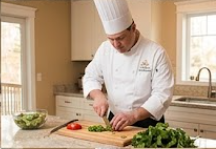
Kitchen Access, Equipment, Containers, and Cleanup
For in-home service, discuss the kitchen arrangements before the appointment.
Confirm whether the chef expects the customer to provide cookware, appliances, ingredients, and storage containers. If special equipment is required, determine who will supply it.
The kitchen should have adequate space for the planned work, and the freezer should have enough capacity for the completed meals.
Agree on access arrangements, preparation hours, cleanup, and waste disposal. These details are especially important when the customer will not be present throughout the session.
Rescheduling, Recurring Bookings, and Service Policies
Before booking, ask how the provider handles changes to the schedule or menu.
Relevant terms include cancellation deadlines, deposits, grocery purchases made before cancellation, unavailable ingredients, and changes to the requested number of meals.
For recurring appointments, confirm the frequency, payment schedule, and procedure for adjusting future menus.
Written terms make it easier for both parties to understand their responsibilities and resolve unexpected changes.
Local Freezer Meal Chef Services: Availability and Service Areas
A search for a freezer meal chef near you is useful only if the provider can serve your location and offer the preparation arrangement you need.
How to Find a Chef Serving Your ZIP Code
Start by checking the provider’s stated service area. Some chefs travel to customers’ homes, while others work from a designated kitchen or offer pickup and delivery.
Ask whether the provider serves your ZIP code, whether travel fees apply, and whether the requested appointment date is available.
A business appearing in a local search result does not automatically mean it offers in-home preparation or serves every nearby neighborhood.
Confirm the actual service before sharing detailed requirements or committing to a booking.
Questions About Local Food Preparation Requirements
Local requirements may depend on whether the chef prepares meals in a customer’s home, operates a commercial kitchen, sells packaged food, transports prepared meals, or delivers food to other households.
Depending on the arrangement, relevant requirements may involve business registration, food safety, kitchen operations, transportation, or permits.
These requirements can differ by state, city, county, and jurisdiction. Providers should understand the rules that apply to their actual business model, and customers can check with the appropriate local authority when clarification is needed.
Avoid assuming that rules for a commercial meal business apply identically to every in-home personal chef.
Seasonal Menu Planning and Regional Ingredient Availability
Ingredient availability and prices may change with the season, local supply, and customer preferences.
A chef may recommend seasonal produce or suggest substitutions when a preferred ingredient is unavailable. Holiday periods and busy booking schedules may also affect appointment availability.
Customers who have strict ingredient preferences should discuss alternatives before the menu is approved.
The article should avoid making specific claims about local availability or seasonal prices unless they have been verified for the location being discussed.
How to Compare Local Providers and Quotes
When comparing local services, evaluate the same factors for each provider:
- Number of meals and actual servings.
- Menu and ingredient quality.
- Preparation location.
- Chef labor and grocery expenses.
- Packaging and storage instructions.
- Shopping, travel, or delivery charges.
- Relevant qualifications and food safety practices.
- Scheduling, cancellation, and payment terms.
The lowest advertised price may exclude expenses that another provider includes.
A written quote based on the customer’s actual needs provides a more useful basis for comparison.
Safe DIY Checks Before Hiring a Freezer Meal Chef
Even when hiring a professional, customers can take a few simple steps to prepare their household for the service.
Check Your Freezer Capacity and Temperature
Check how much usable freezer space is available before scheduling a large batch of meals.
A crowded freezer may make it difficult to organize containers or freeze newly prepared food appropriately. Confirm that the appliance is operating properly and is set to the recommended temperature of 0°F or below.
Tell the chef about any space limitations before the menu and portion sizes are finalized.
List Household Preferences and Meals You Actually Eat
Write down preferred dishes, portion sizes, disliked ingredients, and the meals the household uses most often.
Consider whether you need lunches, dinners, breakfast items, or ingredients for later cooking.
A realistic list helps avoid preparing food that the household is unlikely to eat. It also makes menu planning and budgeting easier.
Identify Equipment and Storage Containers You Already Own
Check whether you have suitable cookware, refrigerator space, freezer containers, and other equipment.
Ask the chef which supplies are necessary and whether the provider brings them. Do not assume ordinary containers are suitable for freezing or reheating.
If containers need to be purchased, confirm the cost and intended use before the appointment.
Know When Professional Help Makes More Sense
Professional assistance may be useful when you have limited time, want a large batch prepared, need help organizing multiple recipes, or prefer to delegate shopping and cooking.
DIY preparation may be practical for smaller batches or households that enjoy cooking and already have the required equipment.
Consider the complete workload, not just the time spent standing at the stove. Planning, shopping, portioning, packaging, and cleanup all contribute to the effort involved.
Frequently Asked Questions About Freezer Meal Chefs
How much does a freezer meal chef cost per session?
The cost depends on the chef’s pricing model, location, menu, number of servings, and service scope. Groceries, packaging, shopping, and travel may be included or charged separately. Request an itemized quote based on the number of meals and portions you actually need.
Can a personal chef prepare a week’s worth of freezer meals?
Some personal chefs offer batch cooking intended to provide meals for future use. Whether a week’s supply is practical depends on household size, meal quantity, recipe complexity, preparation time, and freezer capacity. Discuss the desired number of servings with the provider before booking.
Do freezer meal chefs provide groceries and containers?
Some providers purchase groceries and supply containers, while others ask customers to provide them or bill these expenses separately. Confirm who buys the ingredients, whether receipts are provided, what packaging is included, and whether additional charges apply.
Is an in-home freezer meal chef better than meal delivery?
The options serve different needs. An in-home chef can prepare an agreed menu in the customer’s kitchen, while a delivery service supplies prepared food under its own arrangements. Compare customization, preparation responsibilities, convenience, ingredient information, and total cost before choosing.
Can I hire a chef for vegetarian or allergy-conscious freezer meals?
A chef may be able to prepare meals around vegetarian preferences or certain ingredient restrictions. Discuss allergies and cross-contact risks before booking, and confirm the provider can meet the required precautions. Do not assume that a chef can guarantee an allergen-free environment.
How long does freezer meal preparation take?
The duration depends on the number of recipes, ingredient shopping, cooking methods, portion sizes, packaging, and cleanup. Ask for an estimate based on the agreed menu and clarify which tasks are included in the quoted time.
Are homemade freezer meals safe to store and reheat?
They can be stored and reheated safely when food is prepared, cooled, frozen, thawed, and reheated correctly. Keep the freezer at 0°F or below and generally reheat leftovers to an internal temperature of 165°F. Follow official food-safety guidance and the instructions appropriate to each dish.
Can I find an affordable freezer meal chef near me?
Availability and pricing depend on your location and the providers serving it. Compare written quotes for equivalent portions and services. You may also discuss simpler menus, fewer recipes, or different portion sizes to find an arrangement that fits your budget.
Request a Freezer Meal Preparation Quote
If you want to spend less time cooking during the week, start by defining the meals you need and the preparation tasks you want to delegate.
A useful quote should reflect your household size, preferred menu, number of servings, preparation location, grocery arrangements, packaging requirements, and schedule.
Tell Us About Your Household and Meal Preferences
Prepare your ZIP code, approximate meal count, preferred dishes, dietary requirements, and desired appointment date. This information can help a provider determine whether the service is suitable and what additional details are needed.
Compare Service Options and Itemized Quotes
Review the menu, number of servings, chef fee, grocery expenses, packaging, and other applicable charges. Ask questions about anything that remains unclear before making a decision.
Check Local Availability and Schedule a Consultation
Contact a provider to confirm service-area coverage and appointment availability. Discuss the preparation arrangement and agree on the next steps before booking.
Understand the Service Terms Before Confirming
Confirm the payment arrangement, cancellation policy, grocery responsibilities, food-handling procedures, preparation location, and storage instructions.
Ready to get started? Request a personalized quote from a freezer meal preparation provider serving your area and compare the proposed service with your household’s needs.