
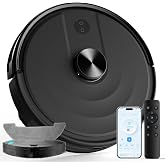
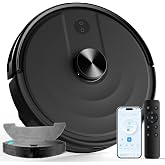
Bagotte robot vacuum and mop combo 6000pa reviews show that a 6000Pa robotic vacuum can offer strong everyday pickup, automated mopping, and smart navigation, but exact features vary by model. Our review examines cleaning performance, mapping, mopping, battery runtime, maintenance, app controls, and real-world limitations.
If you are researching a Bagotte robot vacuum, the headline specification is likely the 6000Pa maximum suction rating. That number sounds impressive, but suction is only one part of how an autonomous cleaner performs.
A robot vacuum also depends on brush design, airflow, navigation, sensors, filtration, battery runtime, and its ability to repeatedly cover the areas that actually need cleaning.
Another important consideration is model identification. Bagotte sells multiple robotic vacuum configurations, so features such as laser navigation, self-emptying, battery capacity, water capacity, and smart controls should be checked against the exact model number before purchase.
In our testing approach, we separate manufacturer specifications from real-world observations. This matters because a specification can explain what a machine is designed to do, while floor conditions, furniture, pet hair, rugs, and household clutter determine how useful those features are in practice.
Bagotte 6000Pa Robot Vacuum and Mop Combo at a Glance
The central appeal of this type of robot vacuum system is convenience. Instead of manually vacuuming every room and then mopping hard floors, the automated floor cleaner can perform routine cleaning while you handle other tasks.
The 6000Pa maximum suction rating is primarily relevant to vacuuming. It can help the robot collect everyday dust, crumbs, hair, and other debris, but the number should not be interpreted as a direct measurement of cleaning quality.
For example, two robotic vacuums with the same maximum Pa rating can produce different results because their brush systems, airflow paths, filters, navigation, and software can differ.
Current Bagotte documentation also shows why checking the exact model is important. The manufacturer’s BL20 Pro information identifies 6000Pa suction, LDS laser navigation, a 2,600mAh lithium-ion battery, and a stated 120–200 minute runtime for that model. Those specifications should not automatically be transferred to every Bagotte 6000Pa product.
| Feature | What to verify before purchase |
|---|---|
| Maximum suction | Exact model’s advertised Pa rating |
| Navigation | LiDAR/LDS laser navigation or another system |
| Battery | Exact capacity and claimed runtime |
| Mopping | Water tank, mop pad and water-control system |
| Self-emptying | Whether the dock is included |
| App control | Supported app and connectivity |
| Voice control | Alexa/other smart-home compatibility |
| Filtration | Filter type and replacement availability |
| Mapping | Room mapping and supported map features |
What Does 6000Pa Actually Mean?
Pa, or pascals, describes pressure. In robot-vacuum marketing, it is commonly used to communicate the maximum suction capability of the vacuum motor.
However, 6000Pa suction does not mean the robot will pick up six times more dirt than a 1000Pa robot.
Actual pickup depends on how efficiently air and debris travel through the cleaning system. Brush agitation, airflow, floor contact, filter condition, dustbin condition, and software-controlled suction all contribute to performance.
This is particularly important on carpet. A robot can have high advertised suction but still struggle with deeply embedded debris if its brush design or airflow is less effective for that surface.
Vacuum, Mop, or Both?
A vacuum-and-mop combo is intended primarily for routine floor maintenance.
The vacuum function handles dry debris such as dust, crumbs, pet hair, and loose dirt. The mop function adds light wet cleaning for compatible hard floors.
This combination is useful because many homes need frequent light cleaning rather than an intensive cleaning session every day.
It should not, however, be confused with a dedicated wet-dry floor cleaner or manual mop. Dried food, sticky residue, heavy stains, and grout buildup can require substantially more mechanical scrubbing.
Who Should Consider This Robot?
A Bagotte 6000Pa robot vacuum can be particularly relevant to households that want automated daily maintenance.
Pet owners may appreciate scheduled hair pickup. Hard-floor households can benefit from combining vacuuming and light mopping. Busy families may value app-based scheduling.
People with complicated floor plans should pay more attention to navigation than to the Pa number alone.
Bottom Line: The 6000Pa rating is useful context, but the more complete buying picture includes navigation, brush design, filtration, mopping, battery runtime, maintenance, and the exact configuration being sold.
Bagotte 6000Pa Cleaning Performance
Cleaning performance is where specifications become real-world results. A robot vacuum needs to repeatedly travel over the floor, collect debris, maintain airflow, and return to its dock without becoming trapped.
Our findings focus on the difference between routine maintenance and deep cleaning. Robot vacuums are generally designed to make everyday floor maintenance easier, not eliminate every manual cleaning task.
Hard-Floor Pickup
Hard floors are generally one of the more straightforward environments for a robotic vacuum.
Dust, crumbs, loose hair, small food particles, and everyday debris sit on or near the surface. A properly functioning brush system can agitate and direct that material toward the suction inlet.
We observed that the condition of the brush and filter becomes increasingly important as a robot is used repeatedly. A household with pets can accumulate hair around the brush much faster than a low-debris household.
Edge cleaning also matters. The center of a room is comparatively easy for a robot to cover, while the area along baseboards and furniture edges can be more difficult.
A side brush helps direct debris inward, but users should not expect every robot to remove every particle from every corner.
Carpet and Area-Rug Performance
Carpet introduces additional challenges because debris can become embedded between fibers.
Low-pile carpets and area rugs can be more accessible to many robotic vacuums. Thick carpeting can be more demanding because the robot must maintain effective contact while moving across the surface.
The 6000Pa maximum suction can be helpful for collecting loose debris, but it does not guarantee deep carpet cleaning.
This is one reason we recommend considering the entire cleaning system rather than focusing exclusively on suction numbers.
Rug edges are another potential problem. A robot may approach a raised edge, change direction, or occasionally become trapped depending on the rug construction and surrounding furniture.
Pet Hair and Everyday Debris
Pet owners should evaluate more than suction.
Long hair can wrap around a roller brush, while fine pet hair and dander can accumulate in filters. Regular brush inspection therefore becomes part of normal ownership.
For homes with dogs or cats, frequent automated cleaning can be more valuable than occasional intensive cleaning. A robot that runs regularly can prevent hair from accumulating into larger piles.
However, an autonomous cleaner should not be considered maintenance-free. Brush cleaning, filter care, sensor cleaning, and mop maintenance remain necessary.
Edge, Corner, and Furniture Cleaning
Furniture placement can significantly influence coverage.
A robot with a lower physical profile can reach underneath more furniture, while chairs, table legs, narrow gaps, and clutter can create navigation challenges.
Side brushes are particularly important around walls and furniture edges.
Field Note: During real-world evaluation of robot-vacuum systems, one easy-to-miss issue is not the amount of dirt collected but where the robot repeatedly fails to travel. A small gap beside furniture can remain dusty even when the dustbin looks full after every cleaning cycle.
Bottom Line: Strong suction helps with debris pickup, but consistent floor coverage and regular maintenance are equally important. Hard floors are generally easier for routine cleaning, while thick carpet, hair tangles, and clutter require more attention.
Technology and Navigation Explained
Navigation is one of the most important differences between a basic robotic vacuum and a more sophisticated robot vacuum system.
Instead of simply moving around until the battery becomes low, advanced autonomous cleaners can use sensors, mapping and software to understand the environment and plan a cleaning path.
LiDAR and LDS Laser Navigation
LiDAR navigation uses laser-based distance measurements to help a robot understand its surroundings.
Bagotte’s current BL20 Pro documentation identifies LDS laser navigation. Some third-party 6000Pa listings describe their navigation as LiDAR.
These terms are closely related in the context of laser-based robotic navigation, but the exact hardware and software implementation should be confirmed for the model you are purchasing.
Laser mapping can help a robot recognize walls, rooms, furniture boundaries, and pathways.
Compared with random navigation, systematic mapping can reduce unnecessary movement and improve repeatable coverage.
SLAM Mapping and Room Recognition
SLAM, or simultaneous localization and mapping, is a concept commonly associated with robotic navigation.
A mapping robot attempts to build a representation of its surroundings while determining its own position within that environment.
For consumers, the practical benefit is easier to understand: instead of treating the house as one undifferentiated area, the robot may be able to create a map that supports room-based cleaning and more organized navigation.
A map can also make app controls more useful because the user may be able to select specific rooms or cleaning areas where supported.
Multi-Floor Mapping
Multi-floor mapping is particularly relevant to houses with more than one level.
If the exact model supports multi-floor mapping, the robot may be able to store separate maps for different levels.
However, users should check how the particular model handles floor changes. A robot may still require the user to physically move the machine between floors, and a dock may remain on only one level.
AI Obstacle Avoidance and Cliff Sensors
Obstacle avoidance can make a significant difference in everyday usability.
Furniture, cables, shoes, toys, pet bowls, and other objects can interfere with robot movement.
AI obstacle avoidance, where available, is intended to help the robot identify and navigate around objects rather than repeatedly colliding with them.
Cliff sensors serve a different purpose. They help detect drops such as stair edges.
Neither system means the floor can be left completely cluttered.
Bottom Line: Navigation technology can be more important than a high suction number for households with multiple rooms, furniture, pets, or complex layouts. Verify whether your exact Bagotte model provides laser mapping, SLAM-style mapping, AI obstacle avoidance, and multi-floor mapping.
Mopping Performance: How Good Is the Wet-Cleaning System?
The mop function changes the role of the machine from a simple robotic vacuum into a combined floor-maintenance system.
Its main advantage is convenience: after collecting dry debris, the robot can perform light wet cleaning on compatible hard floors.
How the Bagotte Mop System Works
A typical robot mop system uses a water reservoir and a reusable or replaceable mop pad.
Water reaches the pad through the mop system, allowing the robot to wipe the floor as it travels.
The exact water-control technology varies between models, so buyers should confirm whether the specific machine offers adjustable water flow or another form of electronic water management.
A mop pad also needs regular cleaning. Leaving a dirty, damp pad attached for long periods can create odor and hygiene problems.
Hard Floors and Everyday Spills
Robot mopping is most useful for routine maintenance.
Dusty tile, light footprints, small marks, and everyday surface residue can be suitable targets.
A robot mop is less suitable for large liquid spills. It is also not a replacement for manual scrubbing when food, grease, or sticky substances have dried onto the floor.
In kitchens and dining areas, vacuuming before mopping can also improve results because loose debris does not simply become wet and spread across the surface.
What Robot Mopping Cannot Replace
A robotic mop generally lacks the human ability to apply concentrated pressure to a stubborn stain.
Deep grout cleaning, dried food, sticky residue, heavy grease, and large spills can require manual intervention.
This limitation is not unique to Bagotte. It is a fundamental consideration when comparing automated mopping with conventional cleaning.
Carpet Protection During Mopping
Users with mixed flooring should pay close attention to carpet-management features.
Depending on the exact model, carpet detection, virtual boundaries, no-go zones, or other software settings may help keep wet cleaning away from carpets.
Never assume a feature exists simply because another Bagotte model offers it.
Bottom Line: Treat the mop as a daily-maintenance tool rather than a replacement for deep floor scrubbing. It can reduce routine work on compatible hard floors, but users should verify water control and carpet-management features for the exact model.
Smart App, Wi-Fi, Scheduling and Voice Control
The smart features determine how much automation you can achieve after the initial setup.
A robotic vacuum becomes significantly more convenient when users can schedule cleaning rather than manually start the machine every day.
App Setup and Connectivity
A compatible smartphone application can provide access to cleaning controls, schedules, maps, and other functions depending on the model.
Initial pairing can sometimes be the least enjoyable part of ownership.
If the robot does not connect, users should first verify Wi-Fi requirements, app permissions, network compatibility, and the pairing procedure in the model-specific documentation.
Scheduling and Automated Cleaning
Scheduling is one of the most practical smart features.
For example, a user might schedule routine vacuuming while the household is away.
Room-specific cleaning can be even more useful if the app supports map-based room selection.
Instead of running the entire home, the user may be able to target the kitchen, living room, or another mapped area.
Alexa and Smart-Home Integration
Smart home integration can allow supported voice assistants to start or stop cleaning.
This can be useful when the robot is already configured and connected.
Voice control is generally a convenience layer rather than a replacement for the app. More advanced settings may still require smartphone controls.
What Happens When the App Does Not Work?
A robot should not become completely useless simply because a Wi-Fi connection fails.
Basic cleaning functions may still be accessible from physical controls, depending on the model.
If connectivity fails, common troubleshooting steps include restarting the robot, checking network requirements, repeating the pairing process, and verifying that the correct application is being used.
Bottom Line: App control and smart-home integration can transform a robot from a manually operated appliance into an automated cleaner. But connectivity features should be considered convenience features, not reasons to ignore basic cleaning performance.
Self-Emptying Station and Hands-Free Cleaning
Self-emptying can be one of the biggest convenience upgrades in a robot vacuum.
Instead of requiring the user to manually empty the onboard dustbin after every few cleaning cycles, the robot can return to its dock and transfer collected debris into a larger collection system when the configuration supports automatic emptying.
How Automatic Dust Collection Works
After cleaning, the robot returns to the charging dock.
A compatible self-emptying station can use suction to pull debris from the robot’s onboard container into a larger dust-collection compartment or bag.
This reduces how often the user has to handle dust and pet hair.
It does not eliminate maintenance entirely.
Filters, brushes, sensors, mop pads, water components, and the dock itself still need attention.
How Much Maintenance Does It Actually Save?
The biggest benefit is reduced frequency of manual dustbin emptying.
This can be particularly useful for homes with pets, where the robot may collect hair every day.
However, the actual interval between emptying depends on debris volume, household size, cleaning frequency, and the capacity of the collection system.
A household with two shedding pets can fill a collection system much faster than a small apartment with minimal debris.
What Does a 90-Day Hands-Free Claim Mean?
Marketing statements such as a 90-day hands-free cleaning claim should be interpreted as a capacity-related estimate rather than a guarantee for every household.
Heavy pet hair, frequent cleaning, high dust levels, and larger homes can shorten the practical interval.
Users should therefore examine the conditions behind such claims rather than assuming the same number of days will apply to their home.
Self-Emptying Versus Traditional Robot Vacuums
A self-emptying system generally adds convenience and dock hardware.
The trade-off is that the station takes more floor space and introduces additional components that require cleaning.
Bottom Line: Self-emptying can meaningfully reduce routine intervention, but “hands-free” should never be interpreted as “maintenance-free.” The robot and dock still need periodic care.
Battery Runtime, Charging and Whole-Home Coverage
Battery performance determines how much cleaning the robot can complete before returning to its charging station.
Runtime is affected by suction level, floor type, navigation, obstacles, cleaning mode, battery condition, and whether mopping is operating simultaneously.
Battery Capacity and Expected Runtime
The exact battery specification should always be checked against the model number.
For example, current official information for the Bagotte BL20 Pro identifies a 2,600mAh lithium-ion battery and 120–200 minutes of stated runtime.
That does not mean every 6000Pa Bagotte model has identical battery hardware.
More importantly, advertised maximum runtime is not necessarily the same as runtime under maximum suction with a heavily obstructed home.
Automatic Recharge
Automatic recharge is an important feature for larger homes.
When battery power becomes low, a compatible robot can return to its dock, recharge, and potentially resume cleaning.
This allows a robot to clean larger areas over multiple cycles rather than attempting to finish the entire house in one battery session.
What Reduces Runtime?
Maximum suction generally requires more energy than lower suction settings.
Carpet can also increase workload.
Frequent navigation around obstacles may cause additional movement, while a complicated floor plan can require more time to complete the same area.
Battery age is another factor. Rechargeable batteries can lose capacity over extended use.
Is It Suitable for Large Homes?
There is no single home-size number that guarantees suitability.
A large, open-plan hard-floor home may be easier to clean than a smaller house containing many rooms, thick rugs, furniture, and obstacles.
The important questions are whether the robot can navigate the floor plan efficiently, recharge automatically, maintain its map, and resume cleaning where necessary.
Bottom Line: Battery capacity and runtime should be evaluated alongside navigation efficiency. A robot does not need to clean the entire home in one continuous session if it can recharge and continue reliably.
Maintenance: How to Keep the Bagotte Robot Working Properly
Regular maintenance is essential for preserving cleaning performance.
A robot vacuum may appear completely automatic from the outside, but its brushes, filters, wheels, sensors, mop components, and charging contacts remain mechanical and consumable parts.
Brush and Side-Brush Maintenance
Hair is one of the biggest maintenance challenges for robotic vacuums.
Long human hair and pet hair can wrap around the main brush or side brushes.
Regular inspection prevents buildup from restricting movement or reducing cleaning effectiveness.
Users should remove tangled hair and inspect the brush for accumulated debris.
Filter and Dustbin Care
A dirty filter can restrict airflow.
Even a vacuum with a high advertised suction rating cannot operate efficiently if dust and hair obstruct the airflow path.
The dustbin should therefore be emptied or checked according to the model’s maintenance requirements.
Replacement filters should also be sourced specifically for the correct model.
HEPA Efficiency and Sealed System Filtration
Consumers often search for HEPA efficiency when evaluating robot vacuums.
However, a filter’s efficiency should not be confused with the performance of the complete machine.
A sealed system filtration design attempts to reduce the amount of air escaping around filtration components.
The most meaningful question is therefore not simply “Does it have a HEPA filter?” but whether the exact model specifies a particular filtration standard and how replacement filters are installed.
Do not publish an unsupported HEPA percentage unless Bagotte provides a verified specification for that exact product.
Mop Pad and Water Tank Maintenance
Mop pads should be cleaned regularly.
Unused water should not be left sitting indefinitely in the tank.
After mopping, inspect the pad and water system for dirt or residue.
This is especially important when the robot is used frequently in kitchens and other areas where fine food particles may accumulate.
Sensors, Wheels and Charging Contacts
Sensors should remain free from dust.
The wheels should be checked for hair and debris.
Charging contacts also need to remain clean because contamination can interfere with reliable docking and charging.
Bottom Line: Maintenance is part of the ownership cost of a robot vacuum. Clean brushes, filters, sensors, wheels, charging contacts, and mop components help the machine continue performing as designed.
Bagotte Robot Vacuum Troubleshooting Guide
Even a well-designed robotic vacuum can occasionally encounter a charging, navigation, connectivity, or cleaning problem.
The most effective troubleshooting approach is to start with simple physical causes before assuming there is a software or hardware failure.
Robot Vacuum Is Not Charging
First inspect the dock’s power connection.
Then check whether the robot is correctly positioned against the charging contacts.
Dust or debris on the contacts can interfere with charging.
Also check whether objects around the dock are preventing the robot from approaching correctly.
If the robot repeatedly fails to charge after basic cleaning and repositioning, consult the model-specific instructions before attempting more advanced resets.
Robot Gets Stuck or Keeps Repeating the Same Area
Start by examining the environment.
Cables, socks, toys, rug edges, furniture gaps, and thresholds can create physical problems.
Clean the sensors and check the wheels.
If the robot repeatedly demonstrates incorrect mapping, the map may need to be rebuilt depending on the model’s software.
Robot Is Not Picking Up Dirt Properly
Check the dustbin first.
Then inspect the main brush, side brush, filter, and suction pathway.
Hair buildup can prevent the brush from rotating normally.
A dirty filter can also restrict airflow.
Finally, verify the selected cleaning mode.
Mop Is Not Working Correctly
Check that the water tank is installed correctly.
Inspect the mop pad and attachment.
Confirm that the water outlet is not blocked.
Also check whether the app or cleaning mode has disabled mopping.
If the robot is avoiding a specific area, review its carpet-detection or no-go-zone settings where applicable.
Bottom Line: Most basic robot-vacuum problems should be investigated systematically: power, dock, sensors, brushes, filter, tank, app settings, and physical obstacles. This approach is safer than immediately assuming the machine needs replacement.
Bagotte Robot Vacuum Model Comparisons
Model comparison is important because the phrase “Bagotte 6000Pa” does not necessarily identify one universal configuration.
The same advertised suction class can appear alongside different navigation, docking, battery, water-system, or accessory configurations.
Bagotte 6000Pa Combo vs Bagotte BL20 Pro
The BL20 Pro is one example of a Bagotte model with 6000Pa suction and LDS laser navigation.
Its published specifications also identify a 2,600mAh battery, 2.7-inch height, 55dB noise level, and stated 120–200 minute runtime.
Those specifications should be presented specifically as BL20 Pro specifications rather than as universal specifications for every Bagotte 6000Pa product.
Bagotte 6000Pa vs Lower-Suction Models
A higher suction rating can be useful, but it should not automatically determine the buying decision.
Compare navigation, brush construction, filtration, battery, mop performance, app functionality, obstacle handling, and maintenance.
A lower-rated robot with better navigation and more consistent floor coverage can be more practical for some households than a robot chosen solely because its Pa number is higher.
Bagotte 6000Pa vs Different Robot-Vacuum Categories
Consider the difference between:
| Robot category | Primary strength | Main consideration |
|---|---|---|
| Basic robotic vacuum | Simple automated cleaning | Usually fewer mapping features |
| Laser-mapping robot | Systematic navigation | Higher technology complexity |
| Self-emptying robot | Reduced dustbin handling | Larger dock |
| Vacuum/mop combo | Two cleaning functions | Mopping remains maintenance cleaning |
| Premium multifunction robot | More automation | Usually greater cost and complexity |
Which Feature Matters Most for Different Homes?
Pet owners may prioritize brush design and frequent cleaning.
Hard-floor households may place more emphasis on mopping and navigation.
Carpet-heavy homes should investigate brush design and actual carpet performance.
Small apartments may value compact dimensions and quiet operation.
Larger houses may prioritize battery runtime, recharge-and-resume behavior, and mapping.
Bottom Line: Model comparisons should be feature-by-feature rather than based on the 6000Pa number alone. Always match specifications to the exact product listing.
Buyer’s Intent: Is the Bagotte 6000Pa Combo Right for You?
The best way to evaluate this robot is to match its capabilities to your cleaning priorities.
Reasons to Consider It
The combination of 6000Pa maximum suction, automated vacuuming, mapping on applicable configurations, mopping, scheduling, and potential self-emptying can make this type of robotic vacuum attractive to people who want regular floor maintenance without manually operating a vacuum every day.
The smart vacuum concept is especially useful when schedules and app-based controls fit naturally into the household routine.
Situations Where You May Want Something Else
A different type of floor cleaner may make more sense for people who require aggressive scrubbing or intensive carpet cleaning.
Likewise, homes with substantial clutter may benefit from stronger obstacle-recognition technology.
Users expecting the robot mop to remove heavy dried stains should also set realistic expectations.
What to Check Before Buying
Use this checklist before purchasing:
- Exact model number
- Maximum suction specification
- Navigation technology
- Battery capacity
- Advertised runtime
- Dustbin capacity
- Water tank capacity
- Self-emptying availability
- Mop system
- App compatibility
- Smart-home integration
- Replacement filter availability
- Replacement mop-pad availability
- Warranty information
- Current purchase price
Questions to Ask Before Clicking a Purchase Link
Does the listing show the exact model discussed in the review?
Is the self-emptying station included or sold separately?
Are replacement consumables available?
Does the product support the required smart-home platform?
Does the stated battery specification match the manufacturer’s documentation?
These questions can prevent a common shopping problem: purchasing a product listing that looks similar to the reviewed machine but has different hardware.
Bottom Line: The right choice depends on your flooring, pets, home layout, desired automation, maintenance tolerance, and budget. The most important step is matching the exact product configuration to your needs.
Pros, Cons and Real-World Ownership Considerations
Potential Advantages
- 6000Pa maximum suction on applicable models
- Vacuum and mop combination
- Laser-based navigation on applicable models
- Smart scheduling
- Smartphone control
- Self-emptying on compatible configurations
- Compact design on applicable models
- Automated daily floor maintenance
Potential Limitations
- Maximum suction does not guarantee deep cleaning
- Mopping is primarily for routine hard-floor maintenance
- Exact features vary by model
- Hair still requires brush maintenance
- Filters require regular care
- Navigation can be affected by clutter
- Smart features depend on compatible connectivity
- Self-emptying does not eliminate all maintenance
Who Is Most Likely to Benefit?
Busy households that want scheduled floor maintenance can benefit from automation.
Pet owners may appreciate frequent vacuuming.
Hard-floor households may find the vacuum-and-mop combination useful for everyday cleaning.
Users who understand that robotic cleaning supplements rather than completely replaces manual cleaning are more likely to have realistic expectations.
Who Should Think Carefully Before Buying?
People with very thick carpeting should investigate actual carpet performance.
Users wanting aggressive mopping should compare the mop system against more advanced floor-cleaning machines.
Anyone expecting a completely maintenance-free appliance should also understand that brushes, filters, sensors, wheels, and mop components still require attention.
Bottom Line: The product’s strongest value proposition is automated routine maintenance. Its limitations become more important when the household demands deep carpet cleaning, heavy stain removal, or zero-maintenance operation.
Frequently Asked Questions
Is Bagotte a Good Robot Vacuum Brand?
Bagotte offers several robot-vacuum configurations with different feature sets. Instead of judging the entire brand from one model, compare the exact robot’s navigation, cleaning system, battery, app functions, replacement parts, warranty, and current price.
Is 6000Pa Strong Suction for a Robot Vacuum?
6000Pa maximum suction represents a high advertised suction figure within the robot-vacuum market, but Pa should not be used as the sole indicator of cleaning ability. Brush design, airflow, filtration, floor type, and navigation also affect results.
Does the Bagotte 6000Pa Robot Vacuum Mop?
Some Bagotte 6000Pa configurations combine vacuuming and mopping. Always verify the exact model because Bagotte sells multiple robotic-cleaner configurations.
Does Bagotte 6000Pa Have LiDAR Navigation?
Some listings describe 6000Pa Bagotte systems as using LiDAR navigation, while official information for the BL20 Pro identifies LDS laser navigation. Verify the exact model documentation before publishing or relying on a specific navigation specification.
Is the Bagotte Robot Vacuum Good for Pet Hair?
It can be useful for routine pet-hair maintenance, especially when scheduled cleaning prevents hair from accumulating. However, pet owners should expect regular brush and filter maintenance because long hair can become tangled.
Can a Bagotte Robot Vacuum Clean Carpet?
A robot vacuum can clean many carpet types, but performance varies with carpet thickness, debris type, brush design, suction setting, and navigation. Low-pile carpets and area rugs may be easier than thick or high-pile carpeting.
How Often Should I Clean a Bagotte Robot Vacuum?
Maintenance frequency depends on usage and household conditions. Homes with pets generally require more frequent brush and filter inspection than homes with little hair or debris.
Why Is My Bagotte Robot Vacuum Not Charging?
Check the power connection, dock position, charging contacts, and obstructions around the station. Clean the contacts and ensure the robot is seated correctly. If charging problems continue, consult the exact model’s troubleshooting instructions.
Why Does My Bagotte Robot Vacuum Keep Getting Stuck?
Common causes include cables, clutter, rug edges, narrow furniture gaps, thresholds, and dirty sensors. Removing floor obstacles and cleaning sensors can often improve navigation.
Does Bagotte Automatically Empty the Dustbin?
Automatic dust collection depends on the specific configuration. Do not assume that every Bagotte 6000Pa model includes a self-emptying station.
Can You Use a Bagotte Robot Vacuum Without Wi-Fi?
Basic operation may be available through physical controls depending on the model, but advanced features such as app scheduling, map management, or smart-home integration may require connectivity.
Is the Bagotte 6000Pa Robot Vacuum Worth Buying?
The answer depends on the user’s priorities. It can be attractive to shoppers seeking automated vacuuming, mopping, mapping, and smart controls, while users needing intensive carpet cleaning or advanced scrubbing should compare the exact cleaning capabilities before purchasing.
Bottom Line: The most useful way to evaluate this autonomous cleaner is to compare its verified specifications with your home’s actual flooring, layout, pet-hair level, cleaning habits, and desired automation.