
b0dz6qqmfj ilife a30 pro robot vacuum and mop combines laser navigation, automated vacuuming, mopping, and a self-emptying station in a relatively compact robot vacuum system. It is designed for scheduled everyday cleaning, with app controls, remote control, smart-home integration, multi-floor mapping, and automatic recharge-and-resume functionality.
The biggest distinction is its focus on vacuuming rather than advanced mopping: independent testing found strong airflow, pet-hair pickup, carpet cleaning, and efficient LiDAR navigation, while its fixed-pad mopping system performed less impressively. ILIFE’s published specifications also contain conflicting suction figures across current materials, so buyers should verify the specification attached to their exact listing before purchasing.
Bottom Line: The A30 Pro is best understood as a budget-oriented automated floor cleaner that prioritizes systematic navigation, everyday vacuuming, pet-hair pickup, and hands-off dust collection. Its mopping system is useful for maintenance cleaning, but it should not be confused with premium vibrating, rotating, or lifting mop systems.
ILIFE A30 Pro at a Glance: Specifications and Key Features
The ILIFE A30 Pro sits in the increasingly competitive budget robot vacuum category. Its feature set includes laser-based navigation, a combined vacuum-and-mop configuration, an auto-empty station, scheduled cleaning, room and zone cleaning, and voice-control compatibility. ILIFE’s 2026 product catalog lists the A30 Pro with laser navigation, 5,000Pa maximum suction, at least 180 minutes of runtime, 200ml dustbin capacity, 200ml water-tank capacity, and a 2.5L dust bag.
The current ILIFE product page, however, prominently advertises 10,000Pa suction and says carpet boost can reach 10,000Pa, creating a specification inconsistency that deserves attention. Vacuum Wars identifies the official suction specification for its tested A30 Pro as 5,000Pa. For a buyer researching B0DZ6QQMFJ, this is one of the most important details to verify against the exact seller listing and product revision.
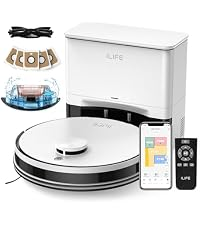
| Specification | ILIFE A30 Pro |
|---|---|
| Robot dimensions | 330 × 330 × 95 mm |
| Robot weight | 2.7 kg |
| Navigation | Laser/LiDAR navigation |
| Maximum suction | 5,000Pa in ILIFE’s 2026 catalog |
| Marketing-page suction claim | 10,000Pa |
| Runtime | ≥180 minutes in ILIFE’s 2026 catalog |
| Dustbin | 200ml |
| Water tank | 200ml |
| Dust bag | 2.5L |
| Station | Self-emptying |
| Mopping | 2-in-1 vacuum and mop |
| Mapping | Multi-floor mapping |
| Controls | App, Alexa, Google Assistant, remote control |
| Climb ability | ≤15mm |
ILIFE’s catalog confirms several of these specifications, while its current product page confirms the dimensions, 2-in-1 tank, self-emptying station, multi-floor mapping, voice controls, and advertised runtime.
What’s Included in the Box
The exact package can vary by market or seller, so the box contents should be checked against the listing before purchase. The A30 Pro ecosystem is built around the robot, charging/self-emptying station, combined dustbin and water tank, mop attachment, mop pad, side brush, filter-related consumables, and remote-control operation.
The inclusion of a physical remote is useful because it means basic cleaning commands do not necessarily depend on smartphone access. Vacuum Wars specifically notes the remote as one of the A30 Pro’s useful features.
Key Features at a Glance
The major features are:
- LiDAR/laser navigation
- Self-emptying station
- 2-in-1 vacuum and mop
- 2-in-1 roller brush
- Multi-floor mapping
- Automatic carpet boost
- App control
- Remote control
- Alexa and Google Assistant compatibility
- Automatic recharge and resume
- No-go and no-mop zones
- Scheduled cleaning
The combination is significant because budget robotic vacuums historically offered simpler navigation and manual dustbin emptying. The A30 Pro attempts to deliver a more automated experience without moving into the most expensive premium category.
Important Specification Differences to Know
One of the most useful pieces of information for prospective buyers is the suction discrepancy.
ILIFE’s 2026 product catalog lists 5,000Pa, while the current global A30 Pro product page displays 10,000Pa. Vacuum Wars’ tested unit is identified with 5,000Pa official suction. This means an article that simply states “the A30 Pro has 10,000Pa suction” without qualification can potentially mislead readers.
Bottom Line: Before buying B0DZ6QQMFJ, check the exact listing, region, packaging, and model information. Specification verification is more useful than assuming every A30 Pro listing contains identical hardware or marketing information.
ILIFE A30 Pro Technology: How the Robot Actually Cleans
The A30 Pro’s most important technological feature is its laser navigation system. Rather than relying only on random bump-and-turn movement, the robot scans its environment and builds a map that can be used for systematic cleaning. This is especially useful in homes with several rooms, furniture, and defined cleaning zones.
ILIFE describes the navigation as smart LiDAR/laser navigation and says the system can create maps and support multiple floors. The company’s product page also provides no-go zones, no-mopping zones, custom areas, and room-selection functions.
LiDAR Navigation and Smart Mapping
LiDAR navigation works by measuring distances around the robot and using those measurements to understand its surroundings. Instead of repeatedly wandering around until it happens to cover the floor, a mapped robot can plan more structured routes.
In practical terms, this can mean:
- More systematic room coverage
- Better route planning
- More predictable cleaning paths
- Easier room-specific cleaning
- Virtual barriers
- Saved floor maps
- Better automatic return-to-dock behavior
Vacuum Wars’ hands-on testing found strong navigation efficiency, with the A30 Pro covering 1.25 square meters per minute in its navigation test. That was above the publication’s reported average of 0.71 square meters per minute for the tested robots.
Field Note: Independent hands-on testing is particularly valuable here because navigation quality cannot be understood from a LiDAR specification alone. Vacuum Wars observed that the A30 Pro covered floor efficiently, and its estimated coverage was 1,763 square feet per charge in that test environment. This is a testing result, not a universal guarantee for every home.
SLAM Mapping: What You Should and Shouldn’t Assume
“SLAM mapping” is often used broadly in the robot-vacuum industry to describe simultaneous localization and mapping. The A30 Pro clearly uses laser-based mapping, but ILIFE’s consumer product materials specifically emphasize LiDAR/laser navigation rather than providing a detailed SLAM algorithm specification.
Therefore, a careful review should describe the robot as a LiDAR-based mapping system rather than claiming a particular proprietary SLAM implementation unless ILIFE documents it.
The practical outcome matters more to most buyers: the robot can create a map, support multiple floors, define rooms, establish virtual barriers, and return to its station automatically.
Suction System and 2-in-1 Roller Brush
The A30 Pro uses a brushless motor and a 2-in-1 roller brush design. ILIFE says the brush maintains close contact with the floor and adapts to uneven surfaces.
The more interesting information comes from independent testing. Vacuum Wars measured 1.92 kPa of suction on its bench and 22 CFM of airflow. Its reported airflow was above the publication’s average of 17 CFM. These are laboratory measurements from that test setup, rather than official ILIFE specifications.
This distinction matters because Pa suction alone does not determine cleaning performance. Airflow, brush contact, floor type, filtration, navigation, and repeated passes can all influence how much debris the robot actually removes.
Water Lift, CFM Airflow and Real-World Cleaning
Water Lift is another measurement sometimes used when evaluating vacuum systems. However, ILIFE does not publish a Water Lift figure for the A30 Pro in the specifications reviewed for this article.
That does not mean the robot has no useful suction. Vacuum Wars measured 1.92 kPa on its suction bench and 22 CFM of airflow. Those measurements provide a more useful independent performance reference than inventing a Water Lift number that the manufacturer has not supplied.
Bottom Line: The strongest documented technology story is not a single suction number. It is the combination of LiDAR navigation, systematic route planning, strong independently measured airflow, a floating roller brush, carpet boost, and automatic dust collection.
Sensors, Cliff Detection and Obstacle Handling
The A30 Pro includes anti-collision, anti-dropping, and anti-stuck sensors. ILIFE describes these as part of its multi-type smart sensor system.
However, buyers should distinguish these sensors from dedicated AI obstacle avoidance.
Vacuum Wars reports that the A30 Pro does not have a dedicated obstacle-avoidance system for recognizing smaller objects such as cables, socks, or toys. That means floor preparation remains important before cleaning.
So, while “AI obstacle avoidance” is an important semantic term in the modern robot-vacuum category, it should not be presented as an A30 Pro capability without qualification.
Auto Recharge and Resume Cleaning
When the battery becomes low, the A30 Pro can return to its station, recharge, and resume cleaning. ILIFE calls this smart battery top-up.
This is more useful than it may initially sound. A robot that needs to complete a larger floor area can divide the job into charging cycles rather than requiring the owner to intervene.
Bottom Line: The A30 Pro’s automation is strongest when the home is prepared for robotic cleaning. Clear cables, small toys, and other loose objects first; then LiDAR mapping, automatic recharge, and scheduled cleaning can reduce everyday intervention.
Vacuuming Performance: Hard Floors, Carpet, Dust and Pet Hair
Vacuuming is where the A30 Pro appears most competitive. Independent testing from Vacuum Wars found strong results for airflow, pet hair, carpet cleaning, crevice pickup, and resistance to hair tangling.
That matters because many shoppers buy a robot vacuum primarily to keep dust, hair, crumbs, and everyday debris under control. Mopping can be useful, but consistent vacuuming is the foundation of a robot cleaner.
Hard-Floor Cleaning Performance
Hard floors are generally one of the easiest environments for a robot vacuum to maintain.
The A30 Pro can be used on surfaces such as:
- Tile
- Laminate
- Vinyl
- Hardwood-type surfaces
- Other relatively smooth floors
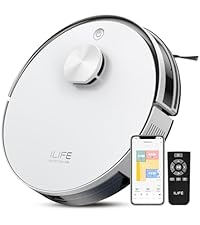
The combination of LiDAR route planning, a side brush, and its roller brush allows the robot to work through rooms systematically rather than relying on random movement.
Vacuum Wars reported that the A30 Pro performed well at picking up different sizes of debris from hard floors and carpets.
The most useful expectation is maintenance cleaning rather than instant deep-cleaning of neglected floors. A scheduled robot that removes dust and crumbs regularly can reduce the amount of debris that accumulates between manual vacuuming sessions.
Carpet Cleaning Performance
Carpet cleaning is more demanding because debris can become embedded below the surface.
The A30 Pro includes automatic carpet boost. ILIFE says it recognizes carpet and increases suction, while Vacuum Wars identifies automatic carpet boost as one of its tested features.
In Vacuum Wars’ carpet deep-cleaning test, the A30 Pro removed 85% of embedded sand from medium-pile carpet. The publication reported a tested average of 78% across its comparison group.
That result suggests the A30 Pro is not simply a hard-floor robot with a token carpet mode. Its brush and airflow combination can provide meaningful carpet maintenance.
Pet Hair and Everyday Household Debris
Pet hair is another area where independent testing was particularly favorable.
Vacuum Wars reported 100% pet-hair pickup in its flattened pet-hair test. It also measured only 11% hair tangling in its main-brush test.
That does not mean every household will experience identical results. Hair length, carpet density, pet type, cleaning frequency, and brush condition all matter.
Still, the test results make pet-hair maintenance one of the more interesting use cases for this robotic vacuum.
Does Higher Pa Automatically Mean Better Cleaning?
No.
A larger Pa number can indicate higher maximum suction pressure, but it does not tell the entire story. A robot vacuum also depends on:
- Airflow
- Brush design
- Floor contact
- Filtration
- Navigation
- Number of passes
- Carpet boost
- Dustbin condition
- Filter condition
The A30 Pro provides a useful real-world example. Its independently measured 22 CFM airflow and 1.92 kPa suction provide additional context beyond the advertised Pa figure.
Bottom Line: If your priority is daily vacuuming, pet hair, dust, and carpet maintenance, the A30 Pro has a stronger documented performance story than its basic mopping system. Its independent testing results support evaluating the entire cleaning system rather than chasing a single suction specification.
Mopping Performance: How Good Is the ILIFE A30 Pro at Wet Cleaning?
The A30 Pro is a genuine 2-in-1 vacuum-and-mop system, but its mopping design is simpler than premium robot vacuum systems.
The robot uses a combined dustbin/water-tank module and a removable flat mop attachment. ILIFE provides water-flow control, while independent testing describes three water-flow levels.
How the A30 Pro Mopping System Works
The combined module contains separate areas for dry debris and water. Once the mop attachment is installed, the robot can apply water to the mop pad while continuing its floor-cleaning routine.
This is convenient for maintenance cleaning because users don’t need a separate manual mop for every light cleaning cycle.
The system is particularly appropriate for:
- Light surface dust
- Footprints
- Everyday floor maintenance
- Small amounts of surface dirt
Tile, Vinyl and Other Hard-Floor Mopping
The A30 Pro is better suited to sealed hard flooring than carpeted areas when the mop is installed.
One important limitation is that the mop pad does not lift automatically over carpet. Vacuum Wars reports that the robot therefore needs no-mop zones or separate vacuum and mopping runs when rugs are present.
That is an important buyer consideration.
A robot that can automatically lift its mop has an advantage in mixed-floor homes because the user does not have to manage carpet boundaries manually.
Mopping Compared With Dedicated Floor Cleaning
A robot mop should usually be considered a maintenance cleaner rather than a replacement for manual scrubbing.
The A30 Pro’s flat pad can wipe a floor repeatedly, but it does not have the aggressive mechanical action found in more advanced rotating, vibrating, or roller-based systems.
Independent testing reflected this limitation. Vacuum Wars reported a 65 score in its legacy dried-stain test and 24 in its newer coffee-only stain test. Those are that publication’s test scores, not manufacturer specifications.
What the A30 Pro Does Not Do
The A30 Pro does not provide the same type of automated mop lifting and advanced scrubbing found on some more expensive systems.
It also does not eliminate the need to wash the mop pad or manually deal with heavier stains.
Field Note: Vacuum Wars’ testing found the A30 Pro left visible residue in dried-stain testing, while its water penalty was relatively low at 0.6 grams. That combination suggests a relatively controlled amount of water but limited aggressive stain removal.
Bottom Line: Think of the A30 Pro’s mop as a useful maintenance feature rather than its primary selling point. For buyers who care mainly about vacuuming, this may be acceptable. For shoppers seeking advanced stain removal and automated carpet-safe mopping, a more sophisticated system deserves comparison.
Self-Emptying Station and Hands-Free Cleaning
The self-emptying station is one of the features that makes the A30 Pro more convenient than a basic robot vacuum.
When the robot finishes cleaning, it can return to its station and transfer collected debris from the onboard dustbin into the disposable station bag. ILIFE says the station uses 12,000Pa dust collection and a 2.5L dust bag.
How the Auto-Empty Dock Works
The normal process is:
Robot finishes → returns to station → station evacuates debris → robot charges → next cleaning cycle
This reduces how often the user needs to manually empty the robot.
The feature is especially useful when the robot runs frequently because a small onboard dustbin would otherwise require repeated attention.
2.5L Dust Bag and Maintenance Interval
The station uses a 2.5L disposable dust bag. ILIFE currently advertises up to seven weeks of use under its stated conditions, while other current ILIFE material describes extended dust-storage capability. Actual replacement frequency depends on household size, pet hair, cleaning frequency, and debris volume.
A pet-owning household may fill a bag faster than a small apartment with one occupant.
Benefits for Busy Households
Self-emptying has several practical benefits:
- Less daily intervention
- Easier scheduled cleaning
- Better suitability for frequent vacuuming
- Less direct contact with collected dust
- More convenient pet-hair management
This is one of the features that makes the robot feel more autonomous.
What Still Requires Manual Maintenance
“Hands-free” does not mean maintenance-free.
Users still need to:
- Clean the mop pad
- Inspect the roller brush
- Clean the side brush
- Maintain filters
- Clean sensors
- Check the charging contacts
- Replace the dust bag
- Maintain the water tank
Bottom Line: The self-emptying station meaningfully reduces routine intervention, but it does not remove maintenance. The A30 Pro automates dust disposal better than it automates wet-floor care.
ILIFE App, Remote Control and Smart-Home Features
The A30 Pro offers multiple control methods, which is useful because different households have different preferences.
ILIFE lists app, Alexa, and Google Assistant support, while the product catalog and independent review also identify remote-control functionality.
Smartphone App Controls
The ILIFE Home app provides features including:
- Scheduling
- Room cleaning
- Zone cleaning
- No-go zones
- No-mop zones
- Map editing
- Suction adjustment
- Water-level adjustment
Vacuum Wars confirmed these core functions but also reported that the app experience was less intuitive than apps from larger competitors.
Remote Control
The included remote can be useful for simple operation.
A user can control basic functions without depending entirely on a smartphone, which can be especially convenient for households where multiple people want to operate the robot.
Alexa and Google Assistant
Smart-home integration allows compatible users to operate the robot with voice commands.
The practical benefit is convenience rather than a dramatic cleaning improvement. A voice command can start or stop cleaning without opening the app.
Mapping, No-Go Zones and Cleaning Customization
The mapping system is more useful than simply displaying a map.
Users can designate:
- Specific rooms
- Custom areas
- No-go zones
- No-mop zones
- Cleaning schedules
ILIFE also supports multi-floor mapping, which means homes with more than one level can benefit from saved floor layouts where the feature operates as intended.
Bottom Line: The A30 Pro provides a good range of smart controls, but the app is not its strongest area. The physical remote is a useful alternative, while LiDAR mapping and zone controls add meaningful automation.
ILIFE A30 Pro Model Comparisons: What Alternatives Should You Consider?
Comparing robot vacuums requires more than comparing suction numbers.
A useful comparison should consider navigation, vacuum performance, mopping, dock automation, app quality, obstacle handling, consumables, and price.
ILIFE A30 Pro vs Other ILIFE Robot Vacuums
ILIFE’s own 2026 catalog shows the A30 Pro alongside models such as the A12 Pro and V9 Pro. The A30 Pro is positioned with laser navigation, self-emptying, mopping, app control, scheduling, and a remote. The V9 Pro uses gyro navigation and has lower published suction and runtime specifications.
| Feature | A30 Pro | Other ILIFE Models |
|---|---|---|
| Navigation | Laser navigation | Model dependent |
| Self-emptying | Yes | Model dependent |
| Mopping | Yes | Model dependent |
| Multi-floor mapping | Yes | Model dependent |
| App control | Yes | Model dependent |
| Remote | Yes | Model dependent |
| Alexa | Yes | Model dependent |
The important point is that the A30 Pro belongs to ILIFE’s more feature-rich mapped-cleaning category.
ILIFE A30 Pro vs Roborock
Roborock offers models across a very wide range, so the exact comparison depends on the specific model.
The A30 Pro’s strongest comparison points are its:
- LiDAR navigation
- Self-emptying station
- Vacuum/mop combination
- Multi-floor mapping
- App controls
- Voice integration
A specific Roborock model may add more advanced obstacle recognition, more sophisticated mopping, or more automated dock functions. However, those features vary substantially by model.
ILIFE A30 Pro vs Eufy
Eufy’s robot vacuum lineup also spans several feature levels.
When comparing a specific Eufy model with the A30 Pro, check:
- Navigation technology
- Obstacle avoidance
- Mop design
- Mop lifting
- Dock automation
- App functionality
- Replacement consumables
- Current price
This approach is more useful than simply comparing advertised suction numbers.
ILIFE A30 Pro vs Dreame and Other Budget LiDAR Robots
Dreame and other manufacturers increasingly offer LiDAR-based budget robots with increasingly advanced mopping and obstacle-detection systems.
The A30 Pro’s key differentiators are its combination of:
LiDAR mapping + self-emptying + strong vacuum testing + pet-hair performance + remote control
Its major compromises are its simpler mopping system and lack of dedicated AI-style obstacle avoidance.
Bottom Line: The right comparison depends on what you value most. A vacuum-focused buyer should examine airflow, brush design, carpet performance, pet-hair pickup, and dock automation; a mop-focused buyer should pay closer attention to pad movement, lifting, scrubbing technology, and stain performance.
ILIFE A30 Pro Maintenance Guide
Even an autonomous cleaner needs routine care.
The easiest way to keep a robot vacuum working consistently is to treat maintenance as part of the cleaning schedule rather than waiting until performance drops.
Cleaning the Roller Brush
Hair and debris can collect around the main roller.
Regular inspection is particularly important in homes with:
- Long hair
- Pets
- Carpets
- Rugs
- High daily cleaning frequency
Vacuum Wars found relatively low hair tangling during its test, but even a low-tangle brush can accumulate debris over time.
Cleaning and Replacing Filters
The filter affects airflow and dust management.
As debris accumulates, airflow can decrease. That is why filter inspection should be part of routine maintenance.
Do not automatically assume the filter is washable unless the manufacturer specifically says it is. Follow the instructions for the exact filter supplied with the unit.
HEPA Efficiency and Sealed System Filtration
HEPA efficiency is an important semantic term in robot vacuum research, but the A30 Pro should not be marketed as a certified HEPA-sealed system unless ILIFE provides that certification for this exact model.
Likewise, “sealed system filtration” should not be presented as an official A30 Pro specification without documentation.
The responsible way to discuss filtration is to explain that filters help capture fine dust while noting that the manufacturer does not provide a detailed HEPA efficiency percentage in the specifications reviewed here.
Cleaning the Mop and Water Tank
After mopping:
- Remove the mop pad.
- Wash it according to the manufacturer’s instructions.
- Empty remaining water when appropriate.
- Allow wet components to dry.
- Check the water tank and attachment.
This helps reduce odor and keeps the mopping system ready for the next cleaning cycle.
Cleaning Sensors, Wheels and Charging Contacts
LiDAR navigation depends on clean sensing components.
Users should periodically inspect:
- LiDAR area
- Cliff sensors
- Wheels
- Side brush
- Charging contacts
- Dock area
Dust or debris around charging contacts can interfere with docking.
Bottom Line: The A30 Pro reduces daily cleaning labor, but brush, filter, sensor, mop, and dock maintenance still determine long-term performance. Automation works best when the machine itself is maintained.
ILIFE A30 Pro Troubleshooting: Common Problems and Fixes
Robot vacuum troubleshooting is usually easier when problems are separated into navigation, charging, cleaning, connectivity, and mopping categories.
| Problem | Possible Cause | What to Check |
|---|---|---|
| Robot won’t start | Battery/dock issue | Charging connection |
| Poor suction | Brush/filter blockage | Clean components |
| Poor mopping | Tank/pad issue | Check water and mop |
| Won’t dock | Obstruction | Clear station area |
| Mapping issue | Navigation obstruction | Re-map and clean sensors |
| App issue | Connectivity | Check network/app |
| Robot gets stuck | Object/threshold | Remove obstruction |
| Leaves debris | Brush/filter blockage | Clean brush/filter |
Robot Vacuum Not Charging
First check whether the robot is sitting correctly on its dock.
Then inspect:
- Charging contacts
- Dock power
- Station placement
- Debris around the contacts
- Battery condition
The automatic recharge feature depends on reliable communication between the robot and station.
Robot Vacuum Not Mapping Correctly
Start with the dock.
The station should have enough clear space for the robot to leave and return. Loose objects, reflective surfaces, dark flooring, or unusual obstacles can also influence navigation.
Vacuum Wars specifically reports that ILIFE warns the A30 Pro’s sensors can struggle with very dark carpets and highly reflective surfaces.
Poor Vacuuming or Hair Pickup
Check the:
- Roller brush
- Side brush
- Filter
- Dustbin
- Suction setting
- Floor type
A blocked brush can reduce pickup even when the motor itself is functioning correctly.
Mopping or Water-Flow Problems
Check:
- Water tank
- Mop attachment
- Mop pad
- Water-flow setting
- No-mop zones
If the floor is carpeted, remember that the A30 Pro’s mop does not lift automatically, so correct no-mop-zone setup is important.
Bottom Line: Most everyday problems can be approached systematically: check the physical components first, then the map/app settings, and finally the operating environment. A clean robot generally performs more consistently than a neglected one.
ILIFE A30 Pro Battery Life, Coverage and Cleaning Time
Battery performance is more complicated than a single runtime number.
ILIFE’s current catalog lists ≥180 minutes of runtime, while the official product page says up to 180 minutes in silent mode and a stated cleaning area of 120㎡.
Battery Runtime
Actual runtime changes with:
- Suction level
- Carpet percentage
- Navigation
- Cleaning mode
- Battery condition
- Floor layout
Maximum runtime should therefore not be interpreted as a guaranteed runtime at maximum suction.
Cleaning Area
A home with many rooms, furniture, rugs, and obstacles can require more movement than an open-plan floor with the same square footage.
That is why measured navigation efficiency can be useful.
Vacuum Wars estimated 1,763 square feet per charge under its testing conditions, exceeding its reported tested average of 1,170 square feet.
Recharge and Resume
The robot can return to its station when the battery becomes low, recharge, and resume cleaning.
This reduces the importance of achieving the entire cleaning area in one uninterrupted run.
How Long Does It Take to Clean a Home?
There is no universal answer.
Cleaning time depends on floor area, furniture density, room layout, cleaning mode, and whether the robot needs to recharge.
Bottom Line: The advertised runtime is useful as a maximum reference, but real-world cleaning coverage depends on the environment. The A30 Pro’s efficient LiDAR route planning helps it make effective use of its available battery.
ILIFE A30 Pro Buyer’s Intent: Who Should Buy It?
The A30 Pro is easier to evaluate when the buyer’s priorities are clear.
This is not simply a question of whether the robot is “good.” The more useful question is whether its feature mix matches the household.
Who the ILIFE A30 Pro Makes Sense For
The A30 Pro can make sense for people who want:
- Automated daily vacuuming
- LiDAR mapping
- Self-emptying
- Pet-hair maintenance
- Carpet cleaning
- Hard-floor cleaning
- Scheduled operation
- Multi-floor mapping
- Remote control
- Basic smart-home integration
Its independent vacuuming results make it particularly interesting for users who prioritize vacuum performance over advanced mopping.
Who May Want a Different Robot Vacuum
Another model may be more appropriate for buyers who specifically want:
- Advanced AI obstacle avoidance
- Mop lifting over carpets
- Stronger stain scrubbing
- More sophisticated mopping
- More advanced dock automation
- A more mature premium app ecosystem
Vacuum Wars specifically identifies the lack of dedicated obstacle avoidance and the basic mopping system as limitations of the A30 Pro.
Questions to Ask Before Buying
Before purchasing, ask:
Do I mainly need vacuuming or mopping?
If vacuuming is the priority, the A30 Pro’s independent results are encouraging.
Do I have pets?
Its pet-hair test performance was one of its strongest areas.
Do I have carpets and rugs?
Yes, but mopping requires special attention because the mop does not automatically lift.
Do I need advanced obstacle avoidance?
If your floors regularly contain cables, toys, socks, or other small objects, a robot with dedicated object recognition may deserve consideration.
Do I need multi-floor mapping?
The A30 Pro officially supports multi-floor mapping.
Do I want to empty the robot every day?
The self-emptying station is designed specifically to reduce this task.
Value Assessment
A sensible value calculation should include:
Features → cleaning requirements → maintenance → purchase price → alternatives → warranty/support → consumables
The lowest purchase price is not always the lowest ownership cost.
Similarly, paying more for features you never use does not necessarily improve your experience.
Bottom Line: The A30 Pro’s buyer profile is relatively clear: prioritize vacuuming, LiDAR navigation, pet-hair pickup, and self-emptying, and accept that mopping and obstacle avoidance are less sophisticated than on some premium alternatives.
ILIFE A30 Pro Pros and Cons
A useful review should show both sides of the product.
Potential Advantages
- LiDAR/laser navigation
- Self-emptying station
- 2-in-1 vacuum and mop
- Multi-floor mapping
- Automatic recharge and resume
- Remote control
- Alexa and Google Assistant compatibility
- Strong independently tested airflow
- Strong pet-hair pickup in testing
- Low hair tangling in testing
- Good carpet deep-cleaning result
- 2.5L disposable dust bag
Vacuum Wars’ hands-on results support several of these advantages, particularly vacuuming, pet hair, navigation, and auto-empty convenience.
Potential Limitations
- Basic fixed-pad mopping
- No dedicated AI obstacle-avoidance system
- Small onboard 200ml dustbin
- Small onboard 200ml water tank
- App experience has reported limitations
- Dark/reflective surfaces can create sensor challenges
- Requires regular brush and filter maintenance
- Conflicting published suction figures
Best Use Cases
The A30 Pro is particularly suited to:
- Daily maintenance cleaning
- Pet-hair pickup
- Hard floors
- Low-to-medium-pile carpet
- Scheduled vacuuming
- Homes wanting self-emptying
- Users who prefer remote control
Situations Requiring More Research
Consider alternatives carefully if:
- Mopping is your highest priority
- Your home contains many small obstacles
- You need advanced AI object recognition
- You want automatic mop lifting
- You expect heavy stain removal from the robot alone
Bottom Line: The A30 Pro’s strengths are concentrated around vacuuming and automation. Its limitations become more noticeable when the buyer expects premium mopping or advanced object avoidance.
Final Verdict: ILIFE A30 Pro Robot Vacuum and Mop Review
The ILIFE A30 Pro is an interesting example of how budget robot vacuums have moved beyond basic random navigation.
Its LiDAR system provides structured mapping, and independent testing found efficient navigation. Its vacuuming performance is the more convincing part of the package, with strong airflow, impressive pet-hair pickup, relatively low brush tangling, and a solid carpet deep-cleaning result.
The self-emptying station adds meaningful convenience, while multi-floor mapping, scheduled cleaning, no-go zones, no-mop zones, remote control, and smart-home integration make the robot considerably more autonomous than simpler entry-level models.
The mopping system is where expectations need to be controlled. Its flat pad and electronically controlled water delivery can handle routine maintenance, but independent testing found below-average stain-removal performance. It also lacks automatic mop lifting, making carpet boundaries more important.
There is also an important specification issue. ILIFE’s 2026 catalog lists 5,000Pa maximum suction, while the current product page advertises 10,000Pa. Because of that discrepancy, buyers should verify the specification of their exact B0DZ6QQMFJ listing rather than relying on a single number.
Our findings: The A30 Pro’s strongest documented qualities are systematic LiDAR navigation, everyday vacuuming, pet-hair pickup, carpet performance, and automated dust disposal.
Its main compromises: basic mopping, no dedicated AI obstacle avoidance, app limitations, and specification inconsistency across current ILIFE materials.
Bottom Line: The A30 Pro should be evaluated primarily as a capable automated vacuum that also happens to mop, rather than as a premium robot mop that happens to vacuum. That distinction makes its strengths and limitations much easier to understand.
Frequently Asked Questions About the ILIFE A30 Pro
Is the ILIFE A30 Pro a good robot vacuum?
The A30 Pro has a strong feature set for automated vacuuming, including LiDAR navigation, self-emptying, multi-floor mapping, scheduled cleaning, and automatic recharge. Independent testing found particularly strong results for pet hair, airflow, carpet cleaning, and navigation efficiency.
Its main weaknesses are its simpler mopping system and lack of dedicated obstacle avoidance.
Does the ILIFE A30 Pro have LiDAR?
Yes. ILIFE describes the A30 Pro as a laser-navigation robot vacuum and states that its LiDAR system scans the home environment for mapping and navigation.
LiDAR helps the robot create a structured map and plan cleaning routes rather than depending entirely on random movement.
How much suction does the ILIFE A30 Pro have?
This requires careful explanation.
ILIFE’s 2026 product catalog lists 5,000Pa maximum suction, and Vacuum Wars identifies the tested A30 Pro with 5,000Pa official suction. However, ILIFE’s current product page also displays 10,000Pa in its marketing material.
Therefore, buyers should verify the exact specification attached to their model and seller listing.
Does the ILIFE A30 Pro empty itself?
Yes. It includes a self-emptying station designed to transfer debris from the robot into a disposable 2.5L dust bag. ILIFE states that the station uses 12,000Pa dust collection.
Actual dust-bag replacement frequency depends on household conditions.
How long does the ILIFE A30 Pro battery last?
ILIFE’s current materials list up to approximately 180 minutes of runtime, with the catalog specifying ≥180 minutes. The exact runtime depends on cleaning mode, suction level, floor type, navigation, and other conditions.
Can the ILIFE A30 Pro vacuum and mop at the same time?
The A30 Pro is designed as a 2-in-1 vacuum-and-mop system with a combined dustbin and water-tank module. However, its mop attachment is a fixed-pad design and does not automatically lift over carpet.
For mixed-floor homes, no-mop zones may therefore be important.
Does the ILIFE A30 Pro work with Alexa?
Yes. ILIFE lists compatibility with Alexa and Google Assistant/Google Home for voice control.
Is the ILIFE A30 Pro good for pet hair?
Independent testing was particularly positive in this area. Vacuum Wars reported 100% pet-hair pickup in its flattened pet-hair test and 11% hair tangling in its brush test. These results come from that publication’s controlled testing environment and should not be treated as a guarantee for every household.
Can the ILIFE A30 Pro clean carpets?
Yes. The A30 Pro supports carpet cleaning and automatic carpet boost. Vacuum Wars reported an 85% result in its medium-pile carpet deep-clean test, compared with a reported 78% average in its comparison dataset.
Does the ILIFE A30 Pro have AI obstacle avoidance?
It should not be described as having a dedicated AI obstacle-avoidance system.
The robot has anti-collision, anti-dropping, and anti-stuck sensors, but Vacuum Wars reports that the A30 Pro lacks a dedicated obstacle-recognition system for smaller objects. Users should therefore clear cables, toys, socks, and similar items before cleaning.
Does the ILIFE A30 Pro support multi-floor mapping?
Yes. ILIFE specifically lists multi-floor mapping as a feature of the A30 Pro.
Does the ILIFE A30 Pro use HEPA filtration?
A careful review should not claim a specific HEPA efficiency percentage unless ILIFE provides certification for the exact model.
The A30 Pro does use filtration to capture dust, but the reviewed manufacturer specifications do not provide a verified HEPA efficiency figure. Therefore, “HEPA efficiency” and “sealed system filtration” should be treated as comparison concepts rather than confirmed specifications.
What is the CFM airflow of the ILIFE A30 Pro?
Vacuum Wars measured 22 CFM airflow in its testing. The publication reported that this was higher than its tested average of 17 CFM. CFM is an airflow measurement, not an official ILIFE specification.
What is the Water Lift rating of the ILIFE A30 Pro?
ILIFE does not provide a verified Water Lift figure in the specifications reviewed for this article.
Because of that, a specific Water Lift number should not be invented or presented as an official specification.
Does the ILIFE A30 Pro have a sealed filtration system?
ILIFE’s reviewed materials do not provide enough information to substantiate a specific sealed-system filtration certification.
It is therefore more accurate to discuss its filter and dust-management system without claiming a laboratory-certified sealed filtration rating.
How often should I clean the ILIFE A30 Pro?
The roller brush, side brush, filter, sensors, charging contacts, mop pad, and water tank should be inspected and maintained regularly. Homes with pets or heavy debris generally require more frequent maintenance.
The exact replacement intervals should follow ILIFE’s instructions for the specific consumable.
Is the ILIFE A30 Pro worth buying?
The answer depends on the buyer’s priorities.
Its documented strengths are vacuuming, pet-hair pickup, LiDAR navigation, self-emptying, and automated cleaning. Its weaker areas are mopping performance, advanced obstacle avoidance, and app refinement. Independent testing supports this distinction.
For a buyer primarily seeking an automated vacuum with mapping and dust disposal, those strengths may be more important than advanced mopping features. A buyer focused on stain removal or highly automated mixed-floor mopping should compare other models before purchasing.
What is B0DZ6QQMFJ?
B0DZ6QQMFJ is the identifier used in the search query/listing context for the ILIFE A30 Pro. When purchasing, buyers should still verify the exact product name, model, included accessories, warranty, and specifications attached to the listing because online specifications can vary.
Final Bottom Line: The ILIFE A30 Pro is a feature-rich robotic vacuum system whose most convincing qualities are LiDAR navigation, automated dust collection, everyday vacuuming, pet-hair pickup, and efficient floor coverage. Its fixed-pad mopping and limited obstacle recognition are meaningful compromises, while the conflicting published suction figures make exact listing verification important before purchase.