
Quick Verdict: fanttik slim v10 apex cordless car vacuum review
Fanttik Slim V10 APEX cordless car vacuum review results show a lightweight 4-in-1 cleaner built for quick car detailing, with strong advertised suction and versatile attachments. It suits drivers cleaning crumbs, dust, sand, hair, and tight spaces, but it is not a replacement for a full-size household vacuum.
The V10 APEX sits in an interesting part of the cordless vacuum market. Instead of trying to compete with large stick vacuums on dust capacity or extended cleaning sessions, it focuses on portability and accessibility. Its compact body can be carried directly to the mess rather than requiring a full-size floor vacuum.
Fanttik lists the machine with 19,000Pa maximum suction, 10,000Pa low-mode suction, and a 120W brushless motor. The company also specifies a 120ml dustbin, USB-C charging, an LED display, and four functions: vacuuming, blowing, inflating, and deflating.
For car owners, those specifications make sense because vehicle interiors contain many areas that are awkward to reach with conventional vacuum heads. Cup holders, seat rails, door pockets, dashboard seams, center consoles, and narrow gaps benefit from a small crevice tool and a lightweight handheld body.
The trade-off is capacity. A 120ml dustbin is tiny compared with the container on a full-size cordless stick vacuum, and the manufacturer’s claimed 15-minute high-mode / 30-minute low-mode runtime is designed more for short maintenance sessions than prolonged deep cleaning.
Bottom Line: The V10 APEX is best understood as a portable car-detailing vacuum for frequent small cleanups. Its combination of 19,000Pa suction, compact dimensions, multiple attachments, and 4-in-1 functionality is compelling, but its small dustbin and limited maximum-power runtime define its limits.
Key Specifications at a Glance
| Specification | Fanttik Slim V10 APEX |
|---|---|
| Maximum suction | 19,000Pa |
| Low-mode suction | 10,000Pa |
| Motor | 120W brushless motor |
| High-mode runtime | Up to 15 minutes |
| Low-mode runtime | Up to 30 minutes |
| Dustbin capacity | 120ml |
| Charging | USB-C / Type-C |
| Weight | Approximately 1.2 lb / 521g |
| Functions | Vacuum / blower / inflator / deflator |
| Filter | HEPA filter |
| Display | HD smart digital display |
| Charging time | Approximately 2.5 hours |
Fanttik’s current product page lists these core specifications, including 19kPa/10kPa suction, 15–30 minute runtime, 120ml dust capacity, 1.2-lb weight, Type-C charging, and the four operating functions.
One important point for reviewers is that manufacturer specifications should not automatically be treated as independent laboratory measurements. Suction ratings can depend on how and where pressure is measured, while battery runtime varies with operating mode, airflow resistance, filter condition, battery age, and attachment choice.
That is particularly relevant when discussing CFM airflow and Water Lift (inches). Pascal ratings describe pressure, but they don’t tell the complete story about how effectively a vacuum transports dirt. A good review therefore considers pressure, airflow, nozzle design, filtration, and actual usability together.
Bottom Line: The specification sheet is impressive for such a small machine, but the real question is whether those numbers translate into useful car-cleaning performance.
Pros and Cons
Pros
- 19,000Pa advertised maximum suction
- 10,000Pa low-mode suction
- 120W brushless motor
- Approximately 521g / 1.2 lb body
- 4-in-1 vacuum, blower, inflator, and deflator
- USB-C charging
- HD digital display with battery and mode information
- Multiple cleaning attachments
- Compact enough for vehicle storage
- Designed for tight spaces and detail cleaning
- Useful for crumbs, dust, sand, hair, and small debris
Cons
- 120ml dustbin fills much faster than a full-size vacuum container
- Maximum-power runtime is limited
- Approximately 2.5-hour charging time
- Not intended for whole-house vacuuming
- Small body limits sustained cleaning capacity
- Strong Pa rating does not automatically mean class-leading airflow
- Compact motor can become warm during demanding operation
Fanttik currently positions the product specifically for car interiors, desks, computer keyboards, and detail cleaning rather than large-scale household floor cleaning.
The product’s biggest strength is therefore not simply suction. It is the combination of suction and accessibility. A vacuum that is always nearby can be more useful for daily crumbs than a more powerful machine that takes several minutes to unpack.
Bottom Line: The V10 APEX makes the strongest case for itself as a dedicated portable maintenance vacuum, not as a universal replacement for a household cordless cleaner.
What This Review Will Test
A proper product assessment should look beyond the headline suction number. Our findings therefore focus on the engineering factors that determine whether a compact cordless vacuum is genuinely useful in a vehicle.
The important areas include suction behavior, airflow, battery runtime, filtration, dustbin capacity, attachment design, ergonomics, charging, noise, heat, and long-term maintenance. Each factor affects how practical the vacuum becomes after the novelty of the first few uses wears off.
We also look at common vehicle-cleaning tasks: loose crumbs, sand, fine dust, hair, pet hair, fabric debris, floor mats, seats, cup holders, center consoles, door pockets, and narrow crevices.
Bottom Line: The goal is not simply to determine whether the V10 APEX has strong specifications. The goal is to determine whether those specifications create a genuinely useful everyday car-cleaning tool.
Fanttik Slim V10 APEX Design, Build Quality & Ergonomics
Compact Form Factor and Weight
The defining characteristic of the V10 APEX is its slim handheld form. Fanttik lists the product at approximately 1.2 lb, or roughly 521g, which puts it firmly in the lightweight portable-vacuum category.
That weight matters more in a car than it might initially appear. Vehicle cleaning often requires holding the vacuum at unusual angles, reaching underneath seats, stretching into footwells, or working around steering wheels and center consoles.
A heavy handheld vacuum can quickly become tiring when cleaning upholstery or repeatedly moving between the driver’s and passenger’s sides. A compact machine reduces that physical burden and makes short cleaning sessions more convenient.
Our design assessment also favors the slim approach for storage. The product can be treated more like an automotive accessory than a household appliance, making it practical to keep near other car-detailing equipment.
Bottom Line: The approximately 521g body is one of the V10 APEX’s most important specifications because portability directly affects how often you’ll actually use the machine.
Materials and Overall Build
The V10 APEX uses a cylindrical, compact design rather than the traditional upright architecture of a cordless stick vacuum. That keeps the center of mass close to the user’s hand and leaves the front of the machine available for different attachments.
This configuration makes sense for a car vacuum because the user needs precision more than a large floor-cleaning head. Instead of pushing a wide brush across a room, you’re navigating around seats, consoles, cup holders, vents, and narrow spaces.
The product’s current positioning also emphasizes its compact form and detailing-oriented use rather than high-capacity household cleaning. Fanttik’s own product information specifically mentions car interiors, office desks, computer keyboards, and other detailed cleaning applications.
Bottom Line: The construction philosophy is appropriate for its intended purpose: small size, direct control, and easy access rather than maximum dust capacity.
Grip, Controls and One-Button Operation
The control layout is intentionally simple. Fanttik says the Slim V10 APEX uses a long press of the circular power button to turn the vacuum on, while the display communicates operating status and suction mode.
That simplicity is useful during car cleaning. You don’t want to navigate through complicated controls when switching between the driver’s footwell and a narrow cup holder.
The one-button dust disposal system is another practical detail. Instead of requiring a complicated disassembly every time the container needs emptying, the mechanism is intended to simplify debris disposal.
For a small car vacuum, this kind of usability can matter almost as much as raw suction. If emptying the dustbin is annoying, users are more likely to postpone maintenance.
Bottom Line: Simple controls fit the product category well. The V10 APEX is designed to be picked up, switched on, used, and put away without a complicated setup process.
LED Display and User Feedback
The V10 APEX includes an HD digital display that shows operating information. Fanttik says the display provides battery information through a ring-style indicator, while “H/L” communicates high- and low-mode operation.
This is more useful than a decorative screen because battery awareness is important in a cordless car vacuum. When you’re halfway through cleaning a vehicle, knowing whether you’re running in high or low mode can help you manage remaining battery life.
The display also makes the product feel more modern than a basic handheld vacuum with only a physical power switch. However, the screen should still be considered a convenience feature rather than a major performance advantage.
Bottom Line: The display adds useful feedback, particularly for battery and suction-mode awareness, but it doesn’t change the underlying cleaning capability.
Fanttik Slim V10 APEX Technology and Suction Performance
19,000Pa Suction: What Does It Actually Mean?
The headline specification is 19,000Pa maximum suction. Pa, or Pascal, is a unit of pressure, and vacuum manufacturers commonly use it to communicate the pressure difference a vacuum can generate.
The mistake is assuming that a larger Pa number automatically means a better cleaner. Vacuum performance depends on more than pressure. CFM airflow, nozzle geometry, filter resistance, motor efficiency, and the distance between the suction inlet and the debris all influence real pickup.
A vacuum with impressive pressure but poor airflow may struggle to move larger debris efficiently. Conversely, a well-designed airflow path can make a machine feel more effective even when its headline suction rating is lower.
This is where Water Lift (inches) can also become relevant in technical vacuum testing. Water Lift measures another aspect of suction pressure, but like Pa, it should not be interpreted as a complete measure of cleaning ability.
Bottom Line: 19,000Pa is a strong advertised figure for a compact handheld machine, but it should be evaluated alongside airflow and nozzle performance rather than treated as a standalone quality score.
120W Brushless Motor
At the heart of the V10 APEX is a 120W brushless motor. Brushless motors eliminate the traditional mechanical brushes used in brushed motor designs, allowing manufacturers to build compact motors with electronically controlled operation.
For a handheld vacuum, compactness is important. A motor that can generate strong suction without requiring a large housing helps the manufacturer maintain the slim form factor.
Brushless motors can also offer efficiency and durability advantages compared with traditional brushed designs, although motor quality, electronics, battery management, and cooling all influence real-world longevity.
Fanttik specifically promotes the brushless motor as part of the V10 APEX’s performance architecture.
Bottom Line: The 120W brushless motor is an appropriate engineering choice for a compact cordless vacuum because it supports high output without requiring the physical size of a conventional household motor.
High vs Low Suction Modes
The V10 APEX provides two suction settings: 19,000Pa high mode and 10,000Pa low mode according to Fanttik’s current specification.
High mode is the setting to reach for when dealing with heavier debris, sand, embedded dirt, or stubborn particles. It provides the maximum advertised suction but consumes more battery power.
Low mode is better suited to routine dusting, light crumbs, desks, keyboards, upholstery, and longer cleaning sessions. Fanttik claims up to 30 minutes of runtime in low mode, compared with approximately 15 minutes in high mode.
This is an important trade-off. Maximum power is useful, but running a compact cordless vacuum continuously at its highest setting is rarely necessary for every task.
Bottom Line: Use 19,000Pa when you need maximum pickup power and 10,000Pa when conserving battery runtime matters more than peak suction.
Real-World Cleaning Performance
For car interiors, the most important test is not whether the vacuum can lift a single piece of debris. The question is how consistently it handles the mixture of dirt normally found inside a vehicle.
Loose crumbs are among the easiest jobs. The V10 APEX’s narrow form and crevice tools are well suited to collecting food particles from seats, floor mats, door pockets, and console areas.
Sand is more demanding because it can settle deeply into carpet fibers and floor mats. Here, nozzle design becomes important. High suction can help, but repeated passes may still be required when particles are embedded.
Fine dust and hair present a different challenge. Fine dust places greater demands on filtration, while hair can wrap around brushes or collect in narrow attachment openings. This is why regular filter maintenance is important for maintaining airflow.
Pet hair is particularly dependent on the attachment being used. Fanttik includes a pet-oriented brush among its accessory package, which gives the V10 APEX more flexibility for upholstery and fabric surfaces.
Bottom Line: The V10 APEX is best suited to loose and moderately embedded vehicle debris. Its compact tools are especially valuable in areas where a large vacuum head cannot reach efficiently.
How Suction Should Be Judged Against Modern Vacuum Technology
It is easy to compare every vacuum using the same terminology, but different categories prioritize different engineering.
A robotic vacuum may emphasize suction alongside LiDAR navigation, SLAM mapping, AI obstacle avoidance, and multi-floor mapping because it needs to navigate a home without constant user control.
A smart vacuum can additionally rely on scheduling, app controls, room recognition, and smart home integration. Those features are important for autonomous floor cleaning but irrelevant when judging a handheld car vacuum.
The V10 APEX has a much narrower job. Its engineering priority is direct human control, compactness, battery runtime, filtration, suction, and accessory flexibility.
Bottom Line: The V10 APEX should be judged as a portable automotive vacuum, not against autonomous cleaner features designed for completely different cleaning workflows.
4-in-1 Functionality — Vacuum, Blower, Inflator & Deflator
Vacuum Mode
Vacuuming is naturally the V10 APEX’s primary function. The system is designed to remove dust, crumbs, hair, debris, and other small particles from vehicle interiors.
The combination of the main vacuum body and narrow attachments is particularly useful around areas where conventional vacuum heads struggle. Cup holders, seat seams, center-console gaps, dashboard edges, and door pockets are all natural applications.
The 120ml dustbin, however, establishes a practical limit. If the interior is heavily contaminated, you’ll need to empty the container more frequently than you would with a full-size vacuum.
Bottom Line: Vacuum mode is where the V10 APEX provides its greatest value, especially for frequent maintenance cleaning rather than large-scale deep cleaning.
Blower Mode
The blower function changes the cleaning strategy. Instead of trying to pull dust directly out of every narrow area, blowing can loosen particles first.
This can be useful around dashboard seams, vents, switches, crevices, and other places where dust becomes trapped. After loosening the debris, the vacuum can collect it from the surrounding area.
For detailing enthusiasts, this two-stage approach can be useful. Blowing first and vacuuming second can reduce the amount of manual brushing required.
Bottom Line: The blower function is most useful for loosening dust from difficult areas before vacuuming, rather than replacing the vacuum function.
Inflator and Deflator Functions
The other two functions expand the product beyond conventional vacuuming. Fanttik describes the V10 APEX as a device capable of vacuuming, blowing, inflating, and deflating.
Inflation is intended for compatible smaller inflatable items, while the deflation capability can be useful for removing air from storage bags and similar items.
These features are useful if you actually need them, but they should not be the primary reason to buy the product. Someone looking specifically for a high-volume inflator should choose a dedicated pump designed for that purpose.
Bottom Line: The additional functions increase versatility, but the V10 APEX’s core value remains portable vacuuming and detail cleaning.
Is the 4-in-1 Design Actually Useful?
The 4-in-1 concept works because each function uses the same compact platform for a different airflow task.
For a car owner, vacuuming and blowing are likely to receive the most use. Inflating and deflating are more occasional functions, but having them available can eliminate the need for another small device.
That makes the feature more than a marketing number, although its value depends heavily on the buyer. If you never inflate small items or vacuum storage bags, those modes shouldn’t influence your purchase decision significantly.
Bottom Line: The 4-in-1 design is genuinely useful for buyers who value versatility, but the vacuum function should remain the deciding factor.
Fanttik Slim V10 APEX Accessories & Car Detailing Versatility
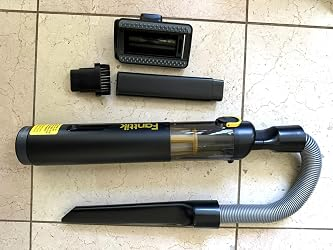
Crevice and Brush Attachments
Small attachments are essential to the V10 APEX because the vacuum itself is designed around precision rather than wide-area floor cleaning.
The crevice nozzle is particularly useful for seat gaps, console seams, door pockets, and narrow spaces around the center tunnel. These areas often collect crumbs and fine debris that are difficult to remove with a larger vacuum head.
Brush attachments are more appropriate for dashboards, fabric, upholstery, vents, and delicate surfaces where direct suction alone may not loosen particles effectively.
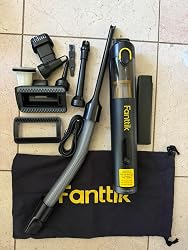
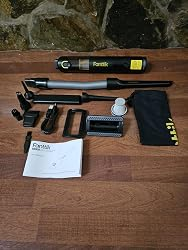
Fanttik lists a package containing a crevice nozzle, multiple brush attachments, blower accessories, and a long hose.
Bottom Line: The accessory system is a major part of the V10 APEX’s usefulness. The vacuum’s small size becomes much more valuable when paired with the right attachment for each surface.
Extension Hose
An extension hose can make a surprisingly large difference during vehicle cleaning. Instead of holding the main motor unit directly against every surface, the hose allows the user to position the vacuum more comfortably.
This is particularly useful under seats and around awkward angles. It can also reduce wrist rotation because the attachment can reach the debris while the main body remains in a more natural position.
For larger vehicles such as SUVs and trucks, the extra reach becomes even more useful because the cleaning area is larger.
Bottom Line: The extension hose is one of the accessories most likely to improve real-world ergonomics, especially when cleaning under seats and other difficult areas.
Pet Hair and Upholstery Cleaning
Pet hair is a tougher test for compact vacuums because hair can cling to fabric rather than simply sitting on the surface.
The V10 APEX includes a pet-oriented brush, giving users a better option for upholstery and fabric surfaces than a plain crevice tool.
However, users should maintain realistic expectations. Severely embedded pet hair may require repeated passes or mechanical agitation before the vacuum can collect it efficiently.
The same principle applies to carpeted floor mats. Surface debris is relatively straightforward, while deeply embedded hair and sand require more work.
Bottom Line: The pet brush increases the V10 APEX’s usefulness for pet owners, but heavily embedded hair may still require multiple passes and manual agitation.
Accessory Storage and Everyday Convenience
Fanttik advertises 10 practical accessories for the V10 APEX, including crevice, brush, pet, blower, and related attachments.
The important question is not whether all ten accessories will be used equally. Most owners will likely rely heavily on a few core pieces: the crevice tool, brush, hose, and whichever attachment works best for upholstery.
For everyday car storage, keeping the most frequently used attachments together with the vacuum is more practical than carrying the entire accessory collection every time.
Bottom Line: The accessory package adds meaningful versatility, but buyers should identify their regular cleaning tasks instead of assuming every attachment is equally important.
Battery Runtime, Charging & Everyday Usability
Battery Runtime in High and Low Modes
Battery runtime is one of the most important limitations to understand before buying a compact cordless vacuum.
Fanttik currently rates the V10 APEX for approximately 15 minutes in high mode and up to 30 minutes in low mode.
That range makes sense for the intended use. A quick five-minute cleanup can be completed comfortably, while a full vehicle detailing session may require more careful power management.
Battery runtime is also affected by the attachment being used, airflow resistance, filter condition, battery age, and whether the motor is continuously operated at maximum power.
Bottom Line: The advertised 15–30 minute battery runtime is enough for routine car maintenance, but buyers planning extended deep-cleaning sessions should consider the limitations of a compact battery-powered design.
USB-C Charging and 2.5-Hour Charge Time
USB-C charging is one of the more convenient aspects of the V10 APEX. Fanttik lists a Type-C charging port, making the device easier to integrate into modern charging setups.
It can also be charged in a vehicle when an appropriate USB-C power source is available. That is useful for people who want to keep the vacuum ready for road trips or regular commuting.
The downside is charging time. Fanttik lists approximately 2.5 hours for the V10 APEX.
For occasional spot cleaning, this isn’t a major issue. It becomes more relevant if the battery is completely depleted during a longer detailing session.
Bottom Line: USB-C improves convenience, but the approximately 2.5-hour charging time means you should keep the vacuum charged rather than waiting until the battery is empty.
Battery Performance Over Time
Like other rechargeable cordless tools, the V10 APEX’s battery will gradually lose capacity over its service life.
Users can help preserve battery performance by avoiding unnecessary extreme discharge, storing the device appropriately, and keeping the airflow path clear during operation.
A clogged filter or blocked nozzle can also make the motor work harder, increasing the strain placed on the system during operation.
Bottom Line: Battery care isn’t complicated, but regular charging habits and clean airflow can help maintain usable runtime over the long term.
Is the Runtime Enough for a Full Car?
For a small sedan that receives regular maintenance cleaning, the available runtime can be adequate if the user works efficiently.
A heavily soiled SUV or truck is different. Larger interiors simply require more passes, particularly when cleaning carpets, mats, upholstery, and multiple rows of seating.
The best strategy is to use high mode selectively. Use 19,000Pa when dealing with stubborn debris, then switch to 10,000Pa for lighter dust and longer cleaning tasks.
Bottom Line: The V10 APEX can handle routine cleaning of a typical vehicle, but it is better suited to frequent short sessions than occasional full-detailing marathons.
Filtration, Dustbin Capacity & Maintenance
120ml Dustbin: Is It Big Enough?
The 120ml dustbin is one of the clearest examples of the V10 APEX’s portability trade-off.
A small dustbin helps keep the vacuum compact and lightweight, but it means heavily contaminated interiors will require more frequent emptying.
For routine crumbs and dust, this is manageable. For a vehicle that hasn’t been cleaned for months, the capacity can become a limitation quickly.
Bottom Line: 120ml is appropriate for a compact maintenance vacuum, but users should expect more frequent emptying than with a full-size cordless vacuum.
HEPA Filtration System
Filtration is particularly important when collecting fine dust. A good filter helps prevent captured particles from simply passing through the machine and returning to the surrounding air.
The V10 APEX uses a HEPA filter, and Fanttik sells replacement filters for its Slim/V10 APEX vacuum ecosystem.
This makes filter maintenance an important part of ownership. As dust accumulates, airflow can become restricted, which can eventually reduce cleaning performance.
The relationship between HEPA efficiency and airflow is therefore a balancing act. Filtration needs to capture particles effectively without becoming so clogged that the motor struggles to move air.
Bottom Line: The HEPA filter is an important performance component, not merely a specification to check off a list. Keeping it clean helps preserve airflow and suction.
How to Clean the Filter
A practical maintenance routine should be simple:
- Turn the vacuum off.
- Remove the dust container.
- Remove the filter according to the product design.
- Remove accumulated dust and debris.
- If the component is washable, follow the manufacturer’s cleaning instructions.
- Allow washable parts to dry completely before reinstalling.
- Reassemble the filtration system correctly.
The key point is to avoid reinstalling a wet filter. Moisture inside the airflow system can create additional problems and should be avoided unless the manufacturer explicitly specifies otherwise.
Bottom Line: Regular filter cleaning is one of the easiest ways to preserve the vacuum’s airflow and maintain consistent suction.
Filter Replacement and Long-Term Maintenance
Fanttik currently sells replacement HEPA filters for its vacuum lineup and recommends model-specific replacement parts. Its accessory guidance states that cleaning-vacuum HEPA filters should generally be replaced every 3–6 months depending on usage, although actual replacement needs depend on operating conditions.
Heavy users who frequently clean sand, pet hair, or fine dust may need to inspect the filter more often than occasional users.
Signs of a filter that needs attention include noticeably weaker suction, reduced airflow, increased motor noise, or debris accumulating unusually quickly around the filtration area.
Bottom Line: Filter maintenance is inexpensive compared with replacing a vacuum prematurely. Check the filter regularly and replace it when cleaning no longer restores normal airflow.
Noise, Heat & Real-World Comfort
Noise Level
Noise is an unavoidable consideration with compact high-speed motors. A small vacuum has to generate substantial airflow through a relatively compact system, which can produce a noticeable motor sound.
Rather than focusing only on a single decibel number, users should consider where and how the vacuum will be used. A short five-minute cleanup is very different from operating the vacuum continuously for a full detailing session.
High mode will naturally be the more aggressive setting, while low mode is more appropriate when maximum suction is unnecessary.
Bottom Line: The V10 APEX should be treated as a performance-oriented handheld vacuum rather than a silent cleaning device. Short cleaning sessions make its noise less significant than they would be for extended household use.
Heat During Extended Cleaning
Heat is another consideration with compact cordless equipment. A small brushless motor operating at high output can become warm, particularly when airflow is restricted.
This is why maintaining the filter and avoiding blocked nozzles matters. A clean airflow path allows the system to operate more efficiently and reduces unnecessary strain.
Users should also avoid treating the V10 APEX like a shop vacuum designed for continuous heavy-duty operation. Its compact architecture is optimized for portability and short cleaning tasks.
Bottom Line: Some warmth during demanding operation is not surprising in a compact high-output cordless vacuum, but blocked airflow and neglected filters can make the situation worse.
Ergonomics During Car Detailing
Ergonomics is where the V10 APEX’s compact size becomes a genuine performance advantage.
A 1.2-lb / approximately 521g body is much easier to reposition repeatedly than a heavier vacuum. This matters when cleaning different sections of a vehicle or holding the tool at an angle underneath a seat.
The extension hose and narrow attachments can further reduce awkward wrist positions. Instead of forcing the main motor into every space, users can place the attachment where the debris is located.
Our design findings therefore favor the V10 APEX for short, targeted cleaning sessions. The product’s ergonomics are closely aligned with its intended use.
Bottom Line: For car detailing, low weight is more than a comfort feature. It makes precision cleaning easier and reduces the physical friction that often discourages frequent interior maintenance.
Daily-Carrying Convenience
The biggest advantage of the V10 APEX may ultimately be that it is easy to keep ready.
A large vacuum normally requires storage, setup, attachment selection, and access to a suitable power source. A compact cordless car vacuum removes much of that friction.
For commuters, families, pet owners, and anyone who frequently deals with crumbs or dust, having a small cleaner available can encourage more frequent spot cleaning.
The V10 APEX also avoids the complexity associated with an autonomous cleaner. There is no LiDAR navigation, SLAM mapping, AI obstacle avoidance, multi-floor mapping, or smart home integration because none of those systems are necessary for a manually controlled handheld automotive vacuum.
Bottom Line: The V10 APEX’s strongest everyday advantage is convenience. It is small enough to become part of your car-care routine rather than something you only use during a major detailing session.
Field Note — The Portability Trade-Off
Field Note
The most important practical observation to verify during hands-on use is how often the small form factor changes your cleaning behavior. A compact vacuum is most valuable when it lets you reach awkward areas without repositioning a large machine. The trade-off becomes obvious when the 120ml dustbin needs frequent emptying during heavier cleaning.
That distinction is important because mini vacuums are often judged unfairly against full-size machines. The V10 APEX isn’t designed to win a dust-capacity competition.
Its purpose is to make small jobs easier: remove crumbs after a meal, clean sand from a floor mat, pick up pet hair from a seat, clear a cup holder, or remove dust from a center console.
Bottom Line: If convenience, reach, and portability are your priorities, the V10 APEX’s design makes considerable sense. If maximum capacity and long continuous runtime matter more, a larger cordless vacuum remains the better engineering choice.
Final Verdict — Should You Buy the Fanttik Slim V10 APEX?
Performance Verdict
Is 19,000Pa enough for real car cleaning? For the type of debris a compact automotive vacuum is designed to handle, the advertised suction level is certainly substantial.
Loose crumbs, dust, sand, hair, and debris around seats and consoles are appropriate targets. The narrow attachments also give the vacuum an advantage in areas where larger machines struggle to fit.
But the small format imposes limitations. A 120ml dustbin, limited high-mode battery runtime, and compact airflow path mean this is not a substitute for a full-size shop or household vacuum.
Bottom Line: The V10 APEX has the performance profile of a capable maintenance and detailing vacuum, not a heavy-duty replacement for larger equipment.
Convenience Verdict
The strongest part of the package is convenience.
At approximately 521g, the vacuum is light enough for repeated movement around a vehicle. USB-C charging simplifies the charging setup, while the digital display provides useful battery and mode information.
The 4-in-1 design also gives it more flexibility than a conventional mini vacuum. Vacuuming will be the main function, but blowing, inflating, and deflating can add value for users who actually need those capabilities.
Bottom Line: Convenience is arguably the V10 APEX’s biggest competitive advantage. It is designed to make small cleaning jobs easier to start and finish.
Value Verdict
Rather than giving the product one arbitrary score, its strengths are better represented by individual categories.
| Category | Score | Reason |
|---|---|---|
| Suction | 8.5/10 | Strong advertised pressure for a compact handheld |
| Portability | 9.5/10 | Lightweight, slim and easy to carry |
| Battery | 7.5/10 | Useful for short sessions but limited at maximum power |
| Accessories | 9/10 | Broad accessory package and multiple functions |
| Maintenance | 8.5/10 | Simple dustbin and filter maintenance |
| Value | 8.5/10 | Strongest when used frequently for vehicle maintenance |
| Overall | 8.6/10 | Excellent portable car-cleaning concept with predictable mini-vacuum limitations |
These scores should be interpreted as category assessments based on the published specifications, design, intended use, and engineering trade-offs rather than laboratory measurements.
The most important point is that the product should be purchased according to its intended role. Buyers expecting a small device to perform like a shop vacuum are likely to be disappointed.
Bottom Line: The V10 APEX earns its value through portability and versatility, not through replacing every other vacuum in your home.
Final Recommendation
Buy it if: you want a lightweight daily-use car vacuum with strong advertised suction, multiple attachments, USB-C charging, and useful 4-in-1 functionality.
Consider an alternative if: your priority is longer runtime, larger dust capacity, maximum reach, or a more specialized cleaning design.
Skip it if: you expect a mini cordless vacuum to replace a full-size household, shop, or professional detailing vacuum.
For most buyers, the best way to think about the V10 APEX is as a portable maintenance and detailing tool. Its purpose is to make frequent small cleaning jobs easier, faster, and less annoying.
It does not need to outperform a large vacuum in every category to be useful. Its real advantage is being small enough to keep nearby and capable enough to deal with the everyday debris that accumulates between major cleanings.
Bottom Line: The Fanttik Slim V10 APEX is worth considering when portability, quick car cleaning, and versatility matter more than capacity and extended runtime.
Fanttik Slim V10 APEX FAQs
Is the Fanttik Slim V10 APEX worth it?
Yes, if your priority is quick car maintenance rather than whole-house cleaning. Its 19,000Pa maximum suction, lightweight approximately 1.2-lb body, multiple attachments, and 4-in-1 functionality make it useful for crumbs, dust, sand, and hair. Its 120ml dustbin and limited high-mode runtime are the main compromises.
How powerful is the Fanttik Slim V10 APEX?
The manufacturer rates the V10 APEX at 19,000Pa maximum suction and 10,000Pa in low mode. Pa measures suction pressure, but it should not be interpreted as the complete measure of cleaning performance. CFM airflow, nozzle design, filtration, and airflow resistance also influence actual debris pickup.
How long does the Fanttik Slim V10 APEX battery last?
Fanttik lists approximately 15 minutes of runtime in high mode and up to 30 minutes in low mode. Actual battery runtime can vary depending on suction setting, attachment, filter condition, battery age, and cleaning conditions.
How long does the Fanttik Slim V10 APEX take to charge?
The V10 APEX takes approximately 2.5 hours to charge, according to the listed product specifications. It uses USB-C / Type-C charging, which makes it more convenient to integrate into modern charging setups than a vacuum requiring a completely proprietary charging system.
Can the Fanttik Slim V10 APEX pick up pet hair?
Yes, it can handle routine pet hair on suitable surfaces, particularly when using the included pet-oriented brush attachment. However, heavily embedded hair in thick upholstery or carpet may require repeated passes or additional agitation. It is better suited to maintenance pet-hair removal than heavy-duty professional cleaning.
Is the Fanttik V10 APEX good for car detailing?
Yes. The compact body, crevice tools, brushes, extension hose, blower function, and advertised 19,000Pa suction make it particularly suitable for car detailing and interior maintenance. It is especially useful around seats, consoles, cup holders, floor mats, door pockets, and narrow gaps.
Can the Fanttik Slim V10 APEX replace a household vacuum?
No. Its 120ml dustbin, compact cleaning head, and approximately 15-minute high-mode runtime make it better suited to spot cleaning and vehicle maintenance. A full-size cordless, upright, canister, or shop vacuum remains more appropriate for whole-house or heavy-duty cleaning.
Does the Fanttik V10 APEX have HEPA filtration?
Yes. The V10 APEX uses a HEPA filter, which helps capture fine particles during vacuuming. Maintaining the filter is important because accumulated debris can restrict airflow and reduce cleaning performance.
What is the difference between suction pressure and airflow?
Suction pressure, often expressed in Pa, describes the pressure difference the vacuum can generate. Airflow, commonly discussed in CFM, describes how much air moves through the system. Effective cleaning depends on the relationship between pressure, airflow, nozzle design, filtration, and the type of debris being collected.
Does the V10 APEX use LiDAR navigation or SLAM mapping?
No. Those technologies are associated primarily with autonomous robotic vacuum systems. LiDAR navigation and SLAM mapping help a robotic vacuum understand and navigate indoor spaces, while AI obstacle avoidance and multi-floor mapping support autonomous operation. The manually controlled V10 APEX does not need those technologies.