
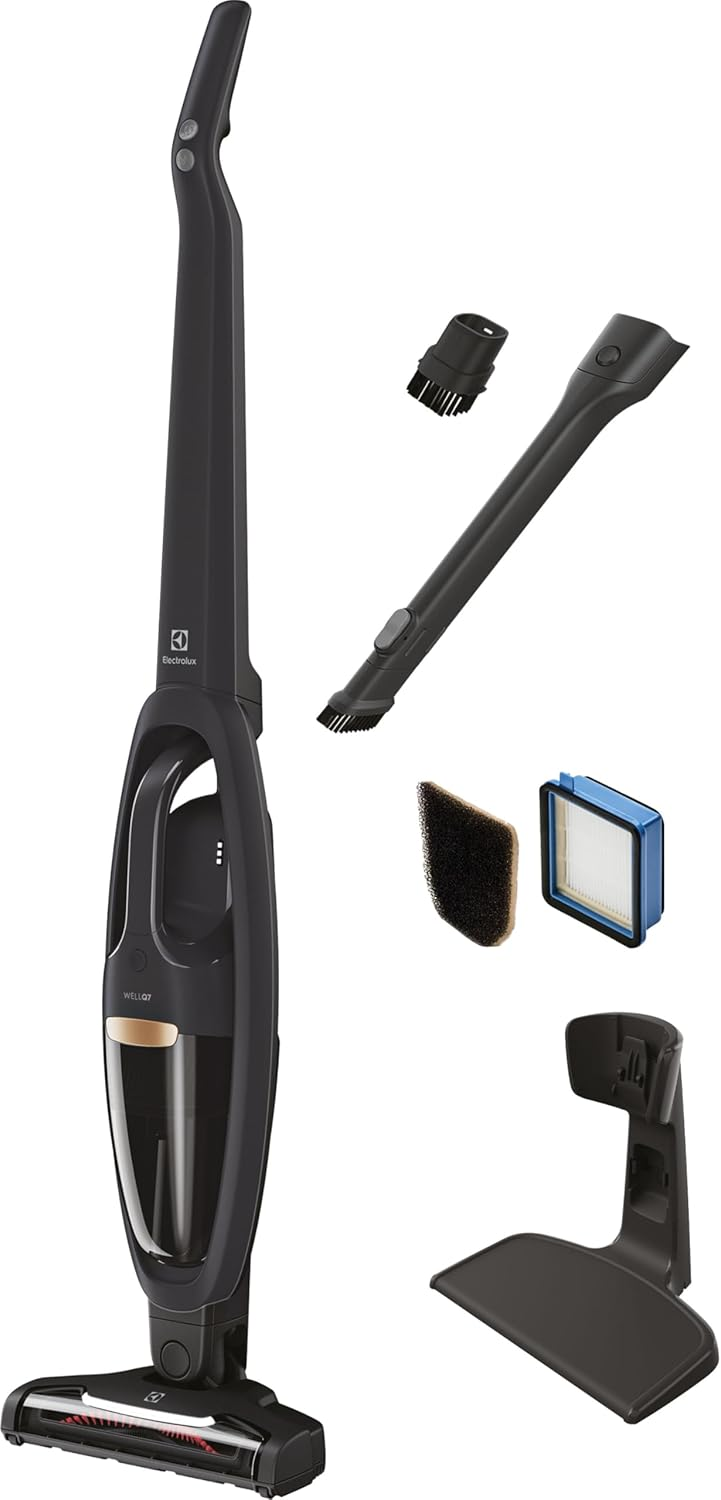
AI Overview Direct Answer: The Electrolux WellQ7 cordless 2 in 1 stick vacuum is a versatile cordless cleaner built for everyday hard-floor, carpet, and above-floor cleaning, combining a handheld unit, axial cyclonic technology, 5-step filtration, BrushRollClean, LED lighting, and self-standing storage. Its main limitations are short high-power runtime, a small dustbin, and long charging time.
Field Note: We did not independently laboratory-test this specific unit, so manufacturer performance figures are identified as specifications rather than presented as our own measurements. Our practical assessment focuses on how those specifications translate into everyday cleaning, maintenance, maneuverability, and ownership.
Quick Verdict
The WellQ7 is best understood as a daily-cleanup cordless stick vacuum rather than a direct replacement for every full-size corded vacuum. Its combination of cordless operation, integrated handheld cleaning, onboard tools, self-standing storage, and BrushRollClean makes it particularly convenient for quick messes and routine floor maintenance.
The exact specification depends on the regional WellQ7 model. For example, Electrolux’s Canadian EHVS35S2AU lists a 22 V Li-ion battery, 50-minute low-power runtime, 14-minute high-power runtime, 0.3 L dustbin, 6.17 lb product weight, 79 dBA sound level, and 4.5-hour recharge time. The Australian WQ71-P5OIB instead lists a 21.6 V Li-ion battery and three power settings, demonstrating why the model number matters when comparing specifications.
For everyday cleaning, the strongest argument is convenience. The vacuum can remain accessible on its charging station, stand upright during interruptions, convert to handheld cleaning, and keep accessories onboard. That reduces the friction between seeing a mess and actually cleaning it.
Bottom Line: The WellQ7 makes the most sense for users who value convenience, hard-floor cleaning, compact storage, and quick daily maintenance more than extended high-power cleaning.
Key Specifications at a Glance
| Specification | Documented WellQ7 specification |
|---|---|
| Battery | Li-ion |
| Voltage | 21.6 V on WQ71-P5OIB / 22 V on EHVS35S2AU |
| Low-power runtime | Up to 50 minutes |
| High-power runtime | 14 minutes on EHVS35S2AU |
| Dustbin | 0.3 L |
| Filtration | 5-step filtration |
| Emission filter | Sealed E10 filter |
| Weight | 6.17 lb / approximately 2.8 kg on EHVS35S2AU |
| Sound level | 79 dBA on EHVS35S2AU |
| Recharge time | 4.5 hours on EHVS35S2AU |
| Cleaning path | 10 inches on EHVS35S2AU |
| Warranty | 2-year limited warranty on EHVS35S2AU |
| Floor nozzle | Multi-surface motorized bristle nozzle |
| Lighting | LED nozzle lights |
| Brush cleaning | BrushRollClean |
| Storage | Self-standing and onboard accessory storage |
Electrolux confirms these specifications for the Canadian WellQ7 variant, while its Australian WQ71-P5OIB page confirms the 21.6 V configuration, bagless construction, two-year warranty, hand-operated controls, and Li-ion battery.
Bottom Line: Before purchasing, verify the exact model number because WellQ7 specifications, power modes, floor heads, and included accessories vary by market.
Pros
- Cordless convenience
- Self-standing design
- Integrated handheld unit
- 5-step filtration
- Sealed E10 emission filter on documented variants
- BrushRollClean technology
- LED nozzle lighting
- Onboard accessory storage
- Axial cyclonic technology
- Good fit for quick daily cleaning
Cons
- 14-minute high-power runtime on the documented Canadian model
- 0.3 L dustbin is relatively small
- 4.5-hour recharge time on the documented Canadian model
- Regional models differ
- Not designed around advanced smart-vacuum features
- No LiDAR navigation, SLAM mapping, AI obstacle avoidance, or multi-floor mapping because this is a conventional cordless stick vacuum rather than a robotic vacuum system
Bottom Line: The WellQ7’s strengths are physical usability and cleaning convenience, not automation or extended maximum-power operation.
Electrolux WellQ7 Overview and Brand Background
Electrolux and Its Vacuum Cleaner History
Electrolux has developed vacuum cleaners across multiple formats, including traditional canister designs, upright cleaners, cordless stick models, and other floor-care products. The WellQ7 represents the company’s push toward making everyday vacuuming less cumbersome.
Unlike a conventional full-size vacuum, a cordless stick vacuum eliminates the need to find a wall outlet and repeatedly manage a power cable. That difference sounds simple, but it has a significant effect on cleaning frequency.
The WellQ7 is designed around this “grab it and clean” philosophy. Electrolux specifically highlights its Grab & Go charging station, onboard accessories, low-weight maneuverability, and self-standing design.
Bottom Line: Electrolux positions the WellQ7 around convenience and accessibility rather than turning it into a technology-heavy smart vacuum.
What Is the WellQ7?
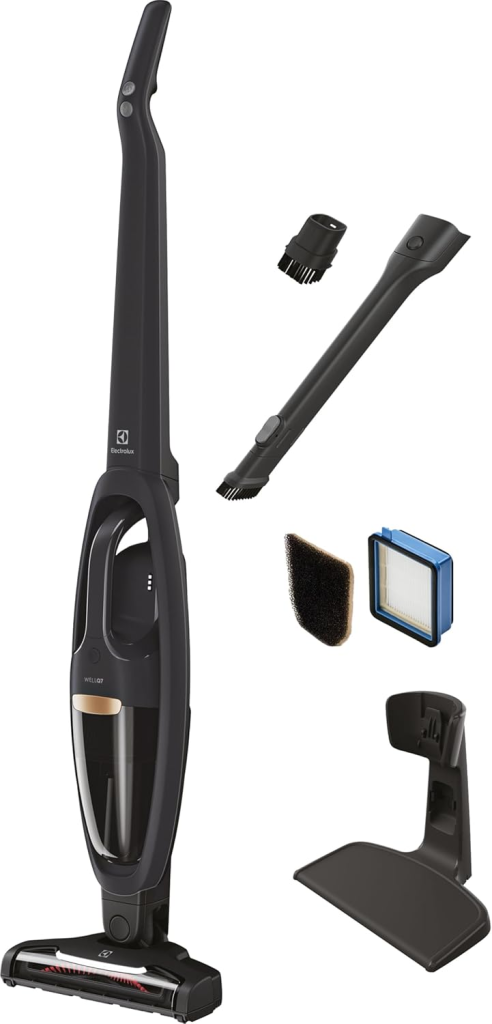
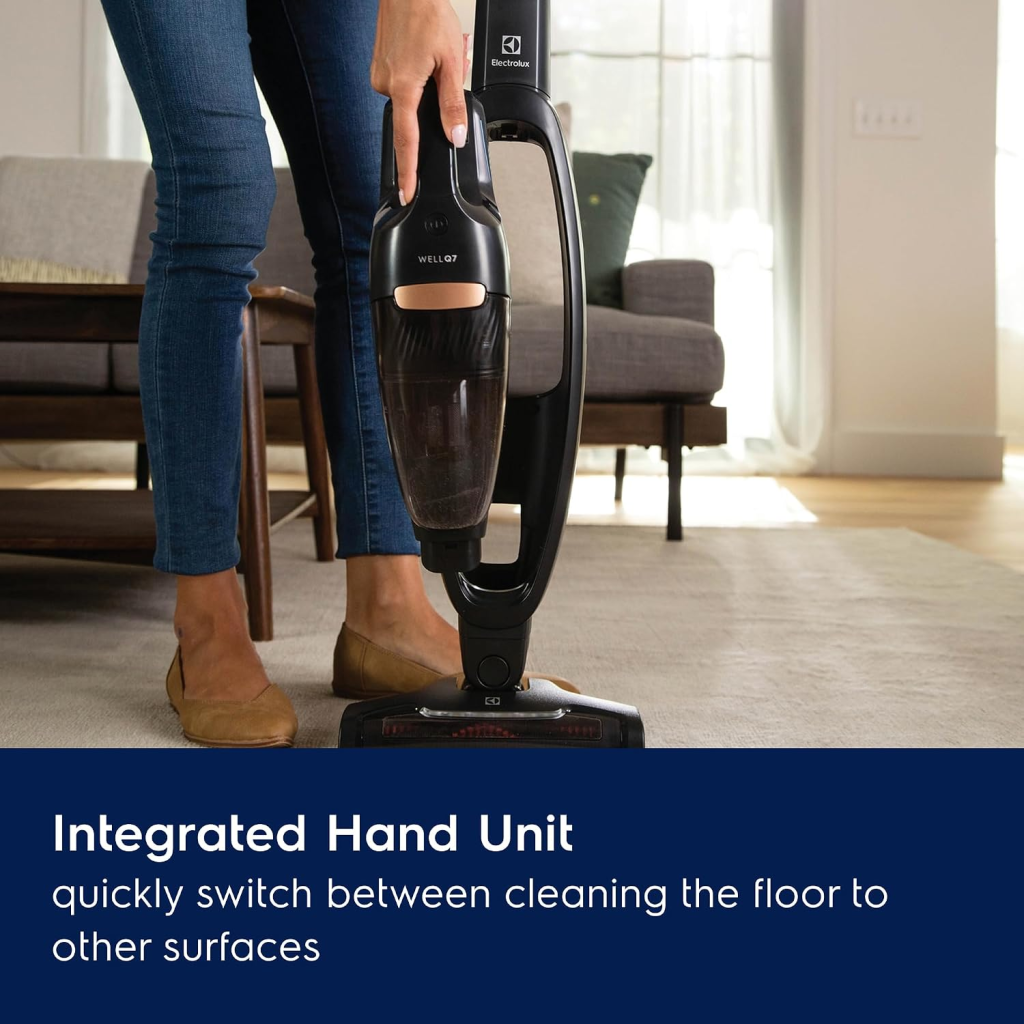
The WellQ7 is a bagless cordless stick vacuum with an integrated handheld unit. This gives it two basic configurations: a floor-cleaning stick vacuum and a smaller handheld cleaner for furniture, shelves, stairs, and other surfaces.
The architecture is straightforward. A rechargeable motor provides suction, the cyclonic system separates dirt from airflow, filtration captures remaining particles, and the motorized floor head agitates debris.
That differs fundamentally from an autonomous cleaner. A robot vacuum system may use LiDAR navigation, SLAM mapping, AI obstacle avoidance, multi-floor mapping, and smart home integration to navigate without direct user control. The WellQ7 instead depends on the user for steering and cleaning decisions.
Bottom Line: Think of the WellQ7 as a manually operated, flexible cordless cleaner—not a smart or autonomous floor-cleaning platform.
WellQ7 Model and Regional Variations
One of the most important research points is that “WellQ7” does not necessarily identify one identical specification worldwide.
The Canadian EHVS35S2AU uses two power modes, while the Australian WQ71-P5OIB is advertised with three power settings and a 21.6 V battery. Electrolux also sells WellQ7 Pet and WellQ7 Hard Floor versions with different cleaning heads and accessories.
The WellQ7 Hard Floor model, for example, uses a PowerPro Roller intended specifically for hard floors. The Pet version adds a PetPro+ motorized nozzle for upholstered surfaces and pet hair.
Bottom Line: Always compare the full model code, not just the WellQ7 name.
Who Is the WellQ7 Designed For?
The WellQ7 is particularly appropriate for apartment owners, small and medium-sized homes, hard-floor households, and people who perform frequent quick cleanups.
It can also work well for busy households where a vacuum needs to be accessible rather than stored inside a closet. Self-standing functionality and the charging station make it easier to pause and resume cleaning.
Pet owners should pay closer attention to the exact version. The standard multi-surface model can handle surface hair, but the dedicated Pet version is more specifically equipped for pet-hair work.
Bottom Line: The best match is a user who prioritizes accessibility, routine cleaning, and cordless maneuverability.
Electrolux WellQ7 Specifications and Design
Dimensions, Weight and Build Quality
The Canadian WellQ7 specification lists a 43.5-inch height, 10-inch width, 5.5-inch depth, and 6.17 lb weight. It also provides a 10-inch cleaning path.
Those dimensions make the WellQ7 relatively easy to store compared with a traditional upright vacuum. Its narrow vertical form also works well in apartments and homes where floor space is limited.
Weight distribution is just as important as the headline weight. A stick vacuum can be technically lightweight but still tiring if the motor and dustbin create excessive hand pressure. The WellQ7’s upright design and integrated floor head are intended to reduce the amount of physical effort required for routine floor cleaning.
Bottom Line: The WellQ7’s physical design favors quick maneuverability and compact storage.
Dustbin and Bagless Architecture
The documented Canadian variant has a 0.3 L dustbin capacity. That is sufficient for routine cleaning but considerably smaller than the bins found on many full-size vacuum cleaners.
A small dustbin has one major advantage: it helps maintain the compact form factor. The trade-off is that heavy cleaning sessions may require more frequent emptying.
The transparent or accessible dust container also gives users a simple visual indication of how much debris has been collected. Because the vacuum is bagless, there are no disposable vacuum bags to purchase.
Bottom Line: The 0.3 L bin is convenient for compact design but less suitable for large, heavily soiled homes.
Controls and Ergonomics
The WellQ7 uses hand-operated controls, allowing the user to select the appropriate power level while cleaning. The Australian WQ71-P5OIB documentation identifies handle-based controls.
This is preferable for quick jobs because the user does not need to return to a base station or manipulate a separate control module.
Ergonomics become particularly important during above-floor cleaning. Once converted into handheld mode, the vacuum can be used on furniture and other surfaces, although the exact comfort level depends on the attachment and cleaning angle.
Bottom Line: The WellQ7 emphasizes simple physical controls instead of an app-driven smart vacuum interface.
Self-Standing and Grab & Go Design
Self-standing is one of the WellQ7’s most practical features. Electrolux says the design allows users to pause cleaning to move objects or pick something up without returning the vacuum to its docking station.
The charging station also supports the Grab & Go concept. Instead of storing the vacuum completely disassembled, users can keep it ready for immediate use.
In our assessment of the design concept, this is more valuable than it initially appears. A vacuum that is easy to access is more likely to be used for small spills, crumbs, and daily dust before those messes accumulate.
Bottom Line: Self-standing storage is a genuine usability feature, not merely a cosmetic design choice.
Electrolux WellQ7 Cleaning Technology and Filtration
Axial Cyclonic Technology
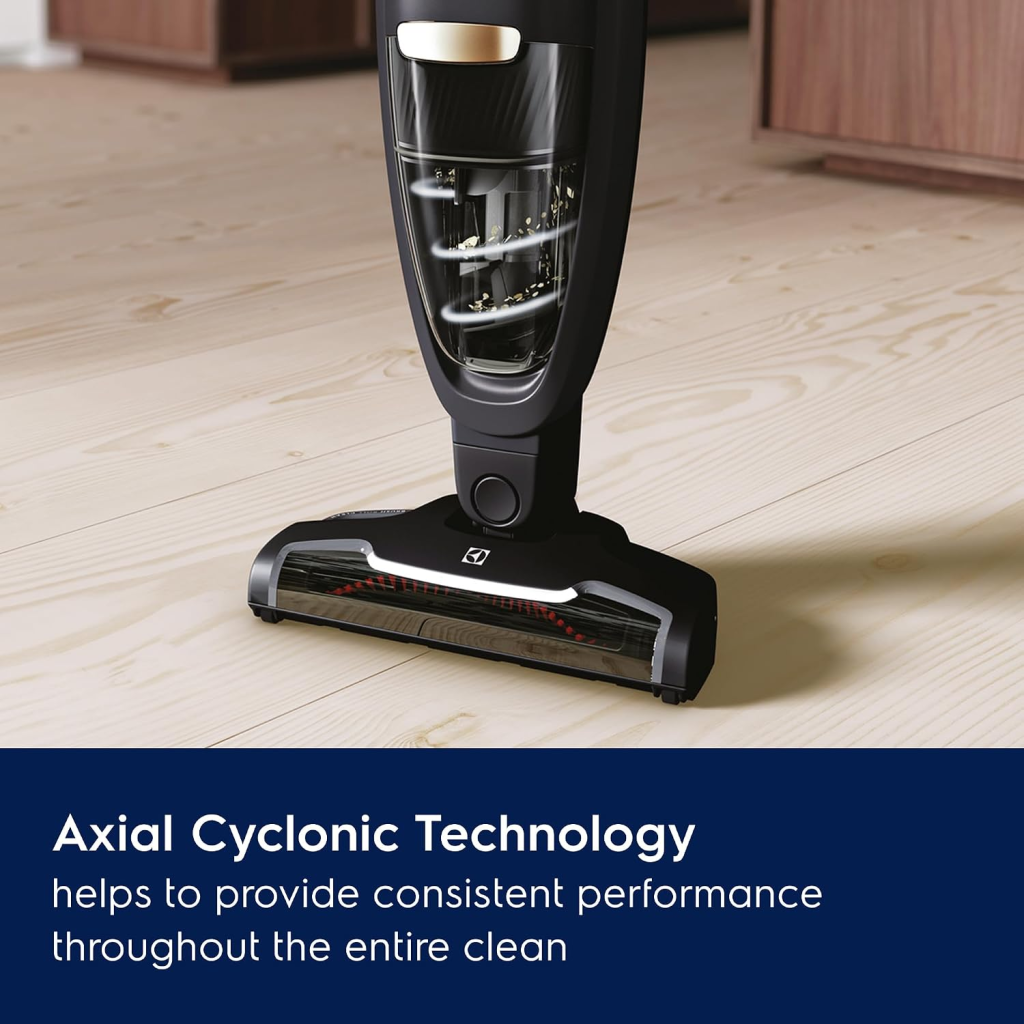
The WellQ7 uses axial cyclonic technology to accelerate airflow rotation inside the dustbin. This helps separate dirt and dust from the airflow before it reaches the filtration stages.
Electrolux says the cyclonic system is intended to reduce clogging and help maintain consistent performance throughout cleaning. Its Australian documentation also describes sustained suction performance even as the dust container fills under specified test conditions.
Cyclonic separation is not the same thing as a particular suction-power measurement. Consumers should not confuse terms such as Water Lift (inches), CFM airflow, or air watts. Those are different performance metrics, and Electrolux’s consumer WellQ7 documentation does not provide a directly comparable Water Lift or CFM figure.
Bottom Line: The axial cyclone is primarily about airflow and dirt separation, not a published suction-power number.
5-Step Filtration System
The WellQ7’s 5-step filtration system includes a 2-layer foam filter, mesh cone, and sealed E10 emission filter on the documented Canadian model.
The Australian WQ71-P5OIB page states that its sealed five-step filtration removes up to 99.9% of dust particles in the specified particle-size range under the referenced test standard.
This should not automatically be translated into “HEPA efficiency.” E10 is a filtration classification, but it is not synonymous with every consumer-facing HEPA claim. If a buyer specifically needs certified HEPA performance, the exact model documentation should be checked.
Likewise, sealed system filtration is more meaningful when considering the complete airflow path rather than looking only at the filter material.
Bottom Line: The WellQ7 has a serious multi-stage filtration architecture, but shoppers should distinguish E10 filtration from a specific HEPA certification.
BrushRollClean Technology
BrushRollClean is designed to reduce one of the most irritating maintenance tasks: removing wrapped hair from a brush roll.
Electrolux explains that pressing the BrushRollClean pedal for approximately 5–10 seconds activates an internal blade that cuts accumulated hair and fibers, after which the debris is sucked into the dust container.
This does not eliminate every maintenance requirement. Long threads, foreign objects, and heavy buildup may still require manual inspection.
It is also important to note that Electrolux’s Canadian Hard Floor model specifies that BrushRollClean is available only on the Multi-Surface Bristle Nozzle.
Bottom Line: BrushRollClean reduces brush-roll maintenance, but it is not a substitute for periodic inspection.
LED Nozzle and Floor Visibility
LED lights on the cleaning head illuminate the area immediately ahead of the vacuum. This can make fine dust and debris easier to see beneath furniture and in darker corners.
The feature is especially useful on hard floors, where small particles can otherwise blend into the surface.
The LEDs do not increase suction or agitation. Their value is visibility: seeing more dirt can help the user make fewer unnecessary passes and identify areas that still need cleaning.
Bottom Line: LED lighting is a simple feature, but it can improve cleaning accuracy during everyday use.
Electrolux WellQ7 Cleaning Performance
Hard-Floor Cleaning Performance
The WellQ7’s multi-surface motorized nozzle is designed for common floor types including hardwood and carpet. Electrolux’s Hard Floor version uses the PowerPro Roller specifically for dust and larger particles on hard surfaces.
For fine dust, crumbs, and everyday debris, a motorized floor head is more useful than a basic suction-only attachment because the brush provides mechanical agitation.
Hard floors are also where the LED nozzle can provide noticeable practical value. Fine particles become easier to identify when illuminated from a low angle.
Bottom Line: Hard floors are among the WellQ7’s strongest use cases, particularly when paired with the appropriate floor head.
Carpet Cleaning Performance
Carpet cleaning requires more than simply generating suction. Brush agitation, airflow, nozzle design, and power level all influence how effectively debris is removed.
The standard WellQ7’s motorized bristle nozzle is designed for carpet and other common flooring. However, the 14-minute high-power runtime documented for the Canadian variant means extended deep-cleaning sessions at maximum power are not its strongest area.
For low-pile carpet and routine surface debris, the WellQ7 should be more practical than for thick carpet where deeper agitation and sustained high power are required.
Bottom Line: Use the WellQ7 confidently for routine carpet maintenance, but consider a more powerful full-size cleaner for extensive deep-carpet cleaning.
Pet Hair and Long Hair
The standard WellQ7 can collect surface hair through its motorized floor head, while the dedicated WellQ7 Pet adds a PetPro+ motorized nozzle designed for pet hair on upholstered furniture.
BrushRollClean is particularly relevant in homes with long hair because wrapped fibers are a common source of floor-head maintenance.
However, pet owners should not assume that every WellQ7 package includes the same pet-specific tools. Model numbers and included accessories should be verified before purchasing.
Bottom Line: Pet households should favor the WellQ7 Pet configuration when upholstery and pet hair are major cleaning priorities.
Furniture, Stairs and Above-Floor Cleaning
The integrated hand unit allows the vacuum to move beyond floors. Electrolux also lists a small dusting brush and telescoping reach tool among the included accessories on the Canadian model.
That makes the WellQ7 useful for stairs, furniture, shelves, corners, and other areas where pushing a full-size vacuum would be awkward.
For narrow spaces, the crevice-style attachment is particularly useful, while the dusting brush is better suited to surfaces where aggressive agitation is unnecessary.
Bottom Line: The 2-in-1 architecture expands the WellQ7 from a floor cleaner into a general household cleanup tool.
Electrolux WellQ7 Battery Life, Runtime and Charging
Lithium-Ion Battery System
The WellQ7 uses a rechargeable Li-ion battery. The Canadian model is rated at 22 V, while the Australian WQ71-P5OIB is rated at 21.6 V.
This illustrates why battery voltage should always be tied to the exact model number. A simple online search for “WellQ7 voltage” can produce different results without either specification necessarily being wrong.
The Canadian version also includes charging indication and a low-battery warning.
Bottom Line: The battery platform is similar across the family, but voltage and control configurations vary by market.
Realistic Runtime Expectations
The Canadian model is rated for 50 minutes on low power and 14 minutes on high power.
The headline runtime should therefore not be interpreted as 50 minutes of maximum suction. Motor speed, floor-head resistance, attachment choice, and power setting affect actual battery runtime.
This distinction is important when comparing cordless vacuum cleaners. Battery runtime should always be evaluated alongside the power mode used to achieve it.
Bottom Line: The WellQ7 offers useful routine-cleaning runtime, but maximum-power cleaning is a much shorter session.
Charging Station and Grab & Go System
The documented Canadian model requires approximately 4.5 hours for a full recharge and includes auto-off charging and charging indication.
For users who return the vacuum to its station after every cleaning session, this is less problematic because the machine can recharge between uses.
The charging station also turns storage into part of the cleaning workflow rather than creating another separate storage requirement.
Bottom Line: The long recharge time matters mainly when you need multiple intensive cleaning sessions close together.
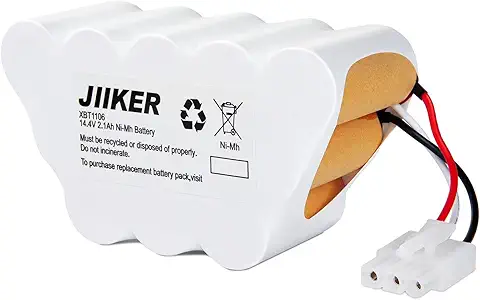
Battery Longevity and Replacement Considerations
Cordless batteries naturally lose capacity over time. Heat, frequent deep discharge, and prolonged storage in unsuitable conditions can accelerate degradation.
The best approach is to keep the vacuum in its intended charging environment and avoid treating a cordless stick vacuum as though its battery were permanently replaceable like disposable cells.
Replacement availability also depends on market and model. Buyers should retain the full model number for future parts searches.
Bottom Line: Battery health is part of the WellQ7’s long-term ownership equation, especially for users planning many years of use.
Electrolux WellQ7 Attachments and 2-in-1 Functionality
Main Motorized Floor Nozzle
The standard Canadian model uses a multi-surface bristle motorized nozzle with a 10-inch cleaning path and LED lights.
This is the primary tool for floor cleaning and provides mechanical agitation rather than relying exclusively on airflow.
The WellQ7 Hard Floor model changes the floor head to a PowerPro Roller, showing how attachment selection can materially change the intended cleaning profile.
Bottom Line: The floor head is one of the most important reasons to compare WellQ7 variants before buying.
Crevice Tool
A narrow crevice tool is useful for baseboards, furniture seams, corners, and narrow gaps.
These jobs often require less total suction than floor cleaning but benefit from concentrating airflow into a smaller opening.
For car interiors, the handheld configuration can also make the WellQ7 more convenient than a full-size vacuum.
Bottom Line: Small attachments make the WellQ7 considerably more versatile than a floor-only stick vacuum.
Dusting Brush and Small Brush
The documented Canadian package includes a small dusting brush.
This attachment can be used for shelves, furniture, delicate surfaces, and other areas where direct motorized-brush contact would be unnecessary.
The value of such an accessory is not its complexity; it is the ability to switch quickly between cleaning tasks without searching through a separate accessory box.
Bottom Line: Onboard accessory storage supports the WellQ7’s quick-cleanup philosophy.
Telescoping Reach Tool and Handheld Mode
Electrolux includes a telescoping reach tool on the documented Canadian model.
This expands the cleaning range for corners and elevated areas while the integrated hand unit handles smaller surfaces.
The 2-in-1 design is particularly useful in homes where one vacuum needs to perform several small jobs throughout the day.
Bottom Line: The WellQ7’s 2-in-1 architecture is one of its strongest reasons to choose it over a basic stick vacuum.
Electrolux WellQ7 Noise, Usability and Everyday Experience
Operating Noise
The Canadian WellQ7 is rated at 79 dBA.
That figure should be treated as a manufacturer specification rather than a universal real-world measurement. Perceived noise can change depending on flooring, attachment, room acoustics, and power setting.
The motorized floor head also introduces mechanical noise beyond the motor itself.
Bottom Line: The WellQ7 is not designed as an ultra-quiet vacuum, so noise-sensitive users should consider this specification before buying.
Maneuverability and Ergonomics
The combination of cordless operation, a relatively compact body, and a motorized floor head makes the WellQ7 suitable for moving between rooms.
Self-standing capability also reduces the number of times the user needs to lean the vacuum against furniture or return it to the dock.
Our assessment of the design is that its usability advantage comes from reducing small inconveniences rather than relying on a single headline performance feature.
Bottom Line: The WellQ7’s everyday experience is built around reducing effort between cleaning tasks.
Dustbin Emptying and Daily Convenience
The 0.3 L dustbin is small enough to keep the vacuum compact but may require more frequent emptying during heavy cleaning.
A good routine is to empty the bin after particularly dusty jobs rather than waiting until maximum capacity.
Keeping the dustbin from becoming excessively full also supports airflow and reduces the chance of debris reaching areas where it can contribute to blockage.
Bottom Line: Frequent emptying is a small trade-off for the WellQ7’s compact design.
Storage Requirements
The self-standing design lets the vacuum remain upright when not actively being used, while the charging station provides a dedicated home base.
This is particularly useful in apartments, utility rooms, and smaller homes where a traditional upright vacuum can occupy valuable floor space.
The onboard accessory arrangement also means fewer loose tools need to be stored separately.
Bottom Line: Storage is one of the WellQ7’s strongest practical advantages.
Electrolux WellQ7 Maintenance Guide
How to Clean the Dustbin
- Switch off the vacuum.
- Remove the dustbin according to the applicable model instructions.
- Empty collected debris.
- Inspect the dustbin and airflow areas.
- Reassemble all components correctly.
Do not operate the vacuum with components incorrectly installed. A poorly seated filter or dustbin can affect airflow and dust containment.
Bottom Line: Regular dustbin cleaning is one of the easiest ways to maintain consistent performance.
How to Clean the Filters
The WellQ7 uses a multi-stage filtration design incorporating foam filtration and an E10 emission filter on documented variants.
Filters should be inspected according to the owner’s manual for the exact model. Cleaning frequency depends on how much dust, hair, and fine debris the vacuum collects.
Never reinstall a washable filter while it is still wet unless the manual explicitly permits that procedure. Moisture inside an electrical appliance can create serious problems.
Electrolux Australia currently lists a WellQ Performance Kit containing an E10 emission filter and progressive fine-dust filter for specific WellQ7 models, demonstrating that replacement filtration is part of the ownership cycle.
Bottom Line: Filter care is essential because clogged filtration can reduce airflow and increase motor workload.
How to Maintain the Brush Roll
Use BrushRollClean where supported by the applicable floor head. Electrolux describes the process as activating the cleaning mechanism for approximately 5–10 seconds so the internal blade cuts hair and fibers for collection in the dust container.
Afterward, inspect the brush roll manually. Look for string, thread, plastic, or objects that the automated system may not completely remove.
If the brush becomes damaged or the floor head begins making abnormal noises, stop using it until the cause is identified.
Bottom Line: BrushRollClean reduces maintenance but should be combined with regular visual inspection.
Recommended Maintenance Schedule
| Component | Recommended attention |
|---|---|
| Dustbin | Empty regularly, especially after heavy cleaning |
| Filters | Inspect and clean according to the model manual |
| Brush roll | Inspect frequently |
| Nozzle | Check for blockages |
| Charging station | Keep contacts and surrounding area clean |
| Battery | Avoid excessive heat and unsuitable storage |
| Accessories | Inspect for cracks or blockages |
Bottom Line: Preventive maintenance is cheaper and easier than waiting for suction loss or charging problems to appear.
Electrolux WellQ7 Troubleshooting Guide
Vacuum Has Weak Suction
Start with the simplest causes:
- Full dustbin
- Blocked airflow
- Dirty filters
- Brush-roll obstruction
- Incorrectly installed components
- Attachment blockage
The axial cyclonic system is designed to separate dirt from airflow, but no cyclonic system can compensate indefinitely for blocked filters or a restricted air path.
Bottom Line: Check the dustbin, filters, floor head, and airflow path before assuming the motor has failed.
Vacuum Stops During Cleaning
Unexpected shutdown can result from a depleted battery, overheating protection, restricted airflow, or another protective system.
First check the battery indicator and allow the machine to cool if it has been operating under heavy load.
Then inspect the floor head and filters for blockages.
Bottom Line: A sudden shutdown does not automatically indicate a defective motor.
Brush Roll Is Not Spinning
Check whether hair or debris has wrapped around the brush roll. Also verify that the cleaning head is properly installed.
If the model supports BrushRollClean, activate the function according to the manual and inspect the roller afterward.
Remember that the Hard Floor model’s BrushRollClean functionality is specified for the Multi-Surface Bristle Nozzle, so the applicable floor head matters.
Bottom Line: Brush-roll problems are often caused by obstruction or configuration rather than motor failure.
Vacuum Will Not Charge
Check:
- Charging-station connection
- Electrical outlet
- Charging contacts
- Battery indicator
- Correct docking position
- Battery condition
The Canadian model includes auto-off charging and charging indication.
If the machine still refuses to charge after basic checks, consult the appropriate Electrolux support documentation rather than repeatedly attempting to charge a potentially defective battery.
Bottom Line: Confirm the charging path first, then investigate the battery or electronics.
Electrolux WellQ7 Model Comparisons
WellQ7 vs WellQ7 Pet
The standard WellQ7 is intended for general multi-surface cleaning, while the Pet model adds a PetPro+ motorized nozzle designed for pet hair on upholstery.
Both versions retain the broader WellQ7 platform characteristics, including the 5-step filtration concept, axial cyclonic system, self-standing design, and integrated hand unit.
For households with multiple pets, the dedicated Pet configuration makes more sense because the specialized nozzle targets furniture and upholstery where ordinary floor heads are less convenient.
Bottom Line: Choose WellQ7 Pet when pet hair is a major cleaning problem rather than a minor occasional issue.
WellQ7 vs WellQ7 Hard Floor
The Hard Floor model replaces the standard multi-surface cleaning head with a PowerPro Roller designed for hard floors.
If most of your home consists of hardwood, tile, laminate, or similar surfaces, this specialization can make the Hard Floor variant more attractive.
The standard model remains more flexible if your home combines several floor types.
Bottom Line: Choose the standard version for versatility and the Hard Floor version when hard surfaces dominate.
WellQ7 vs Dyson V8
The Dyson V8 is a logical comparison because both products occupy the cordless-stick category, but their designs prioritize different aspects of the user experience.
When comparing them, focus on:
- Cleaning-head design
- Runtime by power mode
- Dustbin capacity
- Filtration
- Attachment selection
- Battery replacement
- Maintenance
- Purchase price
Do not judge either machine solely by a headline suction number. Real-world cleaning depends on airflow, agitation, nozzle design, floor type, and battery power.
Bottom Line: The better choice depends on whether you prioritize WellQ7 convenience features or the particular cleaning and accessory ecosystem of the competitor.
WellQ7 vs Shark Cordless Stick Vacuums
Shark offers several cordless stick designs with different floor heads, hair-management systems, dustbins, and battery configurations.
The WellQ7’s differentiators include its self-standing structure, integrated hand unit, axial cyclone, BrushRollClean system, and onboard accessories.
A proper comparison should therefore use the exact Shark model rather than treating “Shark cordless” as one specification.
Bottom Line: Compare specific model-to-model specifications instead of brand-level marketing claims.
Electrolux WellQ7 Pros, Cons and Limitations
Biggest Advantages
The strongest benefits are convenience-oriented:
- Cordless operation
- Self-standing design
- Integrated handheld cleaning
- BrushRollClean
- 5-step filtration
- LED floor-head lighting
- Onboard tools
- Compact storage
The design is particularly strong for users who clean frequently but do not want to bring out a large vacuum for every small mess.
Bottom Line: Convenience is the WellQ7’s central competitive advantage.
Important Limitations
The most significant limitation is battery behavior. The documented Canadian model’s 14-minute high-power runtime is much shorter than its 50-minute low-power runtime.
The 0.3 L dustbin also means heavy cleaning can require repeated emptying, while the 4.5-hour recharge time makes back-to-back maximum-power cleaning inconvenient.
Regional variation is another issue. Buyers must verify the exact voltage, power modes, nozzle, accessories, and warranty applicable to their market.
Bottom Line: The WellQ7 is strongest as an everyday cleaner and less compelling as a high-intensity whole-home replacement.
Who May Want Something More Powerful?
Large homes with extensive carpet may benefit from a larger full-size vacuum with sustained mains power.
Likewise, households dealing with heavy embedded pet hair may prefer a model designed specifically around stronger agitation and longer high-power operation.
If your cleaning routine regularly requires maximum power for extended periods, battery runtime becomes more important than self-standing convenience.
Bottom Line: Heavy-duty users should prioritize sustained cleaning performance over compact cordless convenience.
Who Gets the Most Value?
The strongest candidates include:
- Apartment residents
- Hard-floor households
- Small and medium homes
- Busy professionals
- Users who clean frequently
- People who dislike cords
- Users who need handheld cleaning
- Buyers who value compact storage
For these users, the vacuum’s accessibility can be more valuable than having the highest theoretical suction specification.
Bottom Line: The WellQ7 delivers its greatest value when convenience determines whether and how often you clean.
Buyer’s Intent: Is the Electrolux WellQ7 Worth Buying?
Best Reasons to Buy
Buy the WellQ7 if you want a cordless cleaner that is ready for quick daily use.
Its self-standing design, charging station, handheld configuration, onboard tools, and BrushRollClean system reduce several small frustrations associated with vacuuming.
It is also a good option for people who prefer to clean frequently in short sessions rather than waiting for a major weekly cleaning.
Bottom Line: Buy it for convenience and routine cleaning rather than maximum-power endurance.
When You Should Consider an Alternative
Look elsewhere if you need:
- Extended high-power operation
- A very large dustbin
- Heavy-duty deep-carpet cleaning
- Specialized large-home performance
- Advanced robotic navigation
- App-based smart home integration
The WellQ7 does not attempt to be an autonomous cleaner. It has no LiDAR navigation, SLAM mapping, AI obstacle avoidance, or multi-floor mapping because the user physically controls it.
Bottom Line: If your search is really for a smart vacuum or robot vacuum system, the WellQ7 is the wrong product category.
AdSense-Friendly Alternatives
A strong buyer-intent section should organize alternatives by need:
| Buyer need | Better product category to investigate |
|---|---|
| Maximum carpet performance | Full-size or high-power cordless vacuum |
| Pet hair | Pet-focused cordless vacuum |
| Small apartment | Lightweight cordless stick |
| Hard floors | Dedicated hard-floor cordless model |
| Hands-free cleaning | Robotic vacuum |
| Smart home integration | App-connected robot vacuum |
| Long cleaning sessions | High-capacity battery platform |
| Budget cleaning | Entry-level cordless stick |
This approach provides useful purchase guidance without simply declaring one product universally better.
Bottom Line: The best alternative depends on the problem the buyer is trying to solve.
Value-for-Money Decision Framework
Evaluate the WellQ7 using six factors:
- Purchase price
- Battery runtime
- Floor type
- Maintenance requirements
- Replacement-part availability
- Warranty
Also consider whether you already own a powerful full-size vacuum. If you do, the WellQ7 can function as a convenient secondary cleaner rather than having to replace your existing machine.
Bottom Line: The WellQ7 can offer excellent value as a convenient daily vacuum even when it is not the only vacuum in the home.
Electrolux WellQ7 Ownership Cost and Long-Term Value
Filter Replacement Costs
Filters are consumable components, and Electrolux Australia lists a WellQ Performance Kit for compatible WellQ7 models containing an E10 emission filter and progressive fine-dust filter.
This is useful evidence that long-term ownership should include filter replacement rather than assuming the vacuum will operate indefinitely with its original filtration components.
Use the exact model number when ordering because compatibility is model-specific.
Bottom Line: Include filters in your ownership budget from the beginning.
Battery Replacement
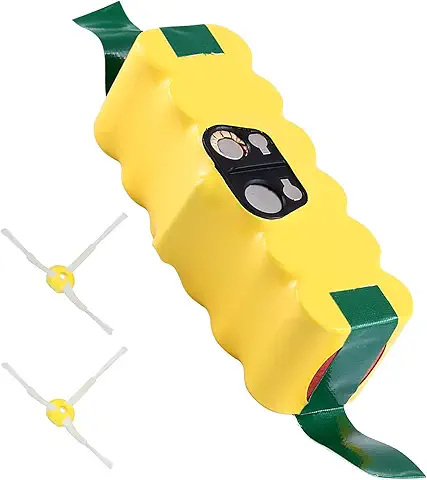
Battery replacement is potentially the largest long-term cost after the initial purchase.
Battery longevity depends on usage, charging conditions, temperature, and the age of the pack. Buyers should investigate official replacement support in their country before assuming a replacement battery will always be readily available.
Bottom Line: A cordless vacuum’s long-term value depends partly on the serviceability of its battery.
Brush Roll and Nozzle Costs
Electrolux provides replacement parts for some WellQ7 configurations. For example, its Australian parts catalog identifies a compatible nozzle belt for WQ71-P5OIB and WQ71-ANIMA.
That is a useful E-E-A-T consideration because ownership is not just about the initial specification sheet; it also involves whether wear components can be sourced.
Bottom Line: Check official parts availability before committing to long-term ownership.
Total Cost of Ownership
A realistic cost calculation should include:
- Initial purchase
- Filters
- Battery
- Wear components
- Accessories
- Electricity
- Warranty coverage
A slightly more expensive vacuum can sometimes be cheaper to own if parts are readily available and maintenance is straightforward.
Bottom Line: Purchase price is only one component of cordless-vacuum value.
Final Verdict: Electrolux WellQ7 Cordless 2-in-1 Stick Vacuum
The Electrolux WellQ7 cordless 2 in 1 stick vacuum is best viewed as a convenience-focused cordless cleaner with enough versatility for floors, furniture, stairs, and quick everyday messes.
Its strongest engineering features are the axial cyclonic system, multi-stage filtration, motorized cleaning head, BrushRollClean, integrated handheld unit, LED nozzle lighting, and self-standing design. Electrolux’s published specifications support a 50-minute low-power runtime, 14-minute high-power runtime, 0.3 L dustbin, and 4.5-hour recharge time for the documented Canadian variant.
The main compromise is that the WellQ7 is not designed to compete with every high-powered full-size vacuum in prolonged deep-cleaning scenarios. The small dustbin and short maximum-power runtime are important considerations for large homes and heavy cleaning workloads.
For apartment residents, hard-floor households, busy users, and anyone who wants a vacuum that is easy to grab, use, pause, store, and maintain, the WellQ7 remains a compelling design.
Buying Recommendation: Choose the WellQ7 when convenience, maneuverability, 2-in-1 functionality, filtration, and everyday cleaning matter most. Choose a more powerful full-size or specialized cordless model when deep carpet cleaning, heavy pet hair, or extended high-power runtime is the priority.
Bottom Line: The WellQ7 is not the most technologically automated vacuum—and it does not need to be. Its real strength is making ordinary vacuuming faster, simpler, and easier to fit into everyday life.
Frequently Asked Questions
Is the Electrolux WellQ7 a good vacuum?
Yes, if your priority is convenient everyday cleaning. Its combination of cordless operation, 2-in-1 functionality, axial cyclonic technology, 5-step filtration, self-standing storage, and BrushRollClean makes it well suited to routine household cleaning.
How long does the Electrolux WellQ7 battery last?
The Canadian EHVS35S2AU specification lists up to 50 minutes on low power and 14 minutes on high power. Other regional versions can differ, so check the exact model number.
How long does the WellQ7 take to charge?
The Canadian model lists a 4.5-hour recharge time.
Is the WellQ7 good for pet hair?
It can handle routine pet hair, but pet owners should consider the dedicated WellQ7 Pet model because it includes a PetPro+ motorized nozzle intended for pet hair on upholstered surfaces.
Can the WellQ7 clean carpets?
Yes. Electrolux states that its motorized bristle nozzle is designed for carpet, hardwood, and other common floor types.
Does the WellQ7 have a HEPA filter?
Do not automatically label every WellQ7 model as HEPA. Documented versions use a 5-step filtration system with an E10 emission filter. The exact filtration specification should be checked against the model sold in your market.
How does BrushRollClean work?
BrushRollClean uses an internal blade to cut accumulated hair and fibers so they can be drawn into the dust container. Electrolux recommends activating the mechanism for approximately 5–10 seconds on supported configurations.
Can the WellQ7 stand on its own?
Yes. Self-standing functionality is one of the documented WellQ7 features and allows users to pause cleaning without returning the vacuum to its dock.
Does the WellQ7 have LiDAR navigation or SLAM mapping?
No. These technologies belong primarily to autonomous robotic vacuum systems. The WellQ7 is a manually controlled cordless stick vacuum and therefore does not require LiDAR navigation, SLAM mapping, AI obstacle avoidance, or multi-floor mapping.
Does the WellQ7 support smart home integration?
The conventional WellQ7 is not positioned as an app-controlled smart vacuum. Its focus is physical controls, cordless cleaning, onboard tools, and charging/storage convenience rather than smart home integration.
Is the Electrolux WellQ7 worth buying in 2026?
It can still be worth buying when priced competitively and matched to the right cleaning requirements. Its strongest advantages remain its 2-in-1 design, self-standing storage, filtration, BrushRollClean, and everyday usability. Buyers who need long high-power runtime or advanced automation should consider alternatives