
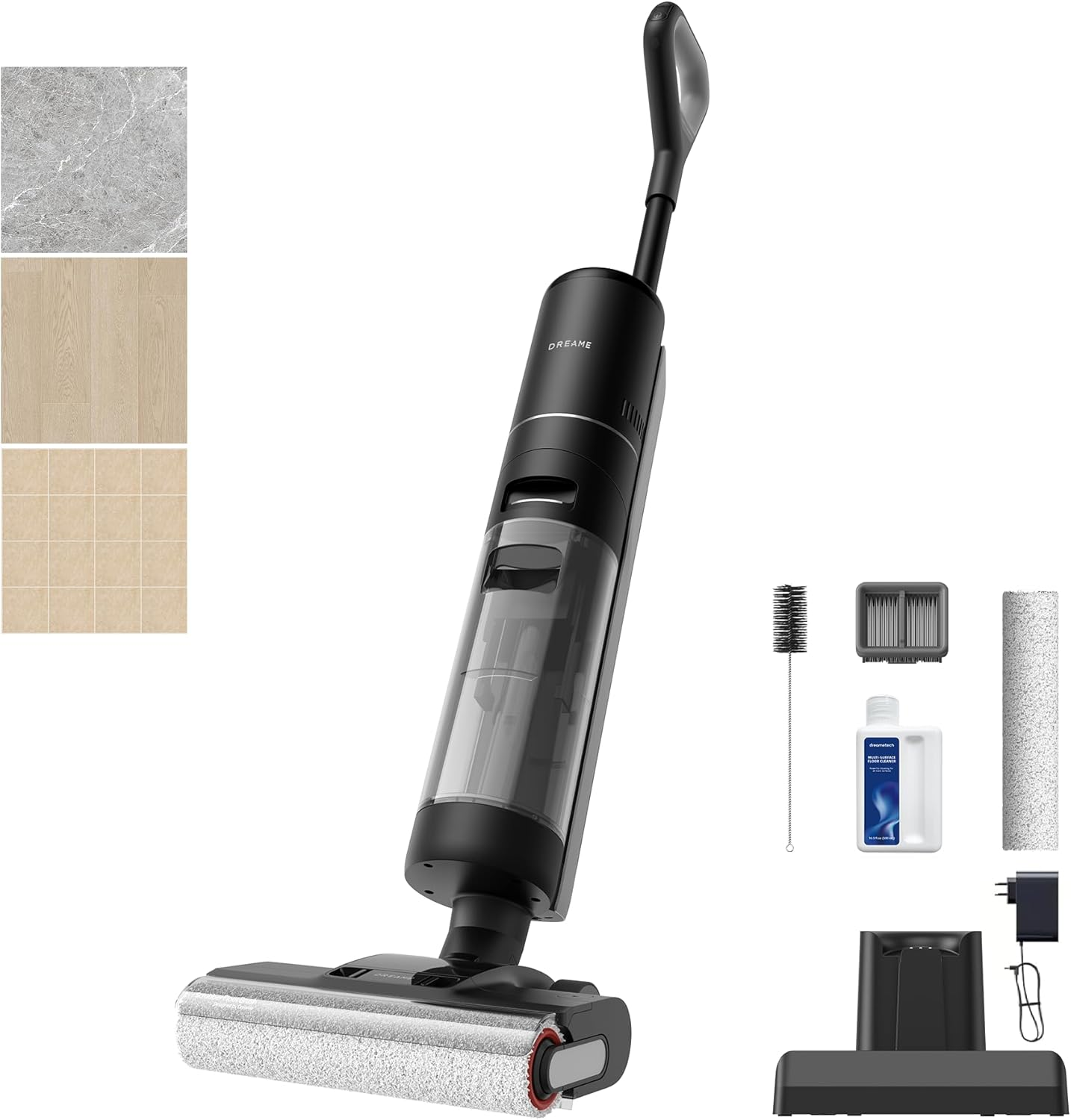
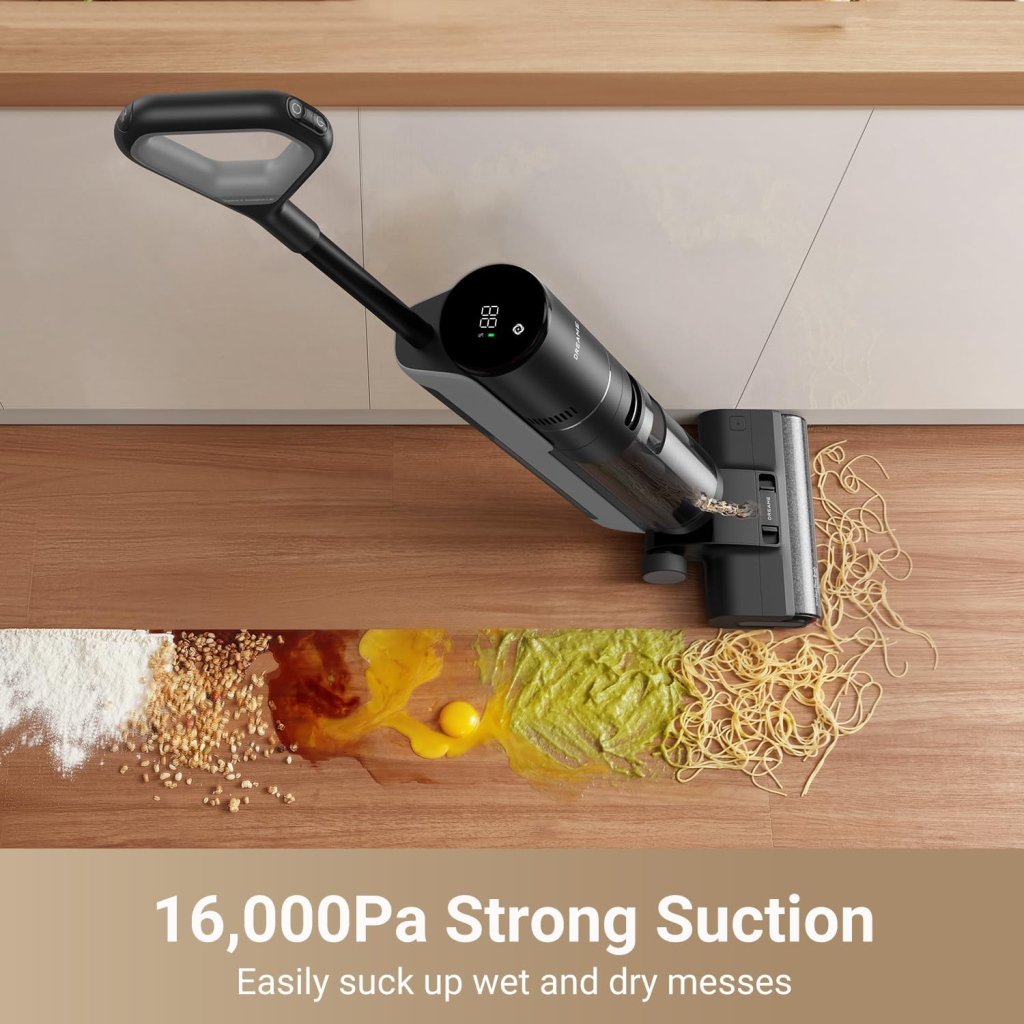
Direct Answer: dreame g10 pro wet dry vacuum reviews show a cordless floor washer built primarily for hard floors, combining vacuuming and mopping in one pass. Its 16,000 Pa suction, dual water tanks, four cleaning modes, self-cleaning function, and up to 35-minute battery runtime make it convenient for everyday spills, crumbs, and routine floor care.
Dreame G10 Pro Wet Dry Vacuum Reviews – Quick Verdict
What Is the Dreame G10 Pro?
The Dreame G10 Pro is a cordless wet-and-dry floor washer designed to vacuum debris and wash hard floors during the same cleaning pass. Instead of using a separate stick vacuum followed by a mop, it combines debris pickup, water delivery, roller agitation, and dirty-water recovery into one upright appliance.
Its most important distinction is that this is not a robot vacuum. The G10 Pro does not navigate the home autonomously, create rooms with LiDAR navigation, or use SLAM mapping to plan cleaning routes. It is a manually operated floor-cleaning machine, which means the user controls where and when it cleans.
That distinction matters when evaluating technologies such as LiDAR navigation, SLAM mapping, AI obstacle avoidance, multi-floor mapping, and smart home integration. These are relevant when comparing robotic vacuum systems, but they should not be presented as G10 Pro features. The G10 Pro’s engineering focus is instead on suction, water management, roller cleaning, battery operation, and user-controlled floor washing.
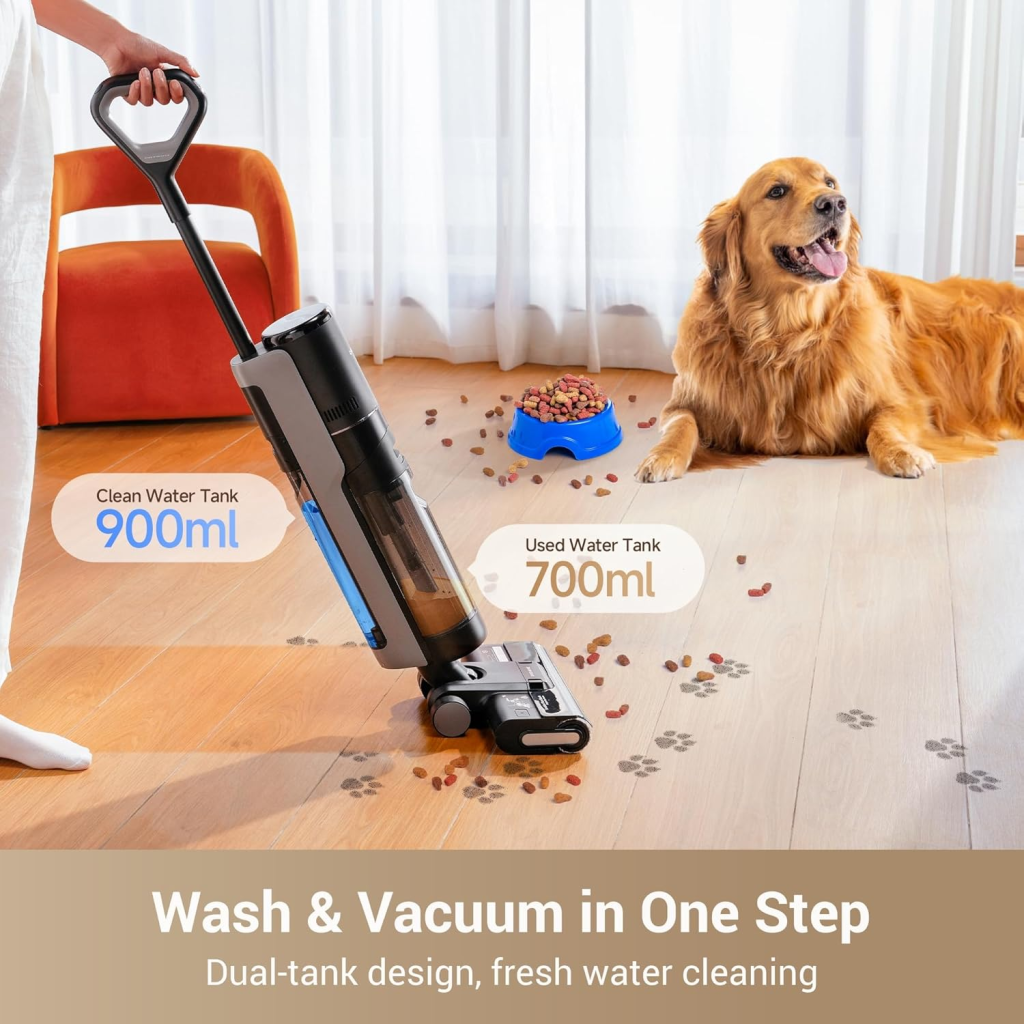
The manufacturer lists 16,000 Pa suction power, a 900 ml clean-water tank, a 700 ml used-water tank, four cleaning modes, and a maximum 35-minute battery runtime. Its display provides operating information and battery status while cleaning.
Bottom Line: The G10 Pro is best understood as a dedicated cordless hard-floor washer rather than an autonomous cleaner. Its value comes from combining vacuuming and mopping into one workflow, not from robotic navigation or app-based automation.
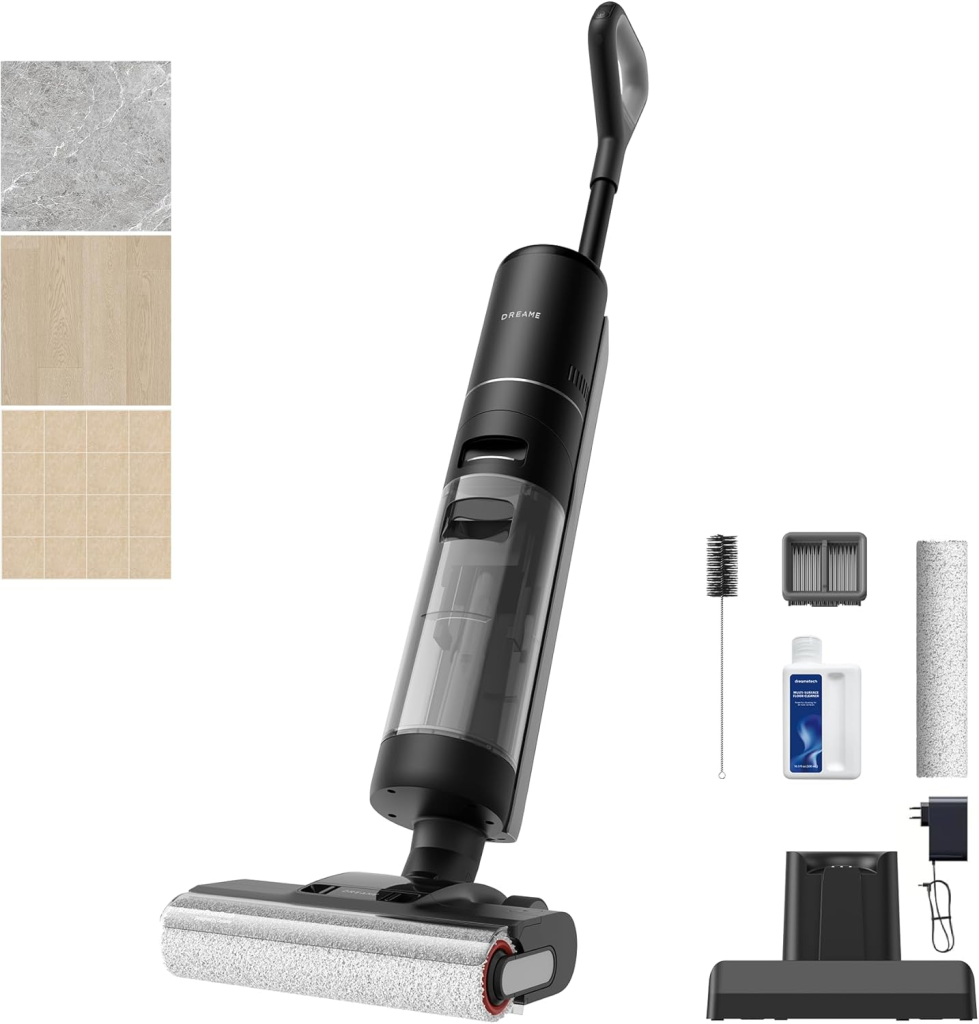
Quick Verdict: Is the G10 Pro Worth Buying?
For homes dominated by sealed hard flooring, the G10 Pro makes a strong case for replacing the traditional vacuum-then-mop routine. It can collect dry debris while simultaneously washing the floor, making it particularly useful for kitchens, dining areas, entryways, and other spaces where crumbs and liquid spills occur together.
Our review assessment is strongest when the machine is judged against the right category. A conventional cordless stick vacuum offers greater versatility for stairs, upholstery, cars, and carpet. The G10 Pro instead specializes in horizontal hard-floor cleaning, where its water system and rotating brush can address messes that a dry vacuum alone cannot.
Independent hands-on testing has also identified the same basic trade-off: the machine is convenient for everyday hard-floor maintenance, but its upright wet-dry construction makes it less versatile than a traditional cordless vacuum. Independent testing has reported good maneuverability and useful self-propulsion, while also noting that the head has limited articulation and cannot be used completely flat.
The battery is another consideration. Dreame specifies up to 35 minutes of runtime, although the actual operating time depends on the selected mode and cleaning conditions. The manufacturer’s documentation identifies Standard, Silent, Turbo, and Suction modes, with Turbo increasing suction and water consumption for heavier messes.
Bottom Line: Buy the G10 Pro if your priority is fast, repeatable hard-floor cleaning with vacuuming and washing combined. Choose a conventional cordless vacuum instead if maximum versatility, carpet cleaning, stairs, and lightweight spot cleaning matter more.
Dreame G10 Pro Pros and Cons
Pros
- 16,000 Pa suction power provides strong debris pickup for a floor washer.
- Vacuuming and mopping can be performed during the same pass.
- Separate clean- and dirty-water tanks prevent the floor-washing process from relying on recirculated dirty water.
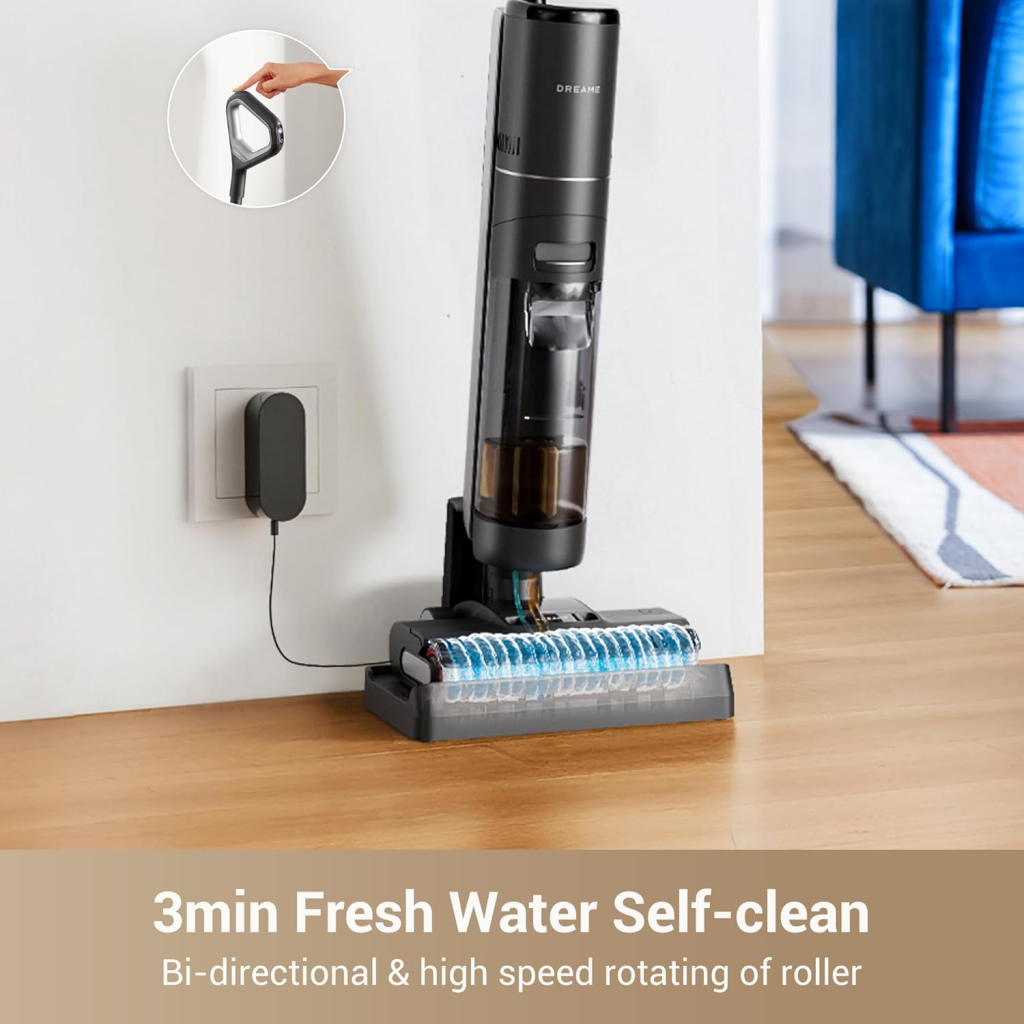
- One-button self-cleaning reduces manual roller-cleaning work.
- Four cleaning modes provide flexibility for different levels of mess.
- Cordless operation eliminates the need to manage a power cable.
- The 900 ml clean-water tank is relatively generous for routine household floor cleaning.
Cons
- Designed primarily for hard floors rather than whole-home carpet cleaning.
- The 4.8 kg weight is noticeably greater than many basic dry cordless stick vacuums.
- Wet-cleaning components require more maintenance than a simple dry vacuum.
- The 35-minute maximum runtime can become limiting in larger homes, particularly when using higher-power modes.
- It is not a robot vacuum and therefore does not provide autonomous navigation, mapping, or app-based floor planning.
- Some independent testing has reported the possibility of streaks or water marks on certain floor surfaces.
A useful way to evaluate these weaknesses is to separate cleaning performance from ownership convenience. The G10 Pro can reduce the number of cleaning steps, but it does not eliminate maintenance. The dirty-water tank still needs to be emptied, the roller and floor head need attention, and the machine should be stored appropriately after wet cleaning.
Pet owners should also consider the type and amount of hair in their home. User experiences are mixed: some owners report successful hair pickup, while others describe problems with heavy shedding and hair tangling around the roller. That variability makes it safer to regard the G10 Pro as a hard-floor washer that can handle ordinary hair rather than a specialist pet-hair vacuum.
Bottom Line: The G10 Pro’s biggest advantage is workflow reduction—vacuum and wash in one machine. Its biggest weakness is that wet-floor cleaning introduces additional maintenance and limits the appliance’s usefulness outside hard-floor applications.
Who Should Consider It?
The G10 Pro makes the most sense for households where hard floors account for most of the cleaning area. Tile, sealed wood, vinyl, and other manufacturer-approved hard surfaces are the environments where its wet-dry design provides the greatest practical advantage.
Families with children can benefit from the combination of dry debris pickup and liquid cleaning. Breakfast crumbs, food particles, tracked-in dirt, and small drink spills are exactly the kind of everyday messes that make switching between a vacuum and mop unnecessarily time-consuming.
Pet owners should take a more nuanced approach. The machine can collect hair and wet messes, but homes with very heavy shedding may require additional vacuuming or more frequent roller maintenance. Independent user experiences demonstrate that results can vary significantly depending on hair volume and roller conditions.
Best For
- Hard-floor homes
- Kitchens and dining areas
- Families with frequent food spills
- Apartments and medium-sized homes
- Users who dislike traditional vacuum-plus-mop routines
- People who value self-cleaning convenience
Less Suitable For
- Carpet-dominant homes
- Frequent stair cleaning
- Upholstery cleaning
- Vehicle interiors
- Users wanting autonomous cleaning
- Users unwilling to maintain a wet-cleaning appliance
Bottom Line: The G10 Pro is most compelling for people who want a dedicated hard-floor cleaner that combines two chores into one. It is less compelling as a replacement for a complete whole-home vacuum system.
Field Note — Real-World Ownership Observation: One detail that is easy to miss in a specification sheet is the difference between self-cleaning and maintenance-free. Independent testing found that the G10 Pro’s self-cleaning function is convenient, but the user still needs to empty and clean the dirty-water system and pay attention to the roller area. That distinction is important when estimating real ownership effort.
About Dreame – Brand History and Market Position
Dreame’s Development in the Floor-Care Market
Dreame has become increasingly visible in the home-cleaning appliance market through cordless vacuums, wet-dry floor washers, and robotic vacuum systems. Its product strategy has generally emphasized combining mechanical cleaning with automation, sensors, high-speed motors, and increasingly sophisticated maintenance systems.
The G10 Pro represents a different part of that strategy. Rather than attempting to automate navigation, it concentrates technology into a manually controlled floor washer. The result is a machine that can offer some of the convenience associated with modern smart-cleaning products without requiring a robot vacuum’s navigation hardware.
That distinction is useful for SEO and product comparison purposes. A Dreame robot vacuum may use technologies such as LiDAR navigation, SLAM mapping, AI obstacle avoidance, multi-floor mapping, and smart-home integration. Those terms should remain associated with the appropriate robotic models rather than being incorrectly assigned to the G10 Pro.
The G10 Pro’s engineering priorities are much more straightforward: 16,000 Pa suction, controlled water delivery, a rotating floor roller, separate water tanks, multiple cleaning modes, battery operation, and automatic self-cleaning.
Bottom Line: Dreame’s broader portfolio includes highly automated cleaning products, but the G10 Pro is a manually operated wet-dry floor washer. Its engineering should be evaluated on floor-cleaning performance rather than robotic intelligence.
Dreame Wet-Dry Vacuum Product Evolution
Wet-dry floor washers have evolved from simple wet vacuum cleaners into more integrated cleaning systems. Modern models combine suction, water distribution, brush agitation, dirty-water extraction, electronic controls, and self-cleaning routines.
The advantage is straightforward: the machine can attack dry debris and liquid messes in a single workflow. Instead of vacuuming crumbs and then returning with a mop, the floor washer handles both tasks through the same cleaning head.
The G10 Pro follows this approach with separate clean- and used-water systems. Dreame specifies a 900 ml clean-water tank and a 700 ml used-water tank, allowing fresh water to be supplied to the cleaning process while extracted dirty water is collected separately.
Independent testing also confirms that the tank arrangement has practical consequences. The clean-water tank is positioned toward the rear, while the dirty-water container is located toward the front. This layout keeps the two water streams physically separated but means the user needs to become familiar with both tanks during routine maintenance.
Bottom Line: The G10 Pro’s evolution is less about robotic automation and more about simplifying the physical process of floor washing. Its core innovation is combining suction, washing, extraction, and self-cleaning into one upright appliance.
Dreame’s Technology and Engineering Approach
The central performance specification is 16,000 Pa suction power. While Pa figures should not be treated as a direct substitute for real-world cleaning performance, they indicate the level of negative pressure Dreame designed into the machine. Floor-washer performance also depends on roller contact, water flow, airflow, debris path, and the condition of the floor.
The G10 Pro also uses a 200 W rated power figure and a battery consisting of 6 × 2,500 mAh cells, according to the manufacturer’s listed specifications. Dreame states a maximum 35-minute battery life, while its operating modes allow the user to balance suction, water usage, noise, and runtime.
The four modes are particularly relevant to everyday use. Standard mode combines suction and water delivery for routine cleaning. Silent mode reduces suction and water use for lighter contamination. Turbo increases cleaning intensity for heavier messes, while Suction mode allows dry vacuuming without water delivery.
Bottom Line: The G10 Pro’s engineering is centered on mechanical floor cleaning and water management. Its performance should be assessed using suction, roller contact, water recovery, battery runtime, and maintenance—not robot-vacuum technologies such as SLAM or LiDAR.
Dreame vs Established Vacuum Brands
The most logical competitors for the G10 Pro are other wet-dry floor washers rather than traditional robot vacuums. Tineco, BISSELL, Shark, Roborock, and Dreame all occupy different portions of this broader floor-care market.
Against a conventional cordless stick vacuum, the G10 Pro has a clear advantage when the cleaning task involves liquid. A stick vacuum is usually more versatile for dry debris, stairs, upholstery, and vehicles, but it cannot replicate the same integrated wet-cleaning workflow.
Against a dedicated mop, the G10 Pro provides the opposite advantage: it adds suction and debris pickup. This makes it particularly useful when a floor contains both solid debris and wet contamination.
The comparison becomes more complicated against premium wet-dry machines. Features such as self-cleaning, edge cleaning, battery capacity, roller design, water management, filtration, and floor-head articulation can make a larger practical difference than headline suction figures alone.
Bottom Line: The G10 Pro’s competitive position is strongest when buyers prioritize straightforward vacuum-and-wash convenience at a potentially lower cost than highly automated floor-care systems.
Dreame G10 Pro Maintenance Cost and Long-Term Ownership
Consumables and Replacement Parts
Wet-dry vacuum ownership involves more consumable components than a basic dry stick vacuum. The G10 Pro uses a brush roller and filter that require periodic replacement in addition to routine cleaning.
Dreame’s US support page recommends replacing the brush roller and filter approximately every six months. It also lists a spare brush roller and spare filter among the package contents for the US version.
Actual replacement frequency should depend on usage. A household that cleans lightly once or twice a week may experience slower wear than a home with children, pets, and daily floor washing.
Before purchasing, buyers should verify that replacement rollers, filters, and other service parts are readily available in their region. This is especially important for products sold through different regional distribution channels.
Bottom Line: Consumables are a predictable part of ownership. Budget for periodic roller and filter replacement rather than treating the purchase price as the entire cost.
Cleaning Frequency
A practical maintenance schedule is more useful than a generic statement that the machine is “easy to maintain.”
| Maintenance Task | Recommended Frequency |
|---|---|
| Empty dirty-water tank | After each wet-cleaning session |
| Run self-cleaning cycle | After wet cleaning |
| Inspect brush roller | Regularly; more often with pets |
| Clean filter | As needed based on condition |
| Inspect suction channel | Whenever suction decreases |
| Deep-clean floor head | Periodically |
| Replace brush roller | Approximately every 6 months, per Dreame guidance |
| Replace filter | Approximately every 6 months, per Dreame guidance |
Dreame’s official support documentation specifically recommends a six-month replacement interval for the brush roller and filter.
The schedule should be adjusted if performance changes sooner. Reduced suction, unusual odor, visible roller wear, or poor water recovery are better indicators of maintenance needs than the calendar alone.
Bottom Line: The simplest routine is to empty and clean the wet system after use, inspect the roller and filter regularly, and follow Dreame’s replacement guidance for consumables.
Preventing Mold and Odor
Odor prevention starts immediately after cleaning. Dirty water should not remain inside the machine because organic debris and moisture can create an environment for unpleasant smells.
Run the self-cleaning cycle, empty the dirty-water tank, and rinse appropriate washable components. Then allow wet components to dry rather than sealing them away while damp.
Dreame’s own troubleshooting advice for odor includes completing self-cleaning, cleaning the dirty-water tank, replacing the filter when necessary, and exposing the tank to sunlight for several hours.
Our preferred approach is to treat ventilation as routine maintenance. A floor washer that is cleaned but stored wet can still develop an odor problem.
Bottom Line: Self-cleaning helps remove contamination, but drying is what prevents residual moisture from becoming a long-term odor problem.
Estimated Cost of Ownership
The initial purchase price is only one part of the G10 Pro’s ownership equation. Buyers should also consider replacement rollers, filters, cleaning solution, electricity, and eventual battery performance.
The manufacturer includes cleaning solution with the US package, but ongoing use may require additional approved cleaning products. Using inappropriate detergents can create excessive foam or affect the wet-cleaning system.
Battery longevity is another long-term consideration. The G10 Pro uses a rechargeable battery system, and its practical runtime varies considerably by operating mode. Independent testing measured approximately 14 minutes in Turbo and 40 minutes in Quiet, demonstrating why a single headline runtime figure does not tell the whole story.
Warranty coverage also affects ownership risk. Dreame’s US support page lists a standard 2-year warranty and says registration can provide an additional six months of extended warranty coverage. Buyers should verify that the same terms apply to their region.
Bottom Line: The G10 Pro can be economical for frequent hard-floor cleaning, but long-term value depends on consumable availability, maintenance habits, battery longevity, and regional warranty support.
Dreame G10 Pro Pros, Cons and Final Verdict
Biggest Advantages
The G10 Pro’s primary advantage is workflow efficiency. Instead of vacuuming dry debris and then switching to a mop, users can handle both tasks during the same cleaning pass.
Its 16,000 Pa suction, dual-tank design, four cleaning modes, and self-cleaning function give it a well-rounded feature set for its category.
The machine is particularly effective for kitchens, dining rooms, entryways, and other hard-floor areas where dry crumbs and wet spills frequently occur together.
Another advantage is simplicity. Unlike a robotic vacuum system, the G10 Pro does not require LiDAR navigation, SLAM mapping, room mapping, Wi-Fi configuration, or AI obstacle avoidance. Users simply pick it up, select a mode, and clean.
Bottom Line: The G10 Pro’s biggest strength is not technological complexity but practical cleaning efficiency.
Biggest Weaknesses
The main weakness is that the machine remains specialized. It is fundamentally a hard-floor washer, so it cannot replace every vacuum in a typical home.
Carpet-heavy households will usually benefit more from a dedicated cordless or upright vacuum. The G10 Pro’s Suction mode can handle dry cleaning on carpets and rugs, but that does not provide the same versatility as a purpose-built carpet vacuum.
Maintenance is another compromise. The self-cleaning cycle reduces work but does not eliminate it. Users still need to empty the dirty-water tank, inspect the roller, maintain the filter, and dry wet components.
Our findings also show why specifications need context. A maximum 35-minute battery runtime sounds adequate, but high-power operation can reduce practical runtime substantially.
Bottom Line: The G10 Pro’s limitations are mostly category-related rather than design failures: it is specialized for hard floors and still requires wet-system maintenance.
Value for Money
Value depends heavily on the purchase price. At a discounted price, the G10 Pro can be particularly attractive because it provides the essential vacuum-and-wash functionality without requiring the newest premium features.
The comparison changes when the G10 Pro approaches the price of newer machines. A premium alternative such as the Tineco FLOOR ONE S7 Stretch Ultra adds 21 kPa suction, 50-minute runtime, heated drying, and 180-degree lay-flat cleaning.
Similarly, BISSELL offers CrossWave models across a broad range of prices, including lower-cost versions and more advanced HydroSteam products.
That makes the G10 Pro’s sweet spot straightforward: buy it when its price reflects its generation and feature set. If a newer competitor is only slightly more expensive, the additional automation may provide better long-term value.
Bottom Line: The G10 Pro offers good value when purchased at the right price, but buyers should compare current street prices rather than assuming an older model is automatically the cheapest option.
Final Verdict: Is the Dreame G10 Pro Worth Buying?
Yes—if you primarily have hard floors and want a dedicated vacuum-and-wash appliance.
For apartment owners, the G10 Pro is especially practical because it can reduce the number of cleaning tools required. Its cordless format and combined cleaning approach work well for kitchens, hallways, and living spaces.
For families, the ability to clean food debris and liquid spills in one pass is arguably its strongest advantage. Frequent small messes are exactly where a wet-dry floor washer can save time.
For pet owners, the answer is more conditional. The G10 Pro can handle everyday paw prints, wet messes, crumbs, and ordinary hair, but heavy shedders may benefit from a dedicated pet vacuum or a newer anti-tangle floor washer.
For hard-floor homes, the recommendation is strongest. The machine’s design aligns directly with the cleaning requirements of sealed hard surfaces.
For carpet-heavy homes, we would not recommend it as the only vacuum. A conventional cordless or upright vacuum remains the better primary cleaner.
The G10 Pro also should not be confused with a robotic vacuum. It does not provide autonomous navigation, LiDAR mapping, SLAM mapping, AI obstacle avoidance, or multi-floor mapping. Those technologies matter when shopping for an automated floor cleaner, not this manually operated wet-dry machine.
Pros
- Combined vacuuming and washing
- Strong hard-floor performance
- 16,000 Pa suction
- Cordless operation
- Self-cleaning
- Large 900 ml clean-water tank
- Four cleaning modes
Cons
- Limited carpet specialization
- No autonomous navigation
- No LiDAR or SLAM mapping
- No automatic roller drying
- Requires regular wet-system maintenance
- 4.8 kg weight is substantial for carrying
Best For: Hard-floor households, families, kitchens, apartments, and users who frequently clean liquid spills.
Buying Recommendation: Buy the G10 Pro when hard-floor vacuuming and mopping convenience are your priority and the price is competitive with current alternatives. Upgrade to a newer premium floor washer if automatic drying, anti-tangle technology, or lay-flat cleaning is worth paying more for.
Bottom Line: The Dreame G10 Pro remains a worthwhile hard-floor specialist, but its value is strongest when buyers understand what it is—and what it is not.
Frequently Asked Questions – Dreame G10 Pro
Is the Dreame G10 Pro Good for Everyday Cleaning?
Yes. The G10 Pro is particularly well suited to everyday hard-floor cleaning because it can collect dry debris and wash the floor during the same pass.
Its four cleaning modes let users adjust the cleaning approach depending on the mess, while the self-cleaning function simplifies post-use roller maintenance.
It is less suitable as the only vacuum in a home with substantial carpet, stairs, upholstery, or vehicle-cleaning needs.
Short Answer: The G10 Pro is a good everyday floor washer for homes dominated by compatible hard floors.
Can the Dreame G10 Pro Vacuum and Mop at the Same Time?
Yes. That combined function is the machine’s primary purpose.
During wet cleaning, the roller receives clean water while the suction system collects loosened debris and contaminated liquid into the dirty-water system.
The machine also provides a Suction mode for dry vacuuming without water, giving users flexibility for debris that does not require mopping.
Short Answer: Yes. It is designed to vacuum debris and wash compatible hard floors during the same cleaning pass.
Can You Use the Dreame G10 Pro on Hardwood Floors?
Yes, but the hardwood must be compatible with wet cleaning and appropriately sealed. Users should always follow the flooring manufacturer’s care instructions.
The key concern is moisture exposure. Wet-dry floor washers are designed to recover most of the water they apply, but flooring that is sensitive to moisture should not automatically be assumed to be compatible.
For sealed hardwood, use the appropriate cleaning mode and avoid excessive passes over the same area.
Short Answer: Yes, on suitable sealed hardwood, provided the flooring manufacturer permits wet cleaning.
How Do You Clean the Dreame G10 Pro After Use?
A practical post-cleaning routine is:
- Return the machine to its charging base.
- Run the self-cleaning cycle.
- Remove and empty the dirty-water tank.
- Rinse the appropriate washable tank and filter components.
- Inspect the brush roller for hair or trapped debris.
- Allow wet components to dry appropriately.
- Reassemble the machine once components are sufficiently dry.
Dreame’s support documentation specifically recommends cleaning the dirty-water tank, maintaining the filter, and checking the roller and hose when performance or odor problems occur.
Short Answer: Run self-cleaning, empty the dirty-water tank, inspect the roller and filter, and allow wet components to dry.
How Long Does the Dreame G10 Pro Battery Last?
Dreame advertises up to 35 minutes of battery runtime, but actual runtime varies by cleaning mode and conditions.
Independent testing recorded approximately 28 minutes in Standard, 14 minutes in Turbo, 24 minutes in Suction, and 40 minutes in Quiet mode.
This is a good example of why advertised battery runtime should be treated as a maximum rather than a guarantee. High-power cleaning consumes energy faster.
Short Answer: Dreame rates it for up to 35 minutes, but practical runtime depends heavily on the selected mode.
Does the Dreame G10 Pro Have LiDAR Navigation or SLAM Mapping?
No. The G10 Pro is manually operated and does not require autonomous navigation.
Therefore, LiDAR navigation, SLAM mapping, AI obstacle avoidance, and multi-floor mapping are not G10 Pro features. These technologies are associated with autonomous robot vacuum systems.
Likewise, the machine does not depend on smart-home integration for everyday operation.
Short Answer: No. It is a manually controlled wet-dry floor washer, not a mapping robot vacuum.
Does the Dreame G10 Pro Have Automatic Roller Drying?
No automatic heated roller-drying system is specified for the G10 Pro. The machine can clean the roller through its self-cleaning cycle, but users still need to allow wet components to dry appropriately.
This is one area where newer premium models have an advantage. For example, the Tineco FLOOR ONE S7 Stretch Ultra specifies 5-minute drying with 85°C air.
Short Answer: It self-cleans the roller, but it does not provide the same automatic heated-drying process found on some newer competitors.
Is the Dreame G10 Pro Good for Pet Hair?
It can handle everyday pet hair and wet pet messes on hard floors, but heavy-shedding households should expect more roller maintenance.
Our findings suggest that hair management is one of the areas where newer anti-tangle floor washers can offer a meaningful advantage.
If your primary problem is large quantities of long pet hair, compare roller designs and maintenance requirements rather than relying only on suction ratings.
Short Answer: Good for routine pet messes, but heavy shedders may want a dedicated pet vacuum or newer anti-tangle floor washer.
Does the Dreame G10 Pro Clean Carpets?
The machine can use Suction mode for dry cleaning on carpets and rugs, according to Dreame’s support documentation.
However, its primary purpose is hard-floor vacuuming and washing. Buyers with extensive carpet should choose a dedicated carpet-capable vacuum as their main cleaner.
Short Answer: It can provide dry suction on carpets and rugs, but it is primarily a hard-floor washer.
What Is the Biggest Reason to Buy the Dreame G10 Pro?
The biggest reason is convenience. It combines two common floor-cleaning tasks—vacuuming and mopping—into one cordless appliance.
That makes it especially valuable for households where spills, crumbs, food debris, and tracked-in dirt occur frequently.
Short Answer: Buy it primarily to simplify everyday hard-floor vacuuming and mopping.