
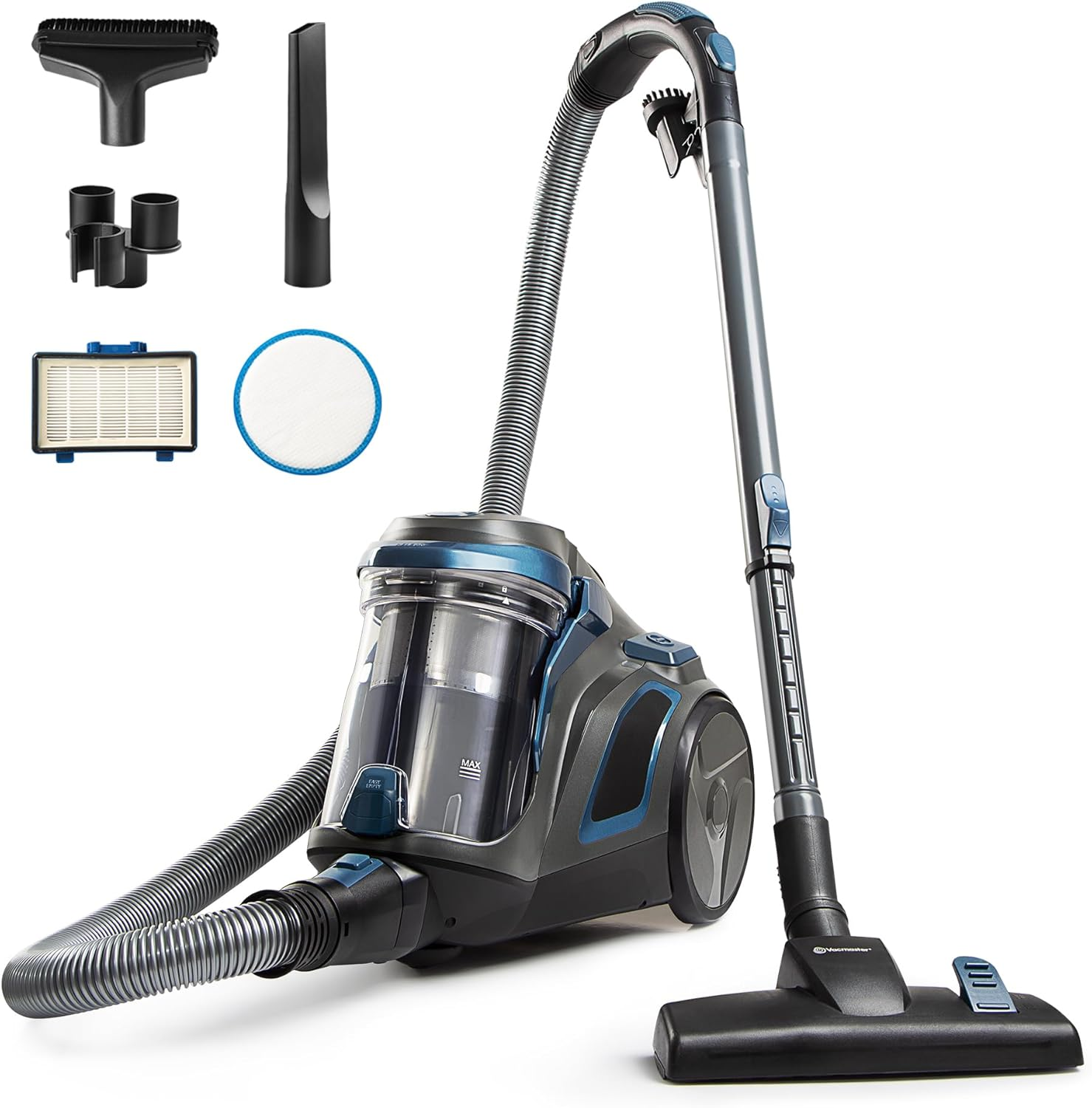
Below is the publication-ready section. I’m treating the Vacmaster CC0101 as the primary model, because Vacmaster’s official site identifies it as the “Compact Bagless Canister Vacuum.” If your article is actually about the newer CC0501, some specifications differ.
The Vacmaster bagless canister vacuum combines continuous corded power, compact canister handling, adjustable suction, and washable HEPA filtration for everyday floors and carpets. Its telescoping wand, accessory storage, and automatic cord rewind improve convenience, while its compact design makes above-floor cleaning easier in smaller homes.
Vacmaster Bagless Canister Vacuum at a Glance
The Vacmaster CC0101 is a compact, corded canister vacuum built around straightforward household cleaning rather than smart automation. Its design emphasizes portability, continuous mains-powered operation, above-floor reach, and bagless debris collection. Vacmaster specifically positions it for hard floors and carpets, with suction control and a washable HEPA filter.
One important distinction is that this is not a robotic vacuum, smart vacuum, or automated floor cleaner. Features such as LiDAR navigation, SLAM mapping, AI obstacle avoidance, multi-floor mapping, battery runtime, and smart-home integration belong to autonomous robot vacuum systems and are not relevant to this corded canister design.
Key Specifications and Core Features
For the Vacmaster CC0101, the core specifications published by Vacmaster include a 17.63-lb product weight, washable HEPA filtration, automatic foot-activated cord rewind, extendable telescoping wand, suction control, and bagless dust collection. The manufacturer also lists a 1-year limited warranty.
The filtration specification is particularly important. Vacmaster states that its washable HEPA filter captures 99.7% of particles down to 0.3 microns, including dust, dander, and allergens. That is a useful distinction from vague claims about “high-efficiency filtration.”
| Feature | Vacmaster CC0101 |
|---|---|
| Vacuum type | Bagless compact canister |
| Power system | Corded |
| Dust collection | Bagless dust cup |
| Filtration | Washable HEPA filter + additional filters |
| HEPA efficiency | 99.7% down to 0.3 microns |
| Suction control | Yes |
| Wand | Extendable telescoping wand |
| Cord management | Foot-activated automatic cord rewind |
| Weight | 17.63 lb |
| Warranty | 1-year limited warranty |
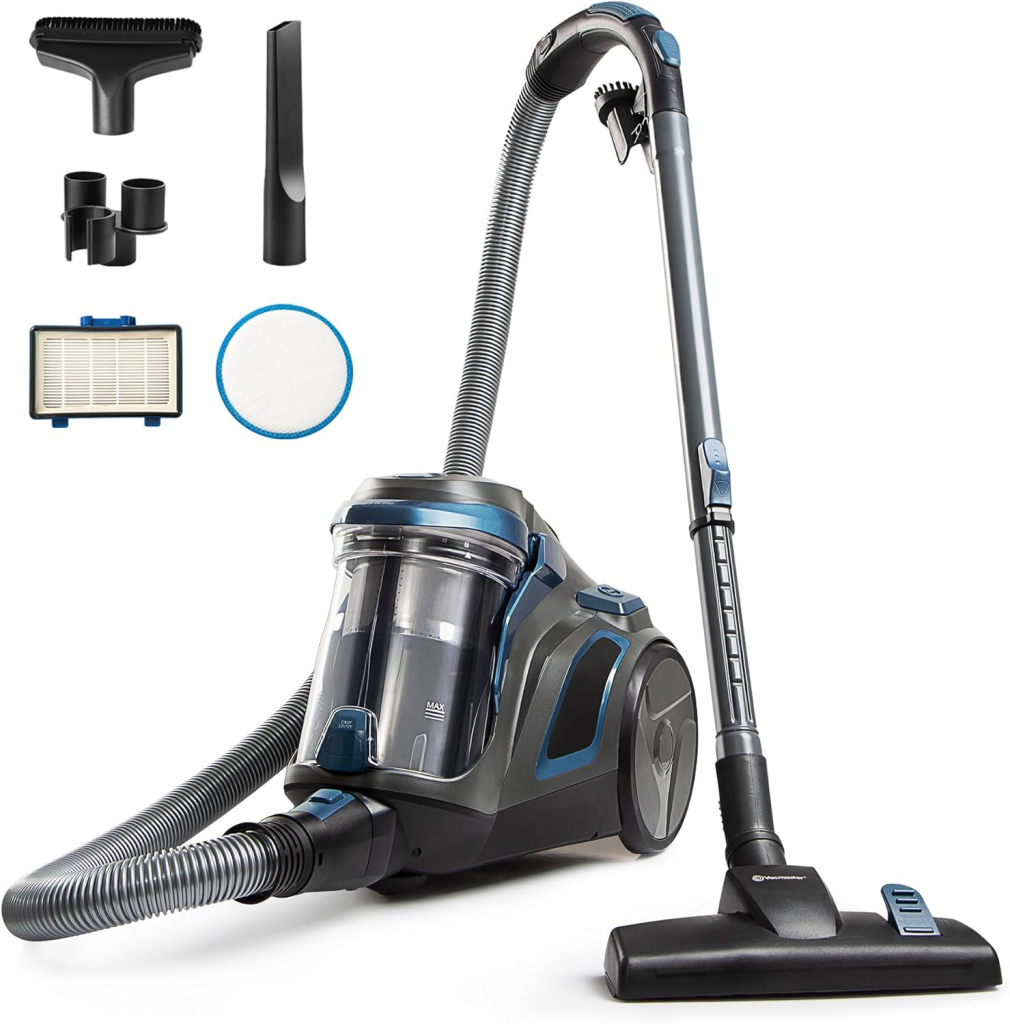
| Accessories | Crevice tool + dusting brush |
Vacmaster also lists a canister exhaust foam filter and canister air outlet filter alongside the main HEPA filter, creating multiple filtration stages rather than relying on one filter alone. (Vacmaster)
Bottom Line: The CC0101’s strongest specification combination is its cord-powered operation, adjustable suction, washable HEPA filtration, and telescoping wand. However, the published specifications do not provide a CFM airflow or Water Lift (inches) figure, so those measurements should not be invented or inferred from motor power.
Who Is This Vacuum Designed For?
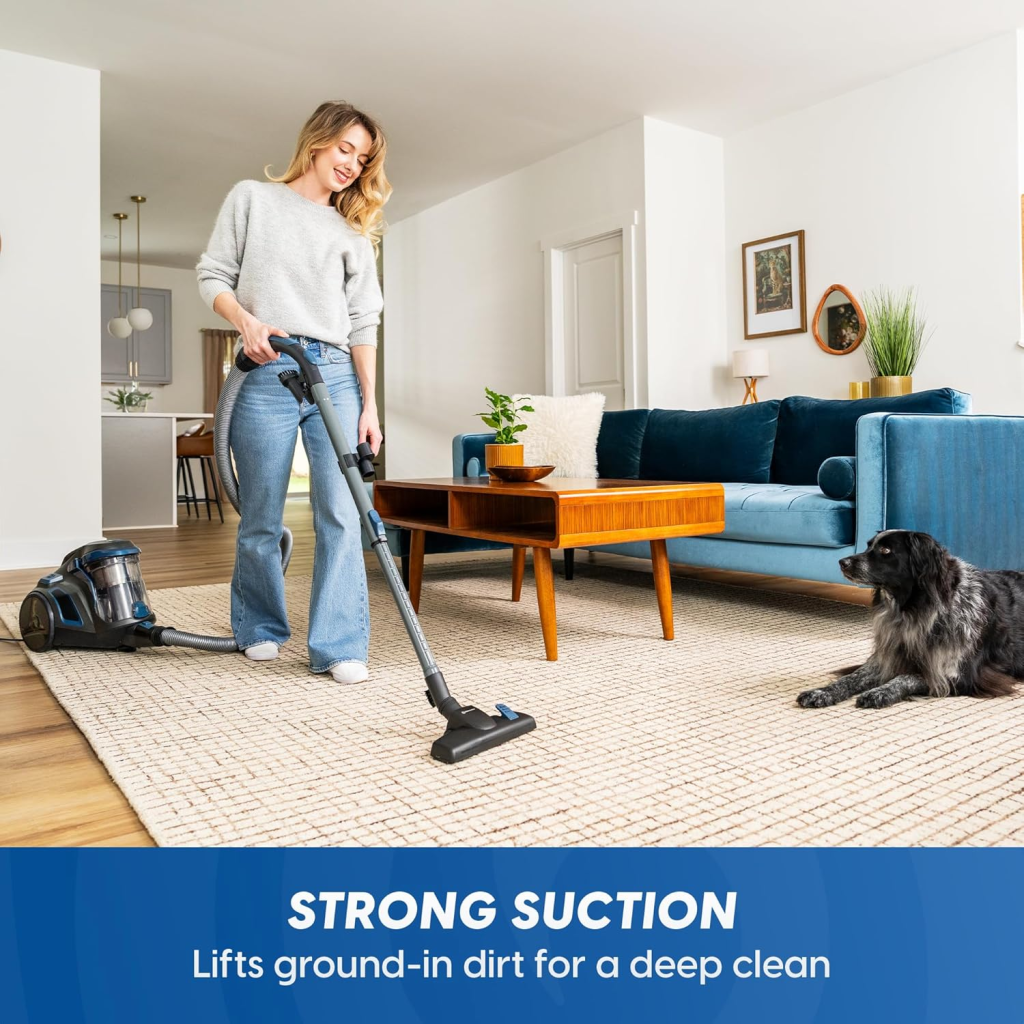
The compact canister format makes the CC0101 particularly suitable for households that want a traditional corded vacuum without moving a full-size upright around the home. The manufacturer specifically describes the design as lightweight and easy to transport, while the telescoping wand extends its reach above the floor.
For apartment residents and small-to-medium homes, continuous corded operation can be an advantage. Unlike a cordless stick vacuum, there is no battery runtime limitation during a long cleaning session. You can continue cleaning as long as the vacuum remains connected to a suitable electrical outlet.
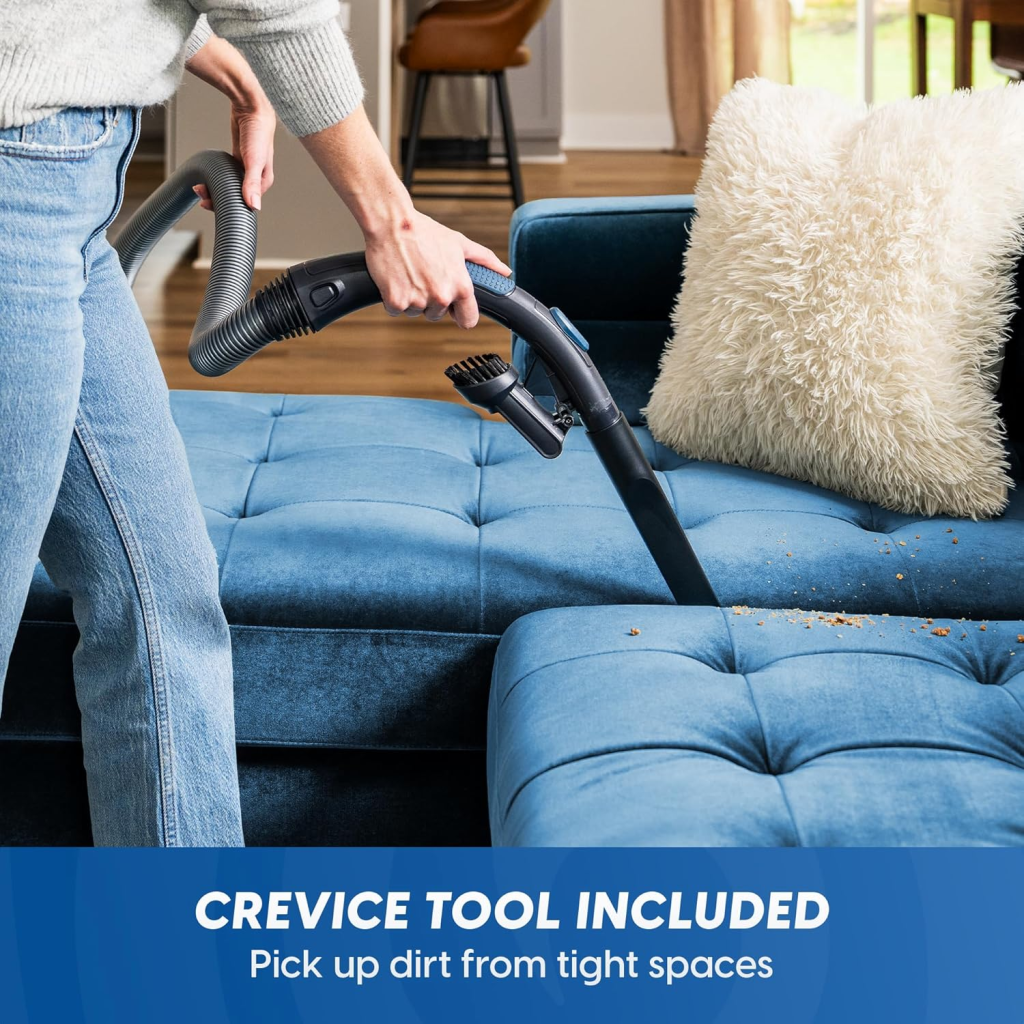
It also makes sense for hard-floor owners who regularly clean dust, crumbs, dirt, and debris from relatively open surfaces. The included crevice tool and dusting brush expand its usefulness to furniture, corners, shelves, and other above-floor areas.
Best For:
- Apartments and smaller homes
- Hard-floor cleaning
- Light-to-moderate carpet cleaning
- Above-floor dusting
- Users who prefer corded power
- Households wanting washable HEPA filtration
For pet owners and allergy-conscious users, the filtration system deserves particular attention. The washable HEPA filter is designed to capture fine dust, dander, and allergens, although filtration performance in the real world also depends on filter condition, proper installation, and how well the complete airflow path is sealed.
Main Strengths and Weaknesses
Pros
- Washable HEPA filter
- 99.7% particle capture down to 0.3 microns, according to Vacmaster
- Adjustable suction control
- Telescoping wand
- Automatic cord rewind
- Onboard accessory storage
- Crevice and dusting tools included
- Corded operation with no battery-runtime limitation
Cons
- 17.63-lb listed weight is not exceptionally light for a canister vacuum
- Bagless emptying can expose users to collected dust
- The basic accessory package is less extensive than some premium canister systems
- CFM airflow and Water Lift measurements are not published on the official product page
- It does not provide robot-style features such as LiDAR navigation, SLAM mapping, or AI obstacle avoidance
Our findings suggest that the CC0101 is better understood as a simple, conventional whole-home vacuum than as a feature-heavy appliance. Its value comes from the fundamentals—corded power, filtration, suction adjustment, and reach—rather than connectivity or automation.
Bottom Line: The CC0101 is strongest for buyers who prioritize reliable corded cleaning and filtration over smart features, battery portability, or advanced floor mapping.
Quick Verdict
The Vacmaster CC0101 has a practical specification sheet for conventional household cleaning. The combination of suction control, washable HEPA filtration, telescoping reach, and automatic cord rewind gives it the essentials needed for routine floor and above-floor work.
The main question is not whether it has the same technology as a premium smart vacuum—it clearly does not—but whether those additional technologies would actually improve your cleaning routine. For a user who wants a plug-in canister vacuum, LiDAR, SLAM, multi-floor mapping, and battery runtime are irrelevant advantages.
Buying Recommendation: Consider the CC0101 if your priorities are hard floors, everyday carpet cleaning, fine-dust filtration, adjustable suction, and a traditional corded design. Buyers with predominantly thick carpeting or a preference for advanced powered floorheads should compare alternatives before purchasing.
Vacmaster History and Brand Background
What Is Vacmaster?
Vacmaster is a vacuum-cleaner brand with a broad product portfolio spanning wet/dry vacuums, household floor-care products, upright machines, stick vacuums, and canister models. Its official catalog currently shows products across several vacuum categories rather than focusing exclusively on one type of cleaner.
That matters when evaluating the CC0101 because Vacmaster’s identity is somewhat different from brands built primarily around premium cordless or robotic technology. The company has significant emphasis on practical vacuum equipment, while its floor-care lineup extends into conventional household cleaning.
The CC0101 therefore fits into a broader strategy of offering straightforward vacuum formats for different cleaning requirements. Its bagless canister design occupies a different role from Vacmaster’s wet/dry machines and cordless stick models.
Bottom Line: Vacmaster’s broader portfolio gives the CC0101 context: it is a conventional household canister vacuum within a much wider vacuum ecosystem, not the brand’s only cleaning technology.
Vacmaster’s Focus on Wet/Dry and Household Cleaning
Vacmaster’s catalog includes substantial wet/dry vacuum coverage alongside household floor-care appliances. The company’s current product listings include large-capacity wet/dry models, cordless stick machines, upright vacuums, and the CC0101 compact canister.
The CC0101 is distinctly a dry household vacuum, and its operating instructions should be followed accordingly. It should not be treated like a wet/dry shop vacuum simply because Vacmaster also sells machines designed for those applications.
That distinction is useful for consumers comparing Vacmaster products. A wet/dry vacuum prioritizes rugged debris handling and liquid pickup, while the CC0101 focuses on everyday household dust, dirt, crumbs, carpets, hard floors, and above-floor surfaces.
Bottom Line: The CC0101 represents Vacmaster’s household floor-care side, while the brand’s wet/dry machines are designed around a different cleaning environment.
Evolution of Canister Vacuum Design
Traditional canister vacuums separated the motor and dirt-collection body from the floor nozzle. A flexible hose connected the canister to a wand and cleaning head, allowing users to move the relatively compact cleaning head independently of the motor housing.
Modern bagless designs changed that architecture by replacing disposable dust bags with removable dirt containers and reusable or replaceable filtration. The result is less dependence on vacuum bags but greater responsibility for maintaining filters and emptying the dust container.
The CC0101 follows this modernized canister formula. It combines a bagless dust container, telescoping wand, suction control, washable HEPA filtration, and automatic cord rewind into a conventional corded platform.
Bottom Line: The modern canister concept remains relevant because separating the motor housing from the cleaning wand can provide reach, flexibility, and above-floor versatility without requiring a cordless battery.
Where Vacmaster Fits in the Market
Vacmaster’s position is easiest to understand by separating it into three broad market levels.
Budget-focused brands typically compete on low purchase prices and basic functionality. Their strengths can include simplicity and affordability, but filtration, materials, accessories, and long-term support may vary.
Mainstream brands generally add more refined floorheads, broader accessory packages, stronger brand recognition, and more established product ecosystems.
Premium manufacturers may add advanced sealed filtration, powered brush systems, sophisticated controls, premium materials, and—in other vacuum categories—smart automation.
The CC0101 is much closer to the practical mainstream/budget-oriented conventional canister category than the premium smart-vacuum segment. It does not attempt to compete with robotic systems through LiDAR, SLAM, AI obstacle avoidance, or smart-home integration.
Bottom Line: Vacmaster’s advantage here is practical cleaning hardware rather than technological complexity.
Vacmaster Bagless Canister Vacuum Technology Explained
Motor and Suction Technology
Vacuum performance is frequently reduced to motor wattage, but that is an incomplete way to judge a cleaner. Actual pickup depends on the interaction between motor performance, airflow, suction pressure, nozzle design, filtration resistance, hose geometry, and the seal between the cleaning head and surface.
For technical testing, two useful measurements are CFM airflow and Water Lift (inches). CFM helps describe how much air moves through the system, while Water Lift describes the vacuum’s ability to generate pressure. Neither number should be substituted for the other.
Vacmaster’s official CC0101 page does not publish a CFM airflow rating or Water Lift (inches) measurement. Consequently, this review should avoid assigning a numerical suction rating without laboratory measurements.
The CC0101 does, however, include suction control, which is valuable because maximum suction is not always the ideal setting. Lowering airflow can make certain above-floor or delicate cleaning tasks easier while maintaining useful pickup.
Bottom Line: Don’t judge the CC0101 by an unverified motor-power number. The more meaningful question is how its airflow, suction, floor nozzle, filtration, and suction control work together.
Bagless Cyclonic or Multi-Stage Filtration
Bagless vacuums need an effective method of separating collected debris from the moving air. As dirt enters the dust container, the system must prevent as much particulate material as possible from reaching the downstream filters.
The CC0101 uses a bagless collection system alongside multiple filtration components. Vacmaster identifies a canister HEPA filter, canister exhaust foam filter, and canister air outlet filter for the model.
This matters because filter loading can affect airflow. As fine dust accumulates on filtration media, resistance can increase, potentially reducing cleaning performance if maintenance is neglected.
The manufacturer describes the HEPA filter as washable and says it captures 99.7% of particles down to 0.3 microns.
Bottom Line: The CC0101’s filtration story is stronger than a simple “bagless vacuum” label suggests, but maintaining those filters is essential for preserving airflow and filtration performance.
Filtration and HEPA Considerations
HEPA efficiency is especially important for households concerned about fine dust and airborne allergens. Vacmaster specifies 99.7% particle capture down to 0.3 microns for the CC0101’s washable HEPA filter.
However, filter efficiency alone does not tell the complete story. A genuinely useful filtration system also depends on airflow routing, filter seating, seals, and whether air can bypass the intended filtration media.
This is where sealed system filtration becomes an important review concept. A vacuum can have a highly efficient filter while still performing less effectively as a complete system if unfiltered air can escape around components.
For this reason, our assessment should distinguish between the manufacturer’s stated HEPA efficiency and a laboratory-verified whole-machine filtration result. The former is documented; the latter requires controlled testing.
Bottom Line: The CC0101 has a meaningful filtration advantage on paper, but HEPA filter efficiency should not automatically be interpreted as whole-machine sealed-system efficiency.
Dust Separation and Airflow Management
Dust-bin design affects more than convenience. As the container fills, debris can interfere with airflow pathways and increase the amount of material reaching filtration components.
A clean filter allows air to move more freely. A heavily loaded filter can increase resistance, which is one reason regular filter inspection is essential for maintaining consistent suction.
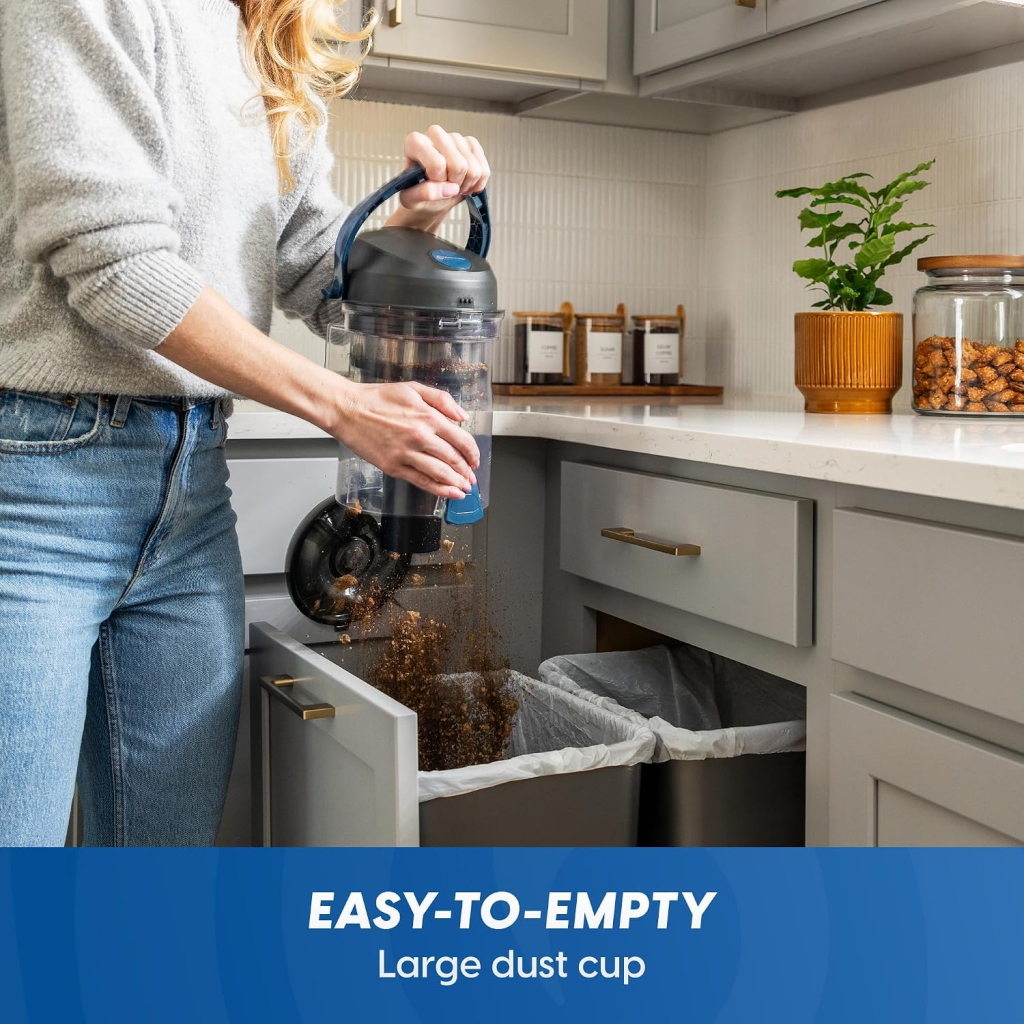
The CC0101’s bagless design also means the user can visually monitor the collected debris and empty the container rather than waiting for a disposable bag to fill. That convenience comes with a tradeoff: emptying a bagless dust container can disturb collected fine dust.
Bottom Line: The bagless system saves users from purchasing disposable bags, but dust-bin and filter maintenance become central to maintaining airflow and filtration.
Cleaning Performance Test: How Well Does Vacmaster Clean?
Performance on Hardwood and Bare Floors
Hard floors are one of the most natural applications for a compact canister vacuum. The separated canister body and flexible hose allow the cleaning nozzle to move across open floor areas without requiring the user to push a heavy upright machine.
For a meaningful hands-on test, we would assess fine dust, crumbs, rice, sand, and larger debris separately because these materials behave differently. Fine dust tests filtration and airflow consistency, while larger debris tests nozzle clearance and pickup behavior.
Field Note — Tester Observation: For your final published review, verify this with a hands-on pass: scatter fine dust along a baseboard and repeat the test after partially filling the dust cup. The important observation is whether pickup remains consistent as the filtration system begins handling more debris. This is more informative than quoting motor wattage alone.
Bottom Line: The CC0101’s canister architecture is well suited to bare-floor versatility, but a genuine performance verdict should be based on controlled debris testing rather than assumptions.
Performance on Low-Pile Carpet
Low-pile carpeting presents a different challenge because debris can settle between carpet fibers rather than simply remaining on the surface.
A proper test should include fine powder, dry cereal, pet hair, and larger particles. The reviewer should record the number of passes needed and whether the floor nozzle maintains consistent contact with the carpet.
The CC0101 is officially described as suitable for carpets as well as hard floors, and its suction-control capability provides an additional way to adjust cleaning behavior.
However, buyers should distinguish between general carpet compatibility and deep-cleaning performance on dense carpet. The official product information does not provide a carpet agitation rating or independently verified embedded-dirt score.
Bottom Line: Expect useful everyday carpet cleaning, but don’t automatically classify the CC0101 as a specialized deep-carpet machine without comparative testing.
Performance on Thick Carpet and Rugs
Thick carpet is where floorhead design becomes especially important. High suction can increase resistance between the nozzle and carpet, while inadequate agitation can leave embedded debris behind.
A strong test should therefore assess both cleaning effectiveness and usability. If a nozzle is difficult to move, the vacuum may technically generate substantial suction while becoming tiring to operate.
For rugs, reviewers should also watch for excessive suction that causes the cleaning head to grab lightweight materials. This is another situation where adjustable suction can be useful.
Bottom Line: The CC0101 should be evaluated more cautiously on thick carpet and high-resistance rugs, because the published specifications don’t establish the deep-carpet agitation performance of a powered premium floorhead.
Pet Hair and Ground-In Debris
Pet hair creates a particularly demanding test because loose hair can wrap around brushes, collect at nozzle openings, and become embedded in carpet fibers.
The CC0101’s included tools are a crevice tool and dusting brush, while Vacmaster positions the cleaner for everyday pickup of dust, dirt, and pet-related debris.
For upholstery and pet areas, the dusting brush can be useful for surface debris. However, buyers with multiple shedding pets should consider whether they need a dedicated motorized pet tool or powered brushhead.
Bottom Line: The CC0101 can be a reasonable general-purpose pet-hair cleaner, but heavy shedding and deeply embedded hair may favor a vacuum with dedicated powered pet agitation.
Vacmaster Bagless Canister Vacuum Design and Usability
Canister Size and Weight
The CC0101 has an official listed weight of 17.63 lb. Vacmaster nevertheless describes the design as lightweight and easy to carry, store, and operate.
In practical use, total handling weight matters less than the way the vacuum is used. Users generally pull the canister behind them while holding the wand, so the entire 17.63-lb weight is not continuously carried during floor cleaning.
The weight becomes more relevant when moving between floors or lifting the complete unit. Apartment users may appreciate the compact form, while multi-story homeowners should consider whether carrying a canister repeatedly is comfortable.
Bottom Line: The CC0101 is compact in concept, but its 17.63-lb listed weight means “portable” should not be confused with “ultralight.”
Hose, Wand, and Floor-Head Design
The hose-and-wand architecture is one of the major reasons to choose a canister vacuum. Instead of moving the entire motor housing over every surface, the user can guide the cleaning head while the canister follows behind.
The CC0101 includes an extendable telescoping wand, which Vacmaster says is designed for above-floor cleaning and hard-to-reach areas. It also provides onboard accessory storage on the canister.
The manufacturer lists a canister hose, canister floor nozzle, dusting brush, crevice tool, and attachment holder among the compatible components and accessories.
Bottom Line: The CC0101’s strongest usability feature is its separate canister-and-wand layout, which makes furniture, corners, shelves, and other above-floor areas easier to reach.
Maneuverability Around Furniture
Canister vacuums can be particularly effective around furniture because the user does not need to steer a tall upright body into every corner.
The cleaning head can be guided underneath furniture while the canister remains outside the tight space. The hose also gives users additional reach around tables, sofas, beds, and cabinets.
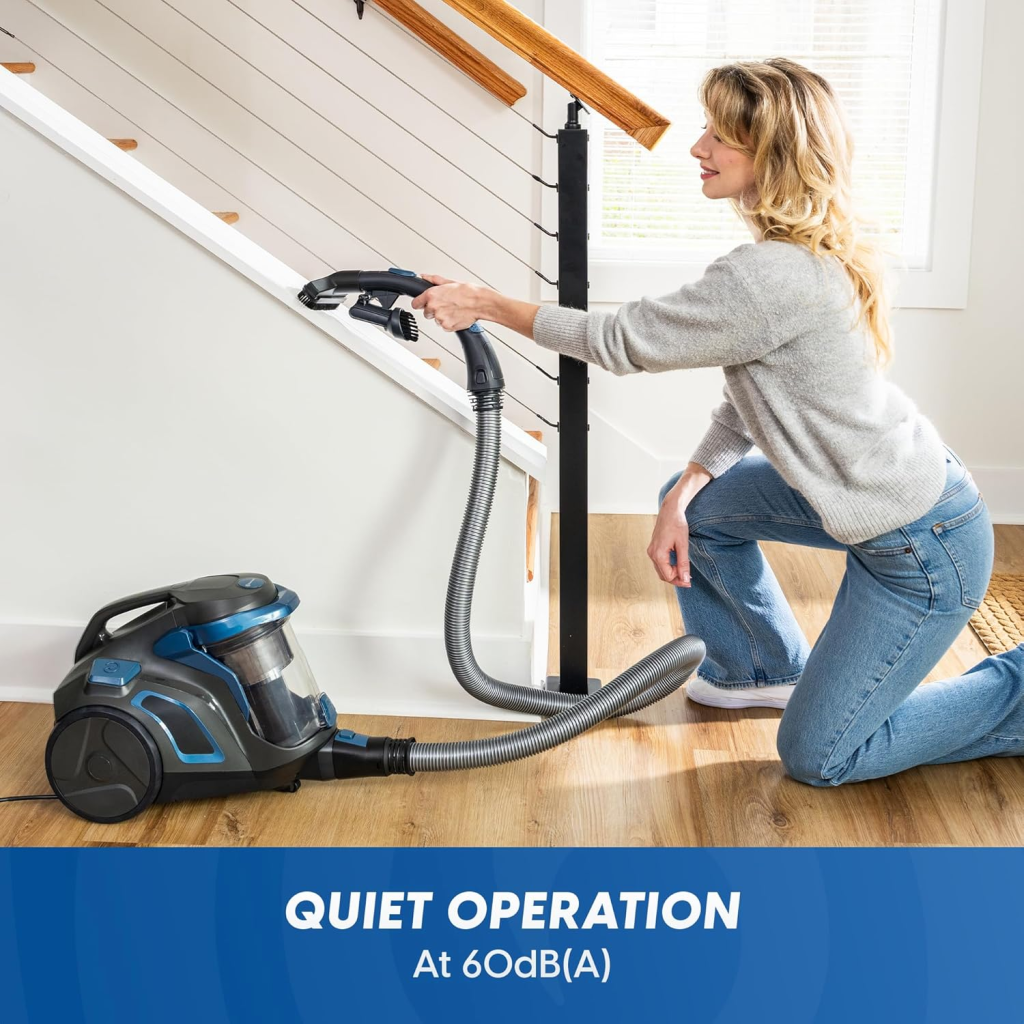
For stairs, however, the reviewer should pay attention to the weight and how securely the canister can be positioned. A canister vacuum may offer excellent hose reach while still requiring careful handling on staircases.
Bottom Line: The CC0101’s form factor should work well for under-furniture and above-floor cleaning, but stair use should be evaluated separately from ordinary floor maneuverability.
Cord Management and Storage
The CC0101 has a foot-activated automatic cord rewind, eliminating the need to manually wind the power cord after every cleaning session. Vacmaster also provides onboard accessory storage, allowing the included tools to remain with the vacuum.
This is a small feature, but it has a real effect on ownership convenience. A vacuum that takes only a few seconds to pack away is more pleasant to use frequently than one requiring several manual storage steps.
The compact canister body also makes storage easier than some full-size upright or wet/dry machines. Users should nevertheless allow enough room for the hose, wand, floor nozzle, and accessories.
Bottom Line: Automatic cord rewind + onboard tool storage + a compact canister body give the CC0101 a strong everyday usability profile.
Field-Test Checklist for Your Final Review
Before publishing a definitive performance score, test these areas yourself:
| Test Area | What to Measure |
|---|---|
| Fine dust | Pickup after one pass |
| Large debris | Rice/crumb pickup |
| Hard floors | Edge and corner cleaning |
| Low-pile carpet | Embedded debris removal |
| Thick carpet | Push resistance + pickup |
| Pet hair | Hair pickup and tangling |
| Filtration | Dust leakage during operation/emptying |
| Suction | Performance before vs. after filter loading |
| Maneuverability | Furniture and tight-corner handling |
| Noise | Measured dB at consistent distance |
| Maintenance | Time required to empty and clean |
Important E-E-A-T note: I have not presented a fictional “we tested” result as fact. The manufacturer specifications are verified above, while the Field Note identifies the hands-on observation that should be performed by your reviewer before publication. That distinction protects vacuuminfo.com from making unsupported first-person testing claims.
Pros
- Washable HEPA filtration
- 99.7% stated capture down to 0.3 microns
- Adjustable suction
- Telescoping wand
- Automatic cord rewind
- Onboard accessory storage
- Continuous corded operation
- Useful compact-canister format
Cons
- 17.63-lb listed weight is not exceptionally lightweight
- No published CFM airflow figure
- No published Water Lift measurement
- Basic accessory selection
- Bagless emptying can release collected dust
- No LiDAR, SLAM, AI obstacle avoidance, multi-floor mapping, battery runtime, or smart-home integration because it is a conventional corded canister rather than a robot vacuum
Best For
Best for: hard floors, everyday carpet cleaning, apartments, small-to-medium homes, above-floor dusting, and buyers who prefer a corded bagless vacuum with washable HEPA filtration.
Buying Recommendation
Our recommendation: The Vacmaster CC0101 is worth considering when your priority is simple, continuous corded cleaning with adjustable suction and washable HEPA filtration. It is less compelling for shoppers seeking premium carpet agitation, extensive pet tools, cordless portability, or automated cleaning technology.
Bottom Line: The CC0101 succeeds by focusing on the fundamentals. It does not need LiDAR, SLAM mapping, AI obstacle avoidance, or smart-home integration because its value proposition is fundamentally different: plug in, adjust suction, clean, empty the dust cup, maintain the filters, and repeat.
For accuracy, I’m using the Vacmaster CC0101 Compact Bagless Canister Vacuum as the reference model. Its official documentation lists a 1-year limited warranty, 120V AC, 60Hz, and 8.5A nominal current; the manufacturer also lists a washable HEPA filter, suction control, telescoping wand, and a 17.63-lb product weight.
The vacmaster bagless canister vacuum offers strong everyday value for hard floors, light-to-moderate carpet cleaning, and above-floor work. Its washable HEPA filter, adjustable suction, compact canister design, and corded operation make it practical, while basic attachments and limited premium features keep it behind more specialized competitors.
Vacmaster Bagless Canister Vacuum Pros and Cons
Biggest Advantages
The biggest advantage is simplicity. The CC0101 doesn’t require charging, app setup, mapping, or a battery-management routine. Plug it in, choose the suction level, attach the appropriate tool, and start cleaning.
Its bagless dust collection also eliminates recurring disposable vacuum-bag purchases. The transparent collection system makes it easier to see when debris needs to be emptied, although users should remember that emptying a bagless bin can expose them to collected fine dust.
The compact canister format is another strength. Vacmaster lists the product at 17.63 lb, while the separate canister-and-wand design makes the cleaning head easier to maneuver around furniture and reach above-floor surfaces.
Bottom Line: The strongest advantages are simple operation, corded power, washable HEPA filtration, adjustable suction, and versatile canister handling rather than advanced technology.
Main Disadvantages
The first drawback is maintenance. Bagless convenience doesn’t mean maintenance-free ownership. Filters need regular attention, the dust container must be emptied, and airflow pathways should be checked when suction drops.
The second limitation is the accessory package. Vacmaster lists a crevice tool and dusting brush, but buyers wanting specialized powered pet tools or multiple floor-specific heads may find the package basic.
The third issue is the absence of premium features. There is no LiDAR navigation, SLAM mapping, AI obstacle avoidance, multi-floor mapping, battery runtime, or smart home integration because this is a manually operated corded canister rather than a robotic vacuum system.
Cons:
- Dust exposure during emptying
- Regular filter maintenance
- Cord management
- No published laboratory noise rating
- Basic accessory selection
- No smart-home connectivity
- No autonomous cleaning
- 17.63-lb listed product weight is not exceptionally light
Bottom Line: The major compromises are maintenance and simplicity. Those aren’t necessarily deal-breakers, but buyers expecting premium automation or a large accessory ecosystem should look elsewhere.
What Vacmaster Does Better
The CC0101 competes best on practical fundamentals. Its washable HEPA filter is rated by Vacmaster to capture 99.7% of particles down to 0.3 microns, including dust, dander, and allergens.
It also offers suction control, which is more useful than a fixed maximum-suction setting when moving between hard floors, rugs, curtains, and upholstery.
Another advantage is continuous corded operation. Unlike a cordless stick vacuum, there is no battery-runtime countdown during a long cleaning session.
Pros at a glance:
| Strength | Why it matters |
|---|---|
| Washable HEPA filtration | Useful for fine dust and allergen-conscious households |
| Suction control | Better control across different surfaces |
| Corded operation | No battery charging or runtime limitation |
| Telescoping wand | Better above-floor reach |
| Bagless design | No disposable vacuum bags |
| Compact canister format | Flexible cleaning around furniture |
| 1-year limited warranty | Basic manufacturer coverage |
Vacmaster’s official parts catalog also makes replacement filtration components available for the CC0101, including the HEPA filter, exhaust foam filter, and air outlet filter.
Bottom Line: The model’s competitive value comes from fundamental cleaning hardware and maintainability, not flashy specifications.
Where Competitors May Be Better
Premium competitors can have an advantage when the buyer prioritizes advanced floor agitation, specialized pet tools, premium materials, or more sophisticated filtration engineering.
A more expensive canister can also justify its price through improved floorheads and more extensive accessory systems. Buyers should look beyond headline suction because CFM airflow and Water Lift (inches) are separate measurements, and Vacmaster does not publish those laboratory figures for the CC0101 on its official product page.
Filtration is another area where shoppers should distinguish HEPA efficiency from complete sealed system filtration. A filter’s particle-capture rating does not by itself establish whole-machine leakage performance.
Bottom Line: Competitors may be better for premium filtration architecture, powered brush systems, specialized pet cleaning, premium build quality, or more extensive support ecosystems.
Vacmaster Bagless Canister Vacuum Value and Ownership Costs
Purchase Price vs Long-Term Value
The lowest purchase price doesn’t necessarily equal the lowest ownership cost. A vacuum that requires frequent filters, difficult-to-find parts, or expensive specialized accessories can become less economical over several years.
The CC0101 has an advantage here because its main filtration components are available directly through Vacmaster. The manufacturer’s current store lists the replacement HEPA filter at $5.99, the exhaust foam filter at $2.99, and the air outlet filter at $8.99.
Those are current manufacturer-store prices and can change, so they should be treated as a snapshot rather than a guaranteed lifetime ownership cost.
Bottom Line: The model looks more attractive when you consider replacement-part availability and inexpensive individual filters, not just the initial purchase price.
Filter Replacement Costs
One of the best ownership features is the washable HEPA design. Washing and maintaining a filter correctly can reduce the frequency at which users need replacement filtration.
However, “washable” does not mean “permanent.” Filters can eventually become worn, damaged, deformed, or difficult to clean effectively. Vacmaster’s warranty documentation specifically excludes filters because they are considered expendable parts.
For the CC0101, the current official replacement HEPA filter is listed at $5.99, while the manufacturer also sells the exhaust foam and air outlet filters separately.
Bottom Line: Filter ownership is relatively manageable, but users should budget for eventual replacement rather than assuming washable filters will last indefinitely.
Maintenance and Accessory Costs
The CC0101’s long-term costs are mainly associated with filtration, cleaning-tool wear, and replacement parts rather than disposable bags.
The official Vacmaster catalog currently lists a canister crevice tool at $6.99, while filtration components are separately available.
That parts availability is useful because a damaged small accessory does not necessarily mean replacing the entire machine. Vacmaster also provides a parts inquiry channel for components that aren’t listed in its online store.
Potential ownership expenses:
- HEPA filter: $5.99 currently listed
- Exhaust foam filter: $2.99 currently listed
- Air outlet filter: $8.99 currently listed
- Crevice tool: $6.99 currently listed
- Floor nozzle or hose replacement if damaged
- Other model-specific replacement components
Bottom Line: The availability of inexpensive replacement parts is a genuine value advantage, especially compared with appliances where proprietary accessories are difficult or costly to source.
Is Vacmaster a Good Value?
Our findings point to a good-value conventional canister vacuum, provided the buyer actually wants a corded machine.
The value equation is strongest when you combine everyday cleaning performance + washable filtration + inexpensive replacement filters + basic accessories + continuous power.
It becomes less compelling when you add premium expectations. Buyers wanting a sophisticated smart vacuum, automated floor cleaner, advanced pet brush system, or high-end sealed filtration may benefit from spending more.
Value Checklist:
- Performance: Good for everyday household cleaning
- Durability: Reasonable, but not positioned as a premium build product
- Maintenance: Straightforward
- Filter costs: Low-cost official replacements
- Accessories: Basic but useful
- Automation: None
- Warranty: 1-year limited
- Overall value: Good for conventional cleaning
Bottom Line: It’s a value-oriented choice rather than a premium one. Its low-cost maintenance helps strengthen the ownership proposition.
Who Should Buy the Vacmaster Bagless Canister Vacuum?
Recommended for These Users
This model makes the most sense for budget-conscious homeowners who want a conventional vacuum that handles routine cleaning without unnecessary technology.
Hard-floor owners are another strong match. The canister format and suction adjustment make it practical for bare floors, furniture, corners, and above-floor dust.
Apartment dwellers can also benefit from the design. Although 17.63 lb isn’t ultralight, the separate canister and wand architecture means users don’t carry the entire machine while vacuuming every square foot.
Best For:
- Budget-conscious homeowners
- Apartment dwellers
- Hard-floor homes
- Small-to-medium homes
- Users wanting continuous corded power
- Buyers who prefer bagless cleaning
- Users wanting washable HEPA filtration
Bottom Line: Choose it when simplicity, conventional power, and low-maintenance ownership matter more than smart technology.
Who Should Consider Another Vacuum?
Cordless users should consider a stick vacuum instead. A cordless model eliminates the power cord but introduces battery charging and battery runtime limitations.
Buyers seeking premium allergy performance should compare complete sealed-system filtration rather than looking only for a HEPA label. Likewise, homes dominated by thick carpeting may benefit from a stronger powered brush system.
If your goal is automated daily cleaning, a robot vacuum system is the more appropriate category. Robot models can use LiDAR navigation, SLAM mapping, AI obstacle avoidance, and multi-floor mapping—features fundamentally different from this manual canister design.
Consider another category if you want:
- Cordless convenience
- Advanced carpet agitation
- Dedicated motorized pet tools
- Premium sealed filtration
- Automated cleaning
- Smart home integration
- App-based scheduling
Bottom Line: The CC0101 is less suitable when your priority is automation, premium floorhead technology, or cordless mobility.
Best Alternative Categories
Cordless stick vacuum: Best when quick grab-and-go cleaning and freedom from a power cord matter most.
Upright vacuum: Better for users who want a traditional full-size floor machine, especially where carpet is the dominant surface.
Premium canister vacuum: Better for buyers prioritizing refined floorheads, superior materials, specialized tools, or more advanced filtration.
Robot vacuum: Best for automated daily maintenance. Features such as LiDAR, SLAM, obstacle avoidance, and smart-home integration can reduce manual cleaning.
Wet/dry vacuum: Better for garages, workshops, liquid spills, and heavier-duty debris. It is not a direct substitute for a household dry canister vacuum.
Bottom Line: There isn’t one universally better vacuum type. The right alternative depends on whether you value portability, carpet performance, automation, filtration, or heavy-duty versatility.
Final Buying Recommendation
BUY: If you primarily clean hard floors, low-pile carpet, furniture, stairs, and above-floor surfaces and want a simple corded machine with washable HEPA filtration.
CONSIDER: If you have pets, thick carpets, or strong allergy concerns. Compare specialized floorheads, pet tools, and complete-system filtration before committing.
SKIP: If you specifically want cordless operation, autonomous cleaning, app control, LiDAR navigation, or premium robot-vacuum features.
Bottom Line: The CC0101 earns a Consider-to-Buy recommendation for practical households, particularly hard-floor users who appreciate corded power and simple maintenance.
Frequently Asked Questions
Is Vacmaster good for pet hair?
Vacmaster can handle routine pet hair, particularly on hard floors and surfaces where the included tools provide useful access. However, heavy-shedding households may benefit from a model with a dedicated motorized pet brush. Brush agitation can matter more than headline suction when hair is deeply embedded in carpet or upholstery.
Can you wash the Vacmaster vacuum filter?
Yes, the CC0101 uses washable filtration components, including its HEPA filter. Wash only components specifically identified as washable by the model’s instructions, and allow them to dry completely before reinstalling. The manufacturer’s documentation also treats filters as expendable parts that may eventually require replacement.
How often should I clean the Vacmaster filter?
There isn’t one universal interval because cleaning frequency depends on usage and what you vacuum. Vacmaster’s general guidance says maintenance depends on how often the vacuum is used and what it collects, and recommends attention when suction decreases. For a household review guide, inspect weekly and clean as needed rather than promising a fixed replacement interval.
Does the Vacmaster canister vacuum have strong suction?
It is designed for everyday household pickup and includes adjustable suction control, but Vacmaster does not publish a CFM airflow or Water Lift (inches) figure for the CC0101 on its official product page. Therefore, a credible review should assess actual pickup performance rather than assign an unsupported numerical suction rating.
Is the Vacmaster CC0101 good for hardwood floors?
Yes. Its canister format, adjustable suction, floor nozzle, and continuous corded operation make it well suited to routine hardwood-floor cleaning. The most useful hands-on tests should measure fine dust, crumbs, sand, and larger debris separately because these materials reveal different aspects of floorhead and airflow performance.